Ghosting

[Image: From Pierre Huyghe, “Les grandes ensembles” (2001)].

A short news items in New Scientist this week describes the work of University of Michigan engineers who have developed a way to, in effect, synchronize architectural structures at a distance. They refer to this as “ghosting”:

When someone turns the lights on in one kitchen, they automatically switch on in the connected house. Sounds are picked up and relayed, too. Engineers at the University of Michigan successfully linked an apartment in Michigan with one in Maryland. The work was presented at the IoT-App conference in Seoul, South Korea, last week.

I haven’t found any more details about the project—including why, exactly, one would want to do this, other than perhaps to create some strange new electrical variation on “The Picture of Dorian Gray,” where a secret reference-apartment is kept burning away somewhere in the American night—but no doubt more info will come to light soon.*

*Update: Such as right now: here is the original paper. There, we read the following:

Ghosting synchronizes audio and lighting between two homes on a room-by-room basis. Microphones in each room transmit audio to the corresponding room in the other home, unifying the ambient sound domains of the two homes. For example, a user cooking in their kitchen transmits sounds out of speakers in the other user’s own kitchen. The lighting context in corresponding rooms is also synchronized. A light toggled in one house toggles the lights in the other house in real time. We claim that this system allows for casual interactions that feel natural and intimate because they share context and require less social effort than a teleconference or phone call.

Thanks to Nick Arvin, both for finding the paper and for highlighting that particular quotation.

Shelter

[Image: Shelters by LUMO Architects; photo by Jesper Balleby].

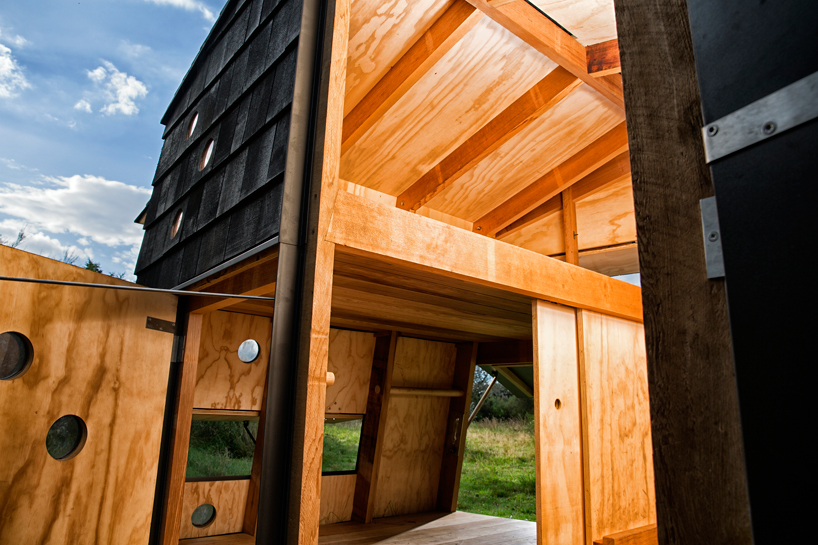
These gorgeous timber pods are a series of “asymmetric nature shelters” designed by LUMO Architects for the Danish South Fyn islands.

According to a write-up over on designboom, they function a bit like traditional Japanese moon-viewing platforms: “clad with large wood chips treated with black-pigmented wood tar oil,” we read, “the randomly displaced openings look out and frame the surrounding nature and at night, the lunar orbit across the night sky can be observed.”

[Image: Shelters by LUMO Architects; photo by Jesper Balleby].

It will be interesting to see how they weather and fade over time, of course—and, in the bottommost images seen here, you can already see them transitioning to grey—but, for now, these look spectacular.

[Image: Shelters by LUMO Architects; photo by Jesper Balleby].

The black exterior shell creates a particularly eye-popping juxtaposition with the unstained interior, almost like cracking open a timber geode to reveal a world of light burning inside.

[Image: Shelters by LUMO Architects; photo by Jesper Balleby].

Here’s some more information, from the all-lowercase designboom:

five different volumes have been established, each varying in size and function, while maintaining a consistent spatial relationship. the asymmetric forms are reminiscent of the various shelter types originating from the traditional huts used by fishermen to store their catch, and thus, influencing the names of each one: ‘monkfish’—containing 3 levels and integrated bird-watching platform; ‘garfish’—a 6-7 person overnight shelter that doubles as picnic space for school classes; ‘lumpfish’—a 3-5 person overnight shelter with stay and sauna space; the ‘flounder’—a 2 person overnight shelter; and finally the ‘eelpout’—which functions as the lavatory.

You can see many of those variant types here, but click through to the architects’ website or to designboom for more.

[Images: Shelters by LUMO Architects; photos by Jesper Balleby].

(Via designboom).

Shaft

[Image: Photo by Adrià Goula, courtesy of Carles Enrich].

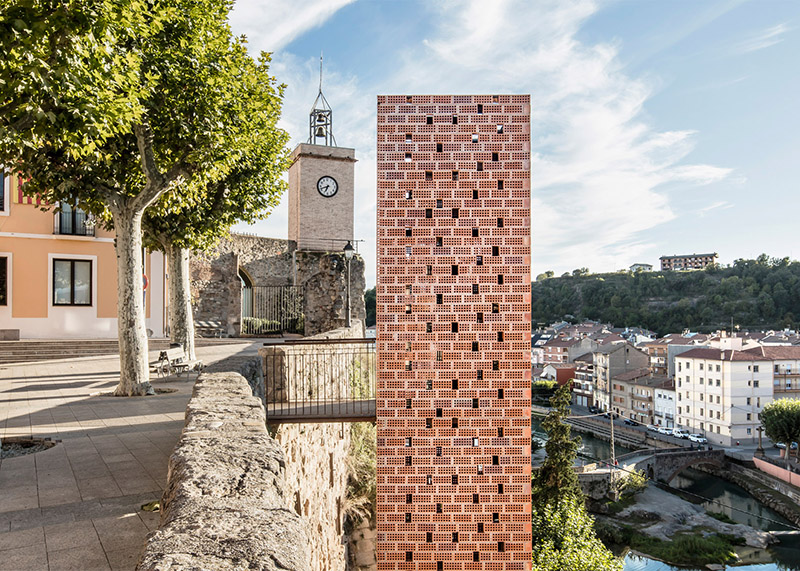
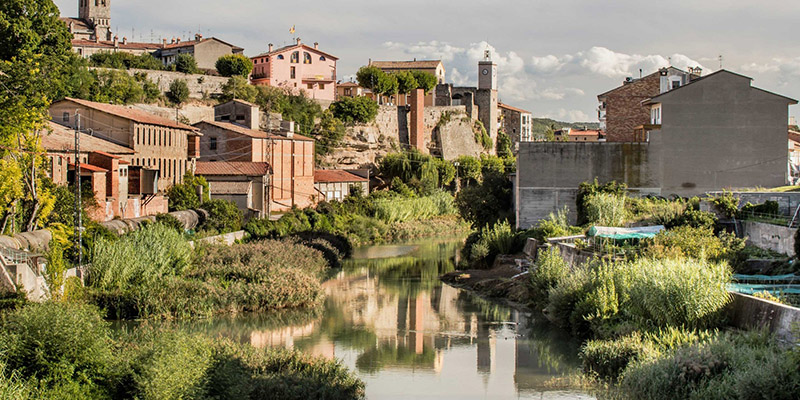
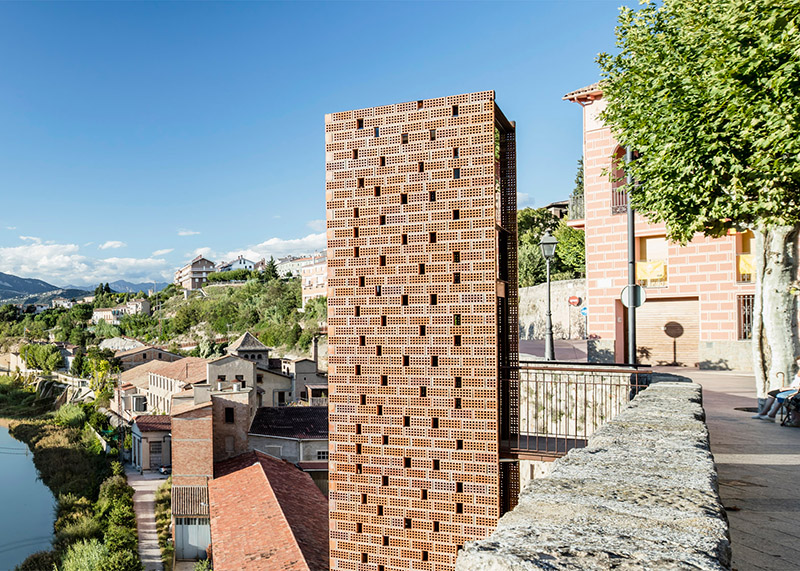
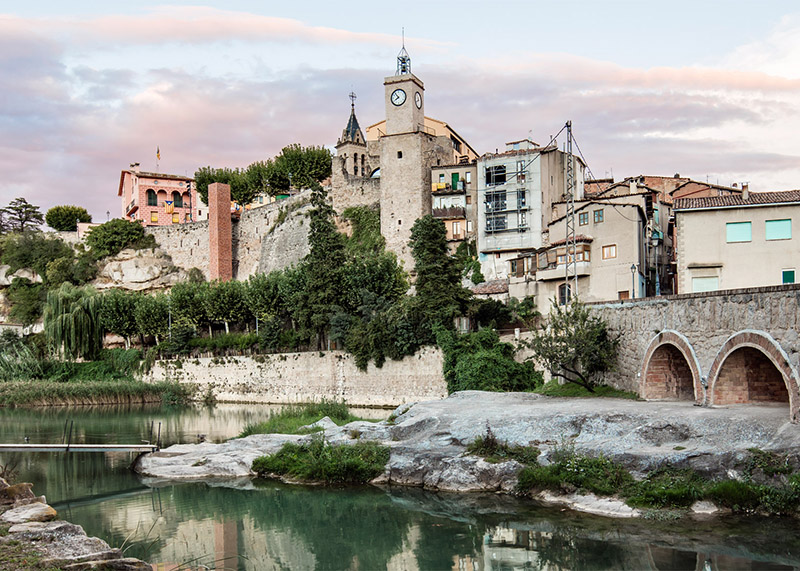
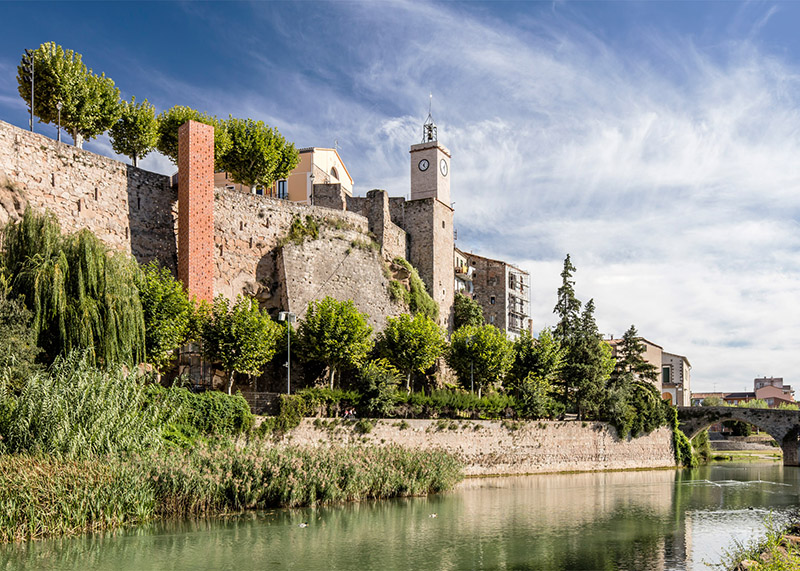
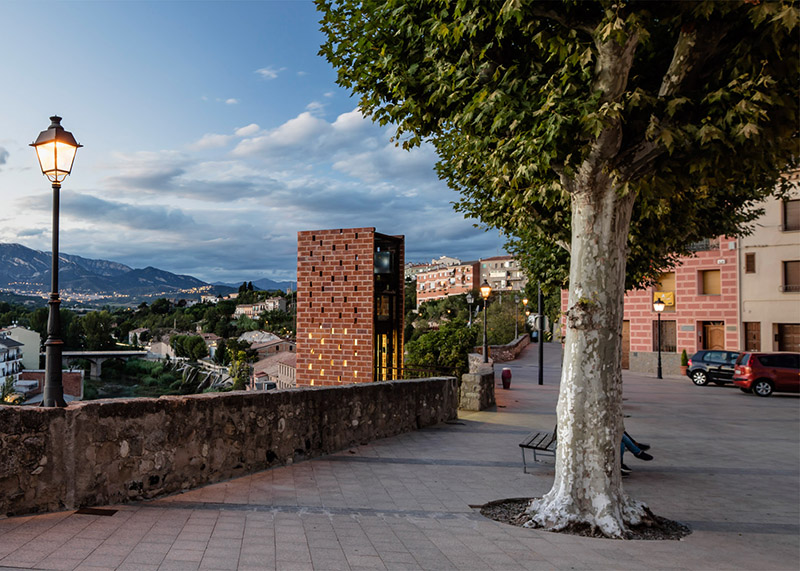
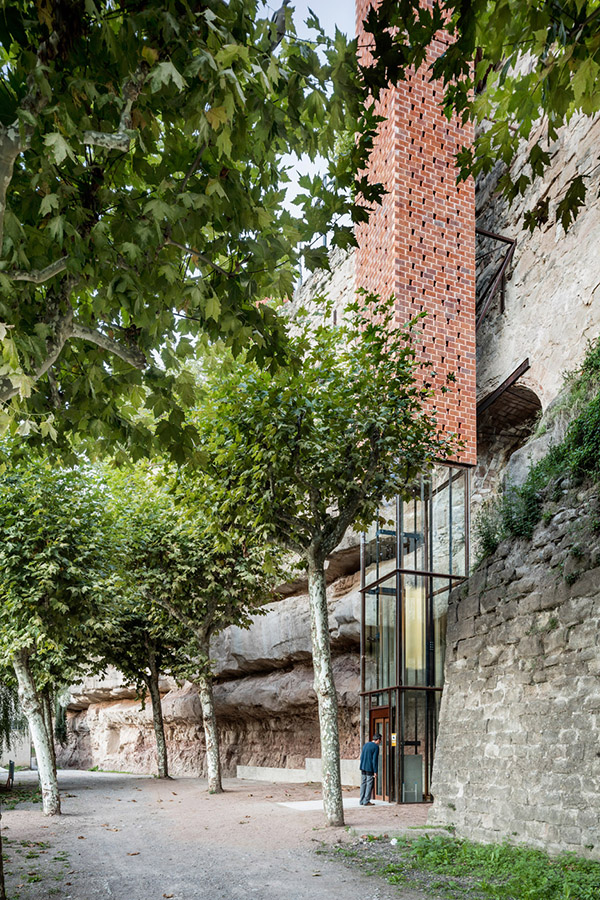
Here’s another prosthetic elevator project—in fact, the reason I posted the previous one—this time around designed by architect Carles Enrich for the riverside city of Gironella, Spain.

[Image: Photo by Adrià Goula, courtesy of Carles Enrich].

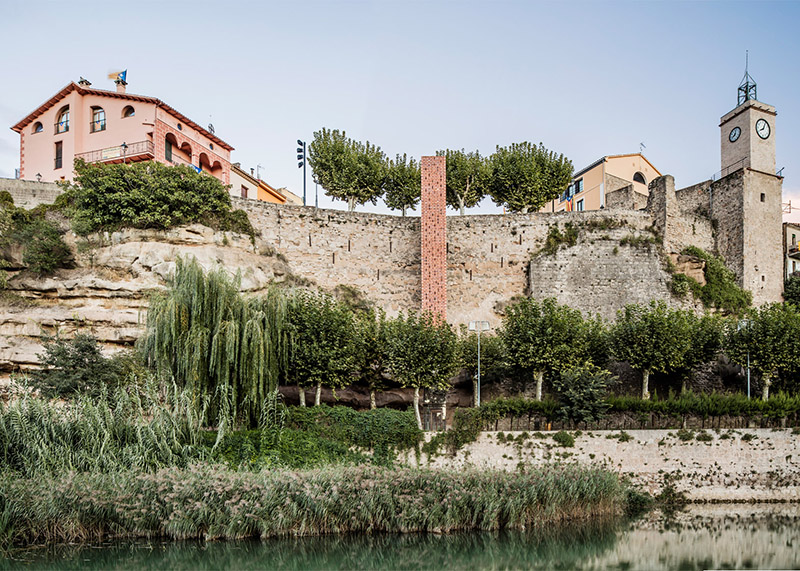
The elevator connects the old and new parts of town, offering ease of access to the young and elderly alike, and reopening social and economic circulation between the two halves of the city.

[Image: Photo by Adrià Goula, courtesy of Carles Enrich].

Built using steel, glass, and bricks, the project also blends into the existing color scheme of the city, looking like a chimney or a church steeple, a tower of roofing tiles suddenly standing alongside the city’s cliff.

[Image: Photo by Adrià Goula, courtesy of Carles Enrich].

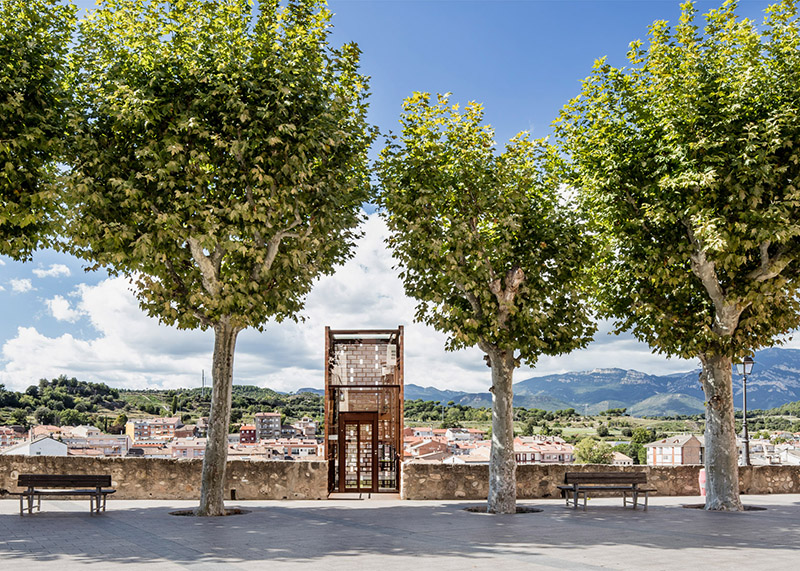
Among many things, I love how unbelievably simple the project is: it’s just a rectangle, going from level A to level B. That’s it.

[Image: Photo by Adrià Goula, courtesy of Carles Enrich].

I’m not entirely sure why I find projects like this so fascinating, in fact, but the notion that two radically separate vertical levels can suddenly be connected by the magic of architecture is one of the most fundamental promises of construction in the first place: that, through a clever use of design skills and materials, we can create or discover new forms of circulation and unity.

[Images: Photos by Adrià Goula, courtesy of Carles Enrich].

With staircases, of course, you have more leeway for introducing expressive shifts in direction and orientation, pinching floors together, for example, or introducing elaborate curls leading from one floor to the next.

The elevator, by contrast, seems remarkably sedate.

[Image: Photo by Adrià Goula, courtesy of Carles Enrich].

It’s just a box you step into, and a vertical corridor you travel within. In the photo above, it’s like a dimly lit portal peeking up from some other, deeper district of the city.

Yet the ease of connection, and the use of subtle materials to realize it, are immensely exciting for some reason, as if we are all ever just one quick design gesture away from linking parts of the world in ways they never had been previously.

Just build an elevator: a pop-up vertical corridor delivering ascension where you’d least expected it.

[Image: Photo by Adrià Goula, courtesy of Carles Enrich].

In any case, read more about the project over at the architect’s own website, or at ArchDaily, where I first saw the project, and check out the previous post for another elevator, while you’re at it.

Lift

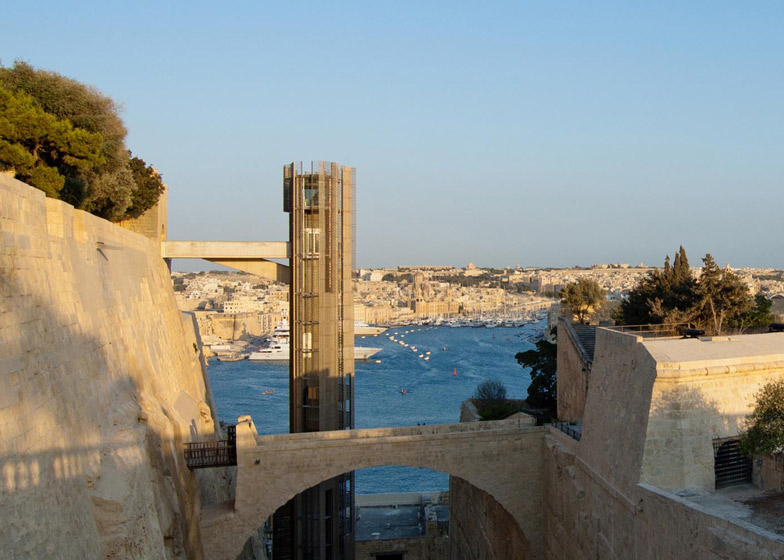
[Image: The “Barakka Lift” in Malta; photo by Sean Mallia, courtesy of Architecture Project].

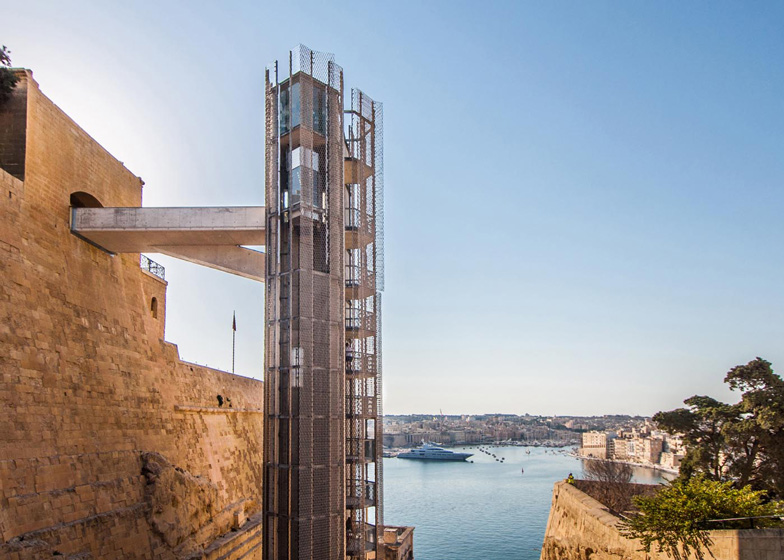
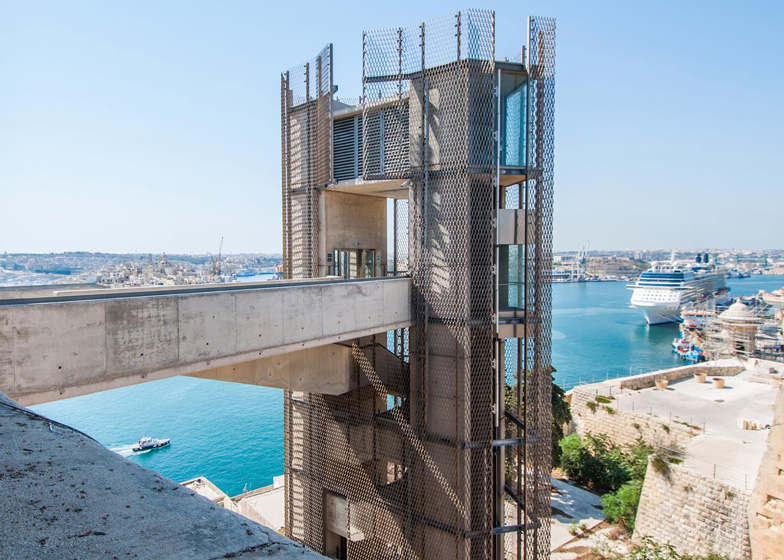
The forthcoming (i.e. next) post will retroactively serve as an otherwise arbitrary excuse for posting this project, one of my favorites of the last few years, a kind of castellated prosthetic elevator on the island of Malta by Architecture Project.

[Image: The “Barakka Lift” in Malta; photo by Sean Mallia, courtesy of Architecture Project].

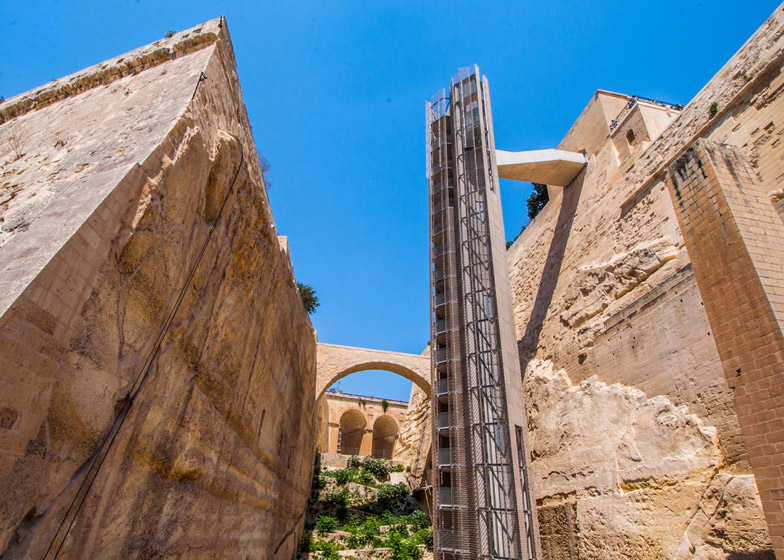
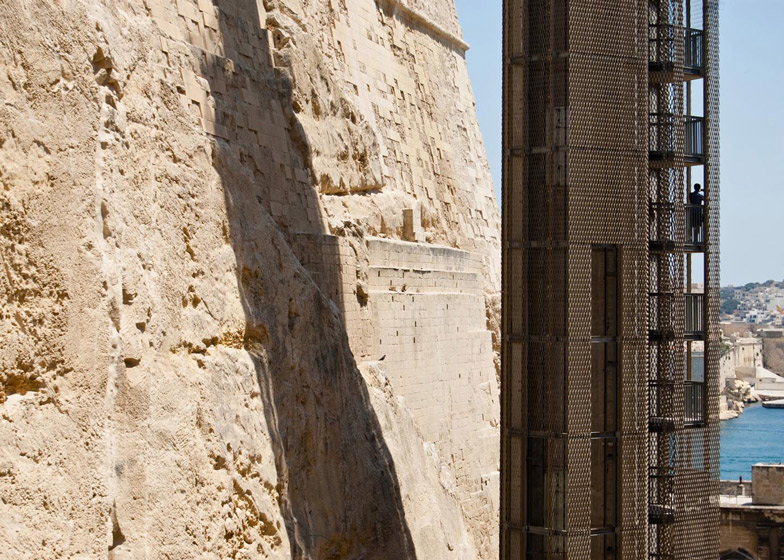
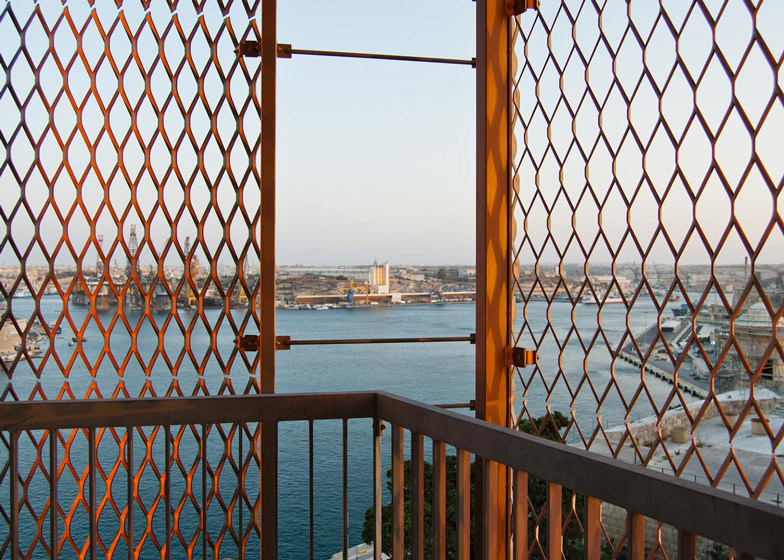
The twenty-story outdoor elevator “required a certain rigour to resolve the dichotomy between the strong historic nature of the site and the demands for better access placed upon it by cultural and economic considerations,” resulting in the choice of blunt industrial materials and stylized perforations.

[Image: Photo by Sean Mallia, courtesy of Architecture Project].

As the architects describe it:

The geometric qualities of the plan echo the angular forms of the bastion walls, and the corrugated edges of the aluminium skin help modulate light as it hits the structure, emphasizing its verticality. The mesh masks the glazed lift carriages, recalling the forms of the original cage lifts, whilst providing shade and protection to passengers as they travel between the city of Valletta and the Mediterranean Sea.

Personally, I love the idea of what is, in effect, a kind of bolt-on castle, combining the language of one era—the Plug-In Cities of Archigram, say—with the aesthetics of the Knights of Malta.

[Image: Photo by Luis Rodríguez López, courtesy of Architecture Project].

In fact, it’s almost tempting to write a design brief explicitly calling for new hybridizations of these approaches: modular, prefab construction… combined with Romanesque fortification.

[Image: Photo by Sean Mallia, courtesy of Architecture Project].

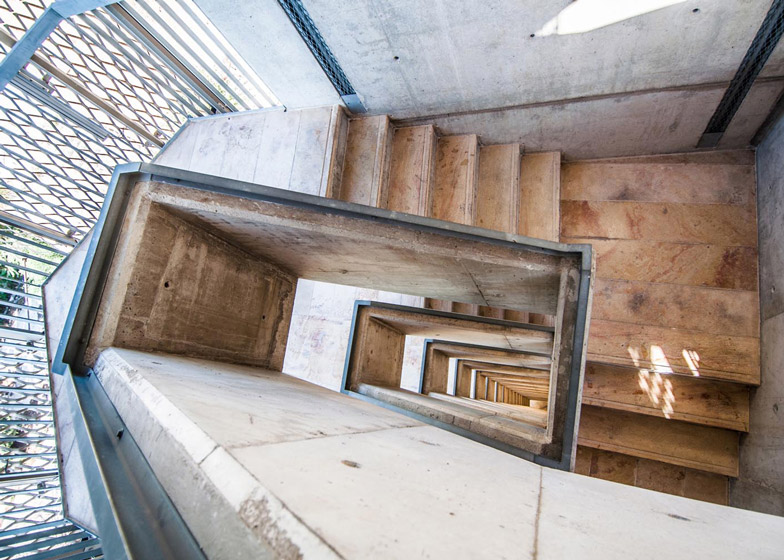
An emergency stairwell spirals down between the two parallel elevator shafts, which “also reduces the visual weight of the lift structure itself and accentuates the vertical proportions of the structure,” the architects suggest and contributes to perforating the outside surface beyond merely the presence of chainlink.

[Image: Photo by Luis Rodríguez López, courtesy of Architecture Project].

In any case, it’s not a new project—like me, you probably saw this on Dezeen way back in 2013—but I was just glad to have a random excuse to post it.

[Image: Photo by Luis Rodríguez López, courtesy of Architecture Project].

Another elevator post coming soon

Then we descend

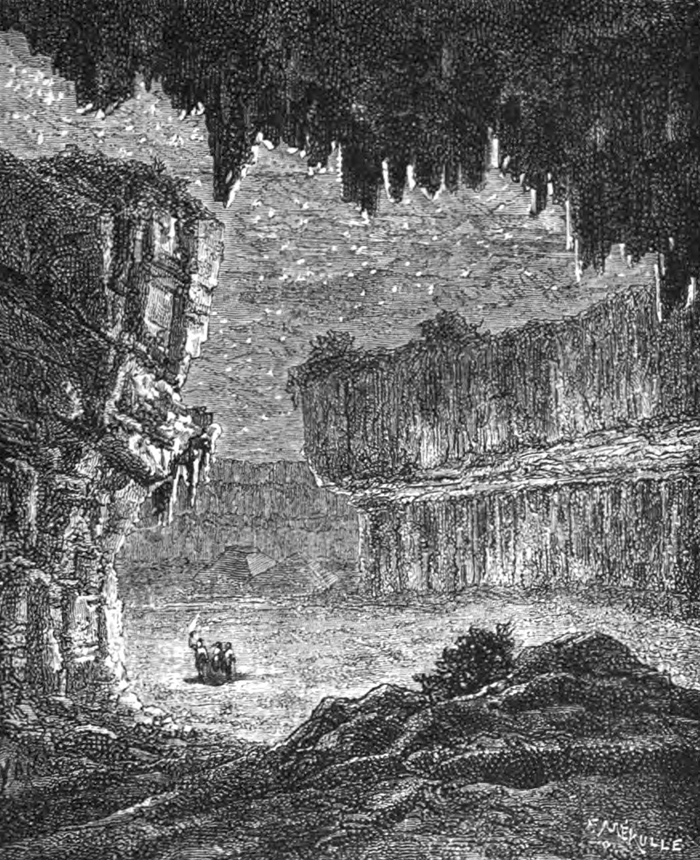
[Image: Descending into Mammoth Cave, from Beneath the surface; or, the wonders of the underground world by W.H. Davenport Adams].

By way of JF Ptak Science Books, I found myself reading through an old book called Beneath the surface; or, the wonders of the underground world by W.H. Davenport Adams this weekend, a travelogue from 1876 exploring subterranean landscapes around the world, including what is now Mammoth Cave National Park.

“Then we descend,” Adams writes upon his arrival at the cave, “by a small pathway excavated among the rocks, until we discover, in the sides of the mountain, and at the bottom of a funnel-shaped cavity, overgrown with verdure, an opening so low and narrow that two people can with difficulty enter at once.”

Slipping through, they pass into “a labyrinth of caves” consisting of seemingly endless sloping rooms, shafts, and corridors.

As my own phrasing there indicates, these spaces are described by way of architectural analogy: as naves and vestibules, chambers and rotundas. In fact, their perceived architectural characteristics are highlighted even on the acoustic level. One cave, for example, is a place “where the voice resounds and, lingering, reverberates, like the strain of an organ through dim cathedral aisles.”

[Image: A room in Mammoth Cave known as “The Maelstrom,” from Beneath the surface; or, the wonders of the underground world by W.H. Davenport Adams].

Continuing on their downward trek, Adams & Co. soon wander into “a chamber nearly 320 feet in circuit, whose roof rises like the stand of an immense nave. Its form, its grandeur, its magnitude (it could accommodate five thousand persons), and the strange architectural-like stalactites which embellish it, have procured it the name of the Gothic Church.”

Indeed, standing amidst this ersatz cathedral, and “thanks to the power of imagination, and the varying influence of the light, we here distinguish all the details of a medieval nave, pillars, and columns, and corbels and ogives.”

Among many things, what interests me here is how the interior of the earth is seen as if through the haze of a projection, with architectural forms emerging where, in fact, only inhuman geological processes at work—but also, in the opposite direction, the implied observation here that, in an age of masonry construction, architecture and geology were, in effect, natural cousins, lending themselves to mutual comparison far more easily than in today’s time of glass and steel construction.

[Image: A vast underground room filled with “a silent, terrible solitude,” from Beneath the surface; or, the wonders of the underground world by W.H. Davenport Adams].

To put this another way, many streets in Manhattan are often quite appropriately described as “canyons,” not only due to their perceived depth—that is, given the towering buildings on either side, as if pedestrians merely wander at the bottom of artificial slot canyons—but also due to the geological materials those buildings were made from.

However, following widespread transformations in global building construction, our buildings today are now more likely to be reflective—even dangerously so—or partially transparent, whether this is due to the use of glass curtain walls or shadow-annihilating polished titanium, with the effect that our urban environment is no longer particularly well-served by geological analogy.

In any case, the book’s flirtation with an architectural vocabulary is gradually abandoned as Adams and his colleagues venture deeper into the planet. They eventually find themselves standing somewhat uncomfortably surrounded by a “phantasmagoria” of black gypsum walls, all “covered with sparkling crystallizations,” in a vast room whose belittling proportions inspire feelings not of grandeur and religiosity but a kind of exhausted desolation.

Here, Adams writes, “you think yourself on one of those dead and naked planets, where mineral nature reigns in the bosom of a silent, terrible solitude; on some earth never warmed by the sun, and which is animated by no kind of life.”

[Image: An unfortunately rather low-res image from Beneath the surface; or, the wonders of the underground world by W.H. Davenport Adams].

The rest of the book—including the image seen immediately above this sentence—ventures elsewhere, into silver mines and glacial caves, even briefly passing by way of underground “artificial ice caves” for the premodern production and storage of ice.

I’m just a sucker for subterranea. Check it out if any of this sounds up your alley, and click through the archives of JF Ptak Science Books while you’re at it.

Computational Romanticism and the Dream Life of Driverless Cars

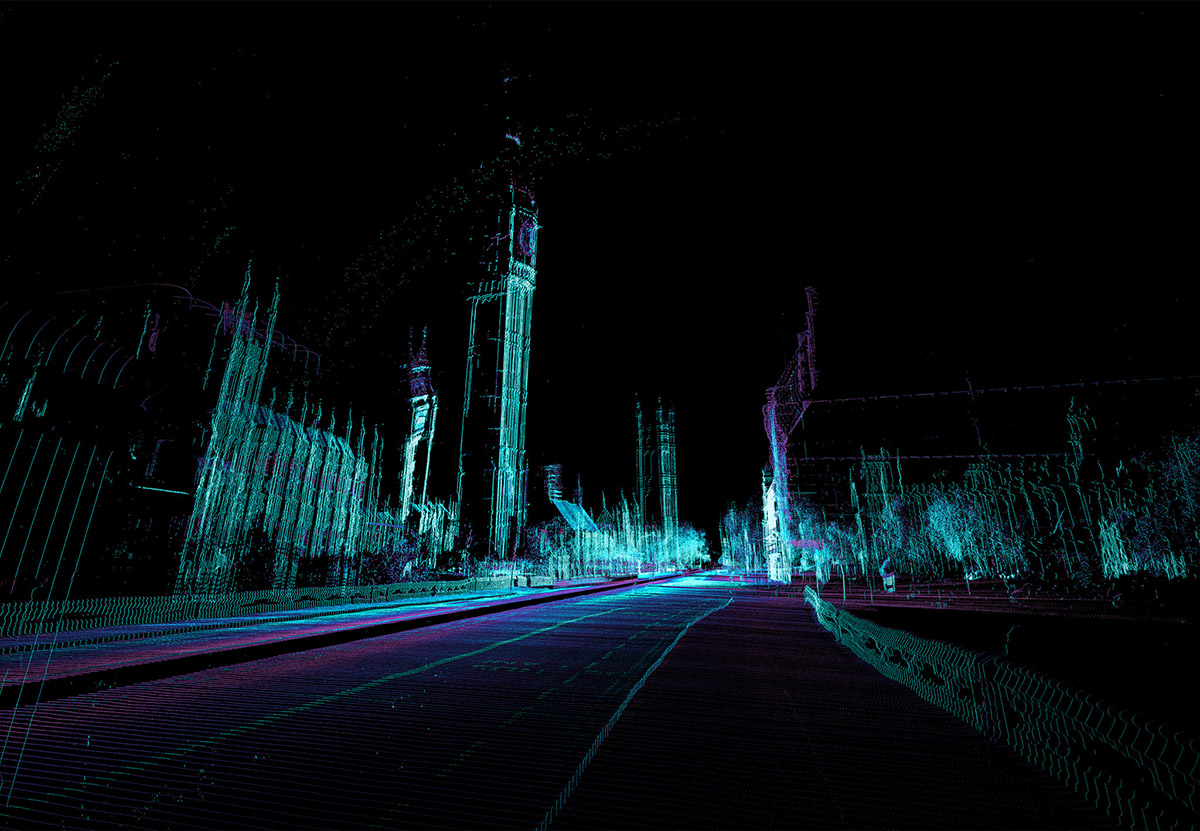
[Image by ScanLAB Projects for The New York Times Magazine].

Understanding how driverless cars see the world also means understanding how they mis-see things: the duplications, glitches, and scanning errors that, precisely because of their deviation from human perception, suggest new ways of interacting with and experiencing the built environment.

Stepping into or through the scanners of autonomous vehicles in order to look back at the world from their perspective is the premise of a short feature I’ve written for this weekend’s edition of The New York Times Magazine.

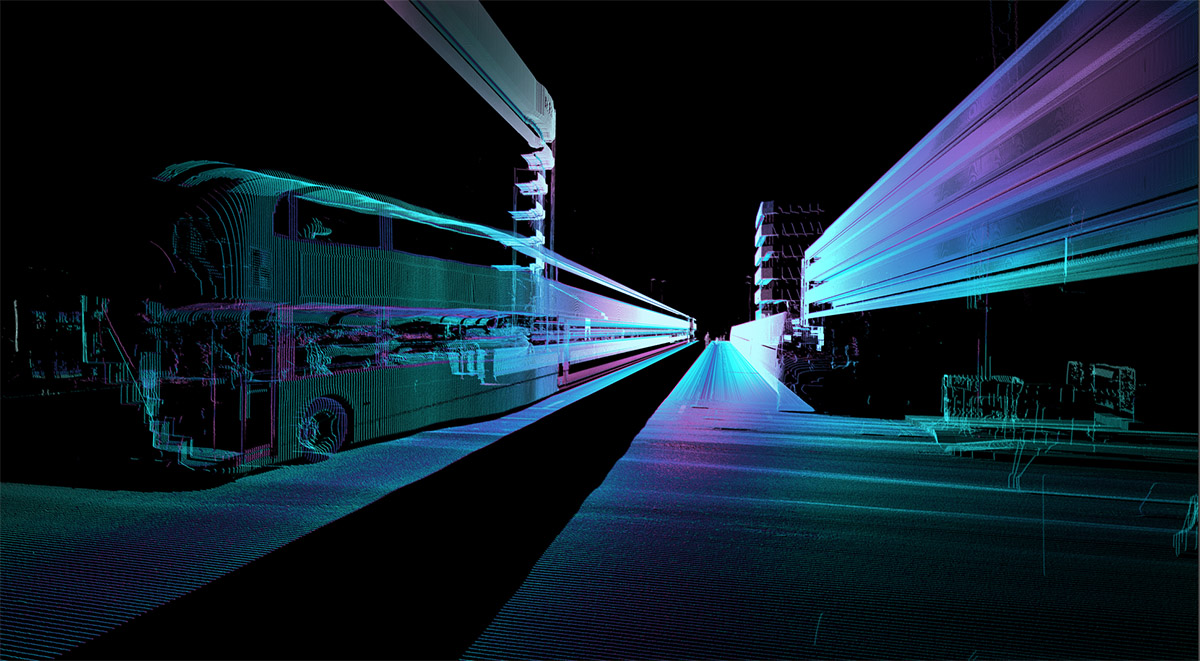
For a new series of urban images, Matt Shaw and Will Trossell of ScanLAB Projects tuned, tweaked, and augmented a LiDAR unit—one of the many tools used by self-driving vehicles to navigate—and turned it instead into something of an artistic device for experimentally representing urban space.

The resulting shots show the streets, bridges, and landmarks of London transformed through glitches into “a landscape of aging monuments and ornate buildings, but also one haunted by duplications and digital ghosts”:

The city’s double-­decker buses, scanned over and over again, become time-­stretched into featureless mega-­structures blocking whole streets at a time. Other buildings seem to repeat and stutter, a riot of Houses of Parliament jostling shoulder to shoulder with themselves in the distance. Workers setting out for a lunchtime stroll become spectral silhouettes popping up as aberrations on the edge of the image. Glass towers unravel into the sky like smoke. Trossell calls these “mad machine hallucinations,” as if he and Shaw had woken up some sort of Frankenstein’s monster asleep inside the automotive industry’s most advanced imaging technology.

Along the way I had the pleasure of speaking to Illah Nourbakhsh, a professor of robotics at Carnegie Mellon and the author of Robot Futures, a book I previously featured here on the blog back in 2013. Nourbakhsh is impressively adept at generating potential narrative scenarios—speculative accidents, we might call them—in which technology might fail or be compromised, and his take on the various perceptual risks or interpretive short-comings posed by autonomous vehicle technology was fascinating.

[Image by ScanLAB Projects for The New York Times Magazine].

Alas, only one example from our long conversation made it into the final article, but it is worth repeating. Nourbakhsh used “the metaphor of the perfect storm to describe an event so strange that no amount of programming or image-­recognition technology can be expected to understand it”:

Imagine someone wearing a T-­shirt with a STOP sign printed on it, he told me. “If they’re outside walking, and the sun is at just the right glare level, and there’s a mirrored truck stopped next to you, and the sun bounces off that truck and hits the guy so that you can’t see his face anymore—well, now your car just sees a stop sign. The chances of all that happening are diminishingly small—it’s very, very unlikely—but the problem is we will have millions of these cars. The very unlikely will happen all the time.”

The most interesting takeaway from this sort of scenario, however, is not that the technology is inherently flawed or limited, but that these momentary mirages and optical illusions are not, in fact, ephemeral: in a very straightforward, functional sense, they become a physical feature of the urban landscape because they exert spatial influences on the machines that (mis-)perceive them.

Nourbakhsh’s STOP sign might not “actually” be there—but it is actually there if it causes a self-driving car to stop.

Immaterial effects of machine vision become digitally material landmarks in the city, affecting traffic and influencing how machines safely operate. But, crucially, these are landmarks that remain invisible to human beings—and it is ScanLAB’s ultimate representational goal here to explore what it means to visualize them.

While, in the piece, I compare ScanLAB’s work to the heyday of European Romanticism—that ScanLAB are, in effect, documenting an encounter with sublime and inhuman landscapes that, here, are not remote mountain peaks but the engineered products of computation—writer Asher Kohn suggested on Twitter that, rather, it should be considered “Italian futurism made real,” with sweeping scenes of streets and buildings unraveling into space like digital smoke. It’s a great comparison, and worth developing at greater length.

For now, check out the full piece over at The New York Times Magazine: “The Dream Life of Driverless Cars.”

Landscapes of Drone Control

[Image: Photo courtesy Mountain Drones].

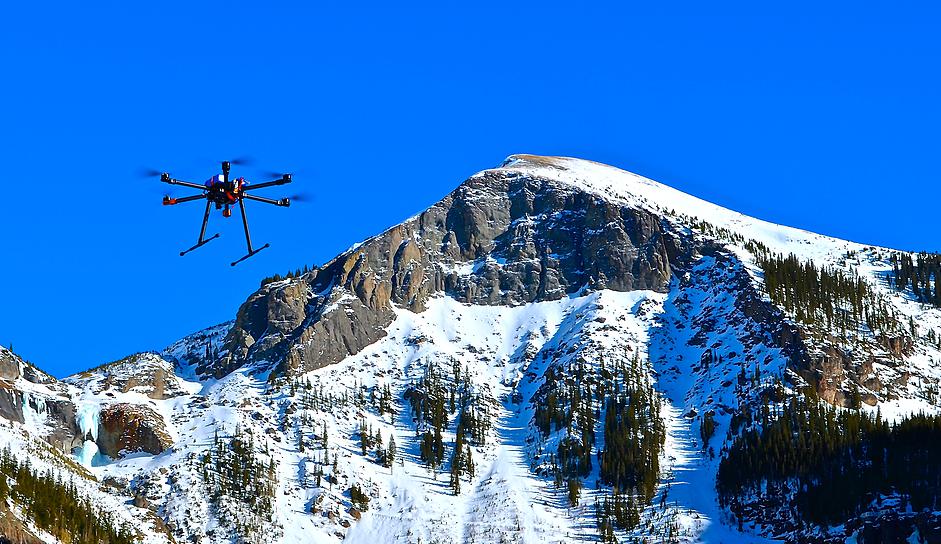
A Colorado-based company called Mountain Drones is developing a line of octocopters armed with small explosive charges as a possible tool for setting off artificial avalanches. It’s landscape design by drone.

“Here’s how it would work,” Outside explains:

Instead of spending hours bootpacking to a ridgeline to drop a hand charge, ski patrollers would select a preprogrammed route for the drone to fly and manually drop the charges to clear the slope from a safe distance. Onboard sensors will calculate the snow-water equivalent—a measure of the snowpack’s water content—and depth, allowing patrollers to identify persistent weak layers and breaking points and helping them determine where to make drops.

For now, of course, this is all still stuck at the proposal stage, although the company estimates—somewhat over-optimistically, it seems—that it will be “at least one or two years” before the proper regulations are passed.

Until then, the drones will instead be flying test routes with mock explosives, running various patterns across the mountains in anticipation of the future landscape events they will trigger.

L.A.T.B.D.

[Image: L.A.T.B.D. by Smout Allen for USC Libraries; photo by Stonehouse Photographic].

I wanted to give a quick heads up that a new collaborative exhibition will be opening to the public later today in the Doheny Memorial Library at USC here in Los Angeles, featuring work by myself and Smout Allen.

Called L.A.T.B.D., the project looks at diverse narrative, scientific, architectural, and landscape futures of Los Angeles. It is a city always yet to be determined—or L.A., T.B.D.

The exhibition actually comes at the very end of the 2015 USC Libraries Discovery Fellowship, which I’ve had the honor of holding this year, the challenge of which was to use the archival holdings of USC as a springboard for looking forward toward whatever Los Angeles might become.

Like plotting a ballistic trajectory, if we know where L.A. has been—if we can see the ingredients of its past, from its prehuman landscapes to the 2012 procession of the Space Shuttle—can we determine where the city might be, 10, 20, 100 years from now?
[Image: L.A.T.B.D. by Smout Allen for USC Libraries; photo by Stonehouse Photographic].

The overall curatorial idea was that, hidden within USC’s impressive and seemingly endless archival holdings, there might be glimpses of an L.A. yet to come, and that a project such as this should find a way of bringing that future version of the city into focus.

However, not one for prediction or prescriptive visions of tomorrow, I wanted this to be far more open-ended than that. We thus developed several parallel lines of materials for the show.

[Image: L.A.T.B.D. by Smout Allen for USC Libraries; photo by Stonehouse Photographic].

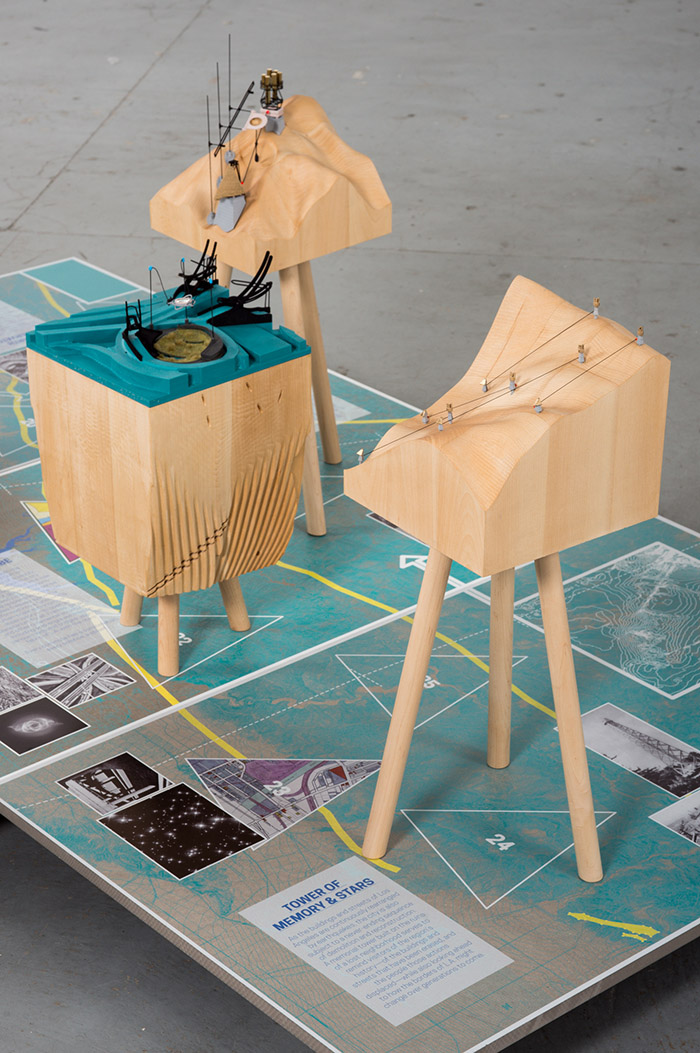
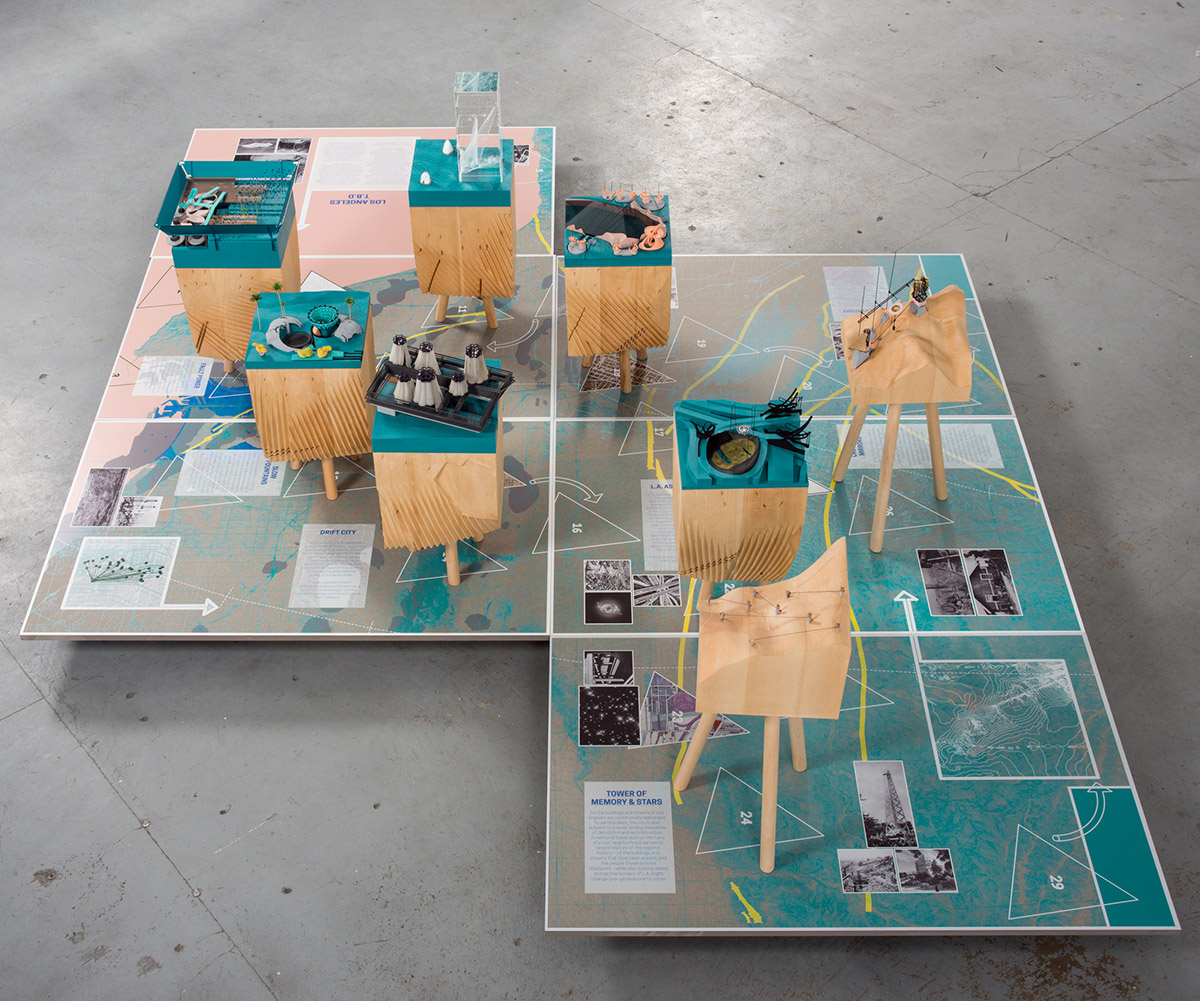
One, of course, are a series of gorgeous models designed and fabricated by Smout Allen, showing various hypothetical scenarios for the future city. In one, huge pendulums have been installed beneath the streets to act as seismic counterweights, protecting the city from earthquakes.

In another, the titanic forces released by plate tectonics can be captured by a new kind of power station, converting those otherwise threatening movements of the earth into a source of renewable energy.

In yet another, the city’s freeway system has been converted into a kind of immersive astronomical device, to help train the eyes of this city of stars on an older and more important firmament above.

This work also served as a direct source for the related project we did for this year’s inaugural Chicago Architecture Biennial.
[Image: L.A.T.B.D. by Smout Allen for USC Libraries; photo by Stonehouse Photographic].

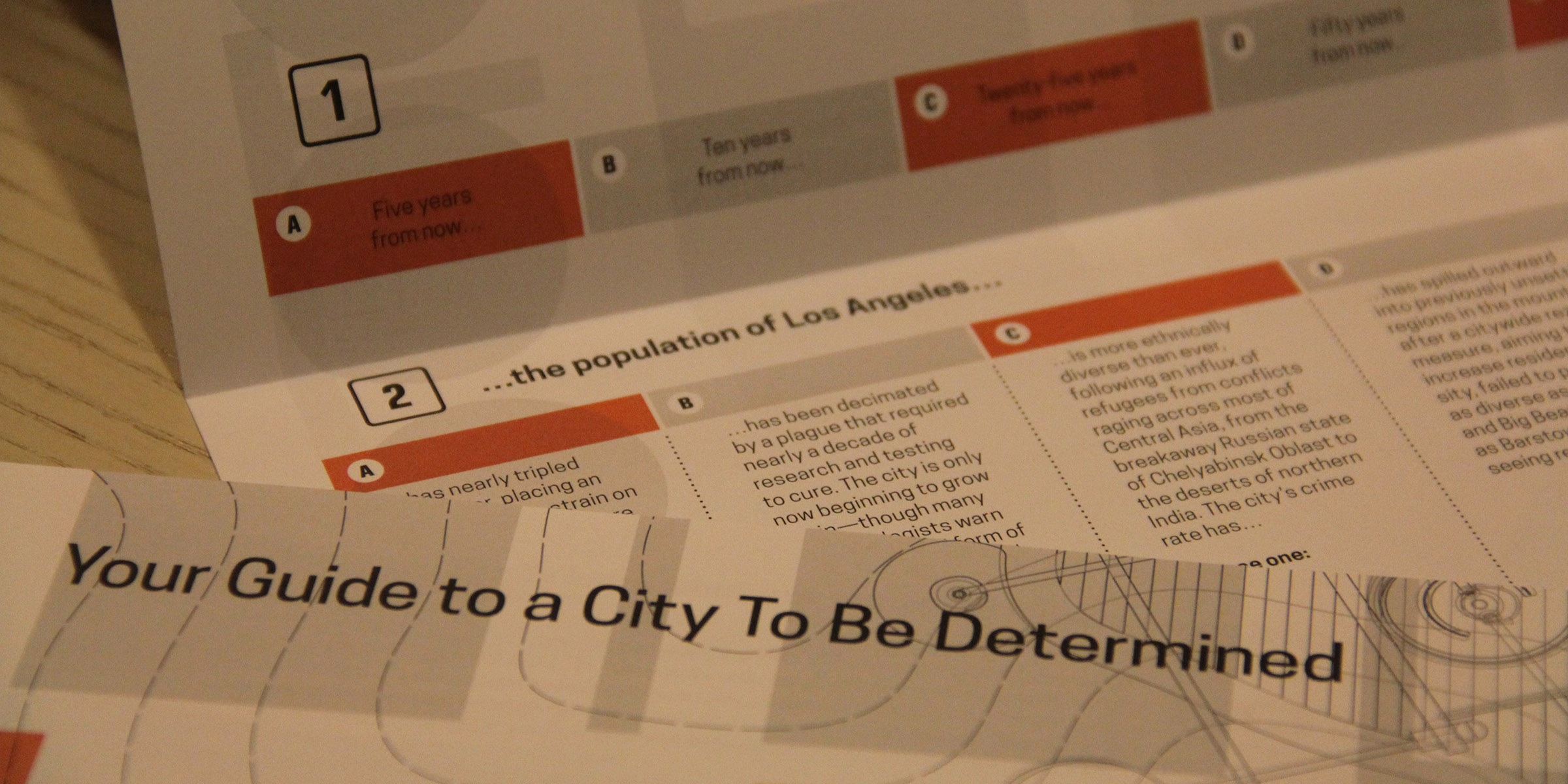
Another key part of the L.A.T.B.D. exhibition is an interactive text that allows visitors to, in a sense, choose their own future for the metropolis. This text combines a small-scale look at what sort of Los Angeles might yet greet our unborn descendants—complete with neighborhoods flooded by sea-level rise, widespread demographic shifts, and corrupt political machinations—with a subtext of noir or urban mystery.

Put another way, if this is a city known for its conspiracies and crimes—whether it’s Chinatown, O.J. Simpson, bank heists, or the novels of James Ellroy—can we use that same narrative register to explore the city’s future infrastructure?
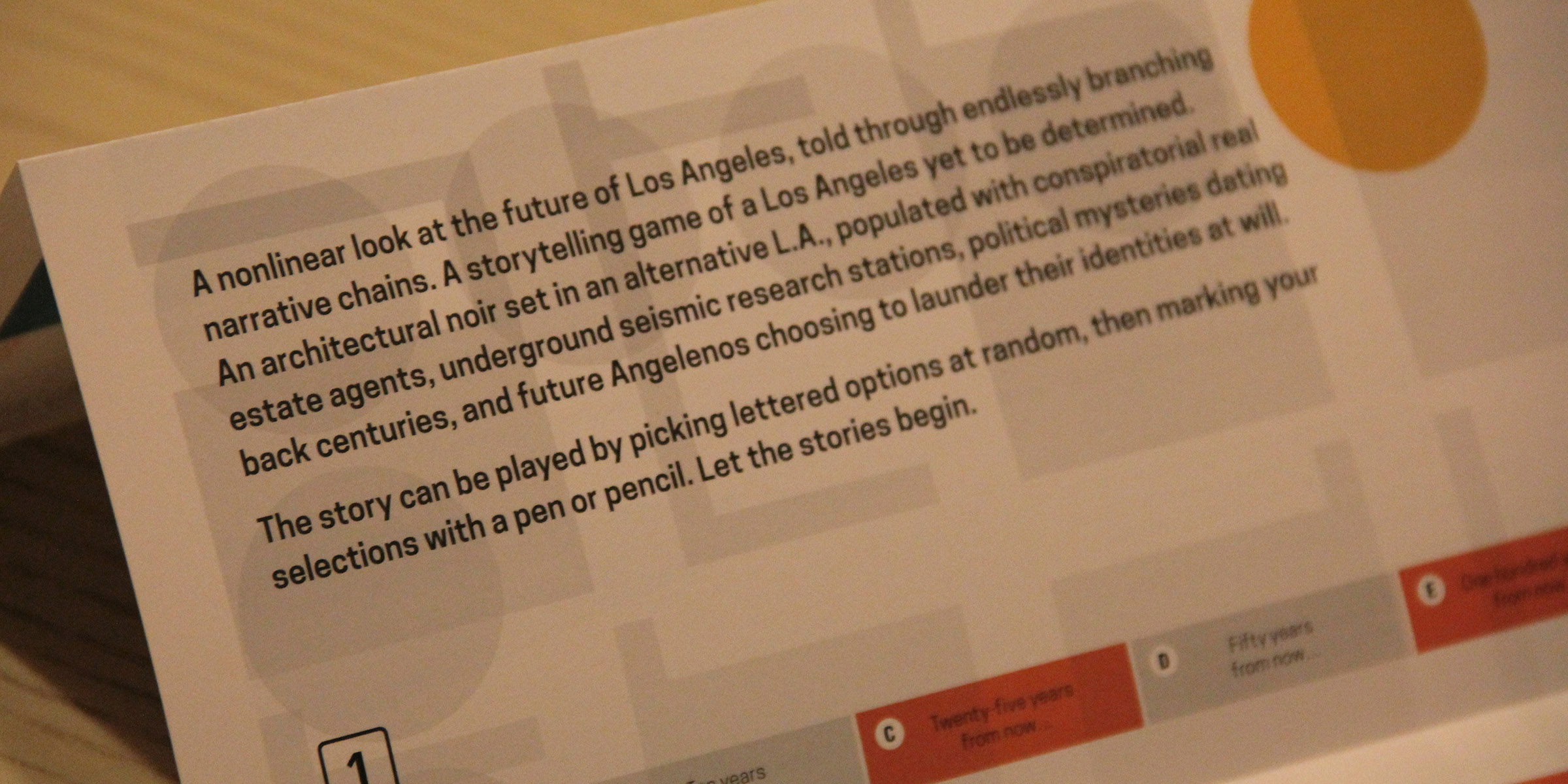
[Images: L.A.T.B.D.‘s accompanying exhibition text, designed by David Mellen Design; terrible photos by Geoff Manaugh].

I started referring to this as a kind of architectural or infrastructural noir, and I’ve come to really like the phrase: the accompanying exhibition text is thus not at all what you’d expect to see in a typical gallery setting, but instead tells an endlessly branching “noir” about the next Los Angeles—by, in some ways, revealing what Los Angeles really was, all along.

[Image: L.A.T.B.D.‘s accompanying exhibition text, designed by David Mellen Design; terrible photo by Geoff Manaugh].

Finally, the exhibition includes a series of historical artifacts from the USC Libraries holdings, from old scientific reports to transportation policy papers, from obsolete urban predictions from the 1980s to board games set in a premodern L.A.

Here, working with designer David Mellen, we had a lot of fun, deliberately crossing and recrossing the line between fiction and reality: that is, not every artifact you see in the exhibition should be trusted, and things might not always be what they seem.

There’s much more to say about the exhibition, but I wanted to get a quick post up before the show opens later this afternoon. There is a reception tonight at 5:30pm in the library, or consider stopping by on Saturday, October 17, from noon to 1pm, to talk to myself and Smout Allen about the project. Saturday’s event is part of the “Archives Bazaar.”

L.A.T.B.D. was made possible by support from the USC Libraries Discovery Fellowship, the Bartlett School of Architecture, UCL, and the British Council. Special thanks are owed to Dean Catherine Quinlan; to Jeff Watson; to the USC Libraries staff; and to Harry Grocott, Doug Miller, and Sandra Youkhana.

Expedition Exhibition

[Image: Venue at SPUR].

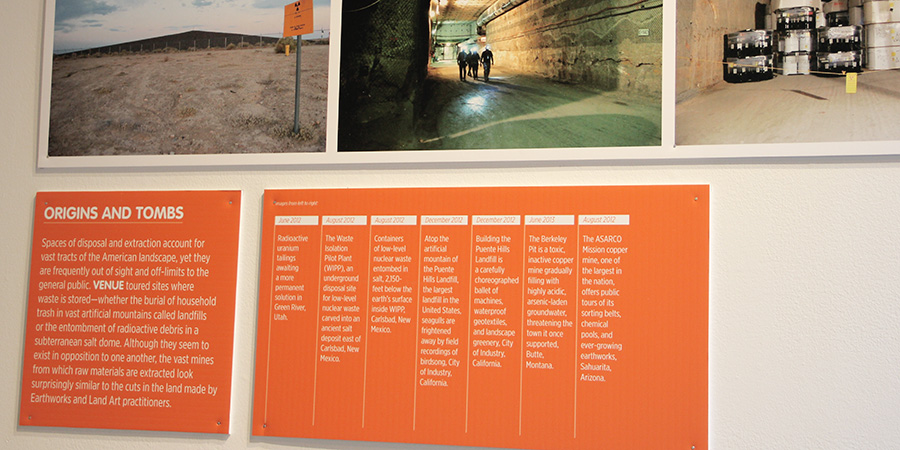
For those of you into road trips, nuclear waste, petroglyphs, 19th-century geographic survey teams, remote military simulations, abandoned rocket fuel facilities, Hollow Earth cults, and more, there is only one week left to catch the Venue exhibition over at SPUR in San Francisco.

[Image: Venue at SPUR].

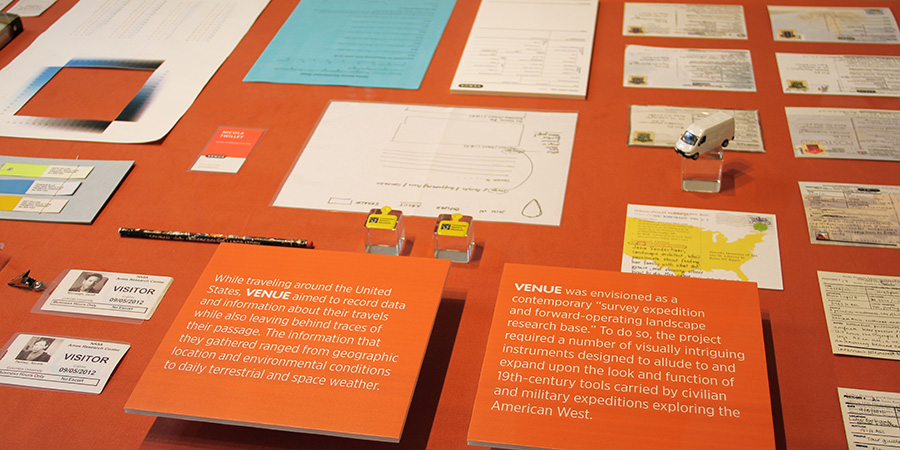
The show documents and looks back at a 16-month collaboration for the Nevada Museum of Art between myself and Edible Geography, collecting not only the special survey instruments we made for the trip with designer Chris Woebken but various ephemera from the travels we picked up along the way.

[Image: Instruments designed by Chris Woebken for Venue].

Over the course of multiple, discontinuous trips throughout the United States—primarily focused on the West—we visited landfills, military bases, nuclear waste disposal sites, atomic clocks, underground neutrino detectors, the world’s largest organism in the mountains of eastern Oregon, the factory where AstroTurf is made, NASA’s “Mars Yard” in Pasadena, the awesomely eccentric Mercer Museum, an elevator-testing tower, the Central Park bolt, a Navy SEAL museum, and a subterranean radon health spa, to name only a handful.

[Image: Venue at SPUR].

Along the way, we interviewed novelists, National Park Service curators, speleobiologists, artists, game designers, the makers of monsters, historians of light pollution, archivists, aerial photographers, and more.

[Images: Venue at SPUR].

The exhibition closes next week, on October 21. Stop by if you can!

The Landscape Architecture of Crisis

[Image: An only conceptually related photo from a volcano in Java, taken by Reuben Wu].

The invisibility of underground fires makes them particularly surreal and difficult to imagine: flames with no real room to flicker, moving slowly forward through the planet, relentlessly burning their way ever deeper into the landscape from below.

Whether that fire was caused by the ignition of a coal seam—as in Centralia or, my favorite example, in Australia’s Burning Mountain—or because subterranean strata of human-generated trash have caught fire, these events make for an especially spectral presence in the landscape. They remain entirely out of view except for the haze of their atmospheric effects, as they fill the air above with toxic gases.

This already strange phenomenon is hitting a whole new level of apocalyptic artificiality in a landfill outside St. Louis, Missouri. There, an underground fire is at risk of igniting old nuclear waste from U.S. weapons programs.

As the AP reports, “Beneath the surface of a St. Louis-area landfill lurk two things that should never meet: a slow-burning fire and a cache of Cold War-era nuclear waste, separated by no more than 1,200 feet.”

It’s worth pointing out that “the waste was illegally dumped in 1973 and includes material that dates back to the Manhattan Project, which created the first atomic bomb in the 1940s.” In many ways, then, this was an obvious problem just waiting to reassert itself.

An “emergency plan” has now kicked into gear to help fend off the potentially “catastrophic event” that would occur if these two things meet—the dormant deposit of nuclear waste and the respiring event of the underground fire.

In effect, this plan is a massive undertaking of design: it is landscape architecture as a tool against crisis.

New structures called “interceptor wells” are being constructed, for example, to maintain a kind of thermal quarantine line between the fire and the nuclear waste—however, the fire already appears to have circumvented these buffers, at least according to the AP. For example, some safety reports from the site have allegedly “found radiological contamination in trees outside the landfill’s perimeter,” implying that the nuclear waste has already, in at least some capacity, entered the biosphere, and “another showed evidence that the fire has moved past two rows of interceptor wells and closer to the nuclear waste.”

Yet another report ominously claims that the management company in charge of the landfill simply “does not have this site under control.”

This slow-burning apocalypse brings to mind our earlier look at writer Robert Macfarlane’s recent work on the vocabulary we use for certain landscapes, how words come and go over time and how spatial atmospheres can be verbally communicated.

Is there a proper landscape term for a subterranean catastrophe ready to burst through the surface of the world and forever change things for the worse in its immediate vicinity?

(Thanks to Ben Brockert and Kevin Iris for the tip!)

Occult Infrastructure and the “Funerary Teleportation Grid” of Greater London

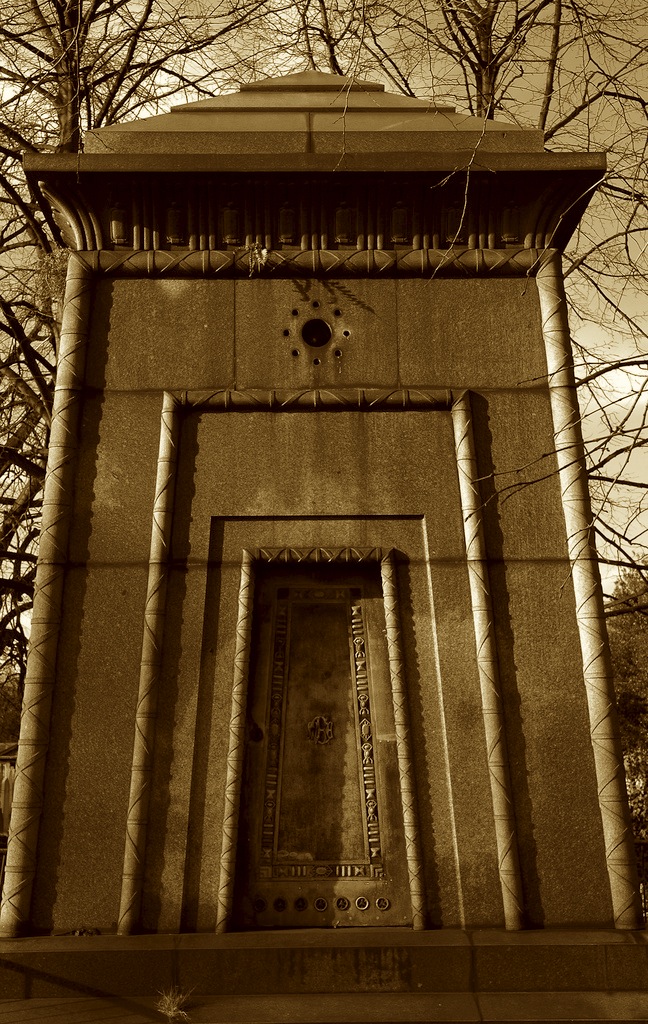
Speaking of cracks in space-time, an urban legend I love is the one about a tomb in Brompton Cemetery, London, allegedly designed by Egyptologist Joseph Bonomi and rumored to be a time machine.

[Image: Via The Clerkenwell Kid].

A sadly now-defunct blog called The Clerkenwell Kid is a great resource for this. There, we read that Bonomi “traded as an archaeological artist but is thought to have been a tomb raider”:

He is also generally considered to have been the designer of the Egyptian styled “Courtoy” tomb in Brompton cemetery which was ostensibly intended to be the final resting place of “three spinsters”. An interesting legend has grown up around this mausoleum because it is the only one in the cemetery for which there is no record of construction. This, together with Bonomi’s obsession with the afterlife (reflected in the hieroglyphs on the tomb), have been held by some to be evidence that it is not a tomb at all but a time machine and that the three spinsters, if they existed at all, were in fact his time travelling sponsors.

The correct question to ask here is not: is this true? Is this tomb really a time machine? The correct question to ask here is: how freaking cool is this?

The Clerkenwell Kid then goes one better, however, claiming that this urban legend is wrong—because it isn’t ambitious enough.

In fact, we’re told, the tomb was actually one of five such chambers, designed and constructed by Bonomi in an occult conspiracy with his colleague, Samuel Alfred Warner.

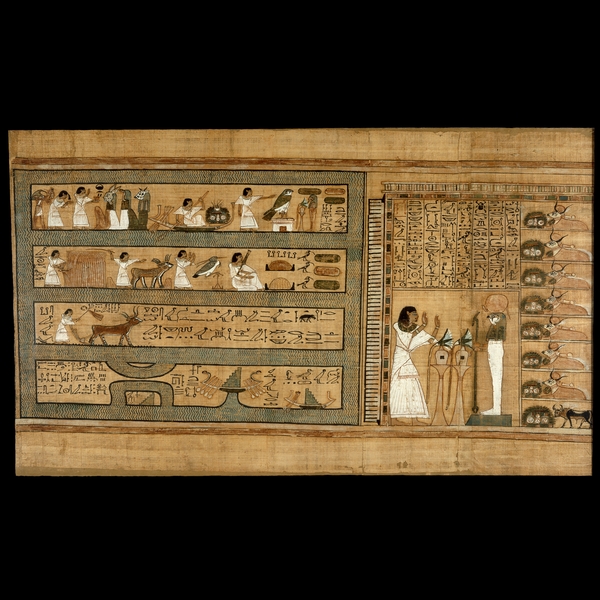
[Image: An otherwise unrelated photo of the Egyptian Book of the Dead, courtesy of the British Museum].
“Amongst several other inventions,” the Kid tells us, “Warner claimed to have developed a mysterious missile capable of destroying ships from a distance”:

The Royal Navy were convinced enough by his demonstrations to pay him to develop this new weaponry but proved unable to reproduce his results independently. This was because what Warner had allegedly discovered (with the help of ancient knowledge gained by Bonomi in Egypt) was an occult way of “teleporting” a bomb a short distance—I suppose you could call it a “psychic torpedo.”

Again, the interest for me here is not whether or not people actually were teleporting themselves—let alone submarine torpedoes!—back and forth through time using Egyptological monuments hidden in London cemeteries.

The interest for me, instead, is at least two-fold: one, how awesome a story this is, and how much I want to tell everyone about it, and, two, how urban infrastructure always seems to inspire, catalyze, or emblematically come to represent these sorts of unexpected narrative investments.

We could say it’s the paranoia of infrastructure: the belief that there is always a bigger story we don’t know, or that someone deliberately isn’t telling us, about how our cities came to be the way they are today. We see this in everything from the water-theft politics of Chinatown to the high-speed rail conspiracies of True Detective Season 2, to this teleportation chamber disguised in plain sight in Brompton Cemetery.

The fact that this story has an atmosphere of the occult only makes literal the notion that the real histories of our cities, the true tales of backstage deals, hidden interests, and untold corruption that made them what they are, have been purposefully obscured from us—they have been occulted—by mysterious figures who prefer we don’t know.

It’s as if narrative paranoia is the default note of infrastructural investigation.

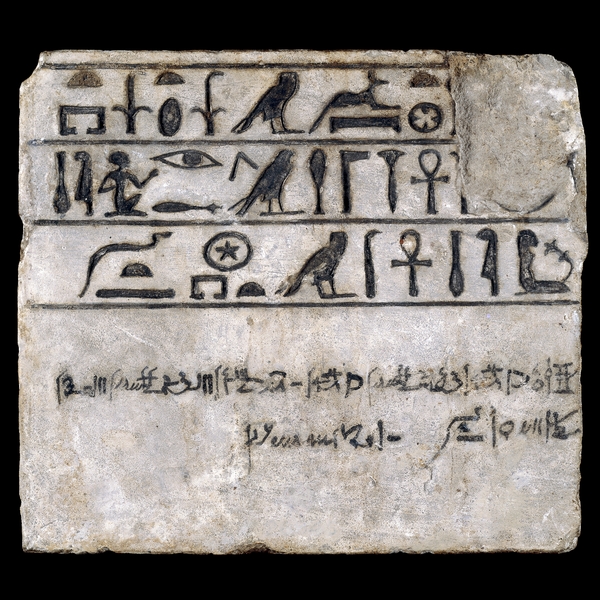
[Image: An otherwise unrelated photo of a “Stela fragment of Horiaa,” courtesy of the British Museum].

In any case, The Clerkenwell Kid keeps upping the ante. Remember those five teleportation chambers? Well, there were actually seven!

In dark collaboration, this legend goes, Bonomi and Warner set about constructing “a transportation grid around London” that would “reduce the time taken to travel the large distances of the vast, congested metropolis. To this end they built seven Egyptian teleportation chambers in the most suitable places they could find—in each of the seven new cemeteries that had been built in the capital from 1839.”

The Kid has a great phrase for this, referring to it as “the London funerary teleportation grid.” Surrounding the city like a seven-pointed star, these tombs formed a kind of mortuarial diagram—an urban-scale morbid force-field—that could zap people back and forth through Greenwich space-time.

It’s worth pointing out, however, that the rumors continue, leaking beyond the borders of Old Blighty, to suggest that there is yet another such transportation monument—but it’s over the English Channel, in Paris.

Even within the complicated mythology of these urban legends, this Parisian tomb is an outlier, but it brings with it an interesting plot development. That is, under the cover of developing something like a primitive military radar system that could protect the English Channel from foreign invasion, occult architects and Egyptologists were actually bilking the defense establishment to amass funds and construct this teleportation grid, scattered throughout the war-shadowed cemeteries of western Europe.

[Image: An otherwise unrelated photo of the “Coffin of Tpaeus,” courtesy of the British Museum].

Now all we need to do is uncover an undocumented Egyptian tomb somewhere in a rainy Swiss mountain churchyard or in the fog-shrouded hills outside Turin, perhaps designed by a bastard child of Bonomi, and we can help keep this urban legend alive…

Until then, for more information check out these three posts over at The Clerkenwell Kid.