The Landscape Architecture of Crisis

[Image: An only conceptually related photo from a volcano in Java, taken by Reuben Wu].

The invisibility of underground fires makes them particularly surreal and difficult to imagine: flames with no real room to flicker, moving slowly forward through the planet, relentlessly burning their way ever deeper into the landscape from below.

Whether that fire was caused by the ignition of a coal seam—as in Centralia or, my favorite example, in Australia’s Burning Mountain—or because subterranean strata of human-generated trash have caught fire, these events make for an especially spectral presence in the landscape. They remain entirely out of view except for the haze of their atmospheric effects, as they fill the air above with toxic gases.

This already strange phenomenon is hitting a whole new level of apocalyptic artificiality in a landfill outside St. Louis, Missouri. There, an underground fire is at risk of igniting old nuclear waste from U.S. weapons programs.

As the AP reports, “Beneath the surface of a St. Louis-area landfill lurk two things that should never meet: a slow-burning fire and a cache of Cold War-era nuclear waste, separated by no more than 1,200 feet.”

It’s worth pointing out that “the waste was illegally dumped in 1973 and includes material that dates back to the Manhattan Project, which created the first atomic bomb in the 1940s.” In many ways, then, this was an obvious problem just waiting to reassert itself.

An “emergency plan” has now kicked into gear to help fend off the potentially “catastrophic event” that would occur if these two things meet—the dormant deposit of nuclear waste and the respiring event of the underground fire.

In effect, this plan is a massive undertaking of design: it is landscape architecture as a tool against crisis.

New structures called “interceptor wells” are being constructed, for example, to maintain a kind of thermal quarantine line between the fire and the nuclear waste—however, the fire already appears to have circumvented these buffers, at least according to the AP. For example, some safety reports from the site have allegedly “found radiological contamination in trees outside the landfill’s perimeter,” implying that the nuclear waste has already, in at least some capacity, entered the biosphere, and “another showed evidence that the fire has moved past two rows of interceptor wells and closer to the nuclear waste.”

Yet another report ominously claims that the management company in charge of the landfill simply “does not have this site under control.”

This slow-burning apocalypse brings to mind our earlier look at writer Robert Macfarlane’s recent work on the vocabulary we use for certain landscapes, how words come and go over time and how spatial atmospheres can be verbally communicated.

Is there a proper landscape term for a subterranean catastrophe ready to burst through the surface of the world and forever change things for the worse in its immediate vicinity?

(Thanks to Ben Brockert and Kevin Iris for the tip!)

Occult Infrastructure and the “Funerary Teleportation Grid” of Greater London

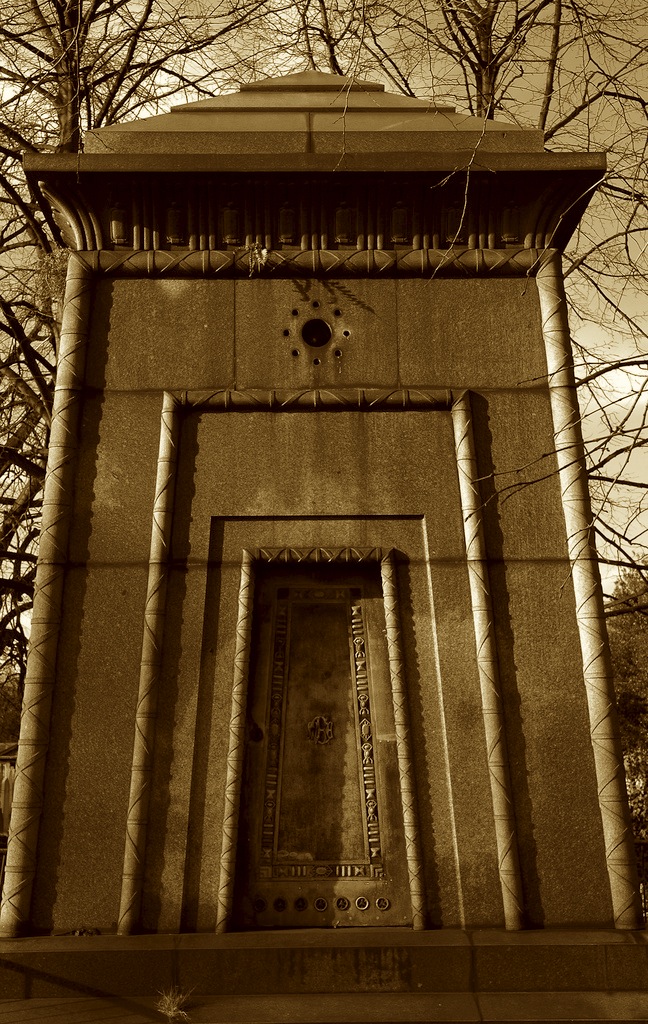
Speaking of cracks in space-time, an urban legend I love is the one about a tomb in Brompton Cemetery, London, allegedly designed by Egyptologist Joseph Bonomi and rumored to be a time machine.

[Image: Via The Clerkenwell Kid].

A sadly now-defunct blog called The Clerkenwell Kid is a great resource for this. There, we read that Bonomi “traded as an archaeological artist but is thought to have been a tomb raider”:

He is also generally considered to have been the designer of the Egyptian styled “Courtoy” tomb in Brompton cemetery which was ostensibly intended to be the final resting place of “three spinsters”. An interesting legend has grown up around this mausoleum because it is the only one in the cemetery for which there is no record of construction. This, together with Bonomi’s obsession with the afterlife (reflected in the hieroglyphs on the tomb), have been held by some to be evidence that it is not a tomb at all but a time machine and that the three spinsters, if they existed at all, were in fact his time travelling sponsors.

The correct question to ask here is not: is this true? Is this tomb really a time machine? The correct question to ask here is: how freaking cool is this?

The Clerkenwell Kid then goes one better, however, claiming that this urban legend is wrong—because it isn’t ambitious enough.

In fact, we’re told, the tomb was actually one of five such chambers, designed and constructed by Bonomi in an occult conspiracy with his colleague, Samuel Alfred Warner.

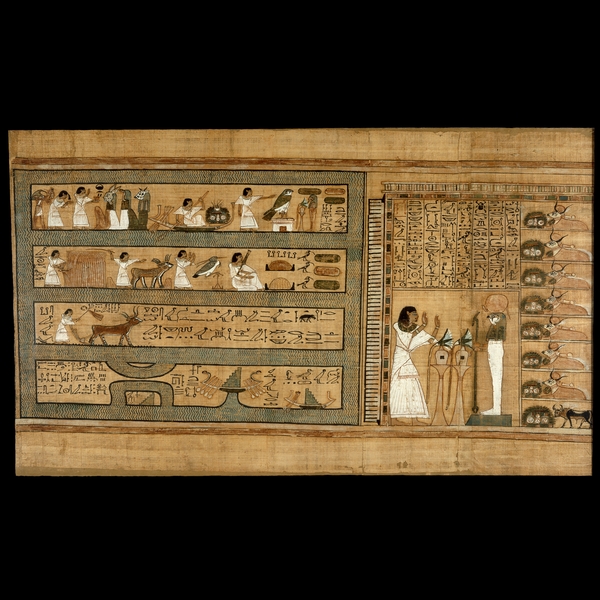
[Image: An otherwise unrelated photo of the Egyptian Book of the Dead, courtesy of the British Museum].

“Amongst several other inventions,” the Kid tells us, “Warner claimed to have developed a mysterious missile capable of destroying ships from a distance”:

The Royal Navy were convinced enough by his demonstrations to pay him to develop this new weaponry but proved unable to reproduce his results independently. This was because what Warner had allegedly discovered (with the help of ancient knowledge gained by Bonomi in Egypt) was an occult way of “teleporting” a bomb a short distance—I suppose you could call it a “psychic torpedo.”

Again, the interest for me here is not whether or not people actually were teleporting themselves—let alone submarine torpedoes!—back and forth through time using Egyptological monuments hidden in London cemeteries.

The interest for me, instead, is at least two-fold: one, how awesome a story this is, and how much I want to tell everyone about it, and, two, how urban infrastructure always seems to inspire, catalyze, or emblematically come to represent these sorts of unexpected narrative investments.

We could say it’s the paranoia of infrastructure: the belief that there is always a bigger story we don’t know, or that someone deliberately isn’t telling us, about how our cities came to be the way they are today. We see this in everything from the water-theft politics of Chinatown to the high-speed rail conspiracies of True Detective Season 2, to this teleportation chamber disguised in plain sight in Brompton Cemetery.

The fact that this story has an atmosphere of the occult only makes literal the notion that the real histories of our cities, the true tales of backstage deals, hidden interests, and untold corruption that made them what they are, have been purposefully obscured from us—they have been occulted—by mysterious figures who prefer we don’t know.

It’s as if narrative paranoia is the default note of infrastructural investigation.

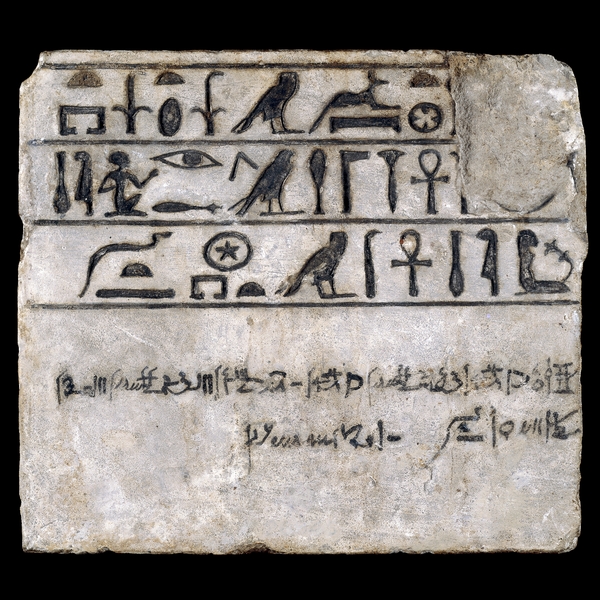
[Image: An otherwise unrelated photo of a “Stela fragment of Horiaa,” courtesy of the British Museum].

In any case, The Clerkenwell Kid keeps upping the ante. Remember those five teleportation chambers? Well, there were actually seven!

In dark collaboration, this legend goes, Bonomi and Warner set about constructing “a transportation grid around London” that would “reduce the time taken to travel the large distances of the vast, congested metropolis. To this end they built seven Egyptian teleportation chambers in the most suitable places they could find—in each of the seven new cemeteries that had been built in the capital from 1839.”

The Kid has a great phrase for this, referring to it as “the London funerary teleportation grid.” Surrounding the city like a seven-pointed star, these tombs formed a kind of mortuarial diagram—an urban-scale morbid force-field—that could zap people back and forth through Greenwich space-time.

It’s worth pointing out, however, that the rumors continue, leaking beyond the borders of Old Blighty, to suggest that there is yet another such transportation monument—but it’s over the English Channel, in Paris.

Even within the complicated mythology of these urban legends, this Parisian tomb is an outlier, but it brings with it an interesting plot development. That is, under the cover of developing something like a primitive military radar system that could protect the English Channel from foreign invasion, occult architects and Egyptologists were actually bilking the defense establishment to amass funds and construct this teleportation grid, scattered throughout the war-shadowed cemeteries of western Europe.

[Image: An otherwise unrelated photo of the “Coffin of Tpaeus,” courtesy of the British Museum].

Now all we need to do is uncover an undocumented Egyptian tomb somewhere in a rainy Swiss mountain churchyard or in the fog-shrouded hills outside Turin, perhaps designed by a bastard child of Bonomi, and we can help keep this urban legend alive…

Until then, for more information check out these three posts over at The Clerkenwell Kid.

A Crack in Space-Time

This is purely promotional, but I wanted to mention that I am up in San Francisco for two nights to speak as part of Pop-Up Magazine, a live-event offshoot of the new publication California Sunday; I’m joining a stellar group of other writers, photographers, broadcasters, artists, animators, and more, to talk about one of the stranger and more architecturally interesting figures from my book A Burglar’s Guide to the City, which comes out in April.

I don’t want to say much more about the story I’ll be telling, but it involves endlessly recommitting the same burglary over and over again, falling through “a crack in space-time,” living inside the walls of a Toys“R”Us—and it’s all true.

Tickets are still available for a few of the cities, over on the Pop-Up Magazine website, as we will be leaving San Francisco for a national tour through Portland, Seattle, Chicago, and Brooklyn. Stop by, if you can, and say hello!

Human Chess

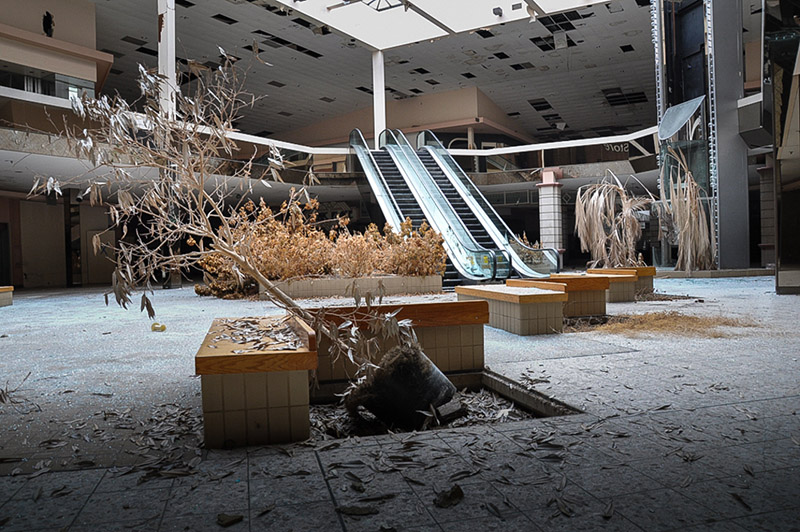
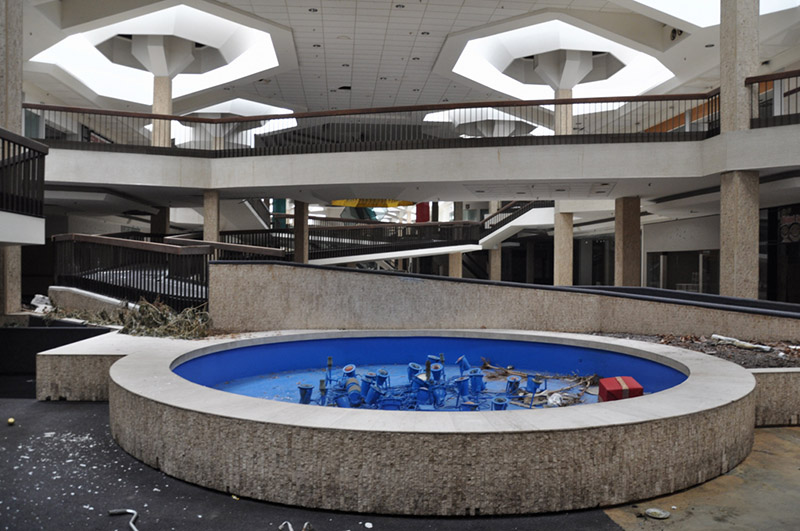
[Image: Photo by Seph Lawless, from his book Autopsy of America].

Many of the ideas being proposed these days for housing international refugees, including families fleeing from the war in Syria, are beginning to sound less like genuine examples of humanitarian outreach and more like a strange new form of hide-and-seek, a bizarre ploy at stashing live human beings in ever-more resourceful locations, like searching for a clever new place beneath your back stairs to store excess home goods.

Three stories, in particular, seem to stand out for this—coming across not as real solutions to human tragedy but as a kind of abstract mathematical exercise.

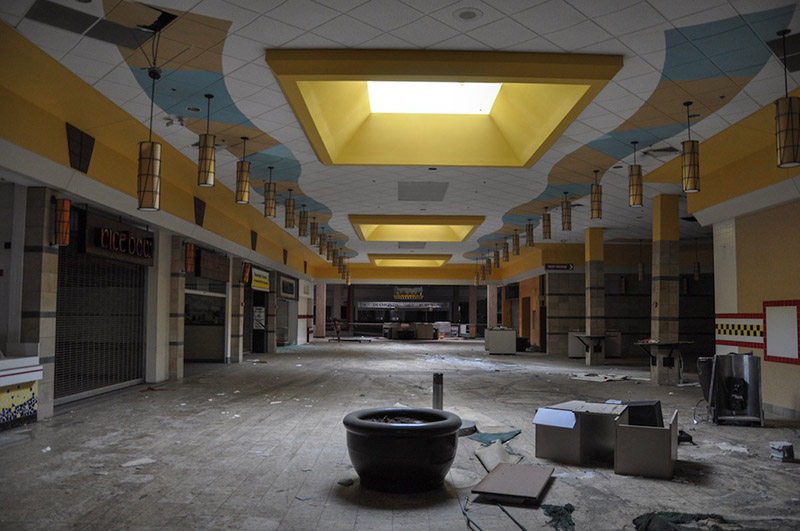
A notable example of this came last year, in the summer of 2014, when FEMA was allegedly looking into housing migrant children—that is, “unaccompanied minors” from countries outside the United States—inside abandoned shopping malls and empty big box stores.

As The New Republic reported at the time, FEMA was searching for examples of an “‘office space, warehouse, big box store, shopping mall with interior concourse, event venues, hotel or dorms, aircraft hangers [sic]’—provided that they are vacant and able to be leased.”

The strange dystopia of this—cramming literally thousands of children who are, at least temporarily, orphans, into derelict shopping malls, empty hotels, and disused office complexes—outweighs the potential cleverness of finding, hidden in plain sight, an architectural resource ripe for humanitarian reuse.

[Image: Photo by Seph Lawless, from his book Autopsy of America].

As FEMA themselves make clear, such facilities are only useful if they are already outfitted with showers and bathrooms, among other bare necessities; retrofitting them for this purpose, while knowing that the day you need to put those showers to use might never arrive, would be both financially improbable and ominously permanent.

More optimistically, however, consider the case of dual-use infrastructure as put to use during events of mass quarantine. As Georges Benjamin, executive director of the American Public Health Association, explained in a joint interview with BLDGBLOG and Edible Geography back in 2009, large architectural complexes not only can be designed for these sorts of secondary uses, but it’s actually a very good idea to do so.

While Benjamin’s primary example in that interview was a sports stadium outfitted for secondary use as a quarantine ward or post-earthquake gathering place, you could quite easily imagine entire shopping malls being designed such that they could be repurposed, with minor fuss, as de facto community centers following major events of social upheaval.

After all, many of today’s malls, schools, airports, and office complexes already contain—or even double as—tornado shelters. Surely, FEMA’s proposal is just a more ambitious continuation of this idea, scaling it up to the point that housing 500 children in an abandoned Circuit City would actually make architectural sense? If successful, it would give the idea of “big box reuse” a whole new valance.

Yet the reality of this threatens to be far less polished than such a speculative vision might otherwise suggest.

Indeed, it’s hard to shake the feeling that this could become a clear case of good architectural intentions gone surreally awry. We might well create one of the emptiest childhood experiences imaginable, a Ballardian architectural prism through which eventually tens of thousands of “unaccompanied minors” would be filtered into something vaguely resembling adulthood. Unaccompanied minors, raised by abandoned malls.

[Image: Photo by Seph Lawless, from his book Autopsy of America].

In any case, the ill-conceived plans don’t end there.

As the Syrian refugee crisis accelerated over the past two months, the idea of housing refugees on Svalbard—a sparsely populated archipelago north of the Arctic Circle, known not for its strong sociopolitical infrastructure but for its polar bears—was suggested by Norwegian politicians.

Exactly how Svalbard would be transformed overnight into a land of economic opportunity was not discussed as part of the plan—although, unbelievably, coal mining was suggested as one possible route toward assimilation and success.

Moving broken families from the Middle East to what is, in effect, the North Pole so that they can mine coal there in an impossibly remote frozen landscape surrounded by polar bears sounds like something Josef Stalin would have come up with, lending even more of an air of unexpected inhumanity to these so-called “plans.”

But a third option, while seeming at first to be the most sensible example of this sub-genre of human chess, is possibly the strangest. “Let The Syrians Settle Detroit,” an op-ed for The New York Times suggested last month. The underlying logic is sound: the city’s population has plummeted, there is already a strong Muslim community in Michigan, and refugees very often exhibit strong entrepreneurial tendencies.

So far, so good.

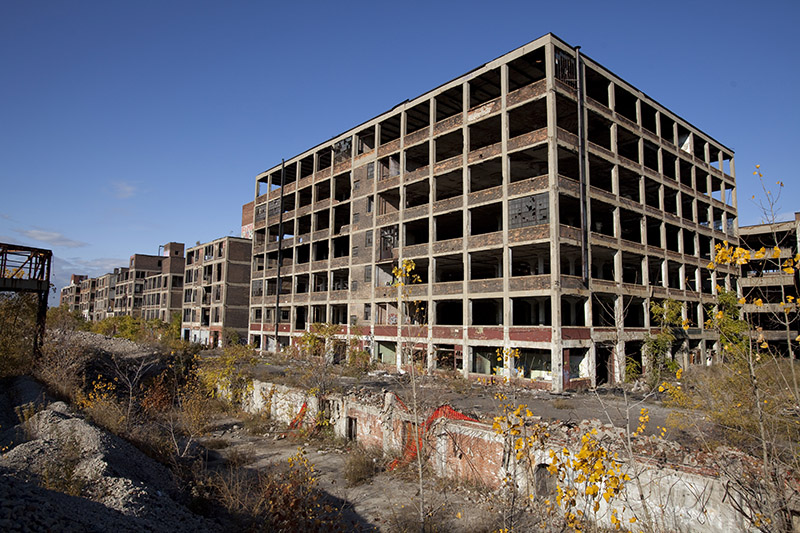
[Image: Abandoned Packard plant in Detroit, via Wikipedia].

On the other hand, if Detroit’s only problem was population, then other people would already be moving back to fill that city’s wide-open economic niches; in fact, this has been the purported goal of many recent programs aimed at inspiring millennial artists and entrepreneurs to move there from overpriced cities such as San Francisco and Brooklyn and “revitalize” the region, an aim not without its own complex racial and political complications.

Worse, though, Detroit was not carefully moth-balled and set aside with packing tape for future generations simply to move in and reclaim it. It’s not a turn-key urban fantasy lying in wait for someone to come back, flip a switch, and turn the lights—and the police, and the fire departments, and the healthcare—back on. Its infrastructure is in decline; its streetlights and even its water supply are gradually being shut off; its houses are being torn down by the hundreds.

Randomly settling 50,000 Syrian refugees there straight from a war zone would mean depositing people in a condition of notoriously rapid urban decline, without any real cultural or economic context in which to orient themselves.

My own suggestion here is not in any way that a war zone in the Middle East would be preferable to living in Detroit—although it is worth noting that the premise of this program is precisely that only people fleeing war would want to live there.

However, people aren’t just game pieces you move from one place to another, swept up by your own architectural cleverness. If they were, well, then let’s put refugees on abandoned oil rigs in the Gulf of Mexico, or move them all to Centralia, gas masks thrown in for free. Let’s settle them in abandoned trailers as fracking “man camps” go empty.

Realizing that something is currently uninhabited does not mean that you can just fill it with human beings and expect a new society to take root. This is a geometric exercise—an experiment in space-packing—not a humanitarian plan.

Finding new homes—whether or not this “solves” the underlying geopolitical problem—is morally and economically necessary, and it will benefit everyone; but turning involuntary mass migration into a new form of architectural science fiction is not the way to go.

The Drowned World

[Image: From Terra Forming: Engineering the Sublime by Adam Lowe and Jerry Brotton].

Artists Adam Lowe and Jerry Brotton’s project Terra Forming: Engineering the Sublime simultaneously explores the history of different geographic projections—including how these have been used to misrepresent and distort the earth’s surface—and at the future of that earth in an era of rising sea levels.

[Image: From Terra Forming: Engineering the Sublime by Adam Lowe and Jerry Brotton].

As Factum Arte explain, their chosen geographic projections offer “a way of engaging with the Earth from different points of view, and reflect historical ways of mapping the world from the Greeks to Google Earth.”

[Image: From Terra Forming: Engineering the Sublime by Adam Lowe and Jerry Brotton].

The projections are milled into beautiful 3D topographic models, with the vertical axis exaggerated to allow for changes in altitude to become visible.

The Andes, for example, become an abrupt spine of skyscraping pinnacles on the edge of an otherwise dead-flat continent, and deep-sea plains become spiky fields of underwater needles and pins.

[Images: From Terra Forming: Engineering the Sublime by Adam Lowe and Jerry Brotton].

As the artists write, “distortion was used because without it the globe’s surface would appear almost totally flat”—which interestingly suggests that representational distortion, with a great deal of irony, is actually central to giving our planet geographic legibility.

To map it or to know it, the implication seems to be, you must first alter it.

[Image: From Terra Forming: Engineering the Sublime by Adam Lowe and Jerry Brotton].

This is only half the project, however.

The artists refer to Terra Forming as “a cartographic response to the advent of the Anthropocene“—which is why the resulting topographic models are then flooded.

[Images: From Terra Forming: Engineering the Sublime by Adam Lowe and Jerry Brotton].

“The installation will mimic the passage of time as well as space,” Factum Arte write, “by flooding the world with water over several days, until we reach current sea levels; the world will then be flooded completely, leaving us with a drowned world, a prescient image for those parts of the world facing rising sea levels, as well as those such as parts of the Arabian Peninsula which is trying to reclaim land from the sea.”

You can watch a short video of the project’s gradual submergence on Vimeo—or embedded below.


And you can read much more about the project over at Factum Arte.

Liquid Quarries and Reefs On Demand

[Image: Micromotors at work, via UCSD/ScienceDaily].

Tiny machines that can extract carbon dioxide from water might someday help deacidify the oceans, according to a press release put out last week by UCSD.

Described as “micromotors,” the devices “are essentially six-micrometer-long tubes that help rapidly convert carbon dioxide into calcium carbonate, a solid mineral found in eggshells, the shells of various marine organisms, calcium supplements and cement.”

While these are still just prototypes, and are far from ready actually to use anywhere in the wild, they appear to have proven remarkably effective in the lab:

In their experiments, nanoengineers demonstrated that the micromotors rapidly decarbonated water solutions that were saturated with carbon dioxide. Within five minutes, the micromotors removed 90 percent of the carbon dioxide from a solution of deionized water. The micromotors were just as effective in a sea water solution and removed 88 percent of the carbon dioxide in the same timeframe.

The implications of this for marine life are obviously pretty huge—after all, overly acidic waters mean that shells are difficult, if not impossible, to form, so these devices could have an enormously positive effect on sea life—but these devices could also be hugely useful in the creation of marine limestone.

As UCSD scientists explain, the micromotors would “rapidly zoom around in water, remove carbon dioxide and convert it into a usable solid form.” A cloud of these machines could thus essentially precipitate the basic ingredients of future rocks from open water.

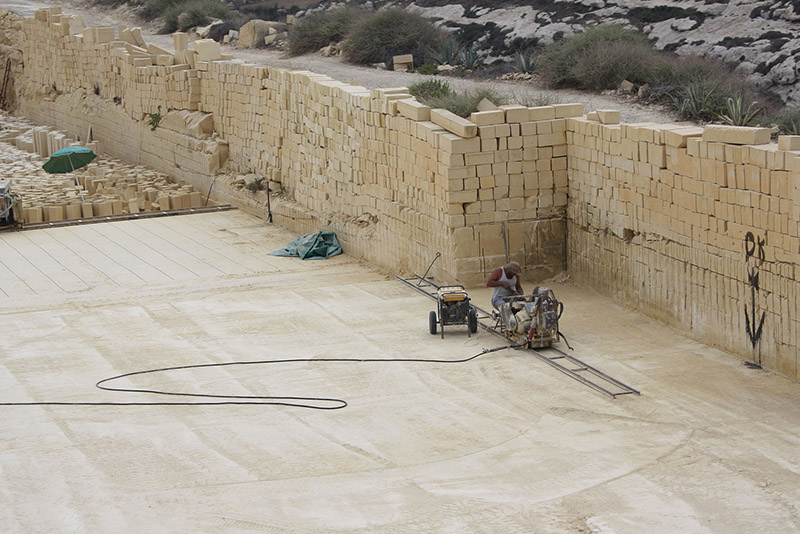
[Image: A Maltese limestone quarry, via Wikipedia].

At least two possibilities seem worth mentioning.

One is the creation of a kind of liquid quarry out of which solid rock could be extracted—a square mile or two of seawater where a slurry of calcium carbonate would snow down continuously, 24 hours a day, from the endless churning of invisible machines. Screen off a region of the coast somewhere, so that no fish can be harmed, then trawl those hazy waters for the raw materials of future rock, later to be cut, stacked, and sold for dry-land construction.

The other would be the possibility of, in effect, the large-scale depositional printing of new artificial reefs. Set loose these micromotors in what would appear to be a large, building-sized teabag that you slowly drag through the ocean waters, and new underwater landforms slowly accrete in its week. Given weeks, months, years, and you’ve effectively 3D-printed a series of new reefs, perfect for coastal protection, a new marine sanctuary, or even just a tourist site.

In any case, read more about the actual process over at UCSD or ScienceDaily.

Subterranean Saxophony

[Image: Photo by Steve Stills, courtesy of the Guardian].

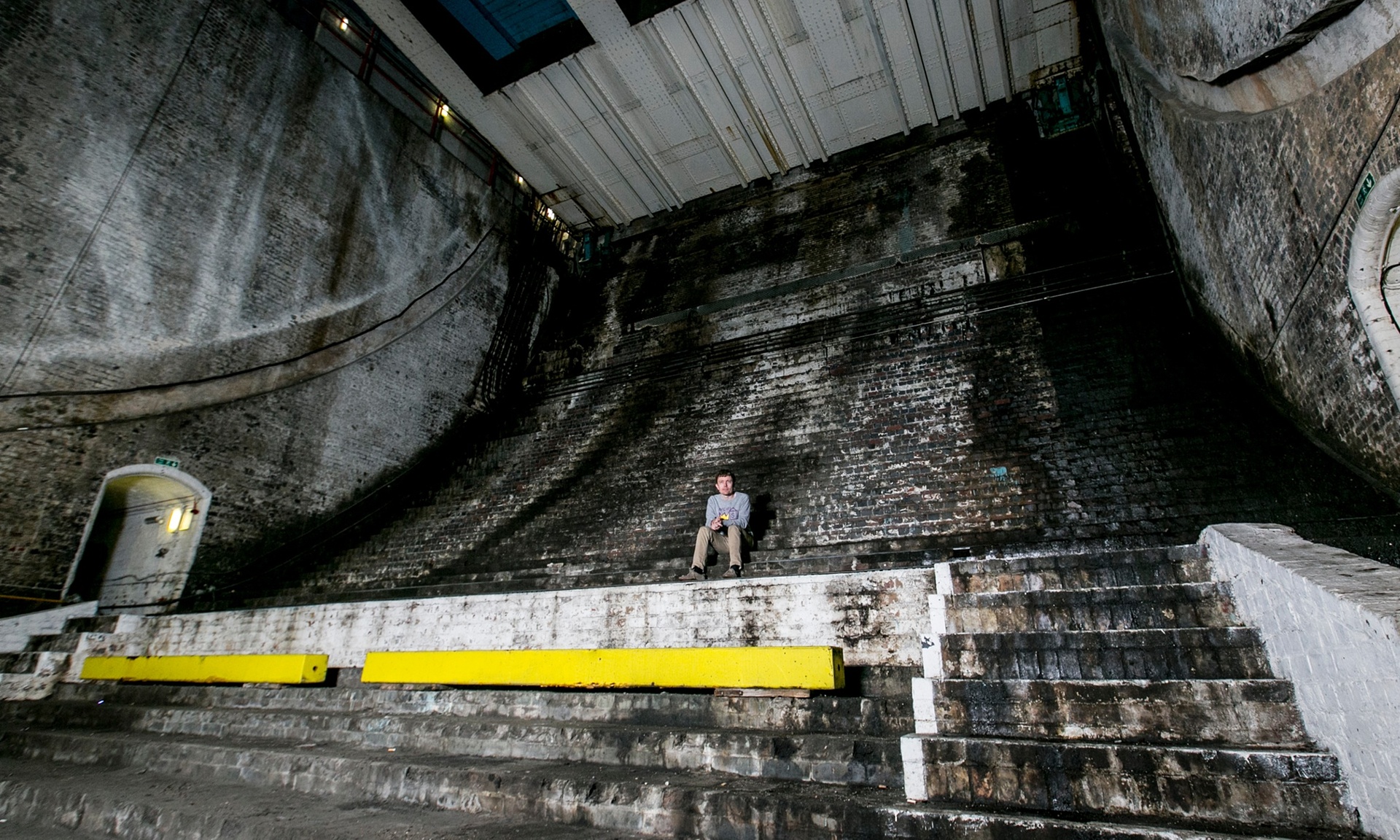
Over in London later today, the Guardian explains, composer Iain Chambers will premiere a new piece of music written for an unusual urban venue: “the caverns that contain the counterweights of [London’s Tower Bridge] when it’s raised.”

The space itself has “the acoustics of a small cathedral,” Sinclair told the newspaper, citing John Cage as an influence and urging readers “to listen to environmental sounds and treat them as music,” whether it’s the rumble of a bridge being raised or the sounds of boats on the river.

In fact, Chambers will be performing one of Cage’s pieces during the show tonight—but, alas, I suspect it is not this one:

It is rumored that the final, dying words of composer John Cage were: “Make sure they play my London piece… You have to hear my London piece…” He was referring, many now believe, to a piece written for the subterranean saxophony of London’s sewers.

Read much more at the Guardian—or, even better, stop by tonight for a live performance.

(Spotted via @nicolatwilley).

Abandoned Mines, Slow Printing, and the Living Metal Residue of a Post-Human World

“High in the Pyrenees Mountains,” we read, “deep in abandoned mines, scientists discovered peculiar black shells that seem to crop up of their own accord on metal surfaces.”
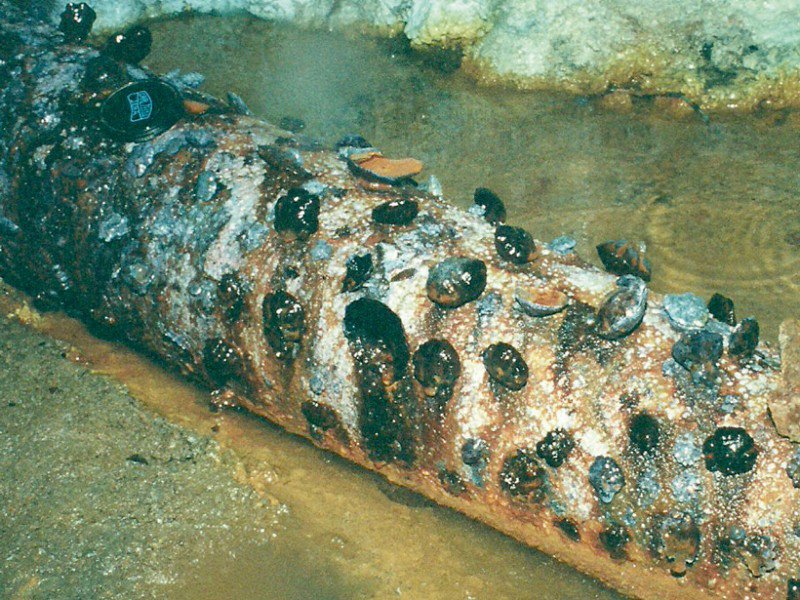
[Image: Metal shells growing in the darkness of abandoned mines; photo by Joan Santamaría, via Eos].

No, this is not a deleted scene from Jeff VanderMeer’s Southern Reach trilogy; it’s from research published in the Journal of Geophysical Research: Biogeosciences, recently reported by Eos.

It turns out that, under certain conditions, subterranean microbes can leave behind metallic deposits “as part of their natural metabolism.” Abandoned mines are apparently something of an ideal environment for this to occur within, resulting in “a rapid biomineralization process that sprouts iron-rich shells from the surface of steel structures.”

These then build up into reef-like deposits through a process analogous to 3D-printing: “Electron microscopy revealed small-scale, fiber-like crystals arranged into lines growing outward from the steel surface. The shells appear to be formed layer by layer, with crystal size and composition varying across layers.”

There are many, many interesting things to highlight here, which include but are not limited to:

Slow Printing

We could literalize the analogy used above by exploring how a controlled or guided version of this exact same process could be used as a new form of biological 3D-printing.

To put this another way, there is already a slow food movement—why not a slow printing one, as well?

Similar to the project John Becker and I explored a while back, using genetically-modified bees as living printheads, damp, metal-rich environments—microbial ovens, so to speak—could be constructed as facsimile mines inside of which particular strains of microbes and fungi would then be cultivated.

Geometric molds would be introduced as “seed-forms” to be depositionally copied by the microbes. Rather than creating the abstract, clamshell-like lumps seen in the below photograph, the microbes would be steered into particular shapes and patterns, resulting in discrete, recognizable objects.

Boom: a living 3D-printer, or a room of specially cultivated humidity and darkness out of which strange replicant tools and objects could be extracted every few years. At the very least, it would make a compelling art project—an object-reef sprouting with microbial facsimiles.
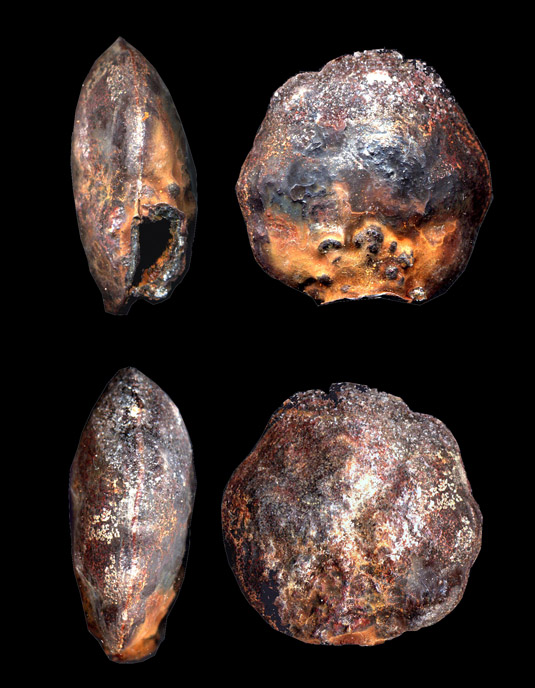
[Image: Metal shells growing in the darkness of abandoned mines; photo by Nieves López-Martínez, via Eos].

Dankness Instrumentalized

Historian David Gissen has written interestingly about the idea of “dankness” in architecture.

In an article for Domus back in 2010, Gissen explained that “dankness”—or “underground humidity,” in his words, a thick atmosphere of mold, rot, and stagnation usually found inside closed, subterranean spaces—was even once posited by architectural historian Marc-Antoine Laugier as a primal catalyst for first inspiring human beings to build cleaner, better ventilated structures—that is, architecture itself, in a kind of long-term retreat from the troglodyte lifestyle of settling in caves.

Dankness, to wildly over-simply this argument, so horrified our cave-dwelling ancestors that they invented what we now call architecture—and a long chain of hygienic improvements in managing the indoor atmospheric quality of these artificial environments eventually led us to modernism.

But dankness has its uses. “While modernists generally held dankness in suspect,” Gissen writes, “a few held a certain type of affection for this atmosphere, if only because it was an object of intense scrutiny. The earliest modernist rapprochements with dankness saw it as the cradle of a mythical atmosphere, an atmosphere that preceded modernity.” The “atmospheric depths of the cellar,” Gissen then suggests, might ironically be a sign of architectural developments yet to come:

Today, in the name of environmentalism, architects are digging into the earth in an effort to release its particular climatic qualities. Passive ventilation schemes often involve underground constructions such as “labyrinths” or “thermosiphons” that release the earth’s cool and wet air. The earth that architects reach into is one that has been so technified and rationalized, so measured and considered, that it barely contains mythical or uncanny aspects. However, this return to the earth’s substrate enables other possibilities.

In any case, I am not only quoting this essay because it is interesting and deserves wider discussion; I am also quoting all this in order to suggest that dankness could also be instrumentalized, or tapped as a kind of readymade industrial process, an already available microbial atmosphere wherein metal-depositing metabolic processes pulsing away in the dankest understructures of the world could be transformed into 3D-printing facilities.

The slow printheads for long-term object replication, mentioned above, would be fueled by and dependent upon Gissen’s spaces of subterranean humidity.

Heavy Metal Compost

If it is too difficult, too unrealistic, or simply too uselessly speculative to consider the possibility of 3D-printing with microbes, you could simply eliminate the notion that this is meant to produce recognizable object-forms, and use the same process instead as a new kind of compost heap.

Similar to throwing your old banana peels, coffee grounds, apple cores, and avocado skins into a backyard compost pile, you could throw metallic waste into a Gissen Hole™ and wait for genetically-modified microbes such as these to slowly but relentlessly break it all down, leaving behind weird, clamshell-like structures of purified metal in their wake.

Cropping teams would then climb down into this subterranean recycling center—or open an airlock and step inside some sort of controlled-atmosphere facility tucked away on the industrial outskirts of town—to harvest these easily commodified lumps of metal. It’d be like foraging for mushrooms or picking strawberries.
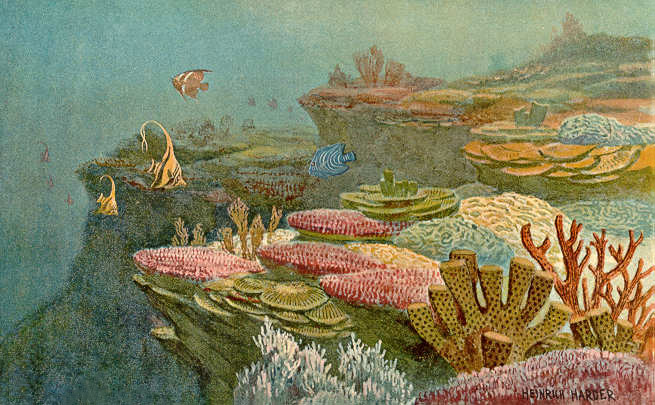
[Image: An “ancient coral reef,” illustrated by Heinrich Harder].

The Coming Super-Reef

Finally, this also seems to suggest at least one fate awaiting the world of human construction long after humans themselves have disappeared.

Basements in the ruined cores of today’s cities will bloom in the darkness with ever-expanding metallic reefs, as the steel frames of skyscrapers and the collapsed machinery of the modern world become source material—industrial soil—for future metal-eating microbes.

Quietly, endlessly, wonderfully, the planet-spanning dankness of unmaintained subterranean infrastructure—in the depths of Shanghai, London, New York, Moscow—humidly accumulates these strange metallic shells. Reefs larger than anything alive today form, crystallized from the remains of our cities.

A hundred million years go by, and our towers are reduced to bizarre agglomerations of metal—then another hundred million years and they’ve stopped growing, now hidden beneath hundreds of meters of soil or flooded by unpredictable shifts of sea level.

Clouds of super-fish unrecognizable to today’s science swim through the grotesque arches and coils of what used to be banks and highways, apartment blocks and automobiles, monstrous and oyster-like shells whose indirect human origins no future paleontologist could realistically deduce.

Forest Megaphone

[Image: Photo by Tõnu Tunnel].

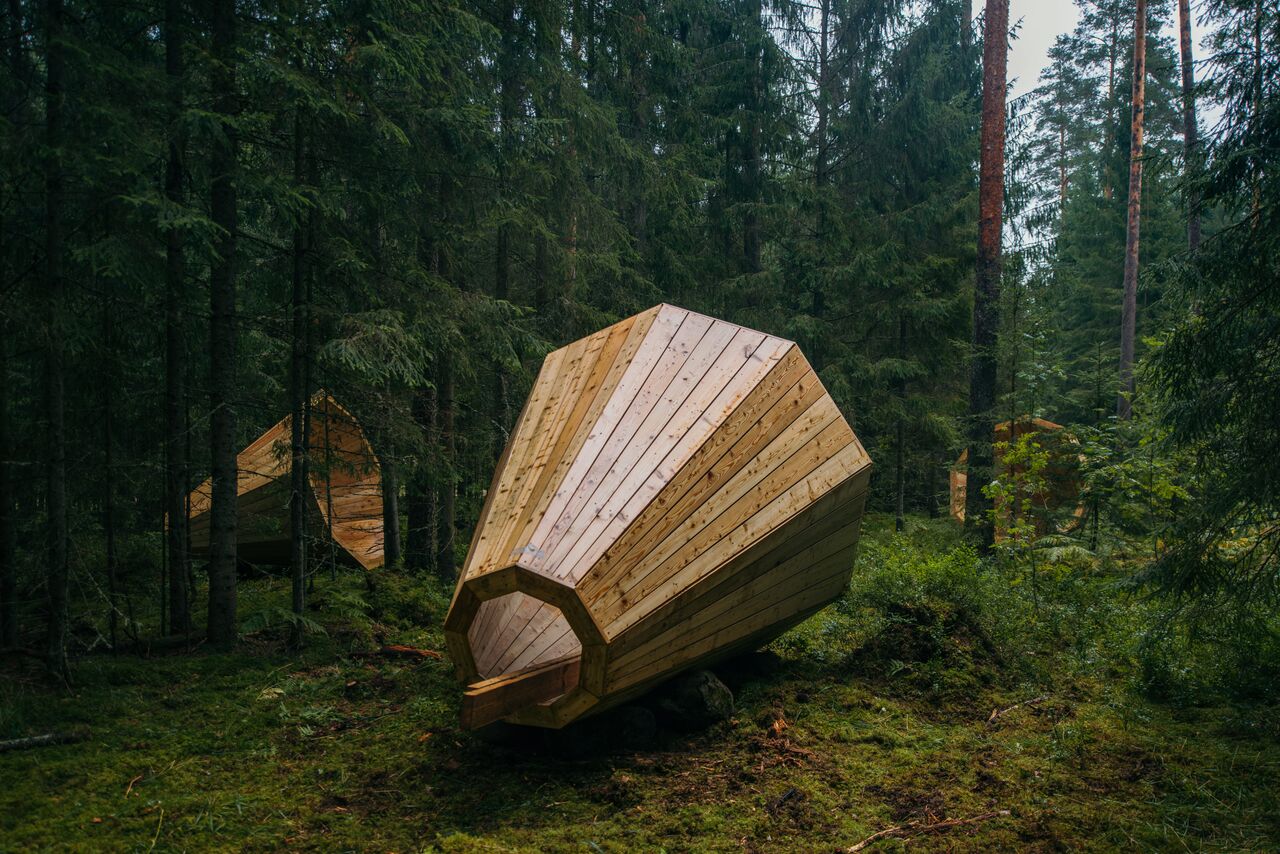
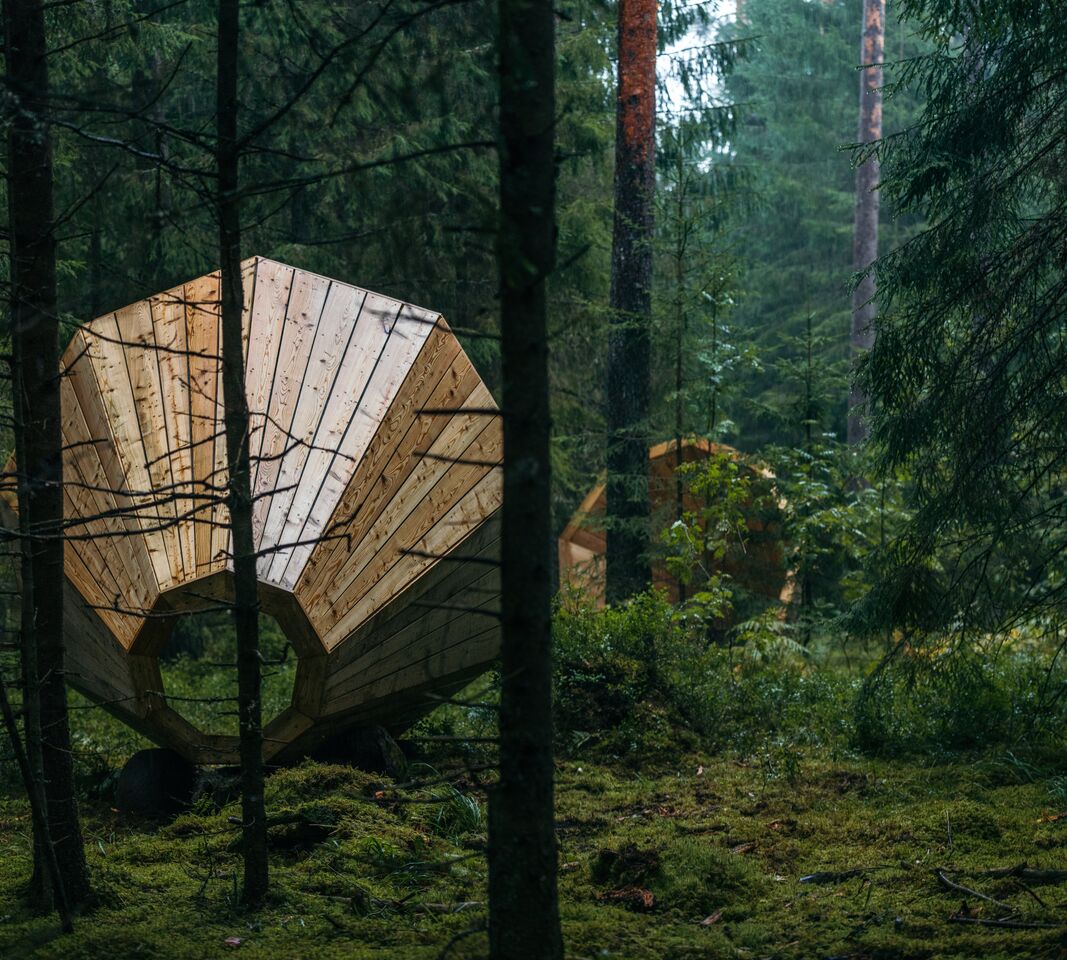
These architectural objects are “gigantic wooden megaphones” for the forest, part of an acoustic installation in Estonia’s gorgeous Pähni Nature Centre for amplifying the sounds of the landscape.

[Image: Photo by Tõnu Tunnel].

“According to interior architect Hannes Praks,” we read in a newly published press release, “who leads the Interior Architecture Department of the [Estonian Academy of Arts] that initiated the installation project, the three-metre diameter megaphones will operate as a ‘bandstand’ for the forest around the installation, amplifying the sounds of nature.”

The actual design is by a student named Birgit Õigus.

[Image: Photo by Tõnu Tunnel].

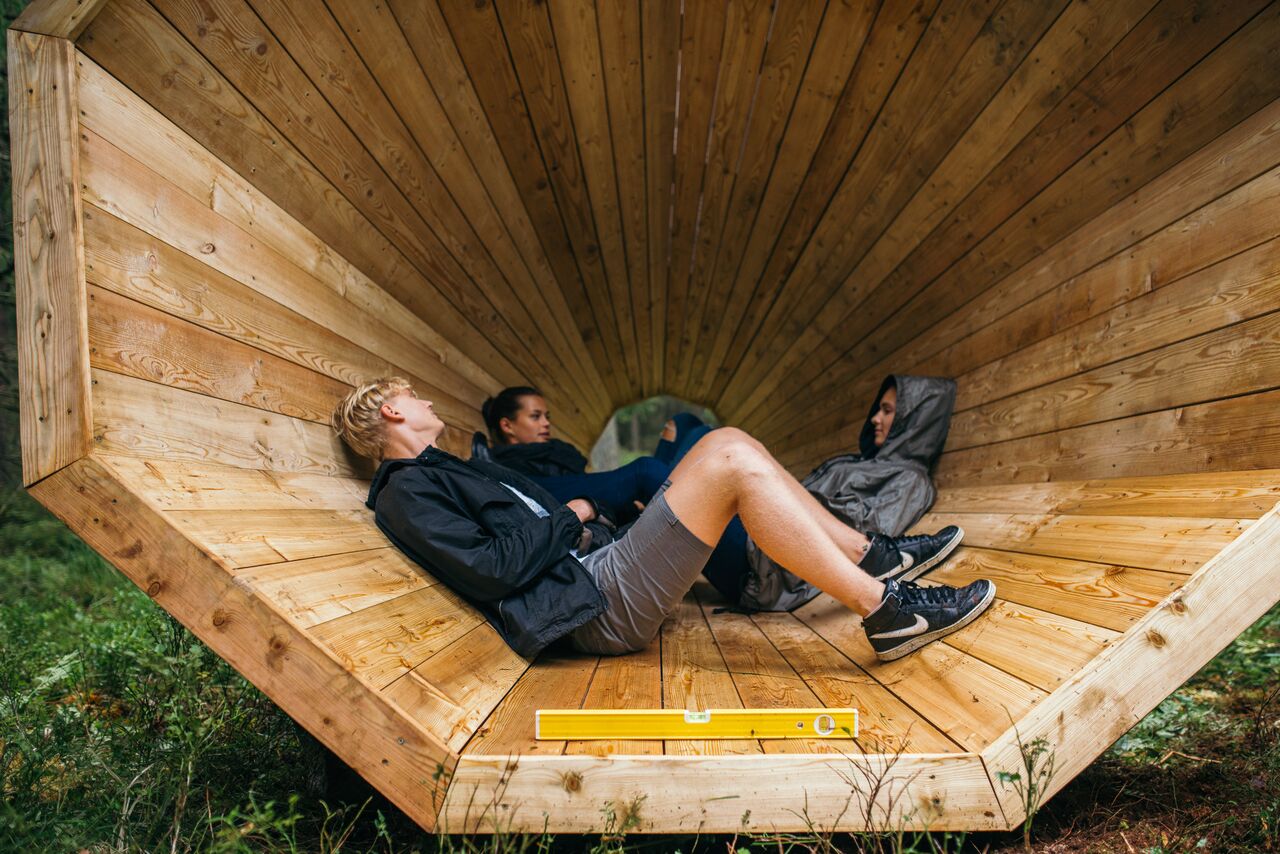
Part building, part furniture, part recreational folly, they’re meant to focus visitor attention on the smallest acoustic details of the site—rainfall, branches brushing against one another in the breeze, distant footsteps, thunder.

[Image: Photos by Tõnu Tunnel].

Sit in them, read books, whisper to friends, listen to birds.

[Image: Photo by Tõnu Tunnel].

Not having visited these in person, I can’t speak to their performance—i.e. whether they function as planned—and the relatively orderly placement of each structure in the woods might very well lead to some unfortunately conservative acoustic effects.

[Image: Photo by Tõnu Tunnel].

Nonetheless, it’s a great idea for a project, and the geometric simplicity of the stained timber frame is compelling.

[Image: Photo by Tõnu Tunnel].

Of course, these bring to mind the so-called “acoustic mirrors” of coastal Britain that we looked at here more than a decade ago.

[Image: Photo by Tõnu Tunnel].

In turn, makes me wonder how these forest megaphones might appear six or seven decades from now, when small groups of hikers stumble upon the moss-covered forms of this old acoustic infrastructure, trying to determine amongst themselves if the strange audio effects and interrupted echoes they notice still filtering through the wooden forms are a curious accident or an engineered goal.

[Image: Photo by Tõnu Tunnel].

Water & Power

[Image: Via the Library of Congress].

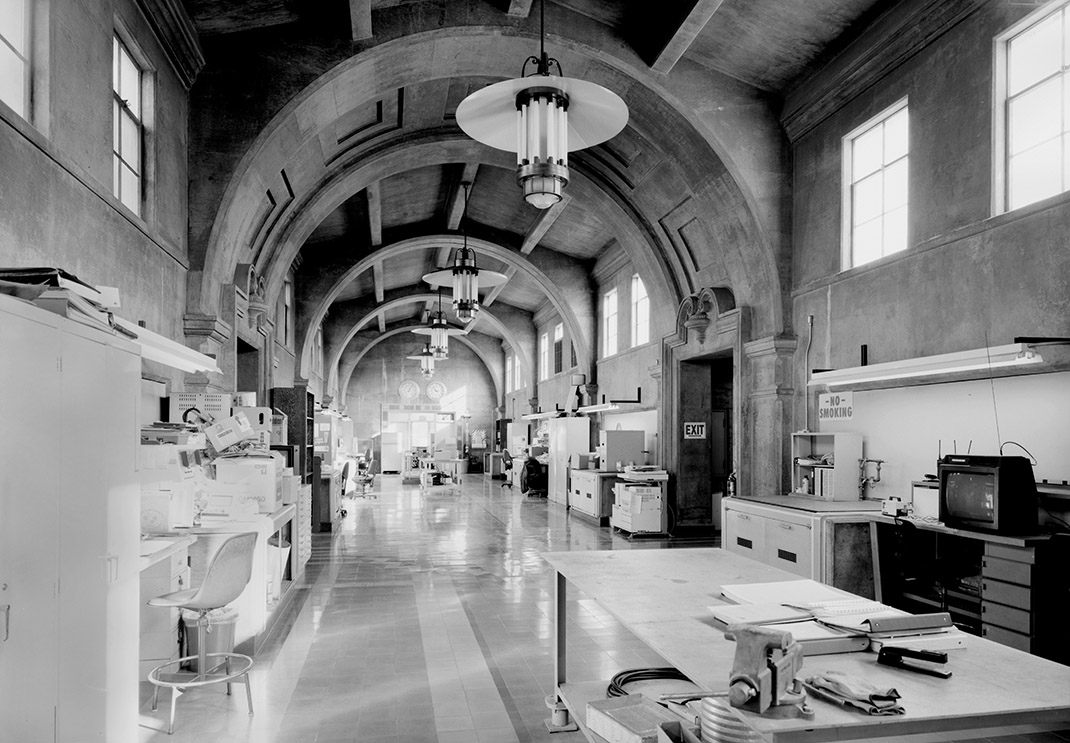
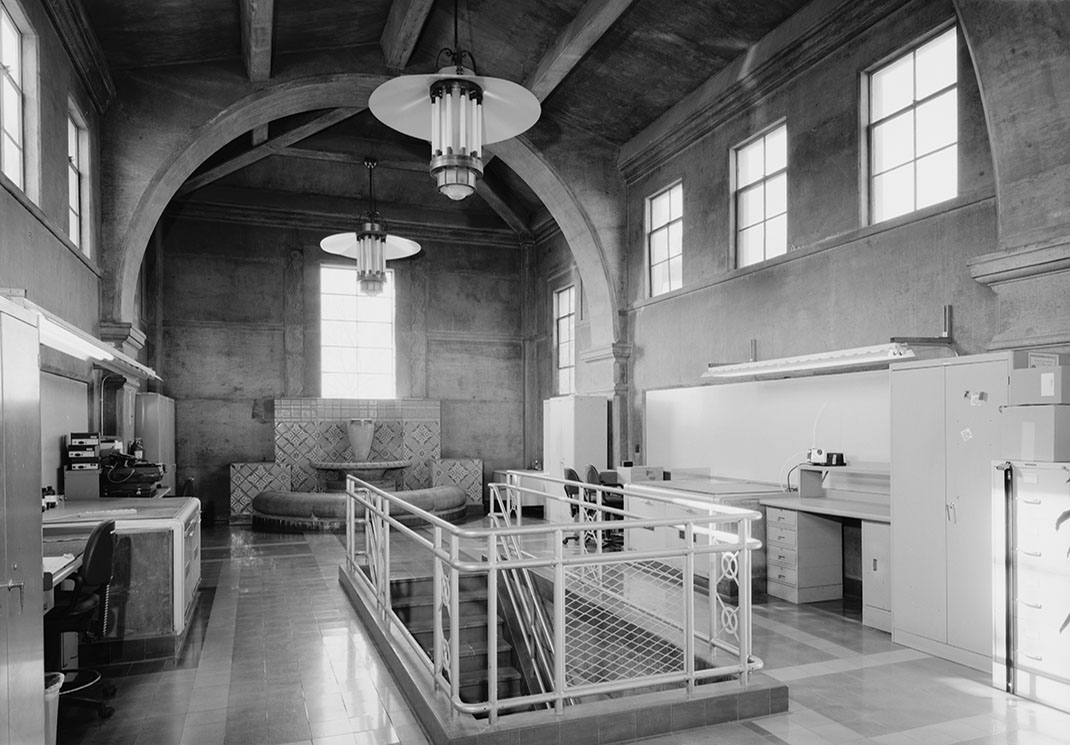
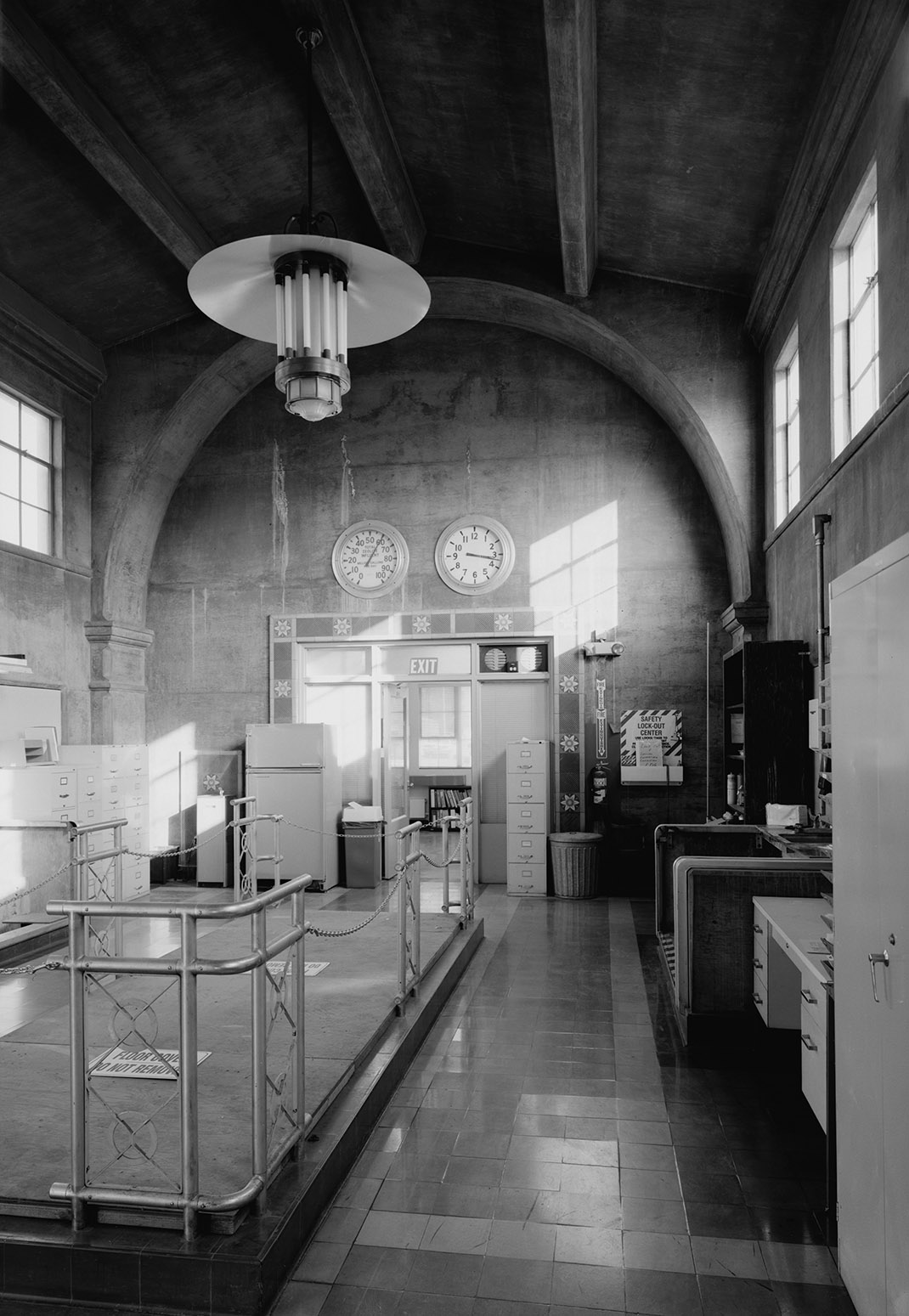
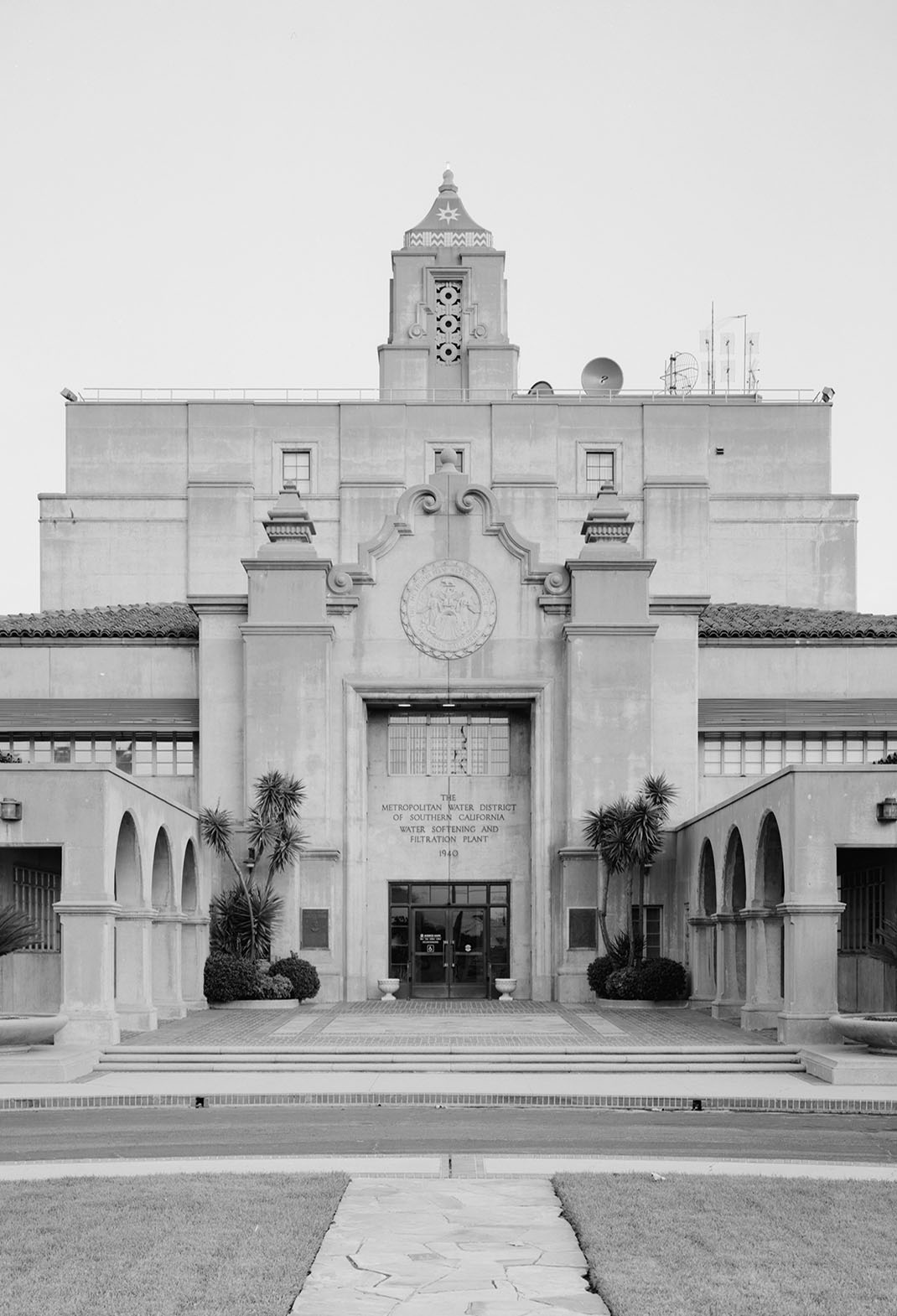
While going through a bunch of old photos of Los Angeles on the Library of Congress website for a project I’m doing at USC this year, I was amazed by these interior shots of the F. E. Weymouth Filtration Plant at 700 North Moreno Avenue in L.A.

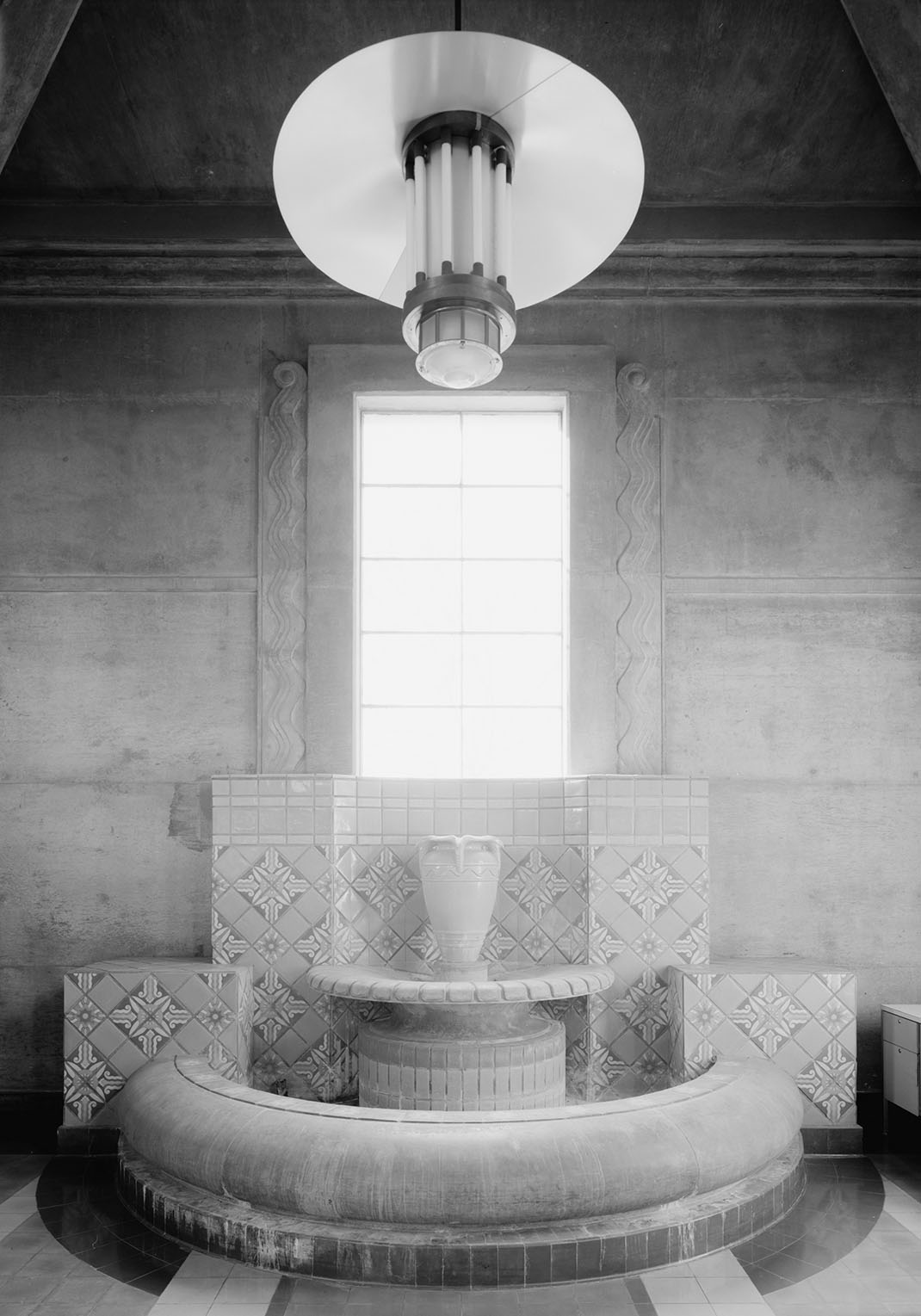
Despite being designed for the administration of an urban water-processing site, the interiors seem to play with some strange, Blade Runner-like variation on Byzantine modernism, where federalist detailing meets a hydrological Babylon.

[Image: Via the Library of Congress].

As the open plan interior of a contemporary home, this place would almost undoubtedly show up on every design website today—imagine a better railing on the central staircase, a galley kitchen on one side, a bed lit by retro-styled fluorescent tubes at the far end, some bold moments of color—but it’s just a piece of everyday municipal infrastructure.

[Image: Via the Library of Congress].

In any case, continuing the vaguely sci-fi feel, there is even a tiled fountain—a Mediterranean concession to the building’s role in water filtration—on one wall, emphasized by these amazing lighting features, yet it looks more like a film set, both ancient and futuristic.

[Image: Via the Library of Congress].

Alas, I’m not a huge fan of the exterior, although it is, in fact, a fairly amazing example of municipal design gone more sacred than profane. But an equally streamlined modernism in keeping with those interiors would have made this place totally otherworldly.

[Image: From the Library of Congress].

Finally, the marbled lobbies continue the surreal mix-up of styles, eras, and materials with something that could perhaps be described as Aztec corporatism with its huge graphic seal and other geometric motifs.

[Image: From the Library of Congress].

For shots of the actual waterworks, click through to the Library of Congress.

Typographic Forestry and Other Landscapes of Translation

[Image: The cover for About Trees, edited by Katie Holten].

Artist Katie Holten—who participated in “Landscapes of Quarantine” a few years back—has just published an interesting book called About Trees.

It is essentially an edited compilation of texts about, yes, trees, but also about forests, landscapes of the anthropocene, unkempt wildness, altered ecosystems, and, more broadly speaking, the idea of nature itself.

It ranges from short texts by Robert Macfarlane—recently discussed here—to James Gleick, and from Amy Franceschini to Natalie Jeremijenko. These join a swath of older work by Jorge Luis Borges, with even Radiohead (“Fake Plastic Trees”) thrown in for good measure.

It’s an impressively nuanced selection, one that veers between the encyclopedic and the folkloric, and it has been given a great and memorable graphic twist by the fact that Holten, working with designer Katie Brown, generated a new font using nothing less than the silhouettes of trees.

Every letter of the alphabet corresponds to a specific species of tree.

[Image: The tree typeface from About Trees, edited by Katie Holten].

This has been put to good use, re-setting the existing texts using this new font—with the delightful effect of seeing the work of Jorge Luis Borges transcribed, in effect, into trees.

This has the awesome implication that someone could actually plant this: a typographic forestry of Borges translations.

[Image: Borges, translated into trees, from About Trees].

Speculative short stories realized as ornamental thickets in the backyards of arboreally inclined landowners.

Given all the urban parks, hedge mazes, and scientifically accurate themed gardens of the world—two of my favorites being the exquisite Silver Garden at Longwood Gardens and the scifi otherworldliness of the Desert Garden at the Huntington—surely there is room for a kind of translation landscape?

Stories and fables—koans, slogans, poems, wisecracks—planted as cryptoforests, literary labyrinths you could somehow, impossibly, read provided you know what each species is meant to signify.

Just take Holten’s typeface as a new kind of planting guide, and see what landscapes might result.

[Image: From About Trees].

Holten’s About Trees is available for purchase, of course, if you want to check it out; in the meantime, I’ll keep my fingers crossed that someone actually implements a typographic grove somewhere, a planted language of texts flipped into readable tree-signs, sequenced using the font from About Trees.

In fact, recall the myth of Odin discovering the Nordic runes: hanging upside-down from a tree and mistaking, in the especially complicated carpet of roots sprawled out beneath him, the beginnings of a new typeface, an arboreal symbol system that could be written down and shared with others. Runes came from roots—and, as Holten implies, every tree contains a library.