Park Stories

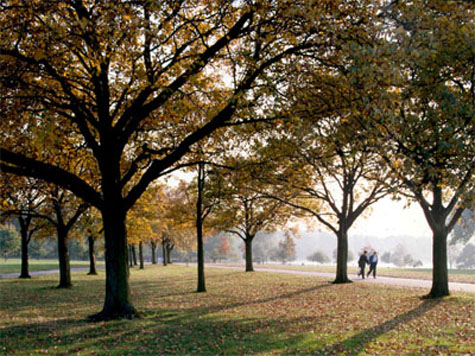
[Image: Hyde Park, London. Image courtesy of The Royal Parks].

Note: This is a guest post by Nicola Twilley.

The Royal Parks of London already boast a long list of worthy, if specialized, publications, from the Kensington Gardens Shared Use Assessments to an executive summary of the Cycle Review at The Regent’s Park. But Thursday, May 7, 2009, will open a new chapter in The Royal Parks’ publishing career, as the organization unveils Park Stories, a set of eight specially-commissioned short stories, each story set in one of London’s public parks.
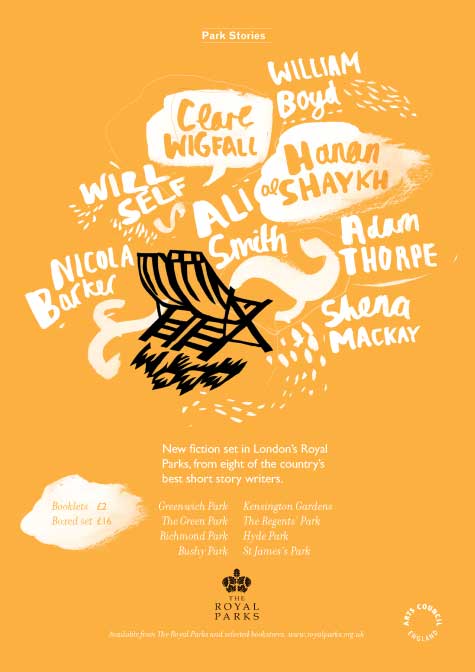
[Image: A poster for the Park Stories project, produced by The Royal Parks under the direction of Rowan Routh].

According to the series’ editor, Rowan Routh, the seeds of her idea were sown during a recent collaboration with London’s Natural History Museum. The Curator for Contemporary Arts at the NHM, Bergit Arends, worked with Routh to commission literary responses—some poems and a short story—to the life and scientific theories of Charles Darwin, for their current exhibition. The creative challenges of incorporating a substantial reading experience into the limited space of a crowded museum, as well as the quality of the writing that emerged from the commission, left Routh “thinking about fiction in terms of other places to experience it,” she explained in a telephone interview with BLDGBLOG.

Routh is also a champion of the short story form—which she feels has been neglected in the UK—and a Londoner who enjoys the city’s parks, so she was thrilled to find a way to bring all three enthusiasms together: “It just suddenly occurred to me: Hang on a minute, a park is a wonderful place to read! It’s a perfect marriage, really, of a location and an activity. Once the idea formed, it became more and more of a no-brainer, to the point where I was wondering why people haven’t done this before. People spend their lunch breaks in the park. It’s an amount of time in which the golden nugget of the short story can be consumed. And even more to the point, London’s Royal Parks have an incredibly rich literary history anyway, so it’s something that is sort of already there.”
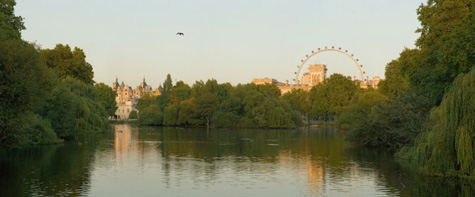
[Image: St. James’s Park, London. Image courtesy of The Royal Parks].

The project is exciting on a number of different levels. For starters, Routh has assembled a stellar list of writers: she has a background as a literary agent, and for her, “It was very important that this was about the short story as well as about parks. It was important that it was about good writing. Commissioning stories for The Royal Parks, when they already have a history of Virginia Woolf, Charles Dickens, and Henry James writing about them, it seemed right to keep to the gold standard.”

She started out by asking writers who had a connection to a particular part of London: for example, Nicola Barker, whose most recent novel is the Booker-prize short-listed Darkmans and who lives in Greenwich, has contributed By Force of Will Alone, set in Greenwich Park. The selection process evolved as word spread—and the final list now looks like this: William Boyd (The Dreams of Bethany Mellmoth, Green Park), Will Self (A Report to the Minister, Bushy Park), Ali Smith (The Definite Article, Regent’s Park), Adam Thorpe (Direct Hit, Hyde Park), Shena Mackay (The Return of the Deer, Richmond Park), Hana al-Shaykh (A Beauty Parlour for Swans, Kensington Gardens), and Clare Wigfall (Along Birdcage Walk, St James’s Park).
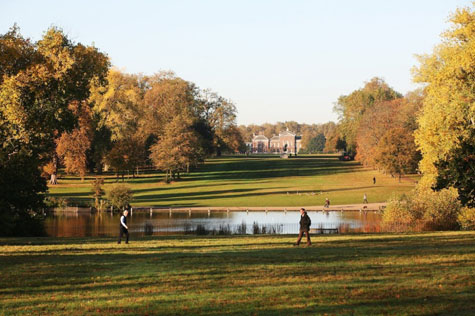
[Image: Kensington Gardens, London. Image courtesy of The Royal Parks].

Routh hopes that the Royal Parks commission will become an annual event, and the potential for this series to evolve in future years is energizing. Her hope is that the project’s core remains “eight very high quality short stories set in the parks,” but she speculates that it could expand to include responses to the parks in different genres or even stories by the general public (through a park-based storybooth or wiki page). Crime writers could make use of fog, weed-choked ponds, and overgrown outhouses to do away with early morning joggers, and sci-fi novelists could set stories in the drowned parks of London’s watery future; it’s even possible to imagine an erotic fiction series (complete with a foreword by George Michael). Meanwhile, the authors of historical romances could bring to life Hyde Park’s Rotten Row, once the gathering place for fashionable London, while horror writers would be drawn instead to the park’s off-limits pet cemetery (which George Orwell apparently considered “perhaps the most horrible spectacle in Britain.”)

Equally pleasing is the formal connection between parks and short stories: both offer a limited space of encounter, but a heightened, or concentrated, experience for all that. In a park, various elements—trees, follies, flowerbeds, and water features—are carefully, even narratively, arranged to mimic, distill, and often improve on the unplanned, “natural” landscape they replace; similarly, Routh contends that short stories “don’t give any less of an emotional or stylistic punch than a novel, and it’s actually heightened and changed by being so carefully contained and arranged in a smaller space.” This idea that a particular landscape can be married to its equivalent literary form is inspiring: perhaps suburbia is best expressed through the sprawling novel; wilderness requires poetry; and a city like Tokyo all but demands a text-message thriller.
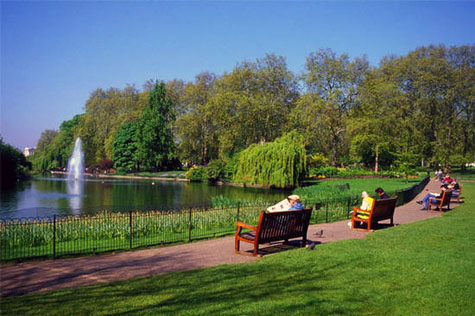
[Image: Another view of St. James’s Park, London. Image courtesy of The Royal Parks].

Finally, the real joy in this project lies in the idea that the owners of a particular landscape or building might commission original literature to celebrate and promote it. If literary commissions become a form of property investment, for instance, could we perhaps see bespoke short stories replacing new kitchen cabinets as the surest way to add value to your home? Or will Los Angeles’ real estate developers forego glossy brochures in favor of paying T.C. Boyle to set his next novel in the city’s struggling loft district, while the local Convention & Visitors Bureau cancels its regular press junkets and instead develops a package of incentives for writers prepared to use L.A. as the backdrop for their work?

Some critics have caviled, finding “precious few examples of good literature being written to order,” but I rather agree with former Poet Laureate Andrew Motion, who felt that his poems, “like all commissioned pieces, work best when they coincide with an existing personal interest.” Within this fruitful framework of shared interests, for example, we already have Lloyd’s of London commissioning poems from John Burnside on the subject of climate change (which is the insurance industry’s greatest threat to profitability as well as a passionate concern for the Scots nature poet). But what about Sigalert.com drumming up customers for its personalized traffic reports through hourly freeway-themed haiku delivered to your smartphone, or NASA campaigning for a manned Mars program by commissioning dozens of screenplays on the subject?
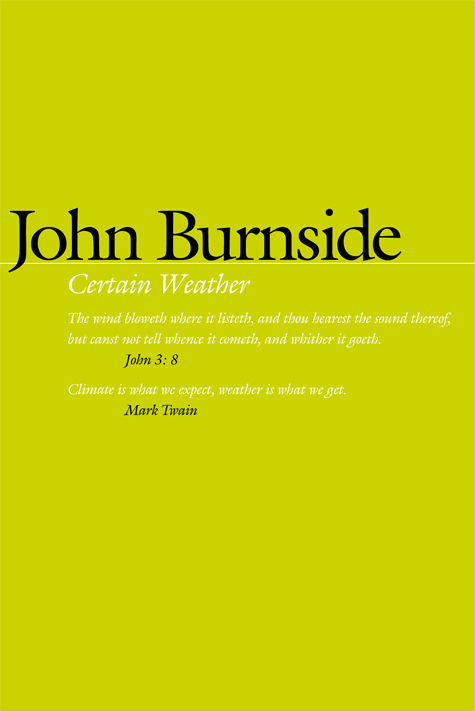
[Image: From John Burnside’s collection Trees in the City; check out the PDF].

Of course, this type of content-specific literary commission is indistinguishable from product placement—and here I feel compelled to mention the example set by Fay Weldon’s 2001 novel The Bulgari Connection. Weldon’s book was commissioned by the eponymous jewelers, who paid an “undisclosed, but ‘not huge’ amount of money,” according to Weldon’s agent, Giles Gordon, for a dozen mentions of their company in the book. Bulgari were, in fact, rewarded with at least three times as many—not to mention the title. With pitch-perfect po-mo sensibility, critics sniped in the New York Times, “It is like the billboarding of the novel. [Note: How about novelizing the billboard?] I feel as if it erodes reader confidence in the authenticity of the narrative. Does this character really drive a Ford or did Ford pay for this?”

In any case, if The Royal Parks are creative and brave enough to commission a set of short stories, I would hope that perhaps the fictionally fertile landscapes built and managed by KB Home (who, in fact, have already partnered with Disney), the Parking Company of America, or the incorporated gated communities of Southern California cannot be far behind?

The Park Stories series will be available from May in eight individual booklets (priced at £2 each) and as a boxed-set (priced at £16) from selected bookstores and The Royal Parks website: (www.royalparks.org.uk). The authors will be conducting readings in the parks this summer.

[Earlier posts by Nicola Twilley include Park’s Parks, Dark Sky Park and Zones of Exclusion; we’ve started joking that she’s our Parks Correspondent).

The Lost Airfields of Greater Los Angeles

[Image: An airplane flies above Los Angeles, a landscape of now-forgotten airports].
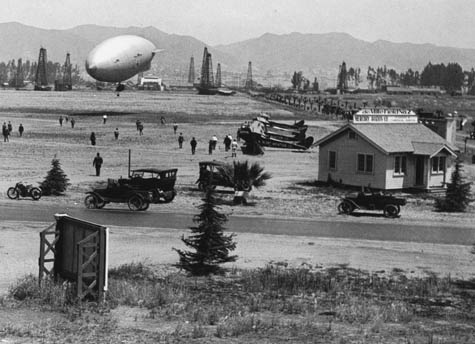
Buried beneath the streets of Los Angeles are lost airfields, airports whose runways have long since disappeared, sealed beneath roads and residential housing blocks, landscaped into non-existence and forgotten. Under the building you’re now sitting in, somewhere in greater L.A., airplanes might once have taken flight.

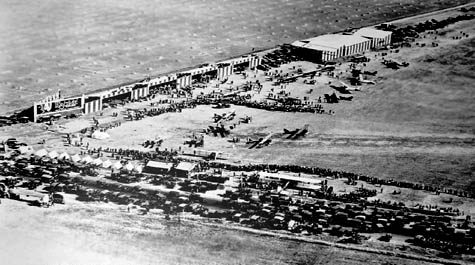
[Image: The now-lost runways of L.A.’s Cecil B. De Mille Airfield; photo courtesy of UCLA’s Re-Mapping Hollywood archive].

The Cecil B. De Mille Airfield, for instance, described by the Re-Mapping Hollywood archive at UCLA as having once stood “on the northwest corner of Wilshire Boulevard and Crescent Avenue (now Fairfax),” would, today, be opposite The Grove; on the southwest corner of the same intersection was Charlie Chaplin Airfield. As their names would indicate, these private (and, by modern standards, extremely small) airports were used by movie studios both for transportation and filming sky scenes. They were aerial back-lots.

Other examples include Burdett Airport, located at the intersection of 94th Street and Western Avenue in what is now Inglewood; the fascinating history of Hughes Airport in Culver City; the evocatively named, and now erased, Puente Hills “Skyranch“; and at least a dozen others, all documented by Paul Freeman’s aero-archaeology site, Abandoned & Little-Known Airfields (four pages alone are dedicated to lost L.A. airfields).

[Image: Charlie Chaplin Airfield in 1920s Los Angeles; photo courtesy of UCLA’s Re-Mapping Hollywood archive].

In a way, though, these airports are like the Nazca Lines of Los Angeles – or perhaps they are even more like Ley lines beneath the city. Laminated beneath 20th century city growth, their forgotten geometries once diagrammed an anthropological experience of the sky, spatial evidence of human contact with the middle atmosphere. Perhaps we should build aerial cathedralry there, to mark these places where human beings once ascended. A winged Calvary.

The cast of minor characters who once crossed paths with those airfields is, itself, fascinating. A minor history of L.A. aviators would include men like Moye W. Stephens. Stephens’s charismatic globe-trotting adventures, flying over Mt. Everest in the early 1930s, visiting Timbuktu by air, and buzzing above the Taj Mahal, would not be out of place in a novel by Roberto Bolaño or an unpublished memoir by Antoine de Saint-Exupéry. And that’s before we really discuss Howard Hughes.

[Image: The Cecil B. De Mille Airfield, renamed Rogers Airport (or, possibly, Rogers Airport, which later became the Cecil B. De Mille Airfield); image via Paul Freeman’s Abandoned & Little-Known Airfields].

Of course, many of these aeroglyphs are now gone, but perhaps their remnants are still detectable – in obscure property law documents at City Hall, otherwise inexplicable detours taken by underground utility cables, or even in jurisdictional disputes at the L.A. fire department.

And they could even yet be excavated.

A new archaeology of airfields could be inaugurated at the corner of Wilshire and Fairfax, where a group of students from UCLA will brush aside modern concrete and gravel to find fading marks of airplanes that touched down 90 years ago, over-loaded with film equipment, in what was then a rural desert.

With trowels and Leica site-scanning equipment in hand, they look for the earthbound traces of aerial events, a kingdom of the sky that once existed here, anchored down at these and other points throughout the L.A. basin, cutting down into the earth to deduce what once might have happened high above.

The Immersive Edge

Starting just a few hours from now down at SCI-Arc, on a cloudless 73º day, “seven distinguished architects and theorists” whose designs straddle “the intersection of physical and virtual worlds” will be presenting their work at the Mediascapes Symposium, led by Ed Keller.

The bulk of the afternoon’s discussion will encompass “the practice of immersive and virtual architecture, which spans animation and 3D technologies, digital environments, and questions of materiality… asking how these classifications will define our understanding of the relationships between tangible and intangible worlds.”
One of today’s speakers, Benjamin Bratton, who will also be presenting next week at Postopolis! LA, describes his talk: “Pervasive computing will make inanimate objects see, hear, and comment on our interactions with them. This experience will, in many cases, be indistinguishable from a psychotic break, or from the rituals of classical Animism.” That, or it will feel like The Sorcerer’s Apprentice.
If you’re in LA, be sure to stop by.

Media Facades and Newscocoons

[Image: A rendering of a “media facade” in action, in Melbourne’s Federation Square; image via Swissnex].
Tonight at 6:30pm here in San Francisco, the fantastic local gallery Swissnex is hosting an event called Media Facades and Newscocoons, “featuring three guests from Switzerland and a Bay Area counterpart.”
The participants are:

—Barbara Kummler, a Swiss media specialist with ag4, a “mediatecture company” based in Köln, Germany
—media artist Muriel Waldvogel
—Jeffrey Huang, Director of the Media and Design Laboratory at EPFL in Lausanne, Switzerland
—Patrick Keller of fabric | ch (and speaker at next week’s Postopolis! LA)
—Scott Minneman, interdisciplinary designer and co-founder of Onomy Labs

At the same time, Swissnex will be kicking off an exhibition of Newscocoons designed by Waldvogel and Huang. The Newscocoons are “room-compatible media art pieces of inflatable ‘media furniture’ that mirror the topics discussed in a subtle but powerful manner.” Waldvogel and Huang have also developed the amazing Sentient Ecologies project, “an algorithmically generated housing structure that follows phototropic behaviors of plants and produces instead of consumes energy.”
After their presentations, BLDGBLOG will be on hand to moderate a 40-minute roundtable discussion about the implications and future applications of their work.
Here is a map. You are meant to email before attending; if you want to stop by – and please do, as I think it will be quite interesting (and it’s free) – please send a note to “media-facades” at “swissnexsanfrancisco” dot org.

Southern Exposure

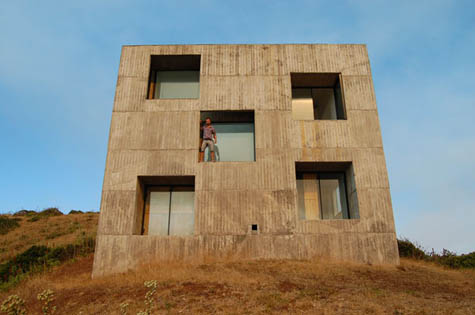
[Image: Elias Redstone stands inside the facade of Casa Poli, designed by Pezo von Ellrichshausen Architects; read more about his visit to the house here. Photo by Jaffer Kolb].

Regrettably, I have not until now pointed readers’ attention to the soon-to-finish travels of Elias Redstone, curator of London’s Architecture Foundation, as he visits the work of emerging Latin American architects, from Mexico to Colombia, Chile to Argentina and Brazil, documenting the whole thing on his blog.
This massive three-and-a-half month tour, funded by a Winston Churchill Fellowship, comes to a close on April 1, when Elias returns to London. His huge roster of site visits – heavy with modern residential design – is worth a scroll, as are his visits to the architects’ offices. He even drops in on our Postopolitan friends, Arch Daily.
Check out the blog for more.
Let me randomly add, by the way, that I would absolutely and genuinely love to do the Australian equivalent of this trip…

Talks, Tours, and the Cities of Tomorrow

[Image: Photo by Satya Pemmaraju, courtesy of the Architectural League].

Here are some upcoming events, courses, and lectures that I would attend if I could:

—Tonight, March 26, author William L. Fox speaks in Reno at the Nevada Museum of Art about his new exhibition, co-curated with Matthew Coolidge of the Center for Land Use Interpretation, about the Trans-Alaska Pipeline. Hopefully Fox will also discuss his newest book, Aereality: The World From Above; Fox’s books are an ongoing exploration of “extreme environments” and their impact on human cognition, from Antarctica and the gridless deserts of Nevada to the Australian Outback and even Mars.

—Also today, March 26, kicking off in Los Angeles (and then again four days from now, on March 30, in Chicago) is an Urban Escape and Evasion course run by the group OnPoint Tactical. The premise of this is hilarious but fascinating: “While on an international business trip, you are kidnapped and held for ransom. A terrorist attack closes the business district and you find yourself in a fix. How do you stay alive? How do you get to safety on your own?”

This class provides leading-edge skills to civilians who live and work in challenging urban environments or in urban centers that may destabilize during a crisis. Topics covered include covert movement (day vs. night), the judicious use of caches, understanding urban baseline movement and urban awareness training, the use of urban disguises and false papers/identification, lock picking, escaping from unlawful custody, obtaining and driving local transportation, the use of “specialized” urban gear, and instruction on how to develop urban escape and evasion go-bags, etc.

If you already know how to do all that, of course, there are also advanced courses. For that, somewhere in the Philadelphia/Camden, NJ, area, beginning April 30, trainees will “spend time in the city in an extensive (extended) escape and evasion simulation. Students will be required to obtain food, water, and shelter. They will need to avoid capture, and they will be required to complete several tests or scenarios that will require advanced students to truly apply their scout and urban survival skills.” I love OnPoint’s final line: “Warning: Massive waiver required for this course!” These “urban survival” courses are run in Los Angeles, Philadelphia, Chicago, Dallas, Salt Lake City, and Conway, Arkansas. If only I had known about OnPoint earlier, I would have invited them to speak at Postopolis! LA. Check out their lock-picking gear. (Spotted via kottke.org).

[Image: Think you’ll survive a corporate kidnapping (or the coming apocalypse)? OnPoint Tactical disagrees; sign up for their courses to learn more].
—March 27-29: The City From Below hits Baltimore, Maryland, exploring, among other things, how “unanticipated futures are being imagined and built” in the contemporary metropolis. My problem with the event write-up, however, is that participating in “social justice struggles” appears to mean adopting a new, niche vocabulary full of analytically useless words like “herstories” – i.e. feminism’s own “Freedom Fries” moment – excluding from your audience many of the very people who would benefit most from such discussions. Emerging forms of grassroots urban self-governance don’t require bizarre, over-academized newspeak about “metropolitan rearticulation” and “horizontal framework[s] of participation.” We don’t need to know that you’ve read Judith Butler in order to organize a better youth basketball league, plant a roof garden, or campaign for affordable day care. I also have a growing problem with the fetishization of “resistance” in today’s leftwing political writing, as if “resisting” something is, in and of itself, a technique that only the left is capable of performing. But the Bush Administration “resisted” the Geneva Conventions and Alberto Gonzales “resisted” civil liberties laws, even as the Mormon Church “resisted” gay marriage in California. Resistance has no political affiliation, and it is tactically meaningless to promote resistance as a goal in and of itself. One need look no further than the conservative Counter-Reformation; as its very name indicates, this was a massive act of cultural and intellectual resistance. Indeed, to pretend that “resistance” is worthy of commendation at all only makes sense if you’ve built your entire movement around a shifting sequence of enemies who, by your own admission, are always one step ahead of you. The alternative – articulating, out of the blue and in the middle of nowhere, unsolicited enthusiasm for a more equitable future for everyone – would seem both substantially more effective and unifying. It seems little wonder, then, that many otherwise intensely interesting urban social justice movements remain rhetorically self-ghettoized, when their own communication strategies seem to exclude the very people they most urgently need to convince.

—On Monday, March 30, London’s Complex Terrain Laboratory will begin a four-day symposium about P. W. Singer’s important new book Wired for War (previously mentioned on BLDGBLOG here). As the event unfolds, regular updates will be posted online.

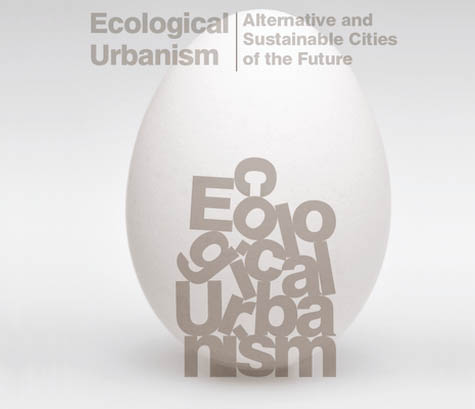
[Image: Ecological Urbanism at the Harvard GSD].

—If it wasn’t for Postopolis! LA, I would be in Boston, attending Harvard’s Ecological Urbanism conference, running April 3-5. “While climate change, sustainable architecture, and green technologies have become increasingly topical,” we read, “issues surrounding the sustainability of the city are much less developed.”

The conference is organized around the premise that an ecological approach is urgently needed both as a remedial device for the contemporary city and an organizing principle for new cities. An ecological urbanism represents a more holistic approach than is generally the case with urbanism today, demanding alternative ways of thinking and designing.

Speakers include – and the list looks great – Rem Koolhaas, Andrea Branzi, Stefano Boeri, Anuradha Mathur, and super-dean Mohsen Mostafavi, among many, many others.

—Saturday, April 4, in Montreal, the excellent Canadian Centre for Architecture will sponsor Mapping Rural Montréal: “Artist Amy Franceschini leads an exploration of rural sites and activities in Montréal, questioning the dichotomy of country and city (in English). $10 per person. Free for children under 12. Reservations required: (514) 939-7026.”

—On April 25, Esotouric will be hosting a bus tour of Raymond Chandler’s Los Angeles: “Bungalows. Crime. Hollywood. Blondes. Vets. Smog. Death. This was Raymond Chandler’s Los Angeles, which resonated from deft and melancholy fits of his writer’s bow.” Esotouric’s Reyner Banham Loves Los Angeles tour also looks well worth a spin.

—Finally, for now – as there are dozens and dozens of other amazing events I could mention – the Architectural League in New York is hosting what sounds like an exciting two-day conference called New Architectures of India, from April 30-May 1. It will “address the architectural and urban forms that are emerging as a turbulent ‘second modernity’ rearranges a vast part of the landscape of India.”

All of these are barely the tip of the iceberg, however; I’ll hope to keep track of other lectures, events, gallery openings, conferences, courses, and such like as the year trundles on.

Super NAFTA Land

[Image: From ¡Super NAFTA Land! by Richie Gelles].

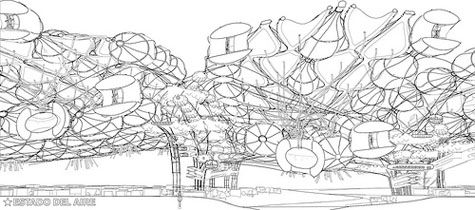
Another project from the Rice University final thesis reviews that I helped to jury back in January is Richie Gelles’s project ¡SUPER NAFTA LAND!.
That project imagines a kind of Mad Max salvage economy, made up of equal parts post-industrial subculture and bioengineered agri-futurism, set along the US/Mexico border.
Think of it as the sci-fi-inflected spatio-cultural wake of the North American Free Trade Agreement (or NAFTA) – falling somewhere between a new, continent-spanning red light district and a super-ranch run by Al Jourgensen.


[Images: From ¡Super NAFTA Land! by Richie Gelles; be sure to view the sections much larger: Estado de la Tierra and Estado del Aire].

This border region is “a dynamic, hybridized, and rapidly growing regional zone,” Gelles writes, “known as ‘Amexica’ or the ‘third space.'”
He continues, outlining the broader political intentions of the project:

The emergence and potential of this “third space” as an economic engine and potential immigration buffer has been jeopardized by US policies towards Mexico such as the Secure Fence Act of 2006, which insists on understanding the border as a line, rather than its reality as a blurred zone of transition. This project proposes building a thickened, connective infrastructural corridor landscape to unite the sister cities (in place of the divisive 700 miles of fence currently under construction by the US government) and generate the resources and conditions for an independent, neutral border nation to emerge.

The result is ¡SUPER NAFTA LAND!, “a giant self-sufficient artificial landscape growing out of the border,” its infrastructure consisting of “a modular system of production pods to generate enough food, water, and energy for the entire border population.”
Awesomely, Gelles’s vision of an Estado de la Tierra and an Estado del Aire includes linked megastructures assembled for the purpose of aeroponic gardening.

[Image: From ¡Super NAFTA Land! by Richie Gelles].

It’s the borderzone as micronation.
Read a bit more about the project through Gelles’s Flickr set – or, even better, stop by his Tumblr site for further updates. For what it’s worth, ¡SUPER NAFTA LAND! could easily become a much larger, long term research project, similar to Fernando Romero’s Hyperborder; I’ll be interested to see where Gelles might take this.

(¡SUPER NAFTA LAND! was produced at Rice University under the direction of Carlos Jimenez. Thesis advisors were Eva Franch Gilabert and Fares El Dahdah; thesis readers were John Casbarian, Albert Pope, and Fiamma Montezemolo).

Photography, Rights, Media

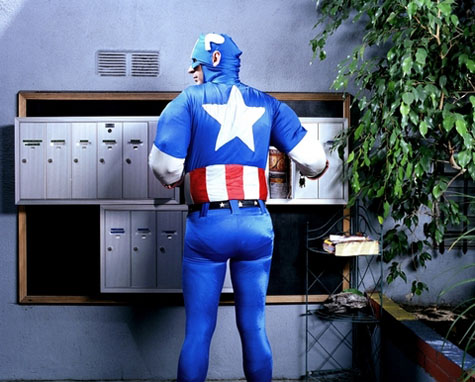
[Image: From the amazing Superheroes series by photographer Gregg Segal].

As many readers will no doubt know, the New York Times last week sent a “cease and desist” letter to Apartment Therapy, demanding that AT stop posting New York Times proprietary material on their website.
Though the story has since undergone a few less confrontational developments – i.e. Apartment Therapy “reached both the NYTimes legal and marketing [departments] on Friday and they called off their take down notice pending our initial conversation” – the issue is still a very valid one, and it cuts to the heart of many financial problems now facing both print and online media.
As but one example, it has always struck me as somewhat economically lopsided that in order for Dwell to run a photograph in the magazine, we have to pay the photographer a not inconsiderable use fee; but that I, as BLDGBLOG, can simply post that photograph – or Dezeen can post it, or materialicious, or Apartment Therapy – and, at least for now, no one has to pay a cent. (See further thoughts on this sentence in the comment thread, below).
In this business model, magazines like Dwell and Wallpaper – or the New York Times – become a kind of unacknowledged production budget for architecture blogs (this site included). Metropolis pays for a photographer to fly to, say, Chicago or Melbourne or Eagle Rock… and an architecture blog then gets free photographs to post on their website, from which they can earn a constant stream of advertising revenue.
From the perspective of an architecture and design blogger, it can’t help but feel a bit like the easy money days of the derivatives market: you wait till someone else pays for a photographer to document something, and then you jump in and skim ad revenue off of that transaction.
The value of your website is derived value; if the magazine photography economy were to collapse, so would your third-party ability to extract revenue from it.
While I was Senior Editor at Dwell, this hit some particularly surreal notes, such as when an architecture blogger – whose entire visual content has been bought and paid for by other people – emailed me to accuse Dwell of stealing from architecture blogs because we had run images (at no small expense to us) of houses that once appeared on that person’s website.
In any case, my point here is not to argue, regressively, from the standpoint of magazines (after all, BLDGBLOG has been around for 5 years, hosting other people’s photographs) or to advance a kind of 1990s-era model of intellectual property, but to point out that this conversation is far from resolved – and that I’m thus particularly excited to announce that Postopolis! LA will include an entire panel about this very subject.
Catherine Ledner, Dave Lauridsen, Gregg Segal, Misha Gravenor, and Tom Fowlks, professional photographers who have worked for the likes of National Geographic, Wired, Newsweek, Dwell, Popular Science, Esquire, the New York Times Magazine, and countless others, will be joining us on Saturday, April 4, to talk about the financial and/or reputational pros and cons of blogs, magazines, online portfolios, Flickr accounts, and so on.
It’s interesting, for instance, in this context, that even mundane technical questions – such as whether to host your work online via a Flash website (which prevents bloggers from downloading your work) – are actually legally motivated decisions made to protect the financial integrity of your portfolio, not aesthetic or stylistic choices at all.
So what do these photographers think of Flash as a form of self-protection? Or of seeing their work on architecture blogs – or, for that matter, of never seeing their work on architecture blogs? Does this result in more (or fewer) paid commissions? What is the ideal balance here between exposure and financial compensation?
The questions are innumerable, and come as part and parcel of the ongoing implosion of the publishing industry, with newspapers and magazines folding (or laying off staff) left and right, and with no realistic new business model yet taking shape.
Watch for this panel coming up on the evening on Saturday, April 4. It will take place in the context of an entire day themed about the future of media, with editors-in-chief, bloggers, journalists, and many more on hand to discuss the changing industrial landscape.
By the way, the complete Postopolis! LA schedule will be announced shortly – so stay tuned!

Books Received

[Image: Bookstore for Shibuya Publishing, Japan, designed by Hiroshi Nakamura].

Through a combination of publisher review copies and the slow-to-end fire sale at my favorite local bookstore, Stacey’s – they’ve gone out of business and are selling everything at 50% off, including now even the furniture – BLDGBLOG’s home office is awash in books. Since there literally is not enough time left in a person’s life to read all of these, I decided that I would instead start a new, regular series of posts on the blog called “Books Received” – these will be short descriptions of, and links to, interesting books that have crossed my desk.
Note that these lists will include books I have not read in full – but they will never include books that don’t deserve the attention.
Note, as well, that if you yourself have a book you’d like to see on BLDGBLOG, get in touch – send us a copy, and, if it fits the site, we’ll mention your title in a future Books Received.

1) Oase #75 and #76Oase is an excellent architecture and urban studies journal published by the Netherlands Architecture Institute and designed by Karel Martens of Werkplaats Typografie. Oase #75 is the 25th anniversary issue, and includes essays from Jurjen Zeinstra (“Houses of the Future”), René Boomkens (“Modernism, Catastrophe and the Public Realm”), and Frans Sturkenboom (“Come una ola de fuerza y luz: On Borromini’s Naturalism”), among many, many others. To be honest, there is so much interesting material in this issue that it’s hard to know where to start; look for this in specialty architecture bookstores and definitely consider picking up a copy. Meanwhile, Oase #76 arrived just in time for me to quote part of its interview with photographer Bas Princen in The BLDGBLOG Book – but the entire issue, bilingually printed in both English and Dutch and themed around what the editors call “ContextSpecificity,” is worth reading. There’s a whole section on “In-Between Buildings,” itself coming between long looks at context, tradition, and the generation of architectural form. #76 also includes virtuoso displays of how to push the typographic grid. A new favorite.

2) Blank Spots on the Map: The Dark Geography of the Pentagon’s Secret World by Trevor Paglen (Dutton) — Trevor Paglen is an “experimental geographer” at UC-Berkeley, well-known – perhaps infamous – for his successful efforts in tracking unmarked CIA rendition flights around the world. Using optical equipment normally associated with astronomy, Paglen has managed to photograph the goings-on of deep desert military bases and has even been able to follow US spy satellites through what he calls “the other night sky.” This book serves more or less as an introduction to Paglen’s work, from Afghanistan to Los Alamos.

3) The Thief at the End of the World: Rubber, Power, and the Seeds of Empire by Joe Jackson (Penguin) — Jackon’s book, new in paperback, explores the industrial implications of monopoly plantlife, telling the story of Henry Wickham, who “smuggled 70,000 rubber tree seeds out of the rainforests of Brazil and delivered them to Victorian England’s most prestigious scientists at Kew Gardens.” This led directly to the “great rubber boom of the early twentieth century,” we read – which itself resulted in such surreal sites as Henry Ford’s failed utopian-industrial instant city in the rain forest, Fordlandia. Here, Jackson describes that city, now in ruins and like something from a novel by Patrick McGrath:

The American Villa still stands on the hill. The green and white cottages line the shady lane, but the only residents now are fruit bats and trap-door tarantulas. The state-of-the-art hospital shipped from Michigan is deserted. Broken bottles and patient records litter the floor. A towering machine shop houses a 1940s-era ambulance, now on blocks. A riverside warehouse built to hold huge sheets of processed rubber holds six empty coffins arranged in a circle around the ashes of a small campfire.

Check out Jackson’s website for a bit more.

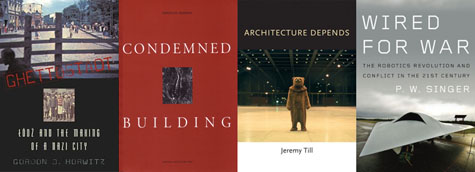
4) Ghettostadt: Łódź and the Making of a Nazi City by Gordon J. Horwitz (Harvard University Press) — By choosing the historical experience of Łódź, Poland, during its political assimilation and ethnic ghettoization by the Nazis, Gordon Horwitz shows how a long series of seemingly minor bureaucratic decisions can radically alter the normal urban order of things, paving the way for something as nightmarish as the Final Solution. This latter fact Horwitz memorably describes as “a phenomenon so unexpected and outrageous in design and execution as to exceed the then-understood limits of organized human cruelty.” About Łódź itself, he writes: “Secured by German arms, reshaped by German planning and technical expertise, the city was to be remade inside and out.” Horwitz shows how property confiscation, spatial rezoning, and literal new walls transformed Łódź into a Ghettostadt.

5) Condemned Building by Douglas Darden (Princeton Architectural Press) — The late Douglas Darden’s work seems both underknown and underexposed (perhaps because so little of it can be found online). This book, published in 1993, collects ten speculative projects, including the Museum of Impostors, the Clinic for Sleep Disorders, and the Oxygen House, complete with plans, models, elevations, and historical engravings. Darden’s work is an interesting hybrid of narrative fiction, visual storytelling, and architectural design – and so naturally of great interest to BLDGBLOG. For instance, his “Temple Forgetful” project weds amnesia, flooding, and the mythic origins of Rome. Good stuff.

6) Architecture Depends by Jeremy Till (MIT Press) — Architectural theory written with the rhetorical pitch of a blog, Architecture Depends is a kind of from-the-hip philosophy of “rogue objects,” construction waste, massive landfills, “lo-fi architecture,” and the fate of buildings over long periods of time. As Till states in the book’s preface, “Mess is the law.”

7) Wired for War: The Robotics Revolution and Conflict in the Twenty-first Century by P.W. Singer (Penguin) — An extremely provocative look at the future of war in an age of robot swarms and autonomous weaponry, Singer’s book is nonetheless a bit too casual for its own good (reading that Singer wrote the book because robots are “frakin’ cool” doesn’t help me trust the author’s sense of self-editing). Having said that, there is so much here to discuss and explore further that it’s impossible not to recommend the book – eyepopping micro-histories of individual war machines come together with Singer’s on-the-scene anthropological visits to robotics labs and military testing grounds, by way of Artificially Intelligent snipers, drone “motherships” forming militarized constellations in the sky, and even “mud batteries” and automated undersea warfare. Like Singer’s earlier Corporate Warriors – another book I would quite strongly recommend – the often terrifying implications of Wired for War nag at you long after you’ve stopped reading. For what it’s worth, by the way, this book seems almost perfectly timed for the release of Terminator Salvation.

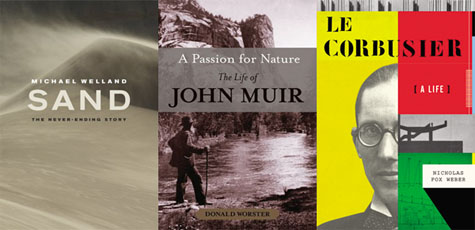
8) Sand: The Never-Ending Story by Michael Welland (University of California Press) — This book is awesome, and I hope to draw a much longer post out of it soon. Only slightly marred by an unfortunate subtitle, Welland’s book is disproportionately fascinating, considering its subject matter. On the other hand, “it has been estimated,” he writes, “that on the order of a billion sand grains are born around the world every second” (emphasis his) – so the sheer ubiquity of his referent makes the book worth reading. From the early history of sand studies to the aerial physics of dunes – by way of the United States’ little-known WWII-era Military Geology Unit – the interesting details of this book are inexhaustible.

9) A Passion for Nature: The Life of John Muir by Donald Worster (Oxford University Press) — Donald Worster has written a long biography of John Muir, the naturalist and writer who once famously climbed as high as he could into the canopy of a Californian forest during a lightning storm so that he could see what it was like to experience nature firsthand. At its most basic, Worster’s book explores the natural landscape of the American West as “a source of liberation.”

Going into wild country freed one from the repressive hand of authority. Social deferences faded in wild places. Economic rank ceased to matter so much. Bags of money were not needed for survival – only one’s wits and knowledge. Nature offered a home to the political maverick, the rebellious child, the outlaw or runaway slave, the soldier who refused to fight, and, by the late nineteenth century, the woman who climbed mountains to show her strength and independence.

Worster himself is an environmental historian at the University of Kansas.

10) Le Corbusier: A Life by Nicholas Fox Weber (Alfred A. Knopf) — I’m strangely excited to read this, actually – and I say “strangely” because I am not otherwise known for my interest in reading about Le Corbusier. But Nicholas Fox Weber’s approximately 765 pages of biographical reflection on Corbu’s life look both narratively satisfying, as a glimpse into the man’s daily ins and outs over eight decades, but also architecturally minded, contextualizing Le Corbusier’s spatial work within his other political (and libidinal) interests. I hope to dive into this one over the summer.

* * *

All Books Received: August 2015, September 2013, December 2012, June 2012, December 2010 (“Climate Futures List”), May 2010, May 2009, and March 2009.

Postopolis! LA Update

Postopolis! LA has been gathering pace over the past few weeks, despite the silence, so it seemed like high time for an update. Although we’re still finalizing both the schedule and the list of speakers, it’s looking amazing so far.

[Image: Logo by Joe Alterio].

The whole thing kicks off in less than two weeks, running from Tuesday, March 31, to Saturday, April 4, and from 5pm-11pm everyday.
The venue has finally been announced, as well: we’ll be up in the sky, watching the sun set every evening from the rooftop pool, deck, and bar of the Standard Hotel in downtown Los Angeles. The event is free and open to everyone, with a cash bar and free wifi, so come on down for some landscape and architecture, bring your favorite wireless device, and wear your Speedo or bikini if you want to use the pool (it’s more like a wading pool, FYI). And, of course, we’ll be keeping our fingers crossed for no rain.
The list of speakers, as it now stands, includes unbelievably interesting people. Here’s a glimpse:

—Ari Kletzky (Founder, Islands of LA)
—Austin Kelly (Principal, XTEN Architecture)
Ava Bromberg (Artist, In the Field)
—Ben Cerveny (Strategic and Conceptual Advisor, Stamen Design)
Benjamin Bratton (Architect and Theorist)
—Bryan Boyer (Organizer, Helsinki Design Lab 2010)
—Christina Ulke (Artist, Co-Founder, C-Level, and Editor, Journal of Aesthetics and Protest)
—Christopher Hawthorne (Architecture Critic, Los Angeles Times)
—David Burns, Matias Viegener, and Austin Young (Founders, fallen fruit)
David Gissen (Theorist and Historian, CCA)
—Dwayne Oyler (Architect and Principal, Oyler Wu Collaborative)
—Eric Rodenbeck (Founder, Stamen Design)
—Freya Bardell and Brian Howe (Principals, Greenmeme)
Fritz Haeg (Artist and Writer)
Gary Dauphin (Writer and Critic)
—Jeffrey Inaba (Architect and Principal, Inaba Projects)
Ken Ehrlich (Artist and Writer)
—Mary-Ann Ray (Architect, Writer, and Principal, Studio Works Architects)
—Matthew Coolidge (Director, Center for Land Use Interpretation)
—Michael Dear (Professor of Geography, USC)
—Michael Downing (Deputy Chief of Counter Terrorism, Los Angeles Police Department)
Mike the Poet (Poet and Writer)
—Orhan Ayyüce (Architect, Blogger, and Senior Editor, Archinect)
—Patrick Keller (Architect and Principal, Fabric)
—Paul Petrunia (Founder, Archinect)
—Robert Miles Kemp (Designer and Principal, Variate Labs)
—Sam Grawe (Editor-in-Chief, Dwell)
—Sharon Johnston and Mark Lee (Architects and Principals, Johnston MarkLee)
—Stephanie Smith (Founder, Ecoshack)
Steve Roden (Musician and Artist)
—Ted Kane (Architect and Author, Polar Inertia)
—Whitney Sander (Architect and Principal, Sander Architects)
—Yo-Ichiro Hakomori (Architect and Principal, wHY Architecture)
—Zach Frechette (Editor-in-Chief, GOOD)

That’s nowhere near the final list, though, as we’ve also got a handful of media panels planned for Saturday, April 4; these will include Matt Chaban from the Architect’s Newspaper, Dakota Smith from Curbed LA, Greg J. Smith of Serial Consign & Vague Terrain, journalist Alissa Walker, a variety of Archinect school bloggers, and many, many more.
So stay tuned for more updates.
And, don’t forget, Postopolis! LA will be hosted by BLDGBLOG, City of Sound, mudd up!, Plataforma Arquitectura/Arch Daily, Subtopia, and we make money not art, under the organization of the Storefront for Art and Architecture and the sponsorship of ForYourArt.
Hope to see you there!

So good you can’t see it

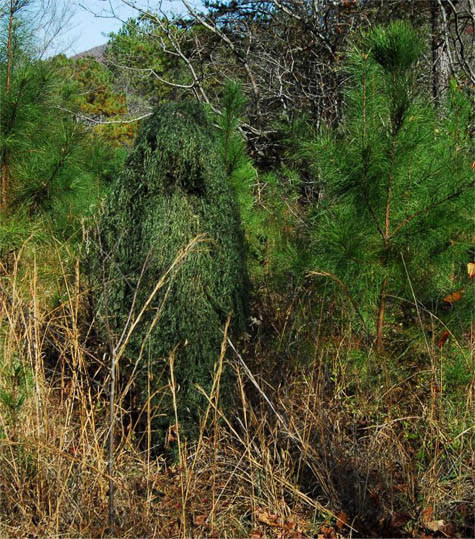
[Image: So good you can’t see it: a hunter wearing a Ghillie suit].

For some reason I found myself looking at Ghillie Suits last week, and I couldn’t resist writing a post about them.
Manufactured under the tagline “It’s what they don’t see that’s important!” Ghillie suits are made for paintball – but they are an amazing example of fashion design and landscape simulation together in one. Less a style of dress, they use garments to represent – and thus blend into – the earth’s surface.

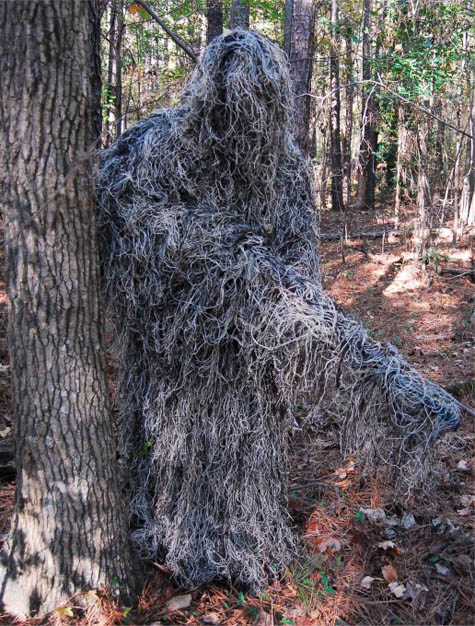
[Images: Two more examples of Ghillie suits – the visual effect of the suits are somewhat undercut by the model’s posture].

You might say that these suits are mobile, replicant earths – minor terrains on the move – a statement seemingly backed up by the incredible “HUMUS® Cover Scent,” marketed by the same firm. HUMUS® is an “oil based product that gives off the smell of decaying leaves and allows you to smell like a part of the forest.”
I’m embarrassed to admit this, because it now seems obvious, but I had never actually thought of hunting as a local repertoire of earth-replication techniques, techniques through which you can become as much like the surface of the earth as possible. This then distracts and fools other organisms – and allows you to step in for the kill.
Looked at this way, hunting becomes a kind of planetary pas de deux – which is just a pretentious way of saying that if you act like the planet, you can kill that which lives upon it most efficiently.
Or, to put it one other way, well-camouflaged hunters are masterful practitioners of the landscape arts – but their contributions to any potential conversation about landscape design have been overlooked for ideological reasons (i.e. they’re hunters, not academics, and never the twain shall meet).

[Image: This suit apparently only weights 2.25 lbs. Photo courtesy of Ghillie Suits].

Whatever you might think of wildlife slaughter, though, how unbelievably interesting would it be to get Ghillie suit designers, deep wilderness hunters, and some landscape theorists together for a long afternoon of spatialized discussions. Throw in some anthropologists studying hunter-gatherer tribes and maybe some military camouflage field testers – and, at the very least, you’ve got yourself an interesting book proposal.
After all, what Deleuze has to say about landscape is meant to be interesting; but what about the guys who run Ghillie Suits? Or the editors of King’s Outdoor World or Predator Xtreme? Invite them to your next landscape architecture conference.
In any case, the instructions for how to build your own Ghillie suit are an amazing, if unintentional, act of sartorial landscape criticism, turning clothing into hyper-accurate representations of the local plantlife.
Finally, for a few more images don’t miss the Ghillie suit product slideshow.

(Related: Urban Camouflage).