Wire-Tapping the Ruins of Pompeii

[Image: Alexander Graham Bell, inventor of the telephone, steps forth into the ruins of the “extinct city” of Pompeii; courtesy U.S. Library of Congress].

The ruins of Pompeii are being wired-up by a company otherwise known for its work as a manufacturer of military drones and “electronic warfare equipment,” Phys.org reports. Finmeccanica, the “Italian aerospace and defense giant,” has been contracted to install a high-tech sensor network amongst the barely stabilized walls and streets of this city once buried by a volcanic eruption nearly 2,000 years ago, in the hopes of monitoring unstable ground conditions on the sites.

Slippage and instability threaten to bring some of the buildings down, not just putting the site’s UNESCO-designated mansions at risk but potentially injuring (or worse) its annual hordes of international visitors.

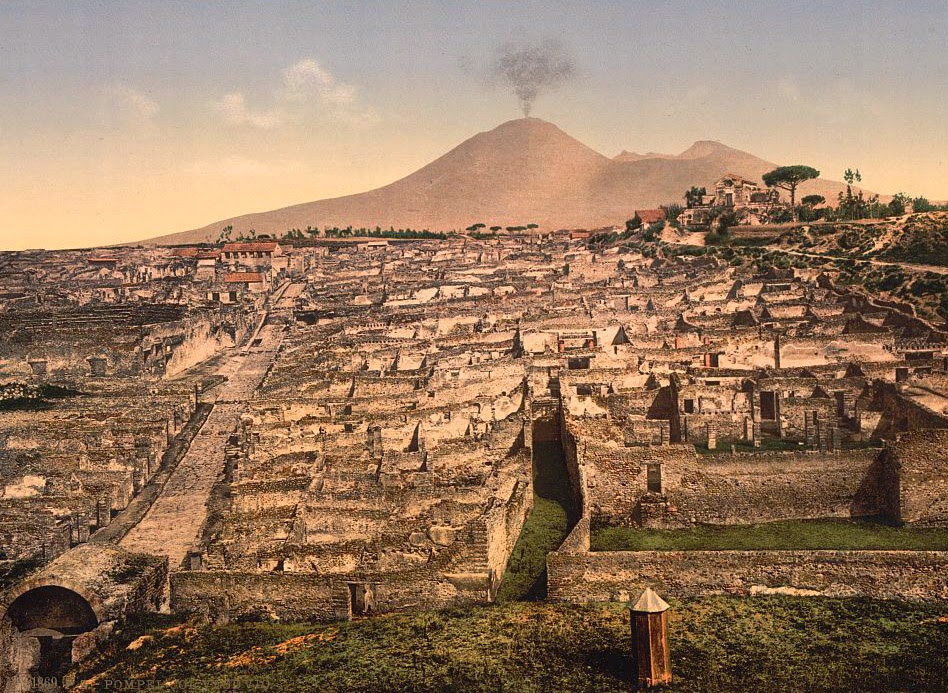
[Image: General view of Pompeii and Mt. Vesuvius; courtesy U.S. Library of Congress].

In Phys.org’s words, the sensors are being installed “to assess ‘risks of hydrogeological instability’ at the sprawling site, boost security and test the solidity of structures, as well as set up an early warning system to flag up possible collapses.”

The results are a bit like electronic eavesdropping—a kind of NSA of the ruins—only, instead of wire-tapping a single phone line, the entire city of Pompeii will be listened to from within, hooked up from one side to the other with equipment so sensitive it is normally used in waging “electronic warfare.”

[Image: The Street of Tombs, Pompeii; courtesy U.S. Library of Congress].

The data will eventually be made available online for all to analyze, but it is interesting to read of a more immediate use of the sensors’ findings: Pompeii’s “security guards will be supplied with special radio equipment as well as smartphone apps to improve communication that can pinpoint their position and the type of intervention required.”

In other words, guards will receive electronic updates from the city itself while out on their daily rounds, including automated pings and alerts of impending structural failure or deformations of the ground, like some weird, semi-militarized version of ambient music, as if listening to the real-time groans of a settling city by radio.

Wire-tapping the ruins of a dead city, this mesh of electronic equipment—normally used in military surveillance operations—will thus help to preserve the archaeological site for future generations.

[Image: Fortuna Street, Pompeii; courtesy U.S. Library of Congress].

Like something out of Douglas Kahn’s recent book about the history of terrestrial electromagnetism and audio art, the old crumbling columns and shattered walls of Pompeii will soon find a new voice through repurposed military equipment, a weaponized seance performed on the empty streets of a place that’s more tomb than city.

[Image: The Forum, Pompeii; courtesy U.S. Library of Congress].

The possibilities for interactive apps and other touristic experiences are also mind-boggling here: imagine, at the very least, being able to walk into the center of Pompeii totally alone, with nothing but your phone and some earbuds, tuning into real-time broadcasts of the shuddering masonry all around you, a wireless archaeological orchestra of bleached monuments in the sun, listening from within to the sounds of the ancient city.

Distant HAM radio enthusiasts, tuning in from attics in Indiana, spin the dial every Saturday night hoping to find Pompeii, a destroyed city on the other side of the world with its own location in the ether, whistling and purring as its architecture falls apart, room by room, a catacomb of sound and destruction.

(An earlier, different version of this post first appeared on Gizmodo).

Romanticism of the Scanning Error

[Image: ScanLAB Projects].

(A different version of this post previously appeared on Gizmodo).

Matthew Shaw and William Trossell, the London-based duo known as ScanLAB Projects, continue to push the envelope of laser-scanning technology, producing visually stunning and conceptually intricate work that falls somewhere between art and practical surveying.

Their work also bears an unexpected yet increasingly pronounced political dimension, as they have scanned concentration camp sites, designed insurgent objects for thwarting police laser scanners, and even point-mapped melting ice floes in the Arctic as part of a larger study of climate change. The results are astonishingly, almost hypnotically detailed, as in this cinematic fly-through of an outdoor festival, where we pass through tent walls and very nearly see recognizable expressions on participants’ faces. It’s as if the future of the motion picture might really be narrative holograms.

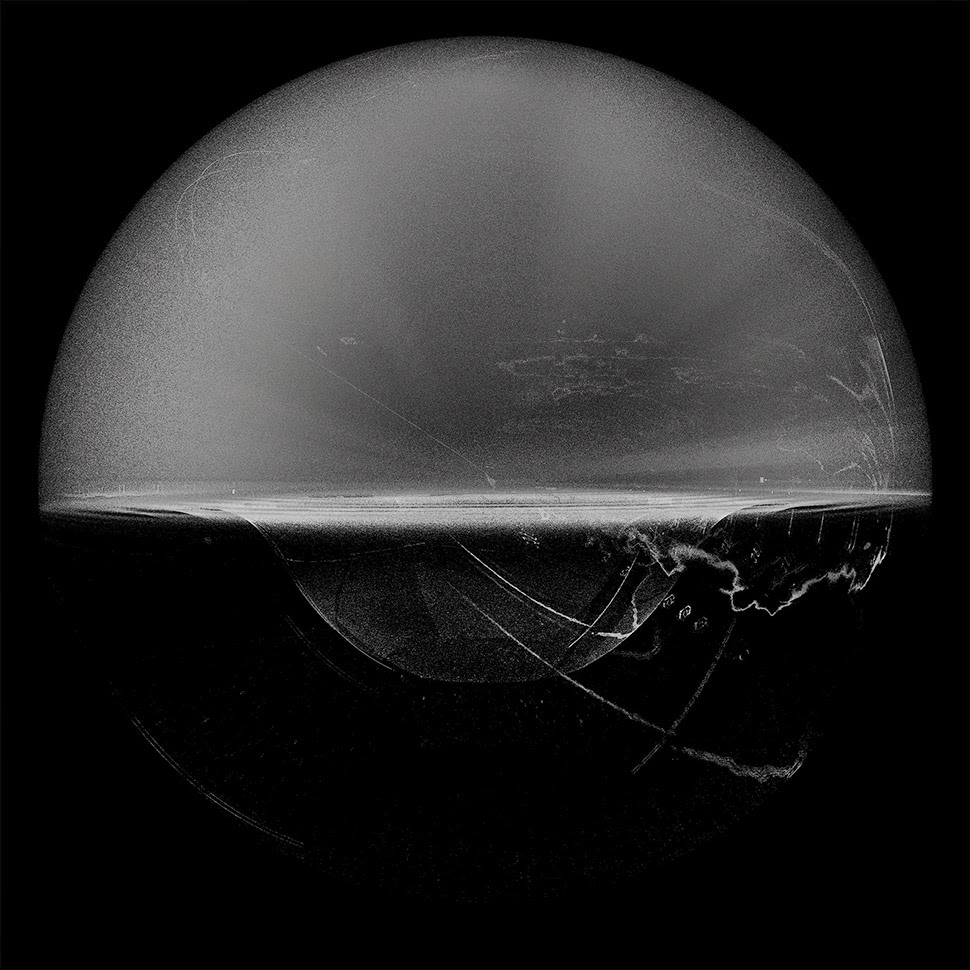
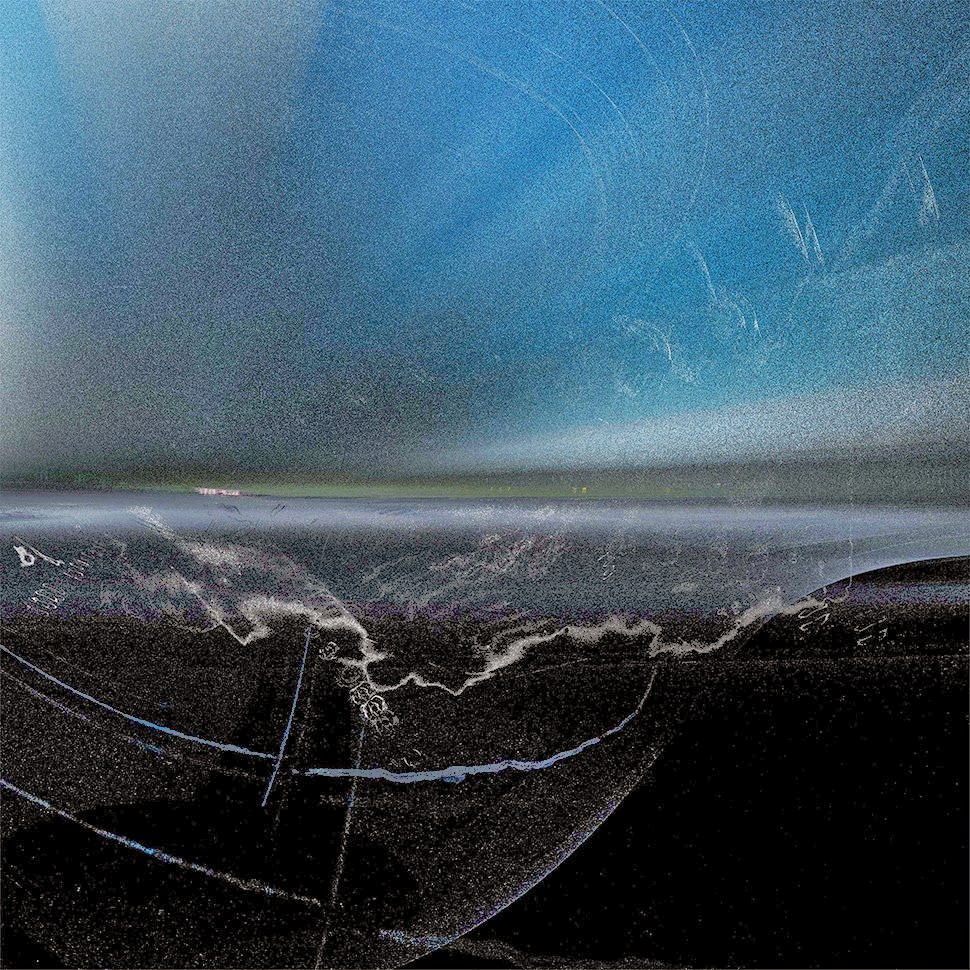
Last week, Shaw and Trossell premiered a new project at London’s Surface Gallery, exploring where laser scanners glitch, skip, artifact, and scatter. Called Noise: Error in the Void, the show utilizes scanning data taken from two locations in Berlin, but—as the show’s title implies—it actually foregrounds all the errors, where the equipment went wrong: a world of “mistaken measurements, confused surfaces and misplaced three-dimensional reflections.”

The tics and hiccups of a scanner gone off the mark thus result in these oddly beautiful, almost Romantic depictions of the world, like some lunatic, lo-fi cosmology filtered through machines.

Frozen datascapes appear like digital mist settling down over empty fields—or perhaps they’re parking lots—a virtual Antarctica appearing in the middle of the city.

[Image: ScanLAB Projects].

Huge domes of white light burn like spherical flames above a central point that remains both mysterious and unidentified, resembling the halos of nuclear explosions or the birth of stars.

[Image: ScanLAB Projects].

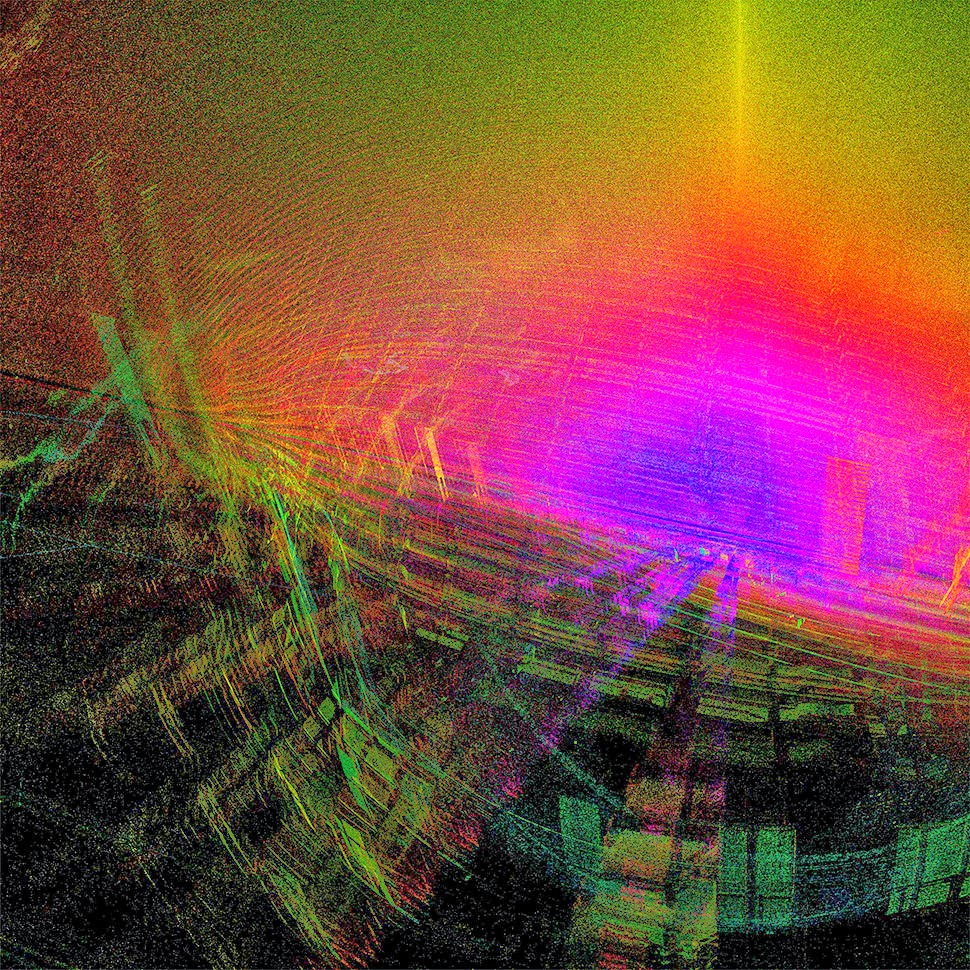
Spectacular bursts of color then suggest the presence of some new stratosphere, where black airplanes roam the edge of space and clouds are nothing but processing errors in a blurred celestial rendering. Perhaps we could call it expressionist scanning.

[Image: ScanLAB Projects].

In Shaw’s and Trossell’s own words, “Using terrestrial LIDAR technology it is now possible to capture the world in three dimensions. This technology can create near perfect digital 3D replicas of buildings, landscapes, objects and events. But these digital replicas are always an illusion of perfection. Noise: Error in the Void explores the inherent mistakes made by modern technologies of vision. Here we see the unedited view of the world as seen through the eyes of the LIDAR machine. Reality is shrouded in a cloud of mistaken measurements, confused surfaces and misplaced three-dimensional reflections.”

A short film—more like a dark ambient music video—shows some of the images in action.

In all honesty, many of the images are colored in a way that looks a bit more like a Pink Floyd laser show than the almost melancholy landscapes I like so much above, and I even made a few of these greyscale to see if, stripped of color, they could still repeat the lonely, wanderer-above-a-sea-of-fog feeling that the other images have, the benthic void of miscalculated data that nonetheless results in new worlds. But then I figured I shouldn’t mess with ScanLAB’s work and I left them as is.

[Images: ScanLAB Projects].

But, even here, blinded by the colors of a rave, throbbing architectural shapes rotate and spin, as if parts of London are stuttering in and out of sync with themselves, a whole city rumbling through a shockwave of digital reverb, blinking gyroscopically out of control.

[Images: ScanLAB Projects].

If you’re lucky enough to be in London in the next few weeks, check out their exhibition at Surface Gallery—and, even better, if you’re an architecture student, you can actually take a class with these guys. Check out their teaching work here.

(Read an earlier version of this post at Gizmodo).

When Hills Hide Arches


Landforms masquerading as architecture and vice versa seem to dominate a few sets of older images hosted at the Library of Congress.

Photos taken between 1865 and 1872, these are—photographically speaking—almost impossibly ancient, approaching a point of chemical age as comparatively old to us today as the structures they depict were to the military expeditions that documented them in the first place.


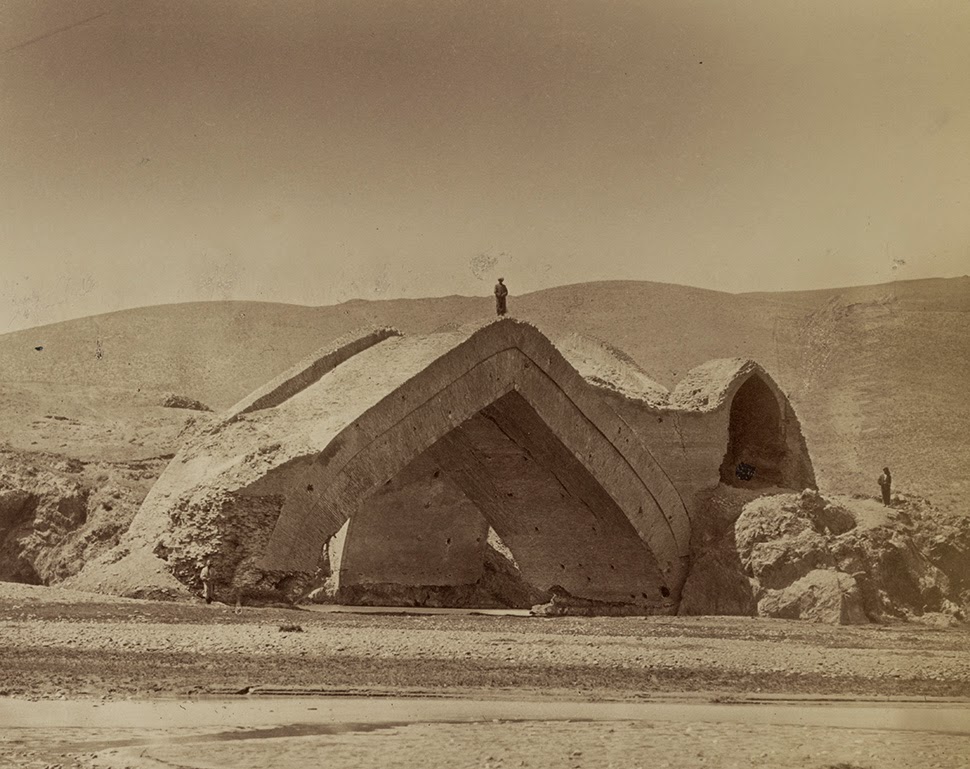
The first shot—depicting the “ruins of the Mulushki Mirza Rabat near Khodzhend,” as the Library of Congress explains it—establishes something of a theme here: works of architecture built from modules of fired clay, their wind-pocked brickwork extracted from the hills around them and transformed by kilns into something artificial, “manmade,” now more artifact than natural object.

Ironically, though, it is exactly their resemblance to the earth that sets the stage for these structures’ later decay, falling apart into mere dust and minerals, little pebbles and grains of sand, literally forming dunes, blending imperceptibly with the landscape. Once they’re gone, it’s as if they were never there.


Domes and extraordinary arches stand in the middle of nowhere, as if left behind by the receding tide of some alien civilization that once slid through, depositing works of architecture in its wake. Like the slime of a snail, these are just residue, empty proof that something much bigger once passed by.

What’s so amazing about these pictures, I’d suggest, is that, among other things, they come with the surreal implication that, beneath or somehow within all the rolling hills and dunes of the surrounding landscape, these sprawling bridges and spinal forms are actually hidden, just waiting there for hooded, 19th-century backpackers to rediscover.

These tiny figures are probably laughing in awe at the anti-gravitational urge that pushes these structures up above the sand line, into the photographs of these seemingly nameless expeditionary teams intent on cataloging every spatially exotic detail they find.


Here, in the ruins of Murza Rabat, seen below, natural hills are actually catacombs of architecture, buildings fooling us for their resemblance to caves, structurally camouflaged as the surface of the earth.

But it’s not the planet—it’s not geology—it’s just architecture: a shaped thing, an artifact, something plastic and formed by human hands. Not hills but abandoned buildings.


In the end, photographs of sand dunes might actually depict scenes of collapsed architecture; that landscape there in front of you might really be a city seen one thousand years after the fact, every wall cracked open and broken into pointless little mounds you’d probably stomp through without even thinking, the desert all around you giving no indication that this all used to be structure.

It used to be arches, bridges, vaults, and domes, huge mosques and cathedrals of human form before crumbling into mindless anthills of mud and clay.


It’s almost like these photographs exist to remind you that everything you now think of as a room—as space, as volume, as creation—will soon just be a suffocation of sand grains packed together in dense, amnesia-ridden hills, landscapes almost laughably quick to forget they once were architecture.

All photos courtesy of the Library of Congress.

Roentgen Objects, or: Devices Larger than the Rooms that Contain Them

[Image: Photo courtesy of the Rijksmuseum Amsterdam and the Metropolitan Museum of Art].

A gorgeous exhibition last year at the Metropolitan Museum of Art featured mechanical furniture designed by the father and son team, Abraham and David Roentgen: elaborate 18th-century technical devices disguised as desks and tables.

First, a quick bit of historical framing, courtesy of the Museum itself: “The meteoric rise of the workshop of Abraham Roentgen (1711–1793) and his son David (1743–1807) blazed across eighteenth-century continental Europe. From about 1742 to its closing in the early 1800s, the Roentgens’ innovative designs were combined with intriguing mechanical devices to revolutionize traditional French and English furniture types.”

Each piece, the Museum adds, was as much “an ingenious technical invention” as it was “a magnificent work of art,” an “elaborate mechanism” or series of “complicated mechanical devices” that sat waiting inside palaces and parlors for someone to come along and activate them.

If you can get past the visual styling of the furniture—after all, the dainty little details and inlays perhaps might not appeal to many BLDGBLOG readers—and concentrate instead only on the mechanical aspect of these designs, then there is something really incredible to be seen here.

[Image: Photo courtesy of the Rijksmuseum Amsterdam and the Metropolitan Museum of Art].

Hidden amidst drawers and sliding panels are keyholes, the proper turning of which results in other unseen drawers and deeper cabinets popping open, swinging out to reveal previously undetectable interiors.

But it doesn’t stop there. Further surfaces split in half to reveal yet more trays, files, and shelves that unlatch, swivel, and slide aside to expose entire other cantilevered parts of the furniture, materializing as if from nowhere on little rails and hinges.

Whole cubic feet of interior space are revealed in a flash of clacking wood flung forth on tracks and pulleys.

As the Museum phrases it, Abraham Roentgen’s “mechanical ingenuity” was “exemplified by the workings of the lower section” of one of the desks on display in the show: “when the key of the lower drawer is turned to the right, the side drawers spring open; if a button is pressed on the underside of these drawers, each swings aside to reveal three other drawers.”

And thus the sequence continues in bursts of self-expansion more reminiscent of a garden than a work of carpentry, a room full of wooden roses blooming in slow motion.

[Images: Photos courtesy of the Rijksmuseum Amsterdam and the Metropolitan Museum of Art].

The furniture is a process—an event—a seemingly endless sequence of new spatial conditions and states expanding outward into the room around it.

Each piece is a controlled explosion of carpentry with no real purpose other than to test the limits of volumetric self-demonstration, offering little in the way of useful storage space and simply showing off, performing, a spatial Olympics of shelves within shelves and spaces hiding spaces.

Sufficiently voluminous furniture becomes indistinguishable from a dream.

[Image: Photo courtesy of the Rijksmuseum Amsterdam and the Metropolitan Museum of Art].

What was so fascinating about the exhibition—and this can be seen, for example, in some of the short accompanying videos (a few of which are archived on the Metropolitan Museum of Art’s website)—is that you always seemed to have reached the final state, the fullest possible unfolding of the furniture, only for some other little keyhole to appear or some latch to be depressed in just the right way, and the thing just keeps on going, promising infinite possible expansions, as if a single piece of furniture could pop open into endless sub-spaces that are eventually larger than the room it is stored within.

The idea of furniture larger than the space that houses it is an extraordinary topological paradox, a spatial limit-case like black holes or event horizons, a state to which all furniture makers could—and should—aspire, devising a Roentgen object of infinite volumetric density.

A single desk that, when unfolded, is larger than the building around it, hiding its own internal rooms and corridors.

Suggesting that they, too, were thrilled by the other-worldly possibilities of their furniture, the Roentgens—and I love this so much!—also decorated their pieces with perspectival illusions.

[Image: Photo courtesy of the Rijksmuseum Amsterdam and the Metropolitan Museum of Art].

The top of a table might include, for example, the accurately rendered, gridded space of a drawing room, as if you were peering cinematically into a building located elsewhere; meanwhile, pop-up panels might include a checkerboard reference to other possible spaces that thus seemed to exist somewhere within or behind the furniture, lending each piece the feel of a portal or visual gateway into vast and multidimensional mansions tucked away inside.

The giddiness of it all—at least for me—was the implication that you could decorate a house with pieces of furniture; however, when unfolded to their maximum possible extent, these same objects might volumetrically increase the internal surface area of that house several times over, doubling, tripling, quadrupling its available volume. But it’s not magic or the supernatural—it’s not quadraturin—it’s just advanced carpentry, using millimeter-precise joinery and a constellation of unseen hinges.

[Images: Photos courtesy of the Rijksmuseum Amsterdam and the Metropolitan Museum of Art].

You could imagine, for example, a new type of house; it’s got a central service core lined with small elevators. Wooden boxes, perhaps four feet cubed, pass up and down inside the walls of the house, riding this network of dumbwaiters from floor to floor, where they occasionally stop, when a resident demands it. That resident then pops open the elevator door and begins to unfold the box inside, unlatching and expanding it outward into the room, this Roentgen object full of doors, drawers, and shelves, cantilevered panels, tabletops, and dividers.

And thus the elevators grow, simultaneously inside and outside, a liminal cabinetry both tumescent and architectural that fills up the space with spaces of its own, fractal super-furniture stretching through more than one room at a time and containing its own further rooms deep within it.

But then you reverse the process and go back through in the other direction, painstakingly shutting panels, locking drawers, pushing small boxes inside of larger boxes, and tucking it all up again, compressing it like a JPG back into the original, ultra-dense cube it all came from. You’re like some homebound god of superstrings tying up and hiding part of the universe so that others might someday rediscover it.

To have been around to drink coffee with the Roentgens and to discuss the delirious outer limits of furniture design would have been like talking to a family of cosmologists, diving deep into the quantum joinery of spatially impossible objects, something so far outside of mere cabinetry and woodwork that it almost forms a new class of industrial design. Alas, their workshop closed, their surviving objects today are limited in number, and the exhibition at the Metropolitan Museum of Art is now closed.


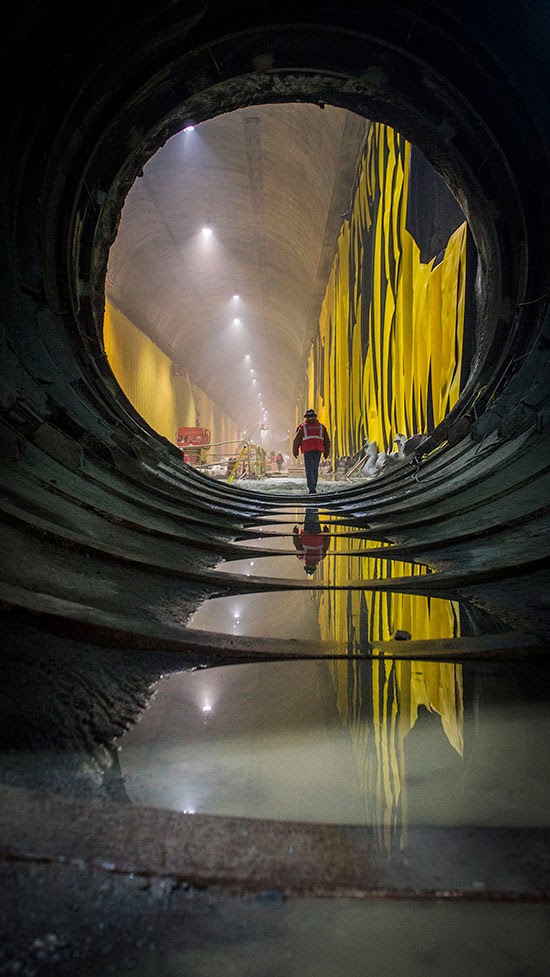
Forward into the colossal yellow room taking shape beneath Manhattan

[Image: A Metropolitan Transportation Authority worker steps forward into the colossal yellow room taking shape beneath Manhattan, an astonishing and cavernous new part of the city’s East Side Access Project that will expand rail service for the Long Island Rail Road. Don’t miss the original shot and its related images, all taken by Rehema Trimiew for the MTA].

Where The Alps Are A 3D-Printed Landscape Made From Artificial Snow

[Image: Photo by Danny Lane].

Earlier this winter, I missed an opportunity to travel over to Switzerland with architects Smout Allen and Kyle Buchanan who, at the time, were leading their students around the mountain landscapes of the Alps in order to learn about infrastructures of defense and national snow-production, among other things. It sounded like an amazing trip.

[Image: Photo by Kyle Buchanan].

However, I did get to see some photos sent back of the various and random things they visited in the resort city of Zermatt.

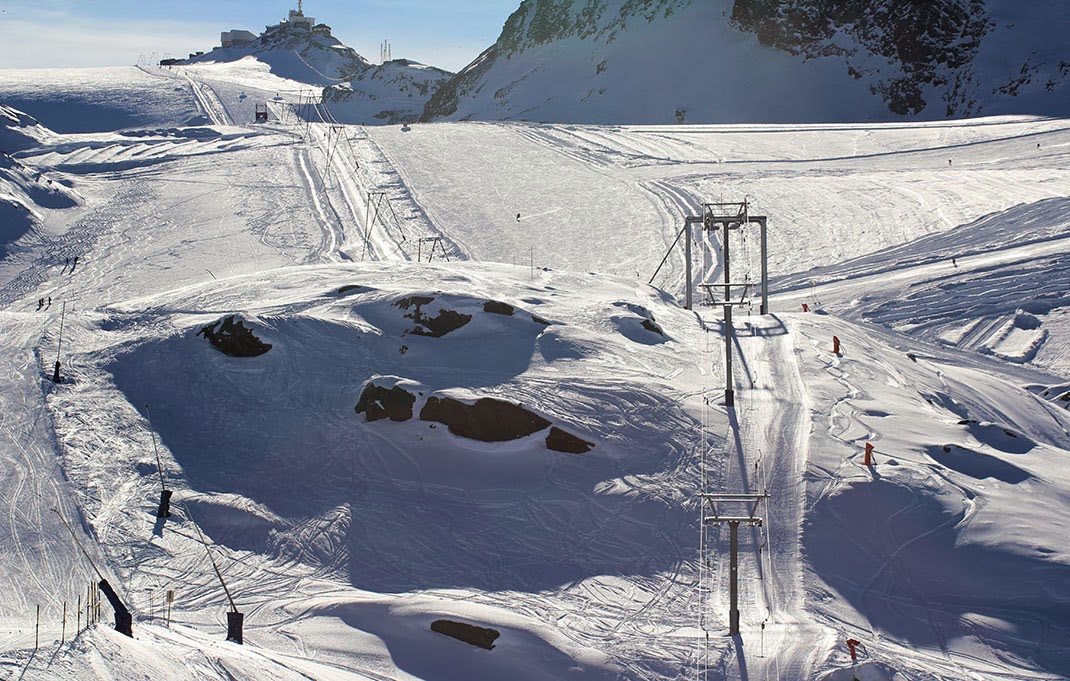
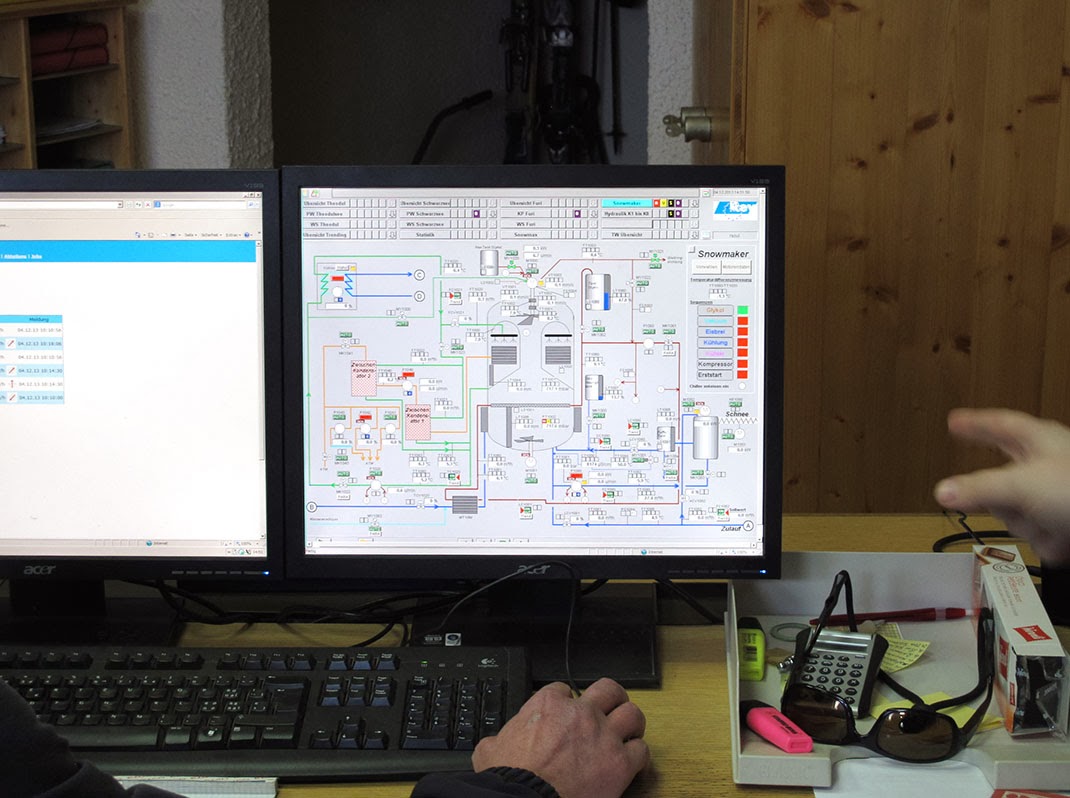
This included a huge machine known as The Snowmaker. Apparently originating in Israel, it was formerly used to cool South African diamond mines but since repurposed for spraying artificial snow onto ski slopes in the Alps.

[Images: Photos by Kyle Buchanan].

The carefully choreographed operation requires a fan-like array of buried water pipes, pipes that spread throughout the resort like capillaries.

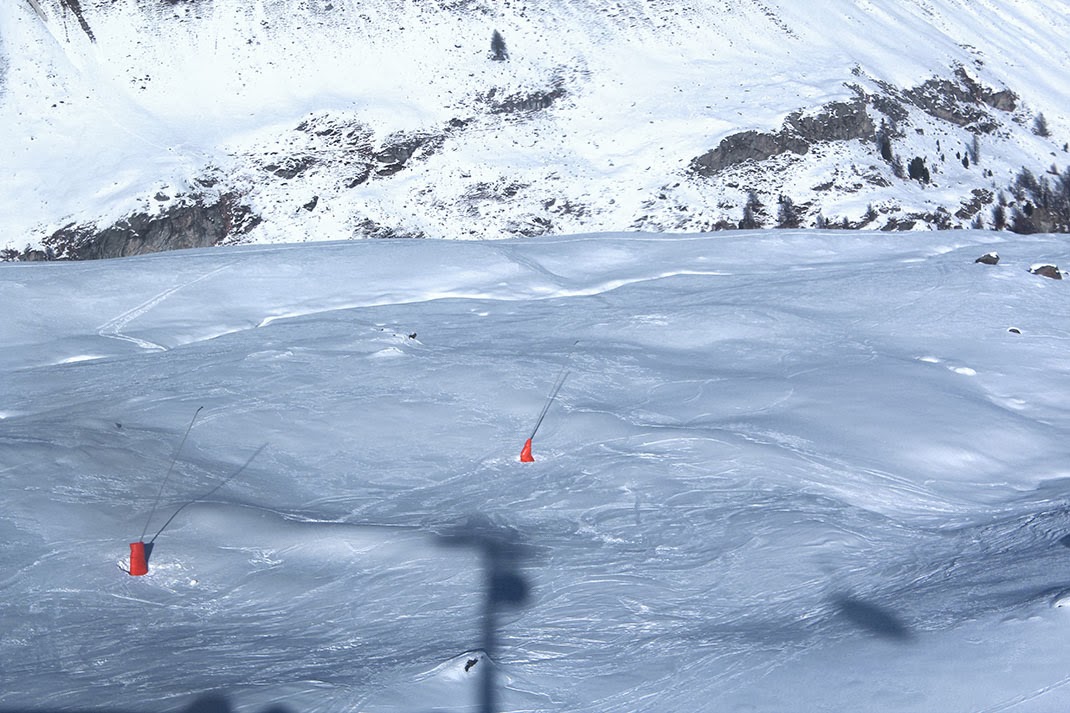
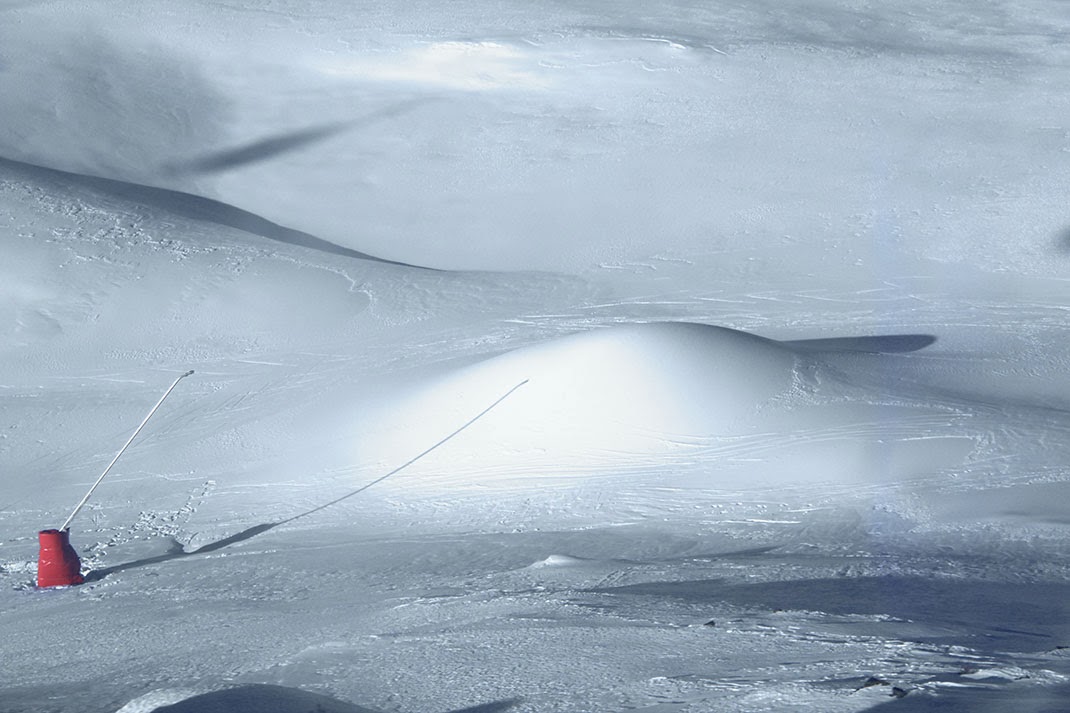
Snow—or what passes for it—then sprays out of thin, reed-like valves called “lances”—

[Image: Photo by Kyle Buchanan].

—resulting in other-worldly piles of fresh white powder, perfectly sculpted domes that later require selective placement elsewhere.

[Images: Photos by Danny Lane].

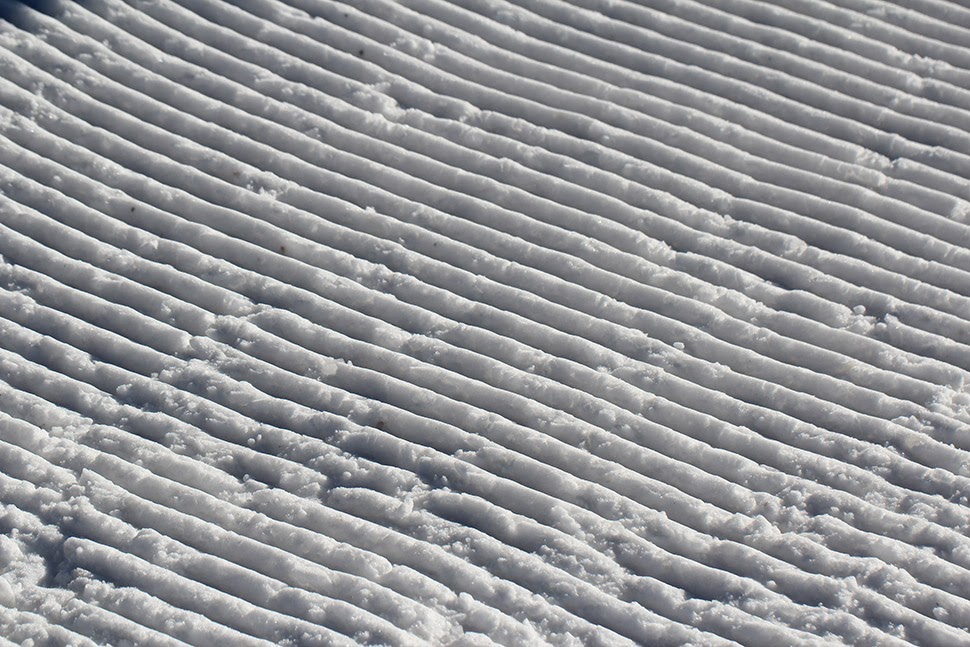
The shaping of the mountain landscape—so easily mistaken for nature—exhibits obvious features of artificiality, including careful lines and striated grooves resulting from deposition, sculpting, and maintenance.

[Image: Photo by Danny Lane].

The machine is literally an oversized air-conditioning unit, waiting to be put to use by landscape-printing crews whose work is mistaken for winter. It so efficiently—though inadvertently—produced ice while cooling diamond mines in Africa that it has since been put to use 3D-printing popular tourist landscapes into existence, like something out of Dr. Seuss.

To at least some extent, The Snowmaker—and newer technology like it—has replaced older, fan-based snow machines. These thus now sit in a maintenance shed, like antique airplane engines, both derelict and obsolete.

[Image: Photo by Danny Lane].

This is all just part of the dramaturgical stagecraft of Switzerland: winter becomes a precisely choreographed thermal event that just happens to take on spatial characteristics amenable to downhill skiing.

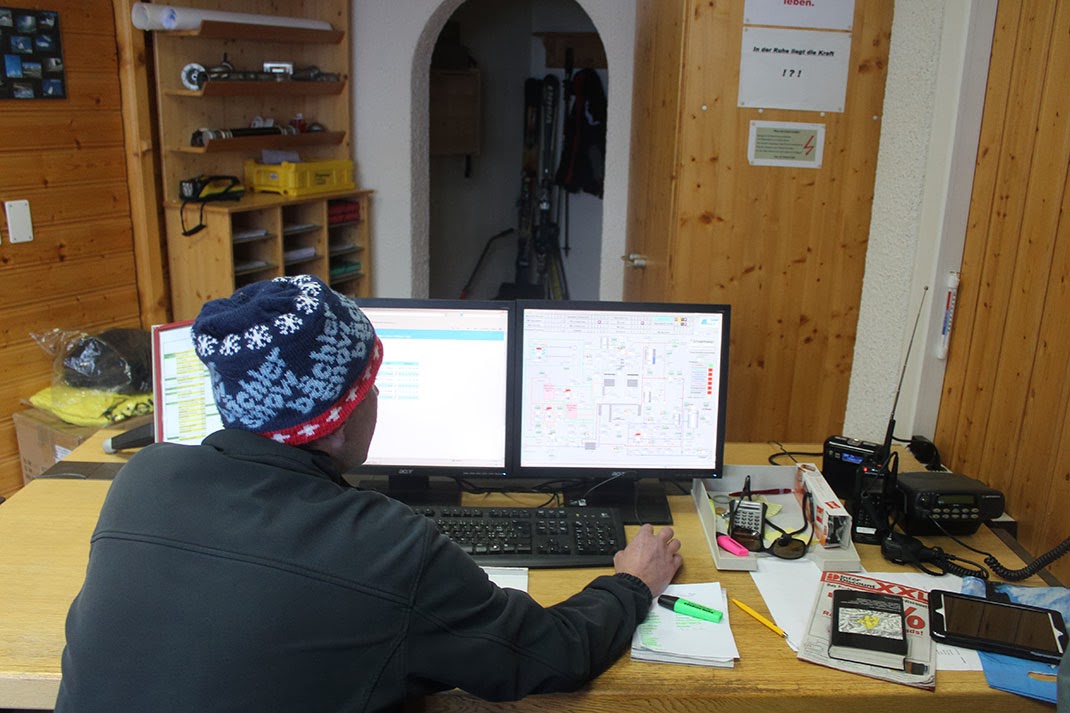
In any case, there are nearly 1,000 individual snow-production machines in Zermatt, only one of which is The Snowmaker. The whole system is controlled from a central computer, apparently operated by one wizard-like figure who is really just a stoned twentysomething in a wool hat, turning different parameters on and off and spraying whole new European landscapes into existence outside.

[Images: (top) Photo by Danny Lane; (bottom) photo by Kyle Buchanan].

It’s like the Sorcerer’s Apprentice at the top of the world, 3D-printing recreational mountainscapes. The landscape is a computer he alone knows how to use.

Imagine if Thomas Mann’s Magic Mountain had taken place amidst a massive, artificially maintained and 3D-printed winter, and you might begin to grasp the unearthly strangeness here, the surreal mechanical goings-on at great altitude.

What appears, at first glance, to be a simple ski holiday actually turns out, upon later inspection, to be a landscape-scale encounter with artificiality and snow-based 3D-printing.

(Thanks to Mara Kanthak for her help with translation in Switzerland).

Kiln

[Image: Via Tunnel Business Magazine].

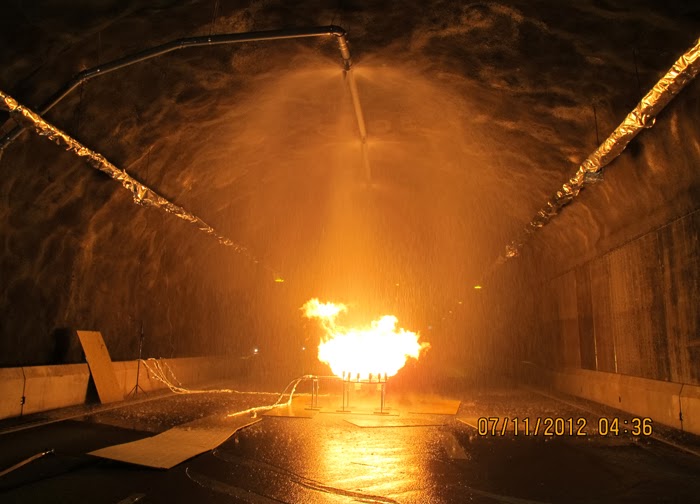
The abandoned Runehamar road tunnel on the southwest coast of Norway has been redesigned and given new life as a site for the experimental burning of trucks, cargo, and other vehicular structures in order to learn how subterranean road fires can best be extinguished.

It’s a kind of Nordic funeral pyre built not for the bodies of kings but for the products of the automotive industry, an underground bonfire of simulated car wrecks that seems more like something you’d see in the fiction of J.G. Ballard.

The overall structure has been modified to serve as a closely-controlled thermal environment—more a furnace than a piece of transportation infrastructure—complete with an array of instruments and sensors, and a system of sprinklers and ventilation fans that let observers try out novel methods of fire suppression.

In a sense, this is what might happen if someone like architect Philippe Rahm was given a limited budget and hired to design experimental subterranean road infrastructure, with his work’s focus on the thermal behavior of spaces and other non-visual dimensions of the built environment.

The Norwegian Public Roads Association explains why all this is necessary:

There is a need for more detailed knowledge on how and why various semi-trailer cargos burn so strongly and why they spread so quickly. The high heat exposure from the semi-trailers to the tunnel linings also needs more focus. The only reasonable way of finding an answer to these questions is to carry out systematic large scale experiments that can provide a better basis for the design of technical systems in road tunnels.

There’s more to write about the tunnel, I’m sure, and there is a bit more detail in the original post on Gizmodo—including, for those of you curious, this PDF that comes complete with structural and thermal diagrams of the burning apparatus.

But I suppose I’m more interested in the sheer strangeness of an old road tunnel being transformed into a venue for controlled thermal events. It is ritualistic, repetitive, and pyromaniacal, as if vitamin-D-deprived engineers in lab coats have been endlessly sacrificing sacred cargo for some infernal mountain, an altar for automotive transubstantiation, where unknown driving objects are reduced to ash and studied, again and again, filmed and re-watched—until the next fire, when the sprinklers fill up again and the vents, like a buried engine, begin to roar.

(Via Gizmodo).

Flywheel Landscapes, Energy Reserves, 3D-Printed Urban Caves, and the British Exploratory Land Archive

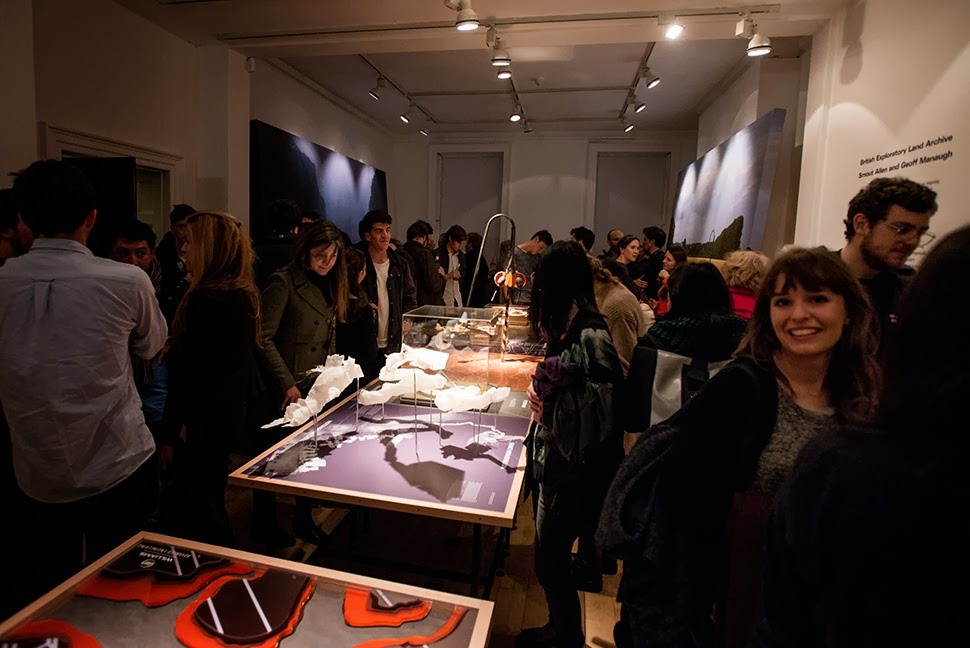
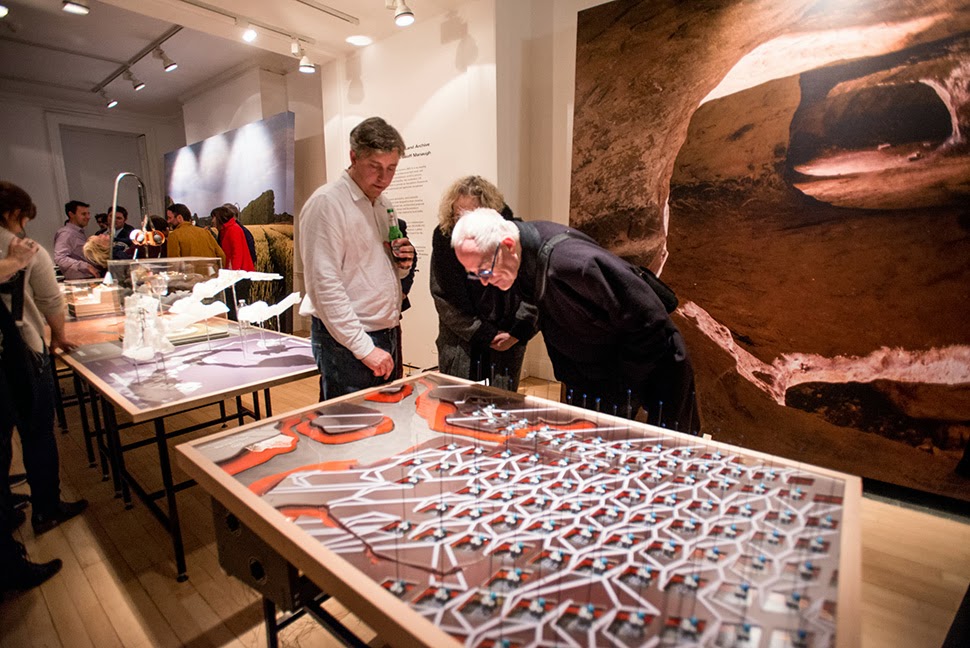
Last week, over at the Architectural Association in London, a new exhibition opened, continuing the work of the British Exploratory Land Archive, an ongoing collaboration between myself and architects Mark Smout & Laura Allen of Smout Allen.

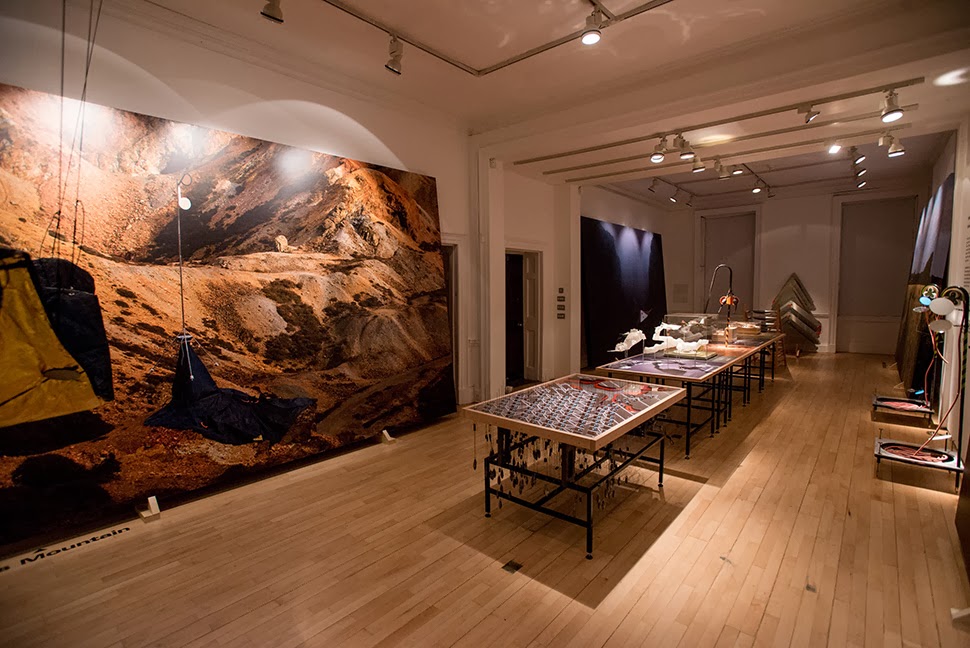
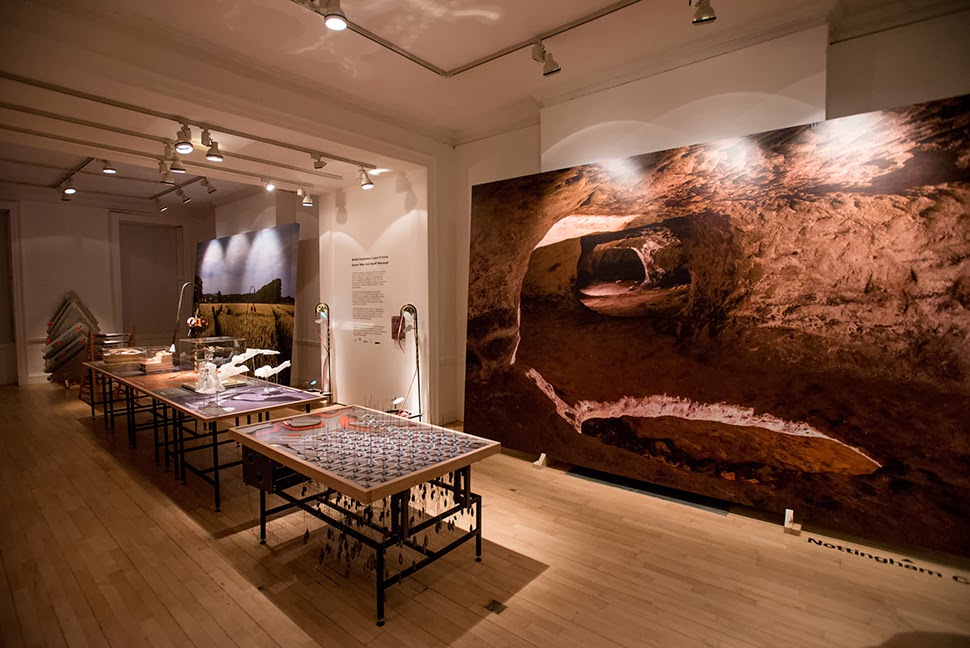
Although I was unfortunately not able to be in London to attend the opening party, I was absolutely over the moon to get all these photographs, taken by Stonehouse Photographic. These show not only the models, but also the show’s enormous wall-sized photographs and various explanatory texts.
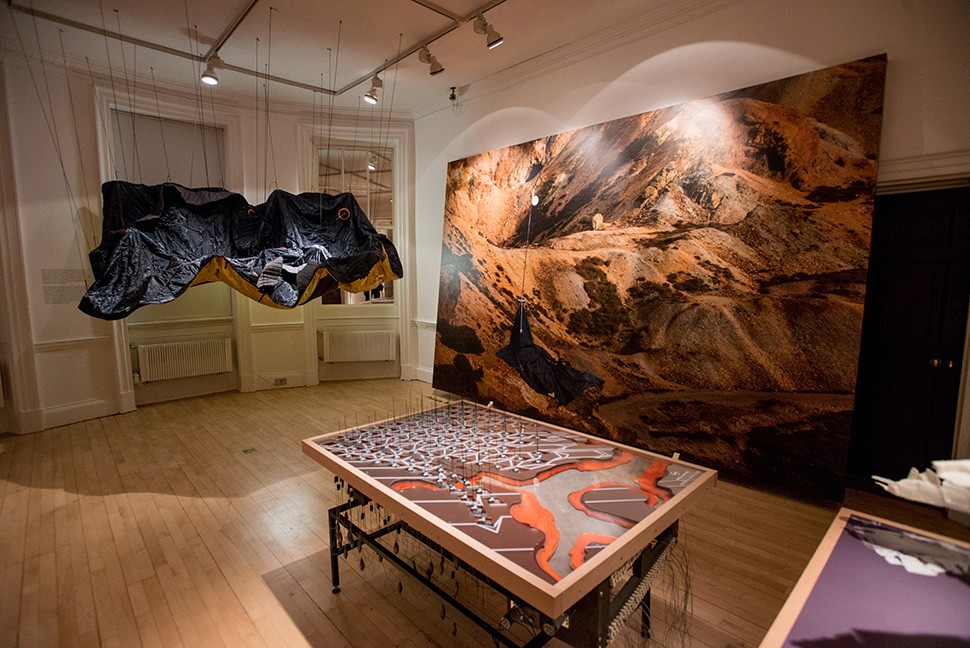
The work on display ranged from cast models of underground sand mines in Nottingham, based on laser-scanning data donated by the Nottingham Caves Survey, to an architectural model the size and shape of a pool table, its part precision 3D-printed for us by Williams, of Formula 1 race car fame. Williams—awesomely and generously—also collaborated with us in helping come up with a new, speculative use of their hybrid flywheel technology (more on this, below).
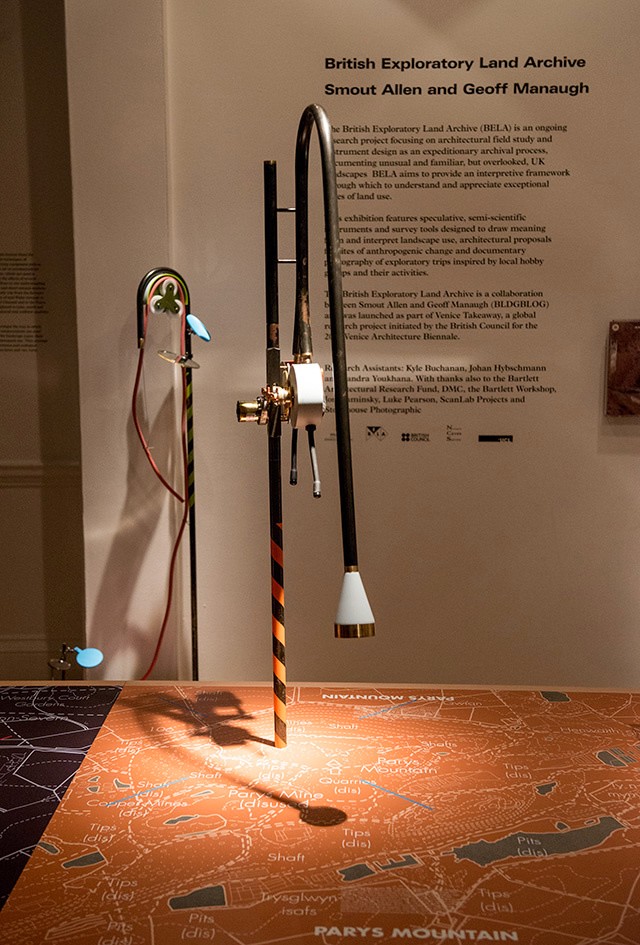
From the bizarre environmental-sensing instruments first seen back at the Landscape Futures exhibition at the Nevada Museum of Art to landscape-scale devices printing new islands out of redistributed silt—a kind of dredge-jet printer spraying archipelagos along the length of the Severn—the scale and range of the objects on display is pretty thrilling to see.
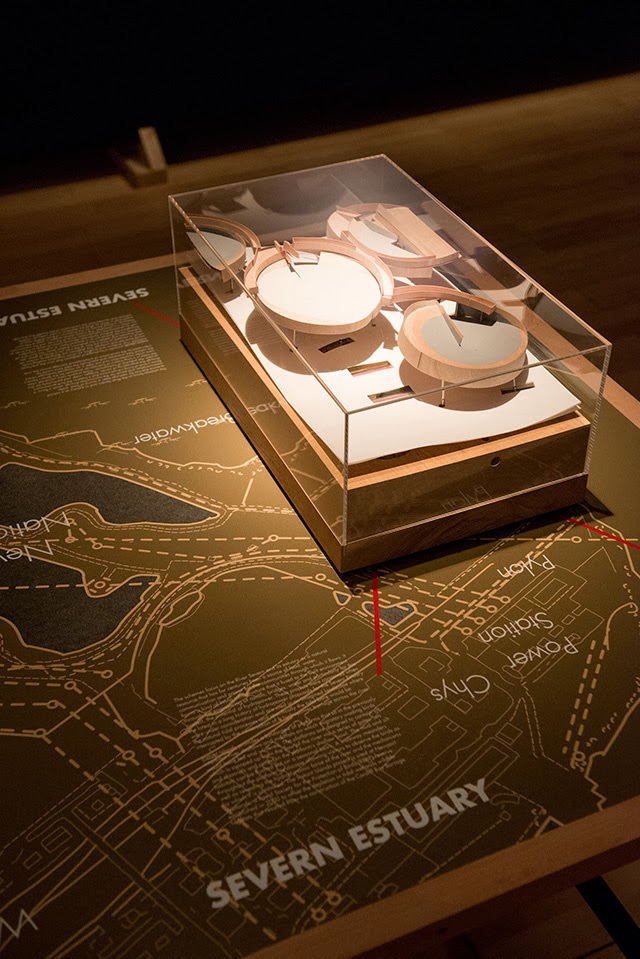
I should quickly add that the exhibition is, by far and away, the work of Smout Allen, who burned candles at every end to get this all put together; despite being involved with the project, and working with the ideas all along, since last summer’s Venice Biennale, I am fundamentally an outside observer on all of this, simply admiring Smout Allen’s incredible tenacity and technical handiwork whilst throwing out the occasional idea for new projects and proposals.
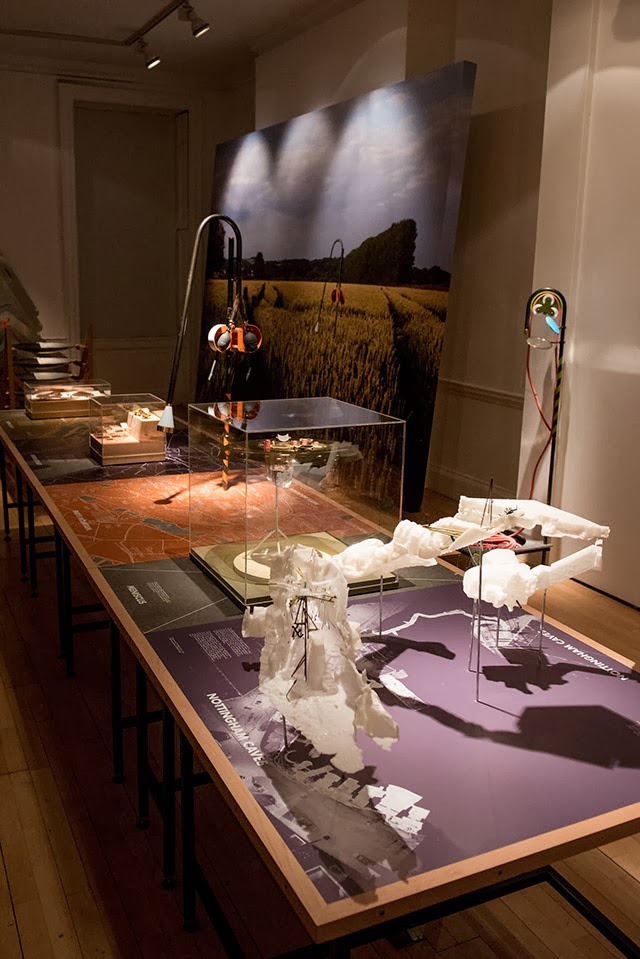
In any case, a brief note on the collaboration with Williams: one of the proposed projects in the exhibition is a “flywheel reservoir” for the Isle of Sheppey.

This would be an energy-storage landscape—in effect, a giant, island-sized, semi-subterranean field of batteries—where excess electrical power generated by the gargantuan offshore field of wind turbines called the London Array would be held in reserve.

This island of half-buried spinning machines included tiny motor parts and models based on Williams’ own hybrid flywheel technology, normally used in Formula 1 race cars.

It was these little parts and models that were 3D-printed in alumide—a mix of nylon and aluminum dust—for us by engineers at Williams.

The very idea of a 3D-printed energy storage landscape on the British coast, disguised as an island, whirring inside with a garden of flywheels, makes my head spin, and a part of me would actually very much love to pursue feasibility studies to see if such a thing could potentially even be constructed someday: a back-up generator for the entire British electrical grid, saving up power from the London Array, brought to you by the same technology that helps power race cars.

Briefly, I was also interested to see that the little 3D-printed gears and pieces, when they first came out of the printer and had not yet been cleaned up or polished, looked remarkably—but inadvertently—like a project by the late Lebbeus Woods.

Finally, thanks not only to Williams, but to the Architectural Association for hosting the exhibition (in particular, Vanessa Norwood for so enthusiastically making it happen); to the small but highly motivated group of former students from the Bartlett School of Architecture, who helped to fabricate some of the exhibition’s other models and to organize some the British Exploratory Land Archive’s earlier projects; to the Nottingham Caves Survey for generously donating a trove of laser-scanning data for us to use in one of the models, and to ScanLAB Projects for helping convert that laser data into realizable 3D form; to UCL for the financial support and facilities; to Stonehouse Photographic, who not only was on hand to document the opening soirée but who also produced the massive photos you see leaning against the walls in the images reproduced here; and—why not?—to Sir Peter Cook, one of my own architectural heroes, for stopping by the exhibition on its opening night to say hello.

The exhibition is open until December 14 at the Architectural Association. Read more about the project here.

The Drowned

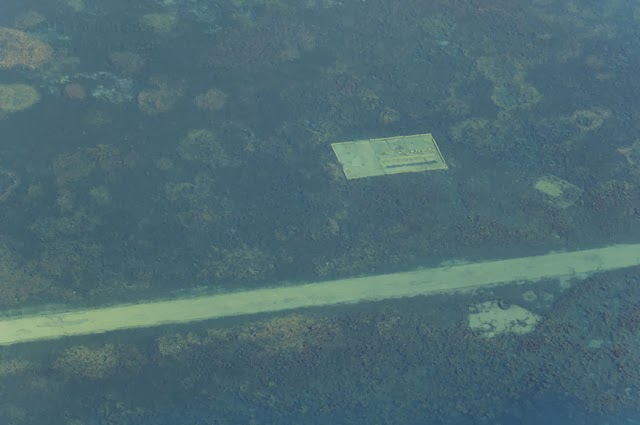
[Image: “Two Buildings Riverside Heights” by Louis Helbig].

I posted these photos on Gizmodo the other week, but I wanted to throw them up here, as well: a series of wildly evocative aerial photographs by Louis Helbig, for a project called Sunken Villages.

Helbig has been documenting flooded villages and industrial structures losted to the water along the artificially engineered St. Lawrence Seaway, a borderland hydrological project smack in the international margin between Canada and the United States.

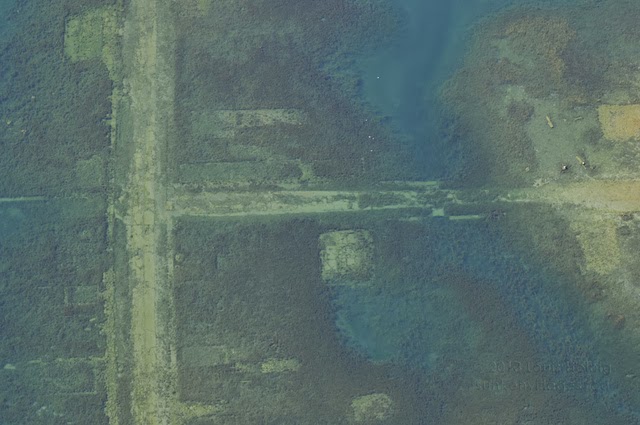
[Images: “Lot 3317 E. Campbell Property” (top) and “Downtown Aultsville” (bottom) by Louis Helbig].

As Helbig explains on the wonderfully organized and detailed project website:

July 1, 1958, is remembered as Inundation Day in the region near Cornwall, Ontario. At 08:00 a controlled explosion tore open a cofferdam and four days later an area that had been home to 7,500 people disappeared under the waves of Lake St. Lawrence, part of the newly created St. Lawrence Seaway.

On the Canadian side, twelve communities, some dating back to the 1700s, were affected. Following the old King’s Highway No. 2, upstream: Maple Grove, Mille Roches, Moulinette, Sheeks Island, Wales, Dickinson’s Landing, Farran’s Point and Aultsville were entirely destroyed; Iroquis was demolished and moved a mile to continue on in name; and, about half of Morrisburg–including its waterfront and most of its business district and main street–were levelled.

On the American side in St Lawrence County, the community of Croil’s Island disappeared and, along Highway 37B, Louisville Landing and Richards Landing ceased to exist, and parts of Waddington were dismantled.

On both sides, large rural tracts and property, farms, cottages, and entire islands were flooded. Sacred sites were obliterated and the historic battlefield of Crysler’s farm–where in November 1813 Redcoats, local militia and Mohawk warriors staved off a larger American force intent on sacking Montreal—disappeared.

With the communities went their infrastructure. Some buildings were moved and some graves exhumed. Roads, railways, and bridges were left to be buried along with the previous system of locks and canals. All else was levelled, razed to the foundations, cut to the stumps, burned and bulldozed.

But easily one of the most awesome moments in Helbig’s write-up is when he points out the inadvertent photographic side-effects of the zebra mussel: the “zebra mussel—an unintended consequence of the Seaway—has clarified the water making [the structures] visible once more.”

In other words, an aquatic infestation has allowed the ruins of old houses and towns to become visible in the murk, drawing back a silty curtain for aerial photographers and recreational boaters—as if we could reveal the presence of drowned things by seeding the waterways of the world with clarifying organisms, filtering water-logged sites of the past for future view.

[Image: “Downtown Altsville East to West” by Louis Helbig].

Old locks and canals rest below the surface of the riverway like dreams. Walls of lost houses are still legible in plan. Entire streets and town cores lie amidst the sediment, steadily fossilizing.

[Image: “Bar with Octagonal Silo” by Louis Helbig].

Click through to the Sunken Villages website for much more context and history, including interviews with local residents pushed out by the rising waters.

Meanwhile, the project was on display at the Marianne van Silfhout Gallery until November 2—but here’s to hoping Helbig’s project will travel, and find a gallery elsewhere interested in picking it up.

(Originally spotted via @urbanphoto_blog, easily one of the best architecture and urbanism feeds on Twitter. A different, earlier version of this appeared on Gizmodo).

(waves, says hello, disappears again)

[Image: Collage by Michael Hession, based on this image from the Library of Congress].

The last few weeks have been extremely busy, and there’s been no real time to post here on BLDGBLOG; so many interesting stories have come and gone, so many ideas to discuss and write about here, but I’ve primarily been working full-throttle in my new role as Editor-in-Chief of Gizmodo, where I’ve joined a team tasked with continuing the site’s transition away from pure tech news and gadget reviews to include the worlds of architecture, urbanism, and design. Any sufficiently large technology is indistinguishable from a landscape, we might say; any sufficiently ubiquitous machine indistinguishable from a city.

[Image: Inside a wind tunnel, courtesy of NASA, via Gizmodo].

In any case, I will be very busy for the foreseeable future in my new role—but we’ve published some really fantastic features there over the past few weeks alone, and I thought I’d throw up a quick post to give BLDGBLOG readers a taste of what’s to come. Here’s a solid list for a long day’s perusal:

Gizmodo was part of the first media tour since the 1980s of Hart Island, the largest mass grave site in the United States, run by the Department of Corrections on the outer maritime edge of New York City.

—”Capture houses” are entire decoy apartments and homes—furnished, lit, and run like actual residences—that, in reality, are elaborate traps for capturing burglars.

—The lost cow tunnels of New York City are no longer an urban myth: Nicola Twilley dug up blueprints for Gizmodo.

—The Los Angeles Aqueduct’s 100-year anniversary just rolled by and, with it, an historic reenactment of the moment the city’s floodgates were opened.

—New Yorkers receive junk mail from the future, thanks to designers Chris Woebken and Elliott P. Montgomery.

—”3D painting” creates working machine parts from directed aerosol layering—in effect, spray-painting objects into existence.

—A South Carolina archaeologist, citing Star Trek: The Next Generation as an influence, has scanned Linear B so that machines can help catalog the ancient past.

—The future of disaster recovery is a constellation of semi-autonomous robots swarming over avalanches and ruined cities to find survivors.

—An incredible “tangible interface” roils like the surface of a mechanical sea, reproducing any object you place within view of its sensors.

—We were on hand to see “Bertha,” the largest-diameter tunneling machine in the world, start spinning its way into the underworld of Seattle.

[Image: Bertha, a tunneling jaeger, undergoes assembly, courtesy of WSDOT, via Gizmodo].

—We learned what life is like on the job of a New York City archaeologist, digging up water mains, old bottles, and the foundation walls of lost prisons.

—Take a look at these chains 3D-printed from ice and igloos algorithmically constructed by architectural robots.

—This herky-jerky rock-climbing robot from NASA could someday conquer the glaciers, cliffs, caves, and mountains of alien worlds.

—Cheese made from human bacteria, cultivated into tomorrow’s sci-fi brie.

—Cold War weapons that terrified U.S. military intelligence.

—New techniques for turning nuclear waste into glass.

—And another tour of the Brooklyn super-factory producing modules for what will be the tallest prefab tower in the United States, right here in New York City.

Enjoy! Meanwhile, I’ll see you on the internet, here, there, and elsewhere, though the frequency of posting here will now be closer to just 2 or 3 times a month.

Hydrological Ceremonies Beneath the City

[Image: Valve chamber for City Water Tunnel No. 3; Instagram by BLDGBLOG].

I had the pleasure last week of visiting an enormous valve chamber 200′ beneath Central Park for the official opening of City Water Tunnel No. 3.

[Image: Mayor Bloomberg opens the tunnel; Instagram by BLDGBLOG].

New York City Mayor Michael Bloomberg was there to offer his own perspective on the value of urban infrastructure, and the colossal valves themselves were opened only a few hours later, bringing drinking water through the $5 billion tunnel, to residents of Lower Manhattan, for the very first time.

[Image: Waiting for the water to flow through Tunnel No. 3; Instagram by BLDGBLOG].

After no fewer than 43 years of construction, it was a pretty amazing ceremony to attend, sitting there at the end of Bloomberg’s reign, amidst security personnel, in a cathedral-like space beneath Central Park, reporters spread out across pews of blue plastic chairs arranged in what felt like a Romanesque side-chapel radiating off from the barrel vault of the central nave.

A manhole beneath our chairs was a surreal indication that, even here, 200′ beneath the city, much deeper levels lay hidden below (in fact, the actual water tunnel itself was another 400′ beneath us).

[Image: The labyrinth of smaller pipes that feed from and lead to Tunnel No. 3; Instagram by BLDGBLOG].

For many more photographs—that aren’t limited to Instagrams—and a much longer write-up, click through to Gizmodo.

(Vaguely related: Subterranean Machines Resurrections and The Windowless Hall of Tides).