Joyful Rendezvous Upon Pure Ice and Snow

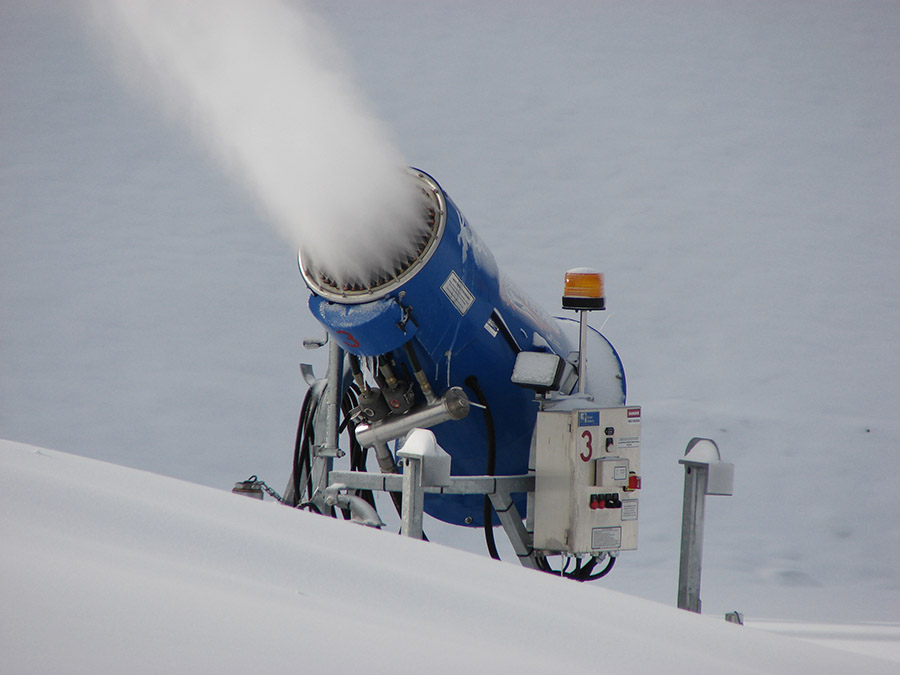
[Image: Snow-making equipment via Wikipedia].

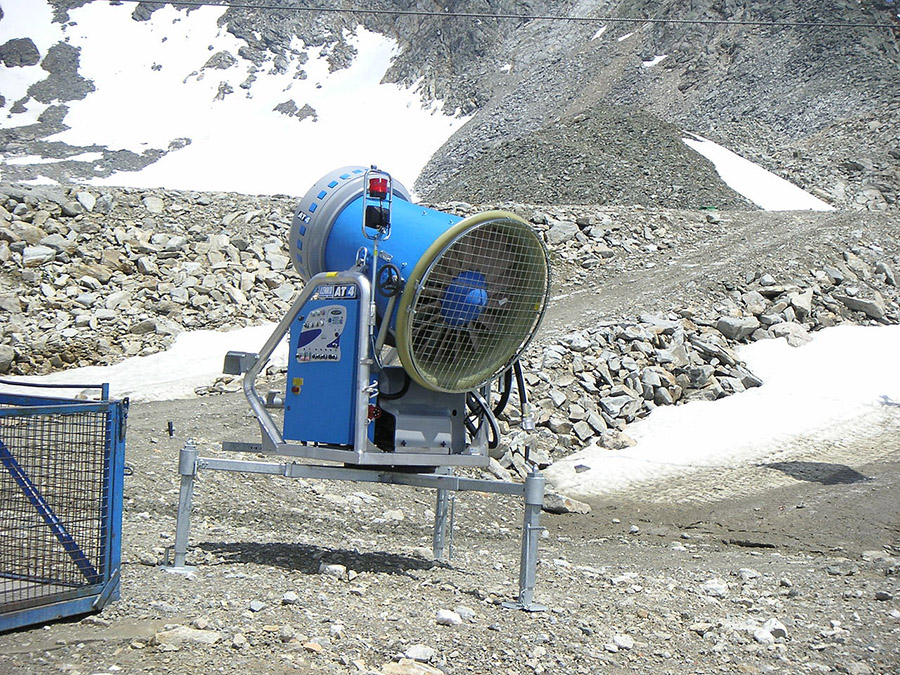
The 2022 Winter Olympics in Beijing are something of a moonshot moment for artificial snow-making technology: the winter games will be held “in a place with no snow.” That’s right: “the 2022 Olympics will rely entirely on artificial snow.”

As a report released by the International Olympic Committee admits, “The Zhangjiakou and Yanqing Zones have minimal annual snowfall and for the Games would rely completely on artificial snow. There would be no opportunity to haul snow from higher elevations for contingency maintenance to the racecourses so a contingency plan would rely on stockpiled man-made snow.”

This gives new meaning to the word snowbank: a stock-piled reserve of artificial landscape effects, an archive of on-demand, readymade topography.

Beijing’s slogan for their Olympic bid? “Joyful Rendezvous upon Pure Ice and Snow.”

[Image: Snow-making equipment via Wikipedia].

Purely in terms of energy infrastructure and freshwater demand—most of the water will be pumped in from existing reservoirs—the 2022 winter games will seemingly be unparalleled in terms of their sheer unsustainability. Even the IOC sees this; from their report:

The Commission considers Beijing 2022 has underestimated the amount of water that would be needed for snowmaking for the Games but believes adequate water for Games needs could be supplied.

In addition, the Commission is of the opinion that Beijing 2022 has overestimated the ability to recapture water used for snowmaking. These factors should be carefully considered in determining the legacy plans for snow venues.

Knowing all this, then, why not be truly radical—why not host the winter games in Florida’s forthcoming “snowball fight arena,” part of “a $309 million resort near Kissimmee that would include 14-story ski and snowboard mountain, an indoor/outdoor skateboard park and a snowball fight arena”?

Why not host them in Manaus?

Interestingly, the IOC also raises the question of the Games’ aesthetics, warning that the venues might not really look like winter.

“Due to the lack of natural snow,” we read, “the ‘look’ of the venue may not be aesthetically pleasing either side of the ski run. However, assuming sufficient snow has been made or stockpiled and that the temperature remains cold, this should not impact the sport during the Games.”

Elsewhere: “There could be no snow outside of the racecourse, especially in Yanqing, impacting the visual perception of the snow sports setting.” This basically means that there will be lots of bare ground, rocks, and gravel lining the virginal white strips of these future ski runs.

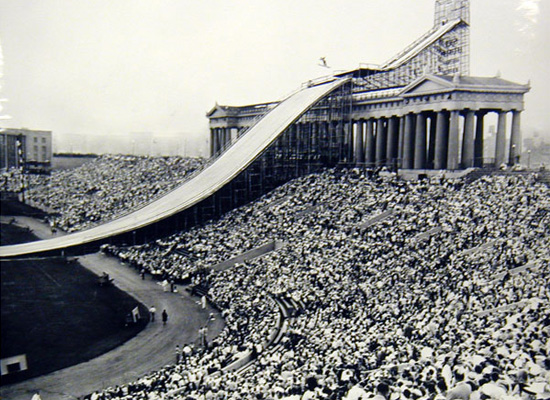
[Image: Ski jumping in summer at Chicago’s Soldier Field (1954); via Pruned].
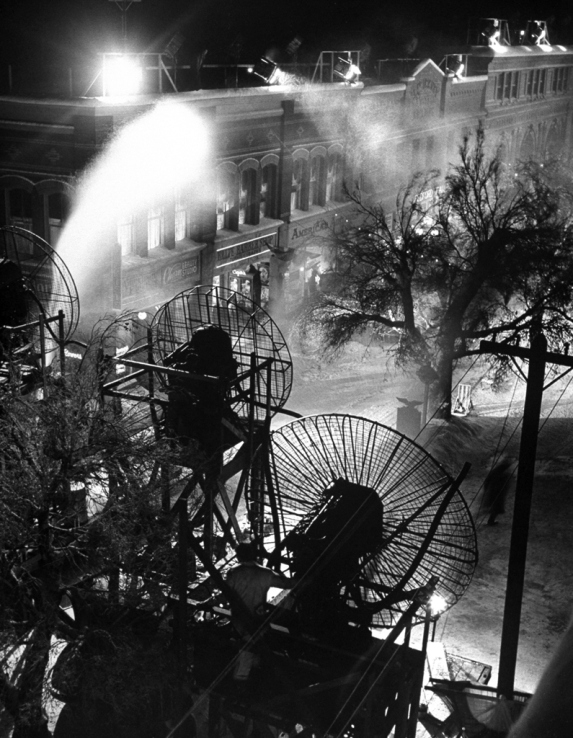
Several years ago, Pruned satirically offered Chicago as a venue for the world’s “first wholly urban Winter Olympics.” With admirable detail, he went into many of the specifics for how Chicago might pull it off, but he also points out the potential aesthetic disorientation presented by seeing winter sports in a non-idyllic landscape setting.

“Chicago’s gritty landscape shouldn’t be much of a handicap,” he suggests. Chicago might not “embody a certain sort of nature—rustic mountains, pastoral evergreen forests, a lonely goatherd, etc.,” but the embedded landscape technology of the Winter Games should have left behind that antiquated Romanticism long ago.

As Pruned asks, “have the more traditional Winter Olympic sites not been over the years transformed into high-tech event landscapes, carefully managed and augmented with artificial snow and heavy plows that sculpt the slopes to a pre-programmed set of topographical parameters?”

Seen this way, Beijing’s snowless winter games are just an unsustainable historical trajectory taken to its most obvious next step.

[Image: Making snow for It’s A Wonderful Life, via vintage everyday].

In any case, the 2022 Winter Olympics are shaping up to be something like an Apollo Program for fake snow, an industry that, over the next seven years, seems poised to experience a surge of innovation as the unveiling of this most artificial of Olympic landscapes approaches.

Landscapes of Inevitable Catastrophe

[Image: Illustration by David McConochie, courtesy of The Art Market, via The Guardian].

Last month, The Economist reported on the widespread presence of radioactive tailings piles—waste rock left over from Soviet mining operations—in southern Kyrgyzstan. Many of the country’s huge, unmonitored mountains of hazardous materials are currently leaching into the local water supply.

In a particularly alarming detail, even if you wanted to avoid the danger, you might not necessarily know where to find it: “Fences and warning signs have been looted for scrap metal,” we read.

Frequent landslides and seasonal floods also mean that the tailings are at risk of washing downriver into neighboring countries, including into “Central Asia’s breadbasket, the Fergana Valley, which is home to over 10m people… A European aid official warns of a ‘creeping environmental disaster.'”

Attempts at moving the piles have potentially made things worse, releasing “radioactive dust” that might be behind a spike in local cancers.

In addition to the sheer aesthetic horror of the landscape—a partially radioactive series of river valleys, lacking in warning signs, that writer Robert Macfarlane would perhaps call “eerie,” a place where “suppressed forces pulse and flicker beneath the ground and within the air… waiting to erupt or to condense”—it’s worth noting at least two things:

One, there appears to be no end in sight; as The Economist points out, the neighboring countries “are hardly on speaking terms, so cross-border co-operation is non-existent,” and the costs of moving highly contaminated mine waste are well out of reach for the respective governments.

This means we can more or less confidently predict that, over the coming decades, many of these tailings piles will wash away, slowly but relentlessly, fanning out into the region’s agricultural landscape.

Once these heavy metals and flecks of uranium have dispersed into the soil, silt, and even plantlife, they will be nearly impossible to re-contain; this will have effects not just over the span of human lifetimes but on a geological timescale.

Second, most of these piles are unguarded: unwatched, unmonitored, unsecured. They contain radioactive materials. They are in a region known for rising religious extremism.

Given all this, surely finding a solution here is rather urgent, before these loose mountains of geological toxins assume an altogether more terrifying new role in some future news cycle—at which point, in retrospect, articles like The Economist‘s will seem oddly understated.

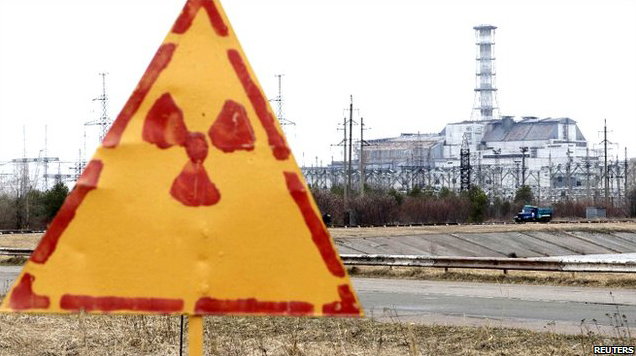
[Image: Hand-painted radiation sign at Chernobyl, via the BBC].

Indeed, our ability even to comprehend threats posed on a geologic timescale—let alone to act on those threats politically—is clearly not up to the task of grappling with events or landscapes such as these.

To go back to Robert Macfarlane, he wrote another article earlier this year about the specialized vocabulary that has evolved for naming, describing, or cataloging terrestrial phenomena. By contrast, he suggests, we now speak with “an impoverished language for landscape” in an era during when “a place literacy is leaving us.”

As Macfarlane writes, “we lack a Terra Britannica, as it were: a gathering of terms for the land and its weathers—terms used by crofters, fishermen, farmers, sailors, scientists, miners, climbers, soldiers, shepherds, poets, walkers and unrecorded others for whom particularised ways of describing place have been vital to everyday practice and perception.”

Channeling Macfarlane, where is the vocabulary—where are our cognitive templates—for describing and understanding these landscapes of long-term danger and slow catastrophe?

It often seems that we can stare directly into the wasteland without fear, not because there is nothing of risk there, but because our own words simply cannot communicate the inevitability of doom.

Horse Skull Disco

[Image: Horse skull via Wikimedia].

If you’re looking to install a new sound system in your house, consider burying a horse skull in the floor.

According to the Irish Archaeological Consultancy, the widespread discovery of “buried horse skulls within medieval and early modern clay floors” has led to the speculation that they might have been placed there for acoustic reasons—in other words, “skulls were placed under floors to create an echo,” we read.

Ethnographic data from Ireland, Britain and Southern Scandinavia attests to this practice in relation to floors that were in use for dancing. The voids within the skull cavities would have produced a particular sound underfoot. The acoustic skulls were also placed in churches, houses and, in Scandinavia especially, in threshing-barns… It was considered important that the sound of threshing carried far across the land.

They were osteological subwoofers, bringing the bass to medieval villages.

It’s hard to believe, but this was apparently a common practice: “the retrieval of horse skulls from clay floors, beneath flagstones and within niches in house foundations, is a reasonably widespread phenomenon. This practice is well attested on a wider European scale,” as well, even though the ultimate explanation for its occurrence is still open to debate (the Irish Archaeological Consultancy post describes other interpretations, as well).

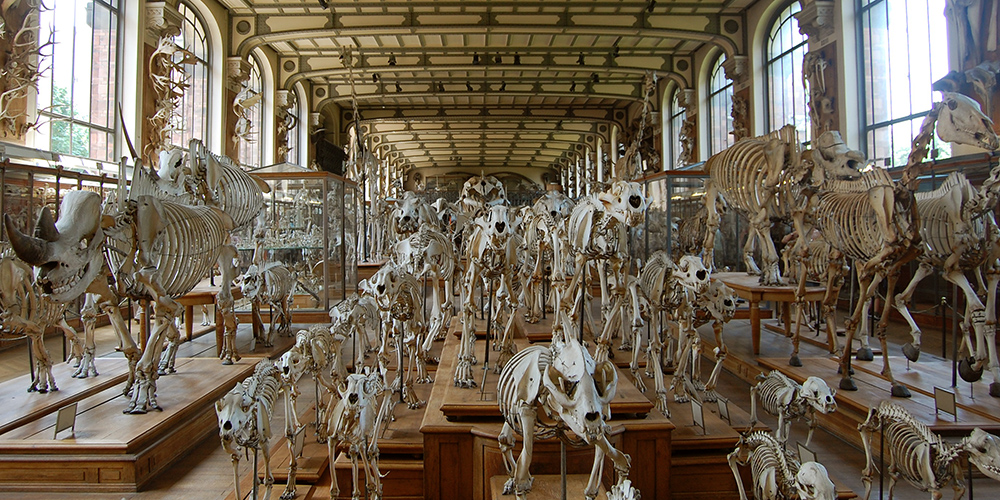
Either way, it’s interesting to wonder if the thanato-acoustic use of horse skulls as resonating gourds in medieval architectural design might have any implications for how natural history museums could reimagine their own internal sound profiles—that is, if the vastly increased reverberation space presented by skulls and animal skeletons could be deliberately cultivated to affect what a museum’s interior sounds like.

[Image: Inside the Paris Natural History Museum; photo by Nicola Twilley].

Like David Byrne’s well-known project Playing the Building—”a sound installation in which the infrastructure, the physical plant of the building, is converted into a giant musical instrument”—you could subtly instrumentalize the bones on display for the world’s most macabre architectural acoustics.

(Via @d_a_salas. Previously on BLDGBLOG: Terrestrial Sonar).

Full-Spectrum Mandala

[Image: Via the Pacific Cold War Patrol Museum].

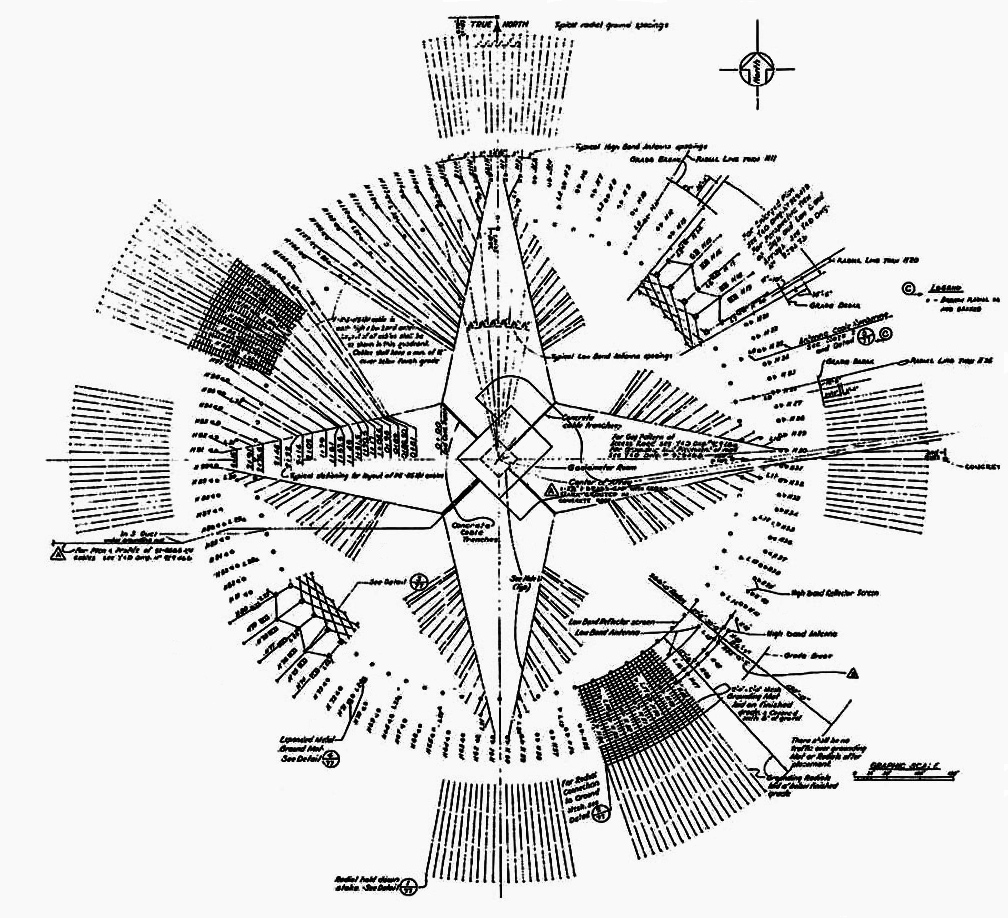
Somewhat randomly—though I suppose I have a thing for antennas—I came across a blog post looking at the layout of Circularly Disposed Antenna Arrays.

A Circularly Disposed Antenna Array, he explains, was “sometimes referred to as a Circularly Disposed Dipole Array (CDDA)” and was “used for radio direction finding. The military used these to triangulate radio signals for radio navigation, intelligence gathering and search and rescue.”

[Image: Via the Pacific Cold War Patrol Museum].

While discussing the now-overgrown landscapes found on old military sites in Hawaii, the post’s author points out the remains of old antenna set-ups still visible in the terrain.

A series of photos, that you can find over at the original post, show how these abandoned circular land forms—like electromagnetic stone circles—exist just below the surface of the Hawaiian landscape, thanks to the archipelago’s intense militarization over the course of the 20th century.

He then cleverly juxtaposes these madala-like technical diagrams with what he calls a “Polynesian guidance system for navigating the Pacific” (bringing to mind our earlier look at large-scale weather systems in the South Pacific and how they might have guided human settlement there).

[Image: Via the Pacific Cold War Patrol Museum].

The idea that Polynesian shell map geometries and the antenna designs of Cold War-era military radio sites might inadvertently echo one another is hugely evocative, albeit purely a poetic analogy.

Finally, I couldn’t resist this brief passage, describing many of these ruined antenna sites: “Their exact Cold War era use, frequencies and purpose isn’t yet known but were most likely for aircraft radio navigation, direction finding, intelligence gathering and for search and rescue.”

You can all but picture the opening shots of a film here, as concerned military radio operators, surrounded by the arcane, talismanic geometries of antenna structures in the fading light of a Pacific summer evening, pick up the sounds of something vast and strange moving at the bottom of the sea.

Horizon Line

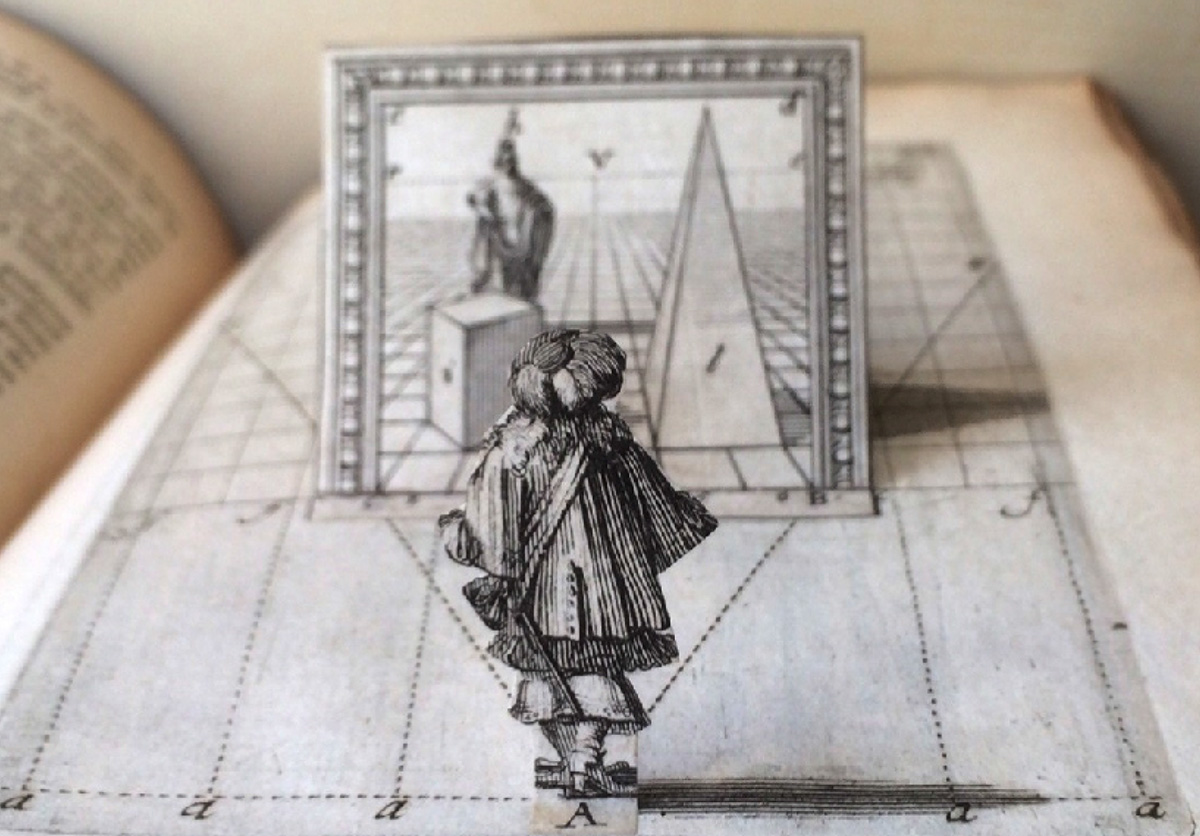
[Image: Here’s another image from the same French rare-book seller seen in an earlier post; this one comes from Thomas Alcock’s Travels in Russia, Persia, Turkey and Greece, printed in 1831. The scene depicted here equally resembles some strange act of theatrical scenography—a geologic backdrop shaded to resemble urban space—and a horizon-spanning speculative megastructure by Étienne Louis-Boullée (previously)].

A Well-Tailored Landscape

[Image: Sewn geology; photo by Matthew Cox of Kit Up!].
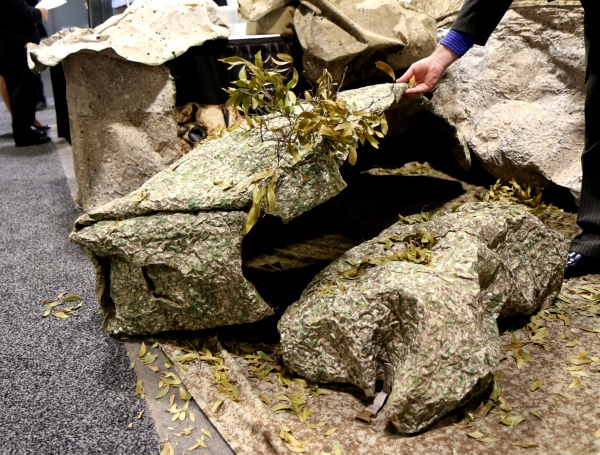
Earlier this summer, packaging and apparel manufacturing firm ReadyOne Industries debuted a new line of products: “moldable camouflage kits that can be customized to mimic virtually any type of rock formation or similar type of terrain.”

The sewn geological forms seen here—in photos taken by Matthew Cox of Kit Up!—use a multi-spectral concealment system called “VATEC,” further described by ReadyOne as a “Portable Battlefield Cryptic Signature and Concealment” system.

In the process, they give the word “geotextile” a new level of literality.

[Image: Lifting up fake rocks; photo by Matthew Cox of Kit Up!].

While you can read a tiny bit more about the product over at both Kit Up! and ReadyOne, what interests me here is the sheer surreality of portable artificial geology made by a garment manufacturing firm, or pieces of clothing blown up to the scale of landscape.

The unexpected implication is that those rocks you see all around you might not only be fake—they might also be pieces of clothing: camouflage garments that already mimicked natural forms simply taken to their obvious end point in the form of pop-up rocks and well-tailored geology.

This Is Only A Test

[Image: From Ways of Knowing by Daniel Stier, on display at the kulturreich gallery].

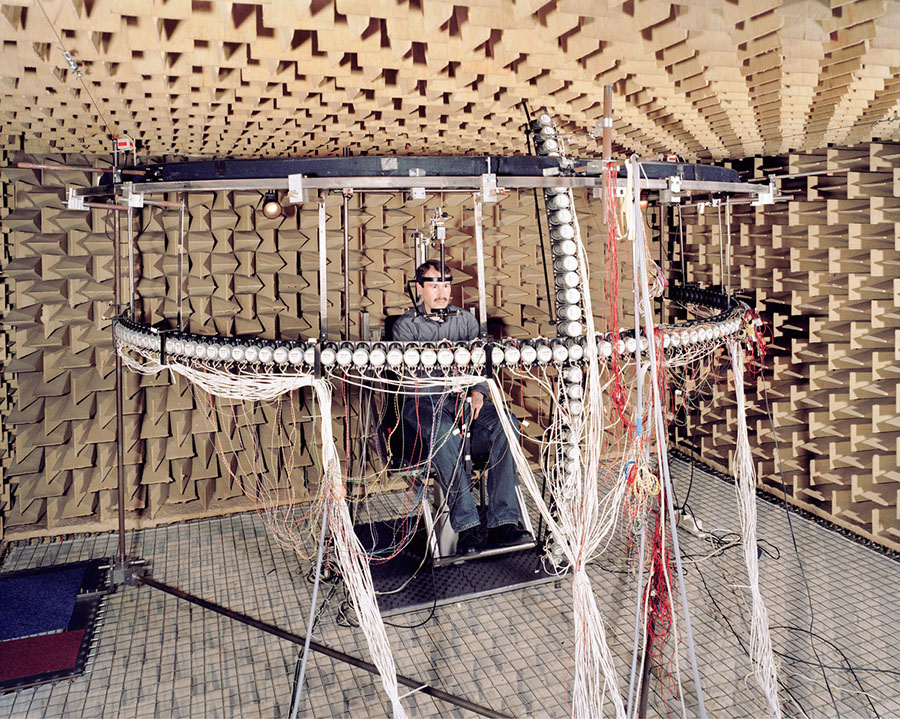
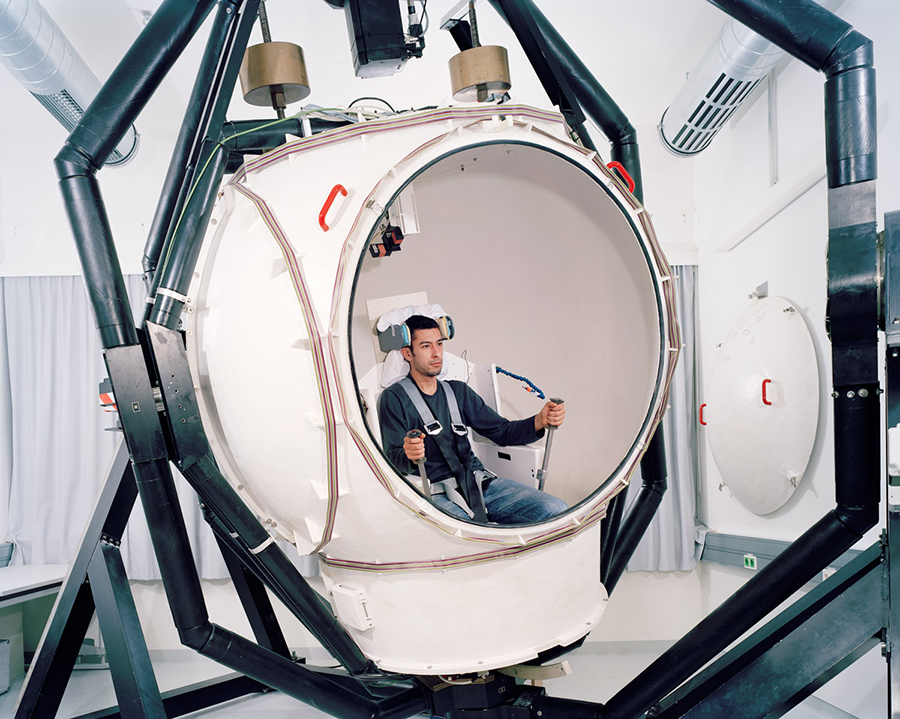
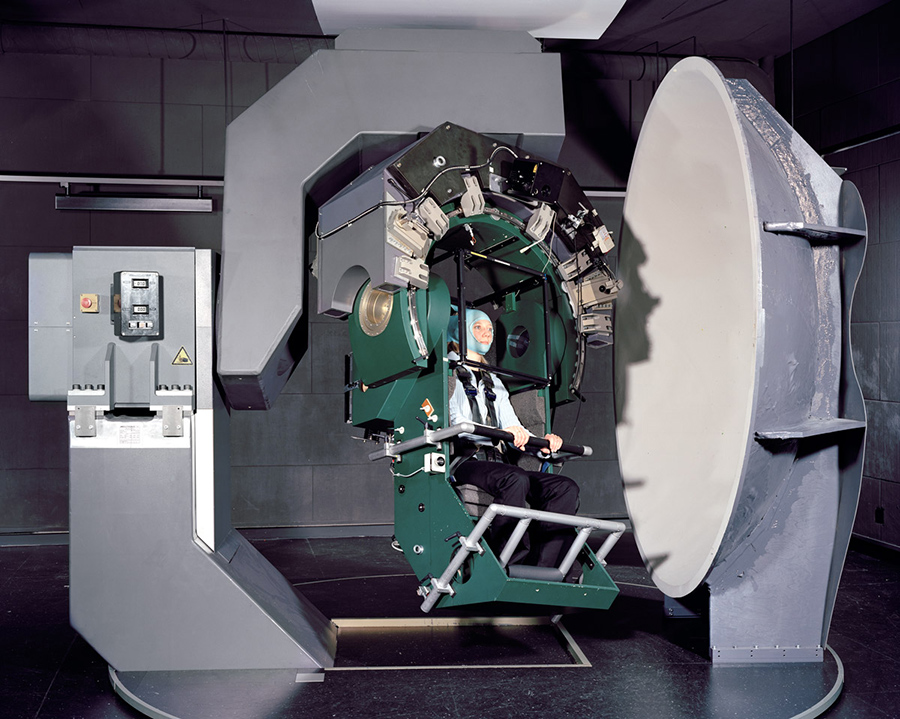
Photographer Daniel Stier has a new book out, and an accompanying exhibition on display at the kulturreich gallery, called Ways of Knowing.

Skier’s photos depict human subjects immersed in, or even at the mercy of, spatial instrumentation: strange devices conducting experiments that function at the scale of architecture but whose purpose remains unidentified.

[Image: From Ways of Knowing by Daniel Stier, on display at the kulturreich gallery].

In Stier’s words, the overall series is “a personal project exploring the real world of scientific research. Not the stainless steel surfaces bathed in purple light, but real people in their basements working on selfbuilt contraptions. All shot in state of the art research institutions across Europe and the US, showing experiments with human subjects. Portrayed are the people conducting the experiments—students, doctorands and professors.”

In recent interviews discussing the book, Stier has pointed out what he calls “similarities between artistic and scientific work,” with an emphasis on the craft that goes into designing and executing these devices.

However, there is also a performative or aesthetic aspect to many of these that hints at resonances beyond the world of applied science—a person staring into multicolored constellations painted on the inside of an inverted bowl, for example.

[Image: From Ways of Knowing by Daniel Stier, on display at the kulturreich gallery].

Ostensibly an ophthalmic device of some kind, it could just as easily be an amateur’s attempt at OpArt.

In a sense, these are not just one-off scientific experiments but spatial prototypes: rigorous attempts at building and establishing a very particular kind of environment—a carefully calibrated and tuned zone of parameters, forces, and influences—then exposing people to those worlds as a means of testing for their effects.

[Image: From Ways of Knowing by Daniel Stier, on display at the kulturreich gallery].

In any case, here are a few more images to pique your curiosity, but many, many more photos are available in Stier’s book, which just began shipping this month, and, of course, over at Stier’s website.

[Images: From Ways of Knowing by Daniel Stier, on display at the kulturreich gallery].

(Originally spotted via New Scientist).

Village Design as Magnetic Storage Media

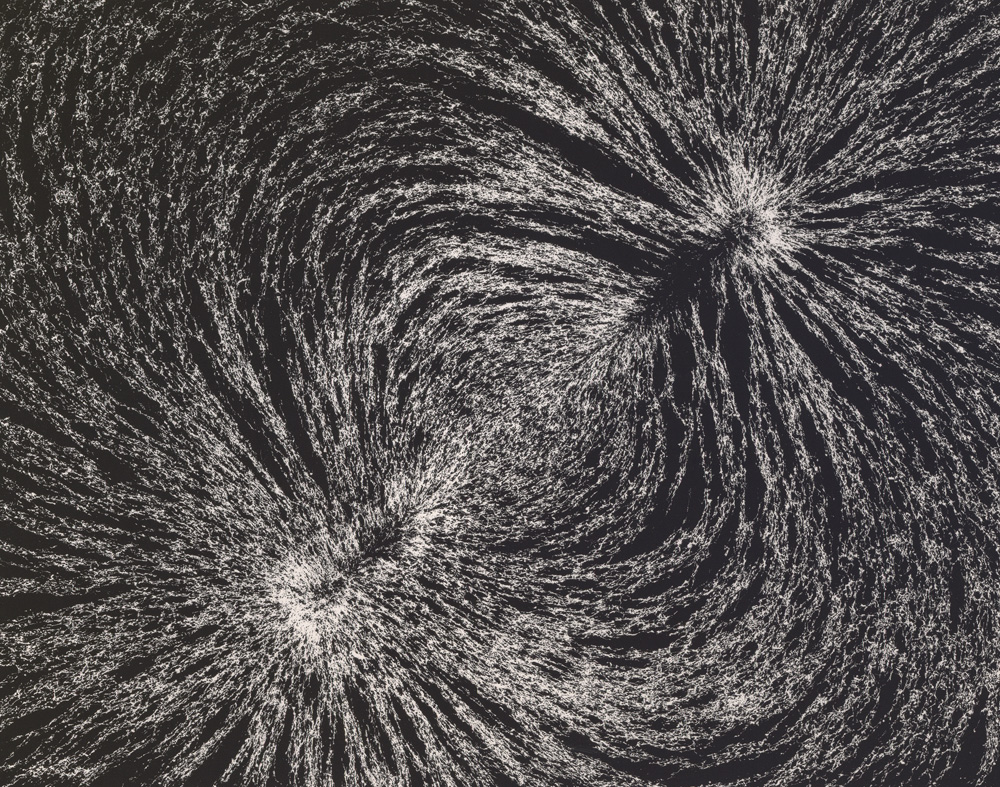
[Image: “Magnetic Field” by Berenice Abbott, from The Science Pictures (1958-1961)].

An interesting new paper suggests that the ritual practice of burning parts of villages to the ground in southern Africa had an unanticipated side-effect: resetting the ground’s magnetic data storage potential.

As a University of Rochester press release explains, the “villages were cleansed by burning down huts and grain bins. The burning clay floors reached a temperature in excess of 1000ºC, hot enough to erase the magnetic information stored in the magnetite and create a new record of the magnetic field strength and direction at the time of the burning.”

What this meant was that scientists could then study how the Earth’s magnetic field had changed over centuries by comparing more recent, post-fire alignments of magnetite in the ground beneath these charred building sites with older, pre-fire clay surrounding the villages.

The ground, then, is actually an archive of the Earth’s magnetic field.

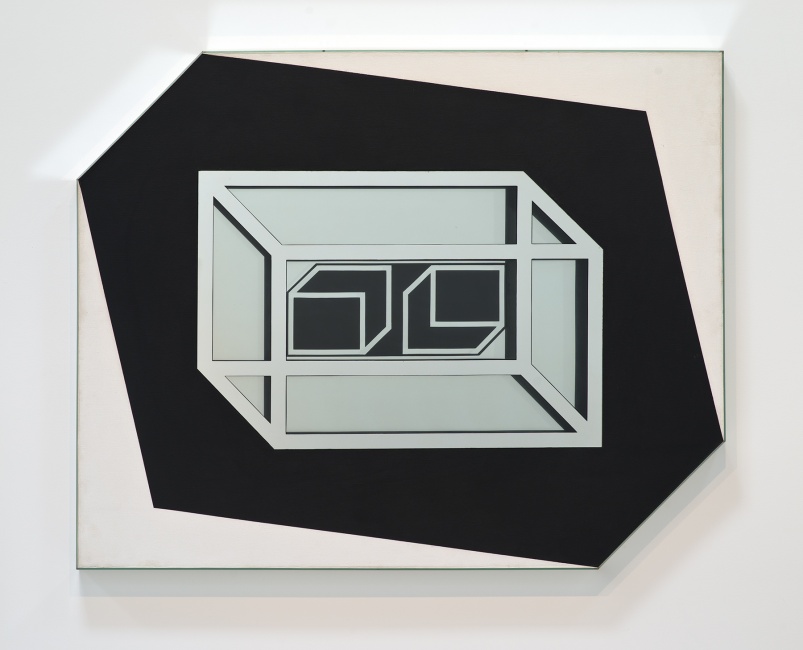
If you picture this from above—perhaps illustrated as a map or floor plan—you can imagine seeing the footprint of the village itself, with little huts, buildings, and grain bins appearing simply as the outlines of open shapes.

However, within these shapes, like little windows in the surface of the planet, new magnetic alignments would begin to appear over decades as minerals in the ground slowly re-orient themselves with longterm shifts in the Earth’s magnetic field, like differently tiled geometries contrasting with the ground around them.

[Image: “Untitled” by Larry Bell (1962), via the L.A. Times].
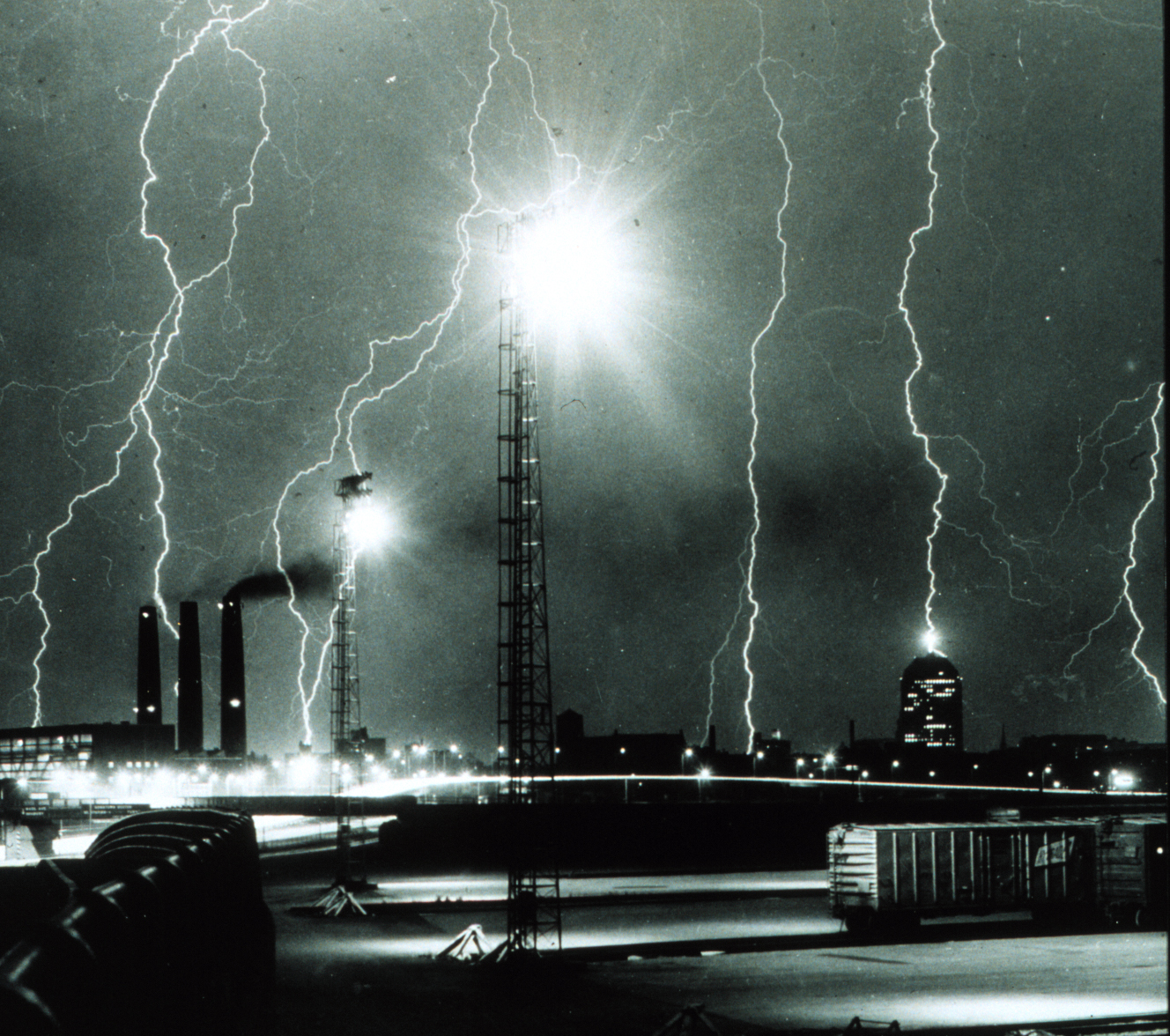
What really blows me away here, though, is the much more abstract idea that the ground itself is a kind of reformattable magnetic data storage system. It can be reformatted and overwritten, its data wiped like a terrestrial harddrive.

While this obviously brings to mind the notion of the planetary harddrive we explored a few years ago—for what it’s worth, one of my favorite posts here—it also suggests something quite strange, which is that landscape architecture (that is, the tactical and aesthetic redesign of terrain) and strategies of data management (archiving, cryptography, inscription) might someday go hand in hand.

(Via Archaeology).

Buy a Los Angeles Sidewalk Corner

[Image: A sidewalk corner in Los Angeles, albeit not the one for sale; via Google Street View].

If you’ve been longing for a way to satisfy your inner Gordon Matta-Clark—the artist who, among many other things, once purchased an interstitial empire of “odd lots” throughout New York City, including the spaces between buildings and other “unusably small slivers of land sliced from the city grid through anomalies in surveying, zoning, and public-works expansion”—then now might be your chance.

Los Angeles is auctioning off a chunk of odd lots: “Offerings include transferable ‘air rights’ and, in one case, the corner of a sidewalk,” the Los Angeles Times reports, among what they describe as “tiny bits of land that were left over from big real estate developments, set aside like scraps of cloth cut from a garment.”

The properties for sale include a collection of oddly shaped and awkwardly encumbered lots acquired during decades of efforts to help developers build in blighted neighborhoods. A few of the parcels, though, are under name-brand Los Angeles institutions, such as the ground under the historic Angels Flight funicular railway on Bunker Hill and the land occupied by the Dolby Theatre in Hollywood, site of the Academy Awards.

You can peruse the full list of sites here. In all honesty, they are not immediately compelling. However, they do include an archipelago of air rights throughout the city; one property is only 26 square feet; and another appears to be the small strip of land located outside 1013 E. Adams Boulevard.

Purchase wisely.

(Previously on BLDGBLOG: Buy a Complex of Submarine Pits, Buy a Skyway, Buy a Fort, Buy a Lighthouse, Buy an Underground Kingdom, Buy a Prison, Buy a Tube Station, Buy an Archipelago, Buy a Map, Buy a Torpedo-Testing Facility, Buy a Silk Mill, Buy a Fort, Buy a Church).

Driving on Mars and the Theater of Machines

[Image: Self-portrait on Mars; via NASA].

Science has published a short profile of a woman named Vandi Verma. She is “one of the few people in the world who is qualified to drive a vehicle on Mars.”

Vera has driven a series of remote vehicles on another planet over the years, including, most recently, the Curiosity rover.

[Image: Another self-portrait on Mars; via NASA].

Driving it involves a strange sequence of simulations, projections, and virtual maps that are eventually beamed out from planet to planet, the robot at the other end acting like a kind of wheeled marionette as it then spins forward along its new route. Here is a long description of the process from Science:

Each day, before the rover shuts down for the frigid martian night, it calls home, Verma says. Besides relaying scientific data and images it gathered during the day, it sends its precise coordinates. They are downloaded into simulation software Verma helped write. The software helps drivers plan the rover’s route for the next day, simulating tricky maneuvers. Operators may even perform a dry run with a duplicate rover on a sandy replica of the planet’s surface in JPL’s Mars Yard. Then the full day’s itinerary is beamed to the rover so that it can set off purposefully each dawn.

What’s interesting here is not just the notion of an interplanetary driver’s license—a qualification that allows one to control wheeled machines on other planets—but the fact that there is still such a clear human focus at the center of the control process.

The fact that Science‘s profile of Verma begins with her driving agricultural equipment on her family farm in India, an experience that quite rapidly scaled up to the point of guiding rovers across the surface of another world entirely, only reinforces the sense of surprise here—that farm equipment in India and NASA’s Mars rover program bear technical similarities.

They are, in a sense, interplanetary cousins, simultaneously conjoined and air-gapped across two worlds..

[Image: A glimpse of the dreaming; photo by Alexis Madrigal, courtesy of The Atlantic].

Compare this to the complex process of programming and manufacturing a driverless vehicle. In an interesting piece published last summer, Alexis Madrigal explained that Google’s self-driving cars operate inside a Borgesian 1:1 map of the physical world, a “virtual track” coextensive with the landscape you and I stand upon and inhabit.

“Google has created a virtual world out of the streets their engineers have driven,” Madrigal writes. And, like the Mars rover program we just read about, “They pre-load the data for the route into the car’s memory before it sets off, so that as it drives, the software knows what to expect.”

The software knows what to expect because the vehicle, in a sense, is not really driving on the streets outside Google’s Mountain View campus; it is driving in a seamlessly parallel simulation of those streets, never leaving the world of the map so precisely programmed into its software.

Like Christopher Walken’s character in the 1983 film Brainstorm, Google’s self-driving cars are operating inside a topographical dream state, we might say, seeing only what the headpiece allows them to see.

[Image: Navigating dreams within dreams: (top) from Brainstorm; (bottom) a Google self-driving car, via Google and re:form].

Briefly, recall a recent essay by Karen Levy and Tim Hwang called “Back Stage at the Machine Theater.” That piece looked at the atavistic holdover of old control technologies—such as steering wheels—in vehicles that are actually computer-controlled.

There is no need for a human-manipulated steering wheel, in other words, other than to offer a psychological point of focus for the vehicle’s passengers, to give them the feeling that they can still take over.

This is the “machine theater” that the title of their essay refers to: a dramaturgy made entirely of technical interfaces that deliberately produce a misleading illusion of human control. These interfaces are “placebo buttons,” they write, that transform all but autonomous technical systems into “theaters of volition” that still appear to be under manual guidance.

I mention this essay here because the Science piece with which this post began also explains that NASA’s rover program is being pushed toward a state of greater autonomy.

“One of Verma’s key research goals,” we read, “has been to give rovers greater autonomy to decide on a course of action. She is now working on a software upgrade that will let Curiosity be true to its name. It will allow the rover to autonomously select interesting rocks, stopping in the middle of a long drive to take high-resolution images or analyze a rock with its laser, without any prompting from Earth.”

[Image: Volitional portraiture on Mars; via NASA].

The implication here is that, as the Mars rover program becomes “self-driving,” it will also be transformed into a vast “theater of volition,” in Levy’s and Hwang’s formulation: that Earth-bound “drivers” might soon find themselves reporting to work simply to flip placebo levers and push placebo buttons as these vehicles go about their own business far away.

It will become more ritual than science, more icon than instrument—a strangely passive experience, watching a distant machine navigate simulated terrain models and software packages coextensive with the surface of Mars.