Right to Light

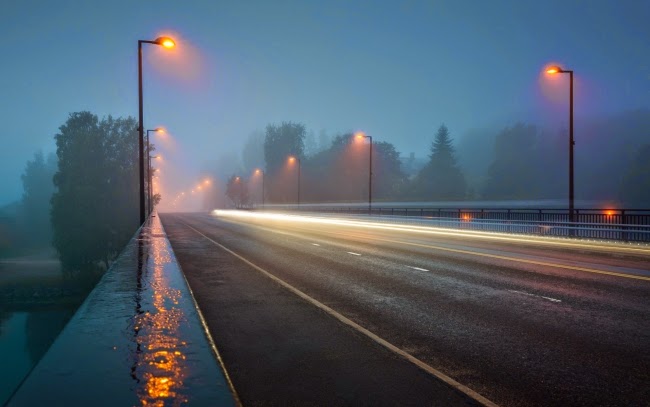
[Image: Random image of street lights].

Parts of Copenhagen are being turned into an outdoor night-lighting experiment, aiming to determine exactly how—even to what extent—cities should be illuminated at night, not only to use resources most efficiently but to increase urban security.

A mix of context-sensitive and remotely controlled lighting systems will be deployed, and each light will have its own IP address for outside monitoring. “Sensors that track traffic density, air quality, noise, weather conditions and UV radiation will also be fitted throughout the site to see what sort of environment the lights are operating in,” New Scientist explains. “All this will help work out which lights are making the biggest difference in terms of lowering costs and emissions.”

The visual results will be not unlike an outdoor museum of experiential light art, a kind of an “Urban Light” sculpture blown up to the scale of a neighborhood, and the Danish Outdoor Lighting Lab—or DOLL as it’s known—is even meant to be toured as such. While “engineers will have freedom to toy with the different products,” we also read that “foreign officials who are curious about the technology can comparison-shop for their hometown.”
[Image: Another random image of a street light].

But these networked and responsive urban lighting systems also come with political implications, including an effect on how the city can be monitored by authorities.

Indeed, “Fitting street lamps with complex sensors—and hooking them up to a larger network that controls the city—will have implications far outside of lighting,” the article explains. “If a street lamp senses a sudden rush of people in an area that’s usually deserted at night, police could be tipped off to go check the area out.” And, by extension, those streets could be dramatically flooded with blazing incandescence, transforming the city’s infrastructure into a kind of giant police spotlight.

It’s not hard to imagine life in one of these smart-lit neighborhoods of the future where, one evening, a suspect—perhaps you—has been chased by police; whole streets light up strategically, one by one, tracking the suspect—guilty or not—as he or she attempts to flee, small emergency lights even turning on in spots where they had previously been invisible. Other streets and alleys dim to help hide police in the darkness. Infrastructure becomes not just civic but tactical.

Recall Evgeny Morozov’s look at the smart city as a kind of urban police state. Writing for The Guardian earlier this summer, Morozov suggested that, “As both cars and roads get ‘smart,’ they promise nearly perfect, real-time law enforcement. Instead of waiting for drivers to break the law, authorities can simply prevent the crime.” They can simply darken entire neighborhoods—or flood them with the brilliance of a thousand LED suns.
[Image: One more random street light image].

Police-enabled pieces of urban infrastructure are, for Morozov, “emblematic of transformations in many other domains, from smart environments for ‘ambient assisted living’ where carpets and walls detect that someone has fallen, to various masterplans for the smart city, where municipal services dispatch resources only to those areas that need them.”

Thanks to sensors and internet connectivity, the most banal everyday objects have acquired tremendous power to regulate behavior. Even public toilets are ripe for sensor-based optimisation: the Safeguard Germ Alarm, a smart soap dispenser developed by Procter & Gamble and used in some public WCs in the Philippines, has sensors monitoring the doors of each stall. Once you leave the stall, the alarm starts ringing—and can only be stopped by a push of the soap-dispensing button.

Perhaps the DOLL experiment reveals that we can now add street lights to that list: smart targeting systems that make decisions in real-time as to which residents and neighborhoods have a right to light and who shall be punished by the induced darkness of an infrastructure that no longer wants to turn on for them.

Seismic Suburb

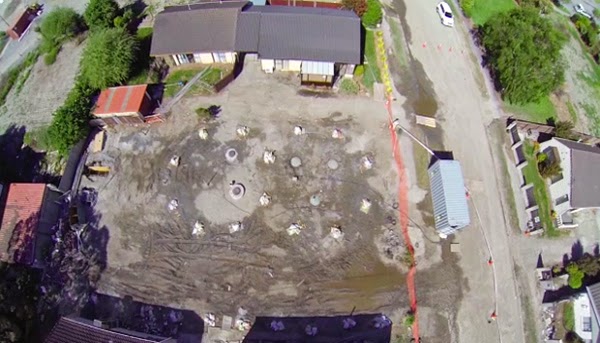
[Image: Screengrab from Stuff showing the test-suburb, a kind of seismic Operation Doorstep].

An empty suburb of Christchurch, New Zealand, abandoned after the 2011 earthquake, was bombed from below last autumn, as a series of carefully timed underground explosions set off an artificial earthquake. The controlled seismic event was part of a closely studied experiment to test how soil liquefaction could be reduced or even eliminated by better geotechnical design.

As Next City explains, it was a 70-year old former resident of the neighborhood named Martin Howman who kicked off the event, triggering the buried necklace of explosives beneath his own street and the houses of his neighbors.

“As he pressed the buttons,” Charles Anderson writes for Next City, “a piece of Howman’s old neighborhood, long since abandoned, jumped and jostled just like it had the day of the 2011 quake. Cameras inside the homes showed floor boards shaking and kitchen benches being thrown from their foundations. Drones hovering above captured images of roof tiles being shaken loose and shock waves thudding through the earth. Signs had been placed throughout the wider area to reassure passersby that the sounds were just science in action. Many gathered at a safe distance to watch the spectacle unfold.”

In video footage of the event, small clouds of dust can be seen bucking upward from the roofs of houses to drift away in a light breeze as the soil continues to jolt and shudder.

Stuff reported at the time that Howman’s initial response to the near-total abandonment of his neighborhood after the 2011 earthquake was that “he might buy a tractor and some cows and revert the land back to dairy farm”—but, instead, he stuck around just long enough to see the empty streets transformed into a seismic research facility like something out the work of Lebbeus Woods.

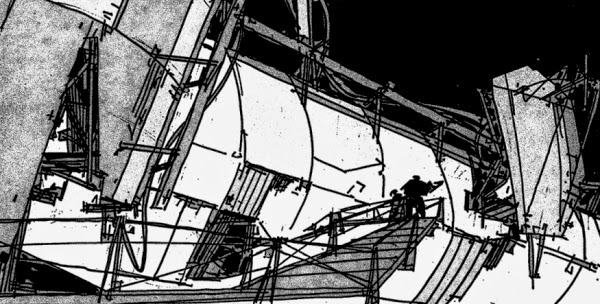
Recall, for example, the ideas behind Woods’s film treatment, Underground Berlin. There—as we explored here on BLDGBLOG back in 2013—Woods posited a fictional network of government seismic labs secretly operating beneath the surface of Berlin, called the Underground Research Station.

[Image: From Underground Berlin by Lebbeus Woods].

Inside the Station, Woods’s unmade film would have shown, “many scientists and technicians are working on a project for the government to analyze and harness the tremendous, limitless geological forces active in the earth… a world of seismic wind and electromagnetic flux.” Their eventual goal is to achieve “a mastery”—that is, to weaponize—the “primordial earth forces” they actively study.

In his book OneFiveFour, Woods pushes these ideas further, describing a city so defined by the seismic energy destabilizing the ground beneath it that almost every building and surface has been covered in “oscilloscopes, refractors, seismometers, interferometers, and other, as yet unknown instruments, measuring light, movement, force, change.”

The entire city has become a seismic instrument where “tools for extending perceptivity to all scales of nature are built spontaneously, playfully, experimentally, continuously modified in home laboratories, in laboratories that are homes… Indeed, each object—chair, table, cloth, examining apparatus, structure—is an instrument; each material thing connects the inhabitants with events in the world around him and within himself.”

In a video posted on Stuff, the ground rhythmically ripples and pops from below, as if a living creature has stirred beneath the cracked foundations of this empty neighborhood, “primordial earth forces” intent on resisting the architecture so flimsily built upon their shoulders.

(Thanks to mike.m.d. for the heads up!)

Cultivating the Map

[Image: “Cultivating the Map” by Danny Wills].

For his final thesis project at the endangered Cooper Union, Danny Wills explored how survey instruments, cartographic tools, and architecture might work together at different scales to transform tracts of land in the geographic center of the United States.

[Images: “Cultivating the Map” by Danny Wills].

Called “Cultivating the Map,” his project is set in the gridded fields, sand hills, playas, and deep aquifers of the nation’s midland, where agricultural activity has left a variety of influential marks on the region’s landscapes and ecosystems.

[Images: “Cultivating the Map” by Danny Wills].

Its final presentation is light on text and heavy on models, maps, and diagrams, yet Wills still manages to communicate the complex spatial effects of very basic physical tools, how things as basic as survey grids and irrigation equipment can bring whole new regimes of territorial management into existence.

It’s as if agriculture is actually a huge mathematical empire in the middle of the country—a rigorously artificial world of furrows, grids, and seasons—dedicated to reorganizing the surface of the planet by way of relatively simple handheld tools and then rigorously perfecting the other-worldly results.

[Images: “Cultivating the Map” by Danny Wills].

Wills produced quite a lot of material for the project, including a cluster of table-sized landscapes that show these tools and instruments as they might be seen in the field.

[Image: “Cultivating the Map” by Danny Wills].

In many ways, parts of the project bring to mind the work of Smout Allen, who also conceive of architecture as just one intermediary spatial product on a scale that goes from the most intricate of handheld mechanisms to super-sized blocks of pure infrastructure.

Imagine Augmented Landscapes transported to the Great Plains and animated by a subtext of hydrological surveying and experimental agriculture. Deep and invisible bodies of water exert slow-motion influence on the fields far above, and “architecture” is really just the medium through which these spatial effects can be cultivated, realized, and distributed.

This, it seems, is the underlying premise of Wills’s project, that architecture is like a valve through which new landscapes pass.

[Images: “Cultivating the Map” by Danny Wills].

In any case, I’ve included a whole bunch of images here, broadly organized by tool or, perhaps more accurately, by cartographic idea, where the system of projection suggested by Wills’s devices have had some sort of spatial effect on the landscape in which they’re situated.

However, I’ve also been a little loose here, organizing these a bit by visual association, so it’s entirely possible that my ordering of the images has thrown off the actual narrative of the project—in which case, it’s probably best just to check out Wills’s own website if you’re interested in seeing more.

[Images: “Cultivating the Map” by Danny Wills].

The project includes land ordinance survey tools and irrigation mechanisms, a “Mississippi River levee tool” and the building-sized “grain elevator tool.”

[Images: “Cultivating the Map” by Danny Wills].

In Danny’s own words, the project “finds itself in the territory of the map, proposing that the map is also a generative tool. Using the drawing as fertile ground, this thesis attempts a predictive organization of territory through the design of four new tools for the management of natural resources in the Great Plains, a region threatened with the cumulative adverse effects of industrial farming. Each tool proposes new ways of drawing the land and acts as an instrument that reveals the landscape’s new potential.”

These “new potentials” are often presented as if in a little catalog of ideas, with sites named, located, and described, followed by a diagrammatic depiction of what Wills suggests might spatially occur there.

[Images: “Cultivating the Map” by Danny Wills].

The ambitious project earned Wills both the Henry Adams AIA Medal & Certificate of Merit, and the school’s Yarnell Thesis Prize in Architecture.

[Images: “Cultivating the Map” by Danny Wills].

I’ll wrap up here with a selection of images of the landscapes, tools, and instruments, but click over to Danny’s site for a few more. Here are also some descriptions:

Tool 1: Meanders, Fog Fences, Air Wells

Tool 1 attaches itself to the groundwater streams, both proposing tools to redirect and slow down the flow, as well as tools to collect atmospheric water through technological systems like air wells and fog fences, forming new bodies and streams of water. The new air wells collect atmospheric water through a system of cooling and heating a substrate core inside of a ventilated exterior shell. The air wells also become spaces to observe the re-directing flow of water, as overflow quantities are appropriately managed.

Tool 2: Aquifer Irrigation Ponds

Tool 2 uses the center pivot irrigation rigs to reconstruct the ground, making bowls in the landscape that act as dew ponds. At the same time, the wells become tools and markers to survey the levels of the aquifer below, signifying changes in the depth through elevational changes above. New forms of settlement begin to appear around each ring as a balance is reached between extraction and recharge of the aquifer.

Tool 3: Sand Dunes, Grazing Fields

Tool 3 uses gas wells as new geo-positioning points, redrawing boundaries and introducing controlled grazing and fallowing zones into the region. Walls are also built as markers of the drilling wells below, creating a dune topography to retain more ground water. Each repurposed oil rig becomes an architectural element that both provides protection and feed for grazing animals as well as a core sample viewing station. The abandoned rigs suspend cross sections of the earth to educate visitors of the geological history of the ground they stand on.

Tool 4: Water Recycling Station

Tool 4 converts the grain elevator into a water recycling station, filling the silos with different densities of sand and stone to filter collected types of water- rain, ground run-off, grey, brackish, etc. Large pavilion like structures are built between houses, collecting water and providing shade underneath. Some housing is converted into family-run markets; the new social space under the pavilions provide for market space. The repurposed grain elevator becomes the storage center for the region’s new water bank. Economic control is brought back to the local scale.

[Images: “Cultivating the Map” by Danny Wills].

The Comet as Landscape Art

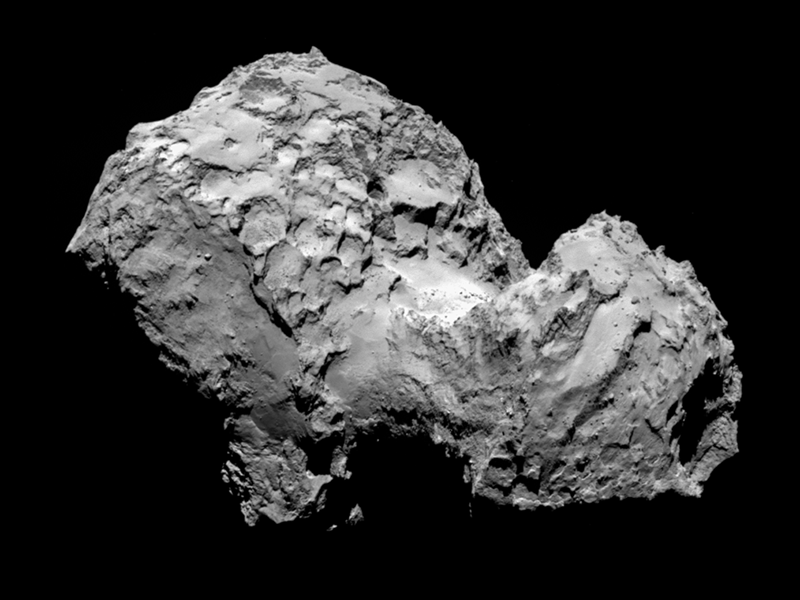
[Image: Photo courtesy ESA].

Intrigued by these images as an example of how the tradition of landscape representation has rapidly progressed—from the Romantics and the Hudson River School to Rosetta—I felt compelled to post a few photos of the craggy and glacial surface of Comet 67P/Churyumov–Gerasimenko, sent back to Earth yesterday from the European Space Agency’s Rosetta spacecraft.

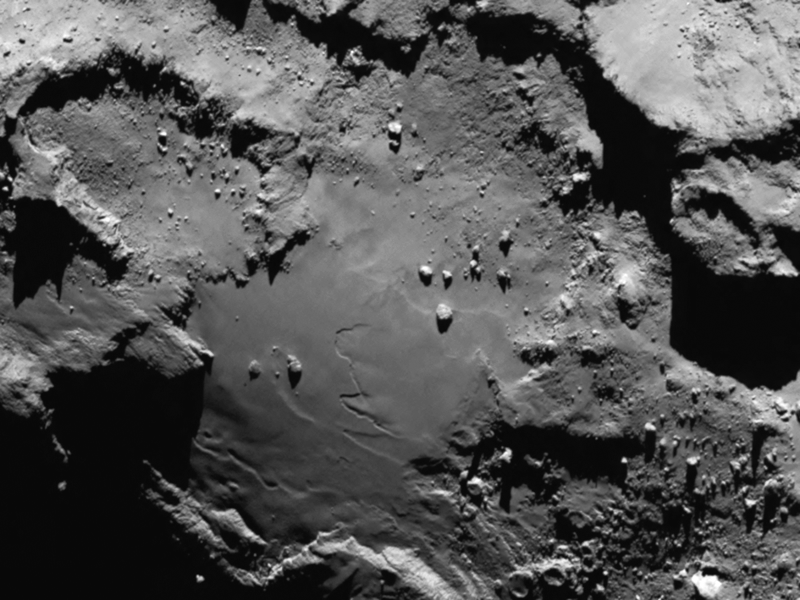
The surface of the comet “is porous, with steep cliffs and house-sized boulders,” making it earth-like yet deeply treacherous, an irregular terrain to photograph and a dangerous place to land.

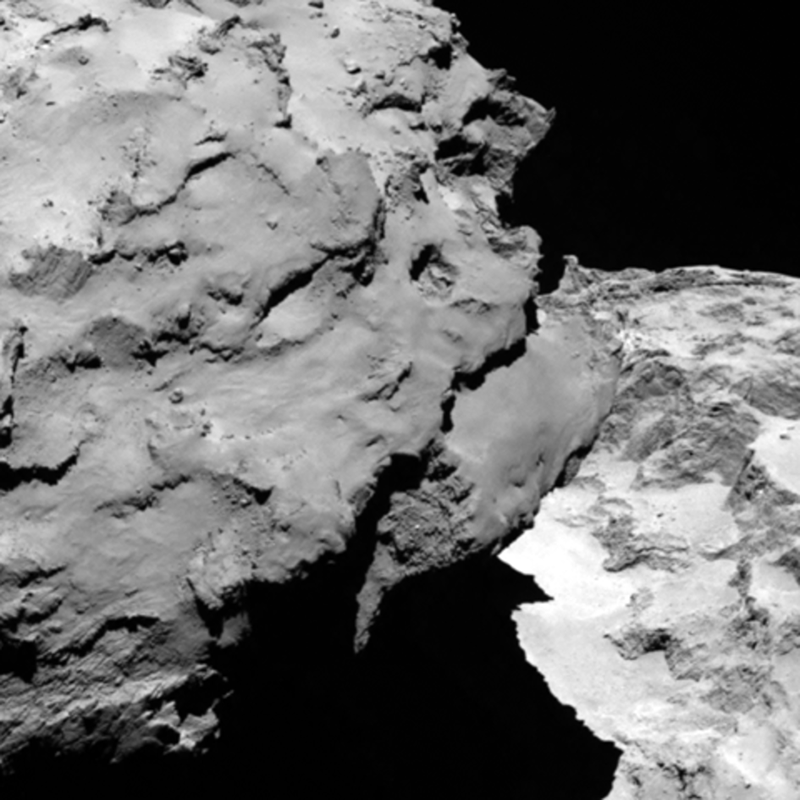
[Image: Photo courtesy ESA].

It is the notion of “land” here that is most interesting, however, as this is really just the imposition of a terrestrial metaphor onto a deeply alien body. Yet the comet is, in effect, literally a glacier: a malleable yet permanently frozen body of ice hurtling through space, occasionally exploding in comas and tails of vapor.

It is “an ancient landscape,” we read, “and yet one that looks strangely contemporary as the sun vaporizes ice, reworking the terrain like a child molding clay.”

Think Antarctica in a winter storm, not southern Utah—or Glacier National Park, not the Grand Canyon.

[Image: Photo courtesy ESA].

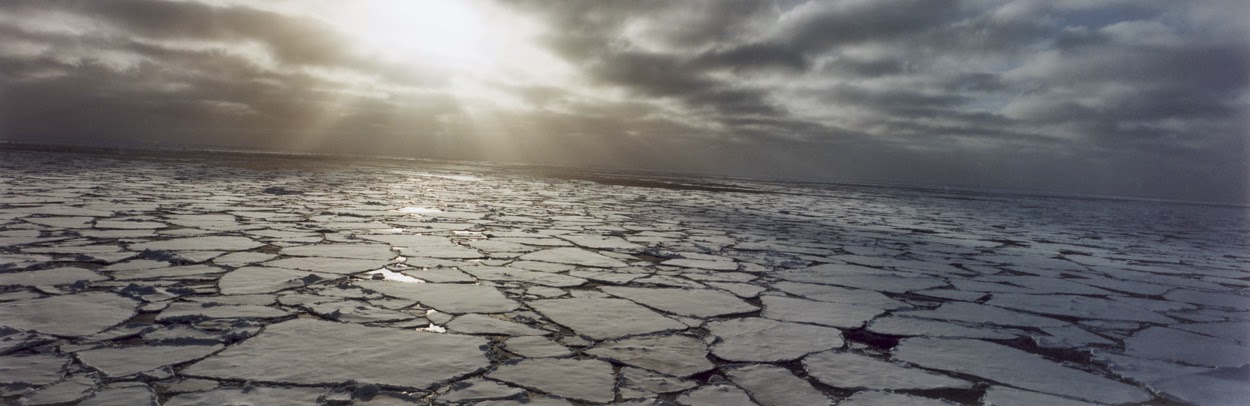
Along those lines, some of the most provocative writing on what it means to visually represent the frozen and hostile landscapes of the Antarctic is by writer William L. Fox, whose work offers some useful resonance here.

Fox has written, for example, about the technical and even neurological difficulties in accurately representing—let alone comprehending or simply navigating—Antarctic space and the vast forms that frame it.

Distant landscapes distorted by thermal discontinuities; white levels pushed to the absolute limit of film chemistry; impossible contours throwing off any attempt at depth perception; even the difficulty of distinguishing complicated mirages from actual landforms: these are all part of the challenge of creating images of an exotic landscape such as the Antarctic.

As Fox writes, it was even specifically the tradition of Dutch landscape painting, combined with the maritime practice of sketching coastal profiles, that first introduced the visual world of the Antarctic to western viewers: it was thus seen as an ominous, ice-clogged horizon of fog and low clouds looming always just slightly out of ship’s reach at the bottom of the world.

He calls this the genre of “representational exploration art.”

[Image: Photo by Stuart Klipper from his fantastic book, The Antarctic: From the Circle to the Pole, with a foreword by William L. Fox].

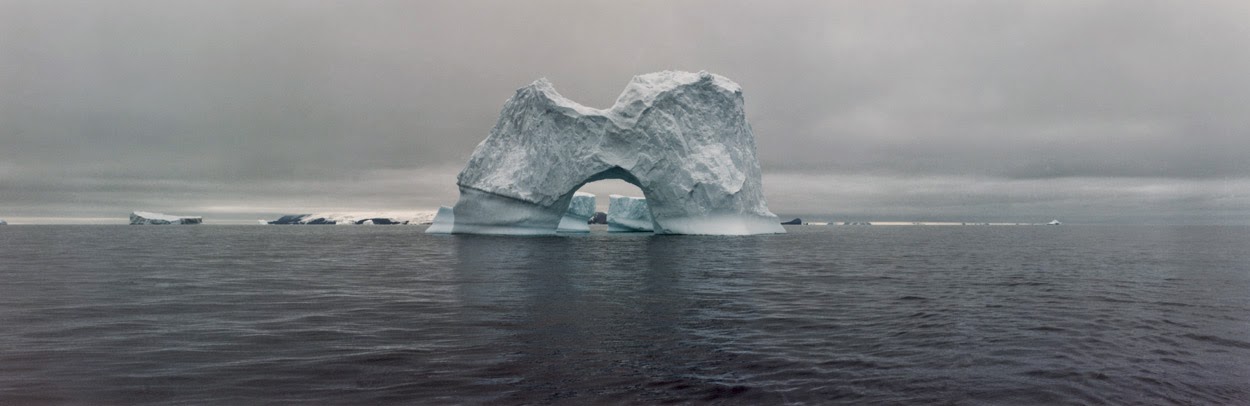
In one interesting passage in his book Terra Antarctica, he suggests that the south polar landscape is so extreme, it often resists natural analogy. As Fox describes it, the wind-carved boulders and isolated pillars and cliffs of ice are more like “artworks by Salvador Dalí and Henry Moore, evoking the spirit of surrealism with the former and modernist forms with the latter. The Antarctic is so extreme to our visual expectations that, once we attempt to move beyond measurement to describe it, analogies with other parts of nature fall short, and we resort to comparisons with cultural artifacts that push at the boundaries of our perceptions.”

These include “cultural artifacts such as sculpture and architecture, products more of the imagination than of nature.”

Consider, for instance, that comet 67P is widely known today as the “rubber-duck comet” due to its bifurcated structure, implying, as Fox suggests with the Antarctic, that no natural analogy seemed adequate for describing the comet’s geometry.

[Image: The gateway arches of the Antarctic; photo by Stuart Klipper from, The Antarctic: From the Circle to the Pole, foreword by William L. Fox].

But what are we to make of comet 67P now that we can see it as a physical landscape, not just an ephemeral optical phenomenon passing, at great distance, through the sky? When a blur becomes focused as terrain, what is the best way to describe it? What visual or textual traditions are the most useful or evocative—vedas and sutras or laboratory reports?

Put another way, is poetry as appropriate as a scientific survey in such a circumstance—should “we attempt to move beyond measurement to describe it,” in Fox’s words—and, if not, what new genres of exploration art might result from this spatial encounter?

I’m reminded here of poet Christian Bök’s wry remark on Twitter: “I am still amazed that poets insist on writing about their divorces, when robots are taking pictures of orange, ethane lakes on Titan…”

Now that humans are beginning to land semi-autonomous camera-ships on the frozen ice fields of passing comets, sending back the (off)world’s strangest landscape art—as if a direct line runs from, say, the pastoral landscapes of Claude Lorrain or the elemental weirdness of J.M.W. Turner to the literally extraterrestrial boulders and gullies depicted by Rosetta—how should our own descriptive traditions adapt? What, we might ask, is comet 67P’s role in art history?

[Image: Approaching 67P, via the ESA].

Silver Village

[Image: Wrapped cabin, courtesy Sierra National Forest].

Historic structures in the mountains of California are being wrapped, Christo-style, in reflective silver sheets to help protect them against the heat of wildfires.

The wrap—available from companies such as Firezat, who explain how to encase your own house as if wrapping a giant birthday present—has been applied to the structures by concerned archaeologists in collaborations with local fire crews.

Gleaming villages of historically preserved structures thus shine with reflected firelight amidst the trees, waiting like an astronaut’s art project as the rest of the forest burns.

(Via Archaeology and abc30.com).

Worshipping the Crash

[Image: Photo by BLDGBLOG].

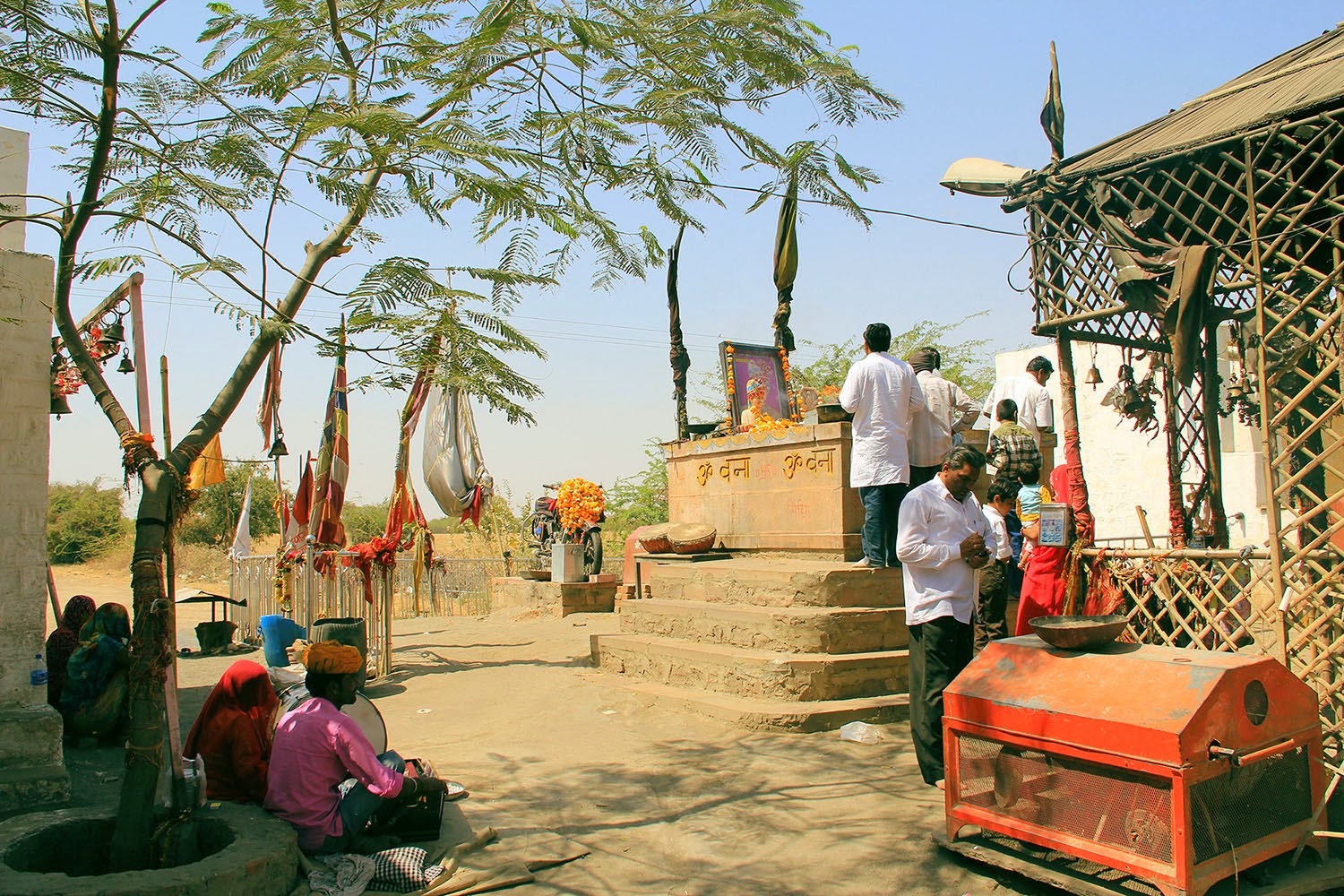
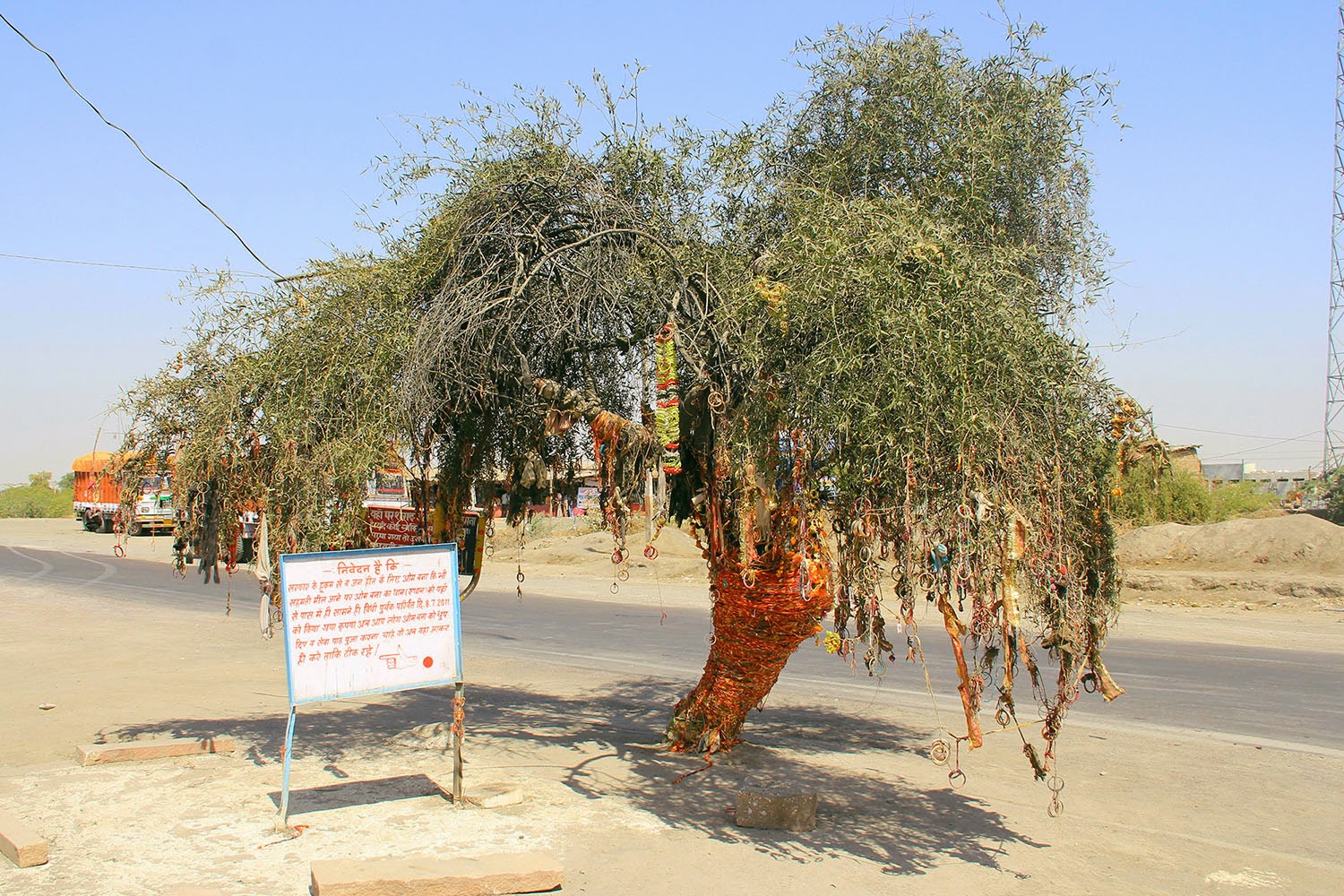
There’s a roadside shrine in Rajasthan where the remains of a crashed motorcycle have been transformed into a temple: a traffic accident from the 1980s now permanently frozen in time and architecturally framed as a site of pilgrimage for spiritually minded passers-by.

I was traveling around the region a while back when our driver suddenly pulled over, saying he needed to see something. When we asked him what was happening, he simply said it was a shrine built from the remains of a crashed motorbike—and I was excited, because I had actually read about this place.

[Image: Photo by BLDGBLOG].

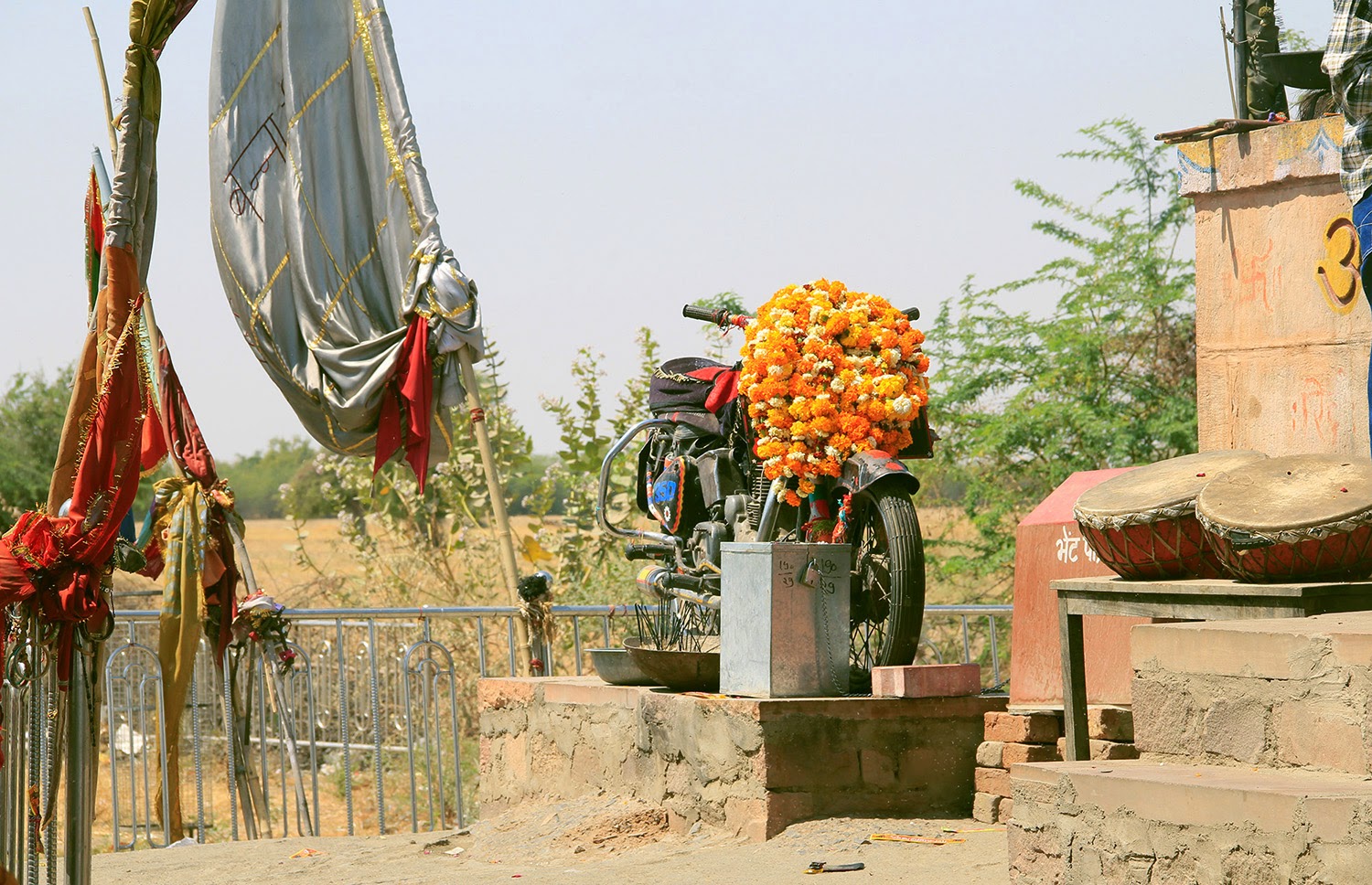
Any fan of J.G. Ballard would want to visit a site like this, due to its strange backstory and its even more amazing contemporary presentation: it’s basically the motorcycle from a fatal road collision in the 1980s that’s now been transformed into a literal shrine, a vernacular place of worship, meditation, and prayer.

The handlebars are draped with flowers, and believers walk ritual circuits around the motorbike all day, transforming it into a kind of supernatural fulcrum.

A beautiful tree, wrapped in colorful threads and ornamented from its trunk to its branches with dyed strips of fabric, is the most immediately obvious marker along the cargo-heavy road that passes close by; as it happens, this tree played a central role in the events that would give this site its otherworldly significance.

[Image: Photo by BLDGBLOG].

As the Lonely Planet Guide to Rajasthan described the place, it is “one of the strangest temples in all India,” a “garland-decked Enfield Bullet motorcycle, known as Bullet Baba.”

The story goes that local villager Om Bana died at this spot in the 1980s when his motorbike skidded into a tree. The bike was taken to the local police station, but then mysteriously twice made its own way back to the tree, and travelers along the road started seeing visions of Om Bana—inevitably leading to the machine’s deification. Any time of day or night people can be seen at the open-air shrine here, praying for safe journeys and making offerings of liquor.

We didn’t stay long, unfortunately, but it felt like a scene from some black-market rewrite of Crash, rewritten for Indian readers in which holy accidents on various roads throughout the country are visited by over-enthusiastic tourists of the afterlife, intent on receiving ill-defined bursts of supernatural energy from celebrity collisions such as these.

The U.S. might have its James Dean Crash Site & Memorial, and France might have the Pont de l’Alma Tunnel, but this machine-deification in the deserts of northern India showed what a rural folk tradition could do with the morbid significance of fatal crash sites and the often deeply unglamorous vehicles that enable them.

The Spacecraft Cemetery

[Image: The International Space Station, speculatively militarized].

While emailing with a colleague yesterday, I realized that I had never really written about the so-called “spacecraft cemetery” of the South Pacific, a remote patch of ocean water used as a kind of burial plot for derelict satellites.

As RT.com explains, the “spacecraft cemetery” is “an area of the South Pacific, approximately 3,900 km from the capital of New Zealand, Wellington. It is used to deposit the remains of spacecraft that do not burn up on re-entry into the Earth’s atmosphere, such as the carcass of the Russian Mir space station and waste-filled cargo ships. The remote location was specially selected for the disposal of spacecraft because of its depth of four km and distance from shipping lanes.”

[Image: The South Pacific “spacecraft cemetery”; image remade based on Wikipedia].

This vast crash site for abandoned Space Age artifacts might, in fact, become the final resting place for nothing less than the International Space Station. According to a slightly over-heated Russian press statement in 2011, the ISS could be deliberately crashed into the ocean as early as 2020.

As a spokesperson for Roscosmos said at the time, “After it completes its existence, we will be forced to sink the [International Space Station]. It cannot be left in orbit; it’s too complex, too heavy an object, it can leave behind lots of rubbish.”

Disastrously underfunded and devoid of human inhabitants by that point, this Mary Celeste of the near-earth orbit would meet a weird and watery fate, falling into the sea perhaps to seed some future artificial reef in the middle of nowhere.

[Image: The International Space Station, courtesy NASA].
While the actual physical effects of this—assuming it even happens—would be little more than to create several miles of scattered metal and occasionally floating fragments of this once-spaceborne super-structure, the very idea that there is an international spacecraft cemetery in the middle of the South Pacific is incredible.

Of course, the reality of this is underwhelming—there is no well-preserved graveyard of physically intact Space Age objects out in the middle of the ocean—but the imaginative potential of a place like this is almost unbelievable, as if all these ruins from the sky might someday become a UNESCO World Heritage Site: an underwater museum of global space ruins perhaps even sign-posted like the Baltic shipwrecks we looked at the other week.

Wreck-diving the fallen airlocks of the International Space Station! A new Tintern Abbey of the sea as giant squid swim by in the distance and submarine lights flash eerily through clouds of silt.

Rather than visit Cape Canaveral or Baikonur, you could instead slip, Captain Nemo-like, through the tides and currents of the remote ocean, peering ahead through thick glass as fantastic megastructures—rockets and satellites, offworld bases and labs—loom amidst the rock arches and mudflats of the planet’s strangest museum, this benthic necropolis of dead spacecraft, haunted by silent and uncomprehending marine creatures in the darkness.

(Thanks to Jonathan Rennie for originally pointing this out to me many years ago. Previously on BLDGBLOG: Rockets to Reefs).

NATO’s Underground Roman Super-Quarry

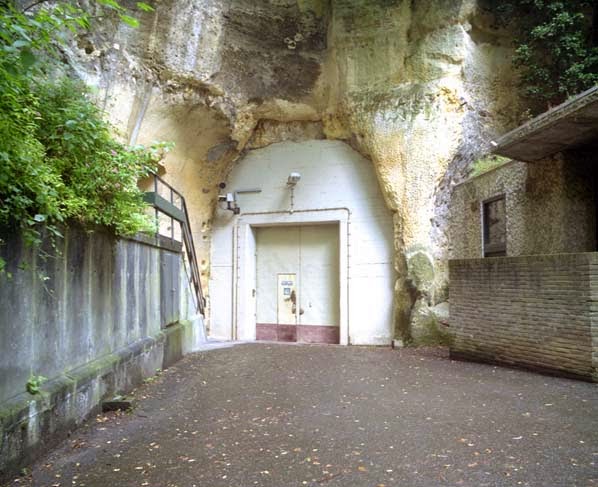
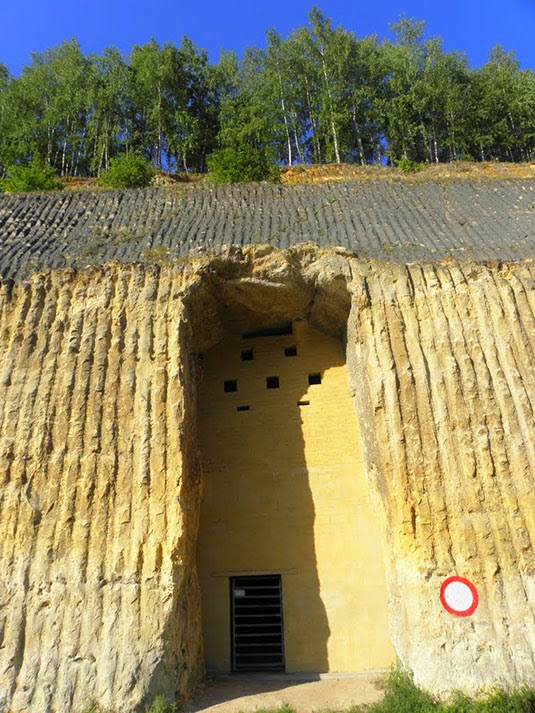
[Image: An entrance to the quarry in Kanne; photo by Nick Catford via Subterranean Britannica].
There is an underground Roman-era quarry in The Netherlands that, when you exit, you will find that you have crossed an invisible international border somewhere down there in the darkness, and that you are now stepping out into Belgium; or perhaps it’s the other way around, that there is an underground Roman-era quarry in Belgium that, when you exit, you will find that you have crossed an invisible international border somewhere down there in the darkness, and that you are now stepping out into The Netherlands.

However, this is not just a disused quarry—not just an archaeological site on the fringes of the Roman empire that was once mined for blocks of limestone. Its afterlife is by far the most interesting part of the story.

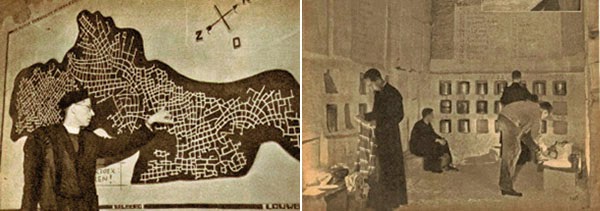
For nearly a century, beginning in the 1800s, these underground hollows were used by Jesuit monks as a secluded place for prayer, study, and meditation, and even for the carving of elaborate and impressive forms into the soft rock walls; then the Nazis took over, transforming this weird underworld into a subterranean factory for World War II airplane parts; then, finally, pushing the stakes yet higher, the whole complex of former Roman limestone mines, straddling an international border underground between two modern European nations, was turned into a doomsday bunker for NATO, a dark and mold-prone labyrinth within which military commanders constructed a Joint Operations Center for responding to the end of the world (whenever the time finally came).

[Images: Monks underground; via De Limburgse Mergelgrotten].

“There was even a 3-hole golf course complete with artificial turf,” Subterranean Britannica reports in a recent issue of their excellent magazine, Subterranea.

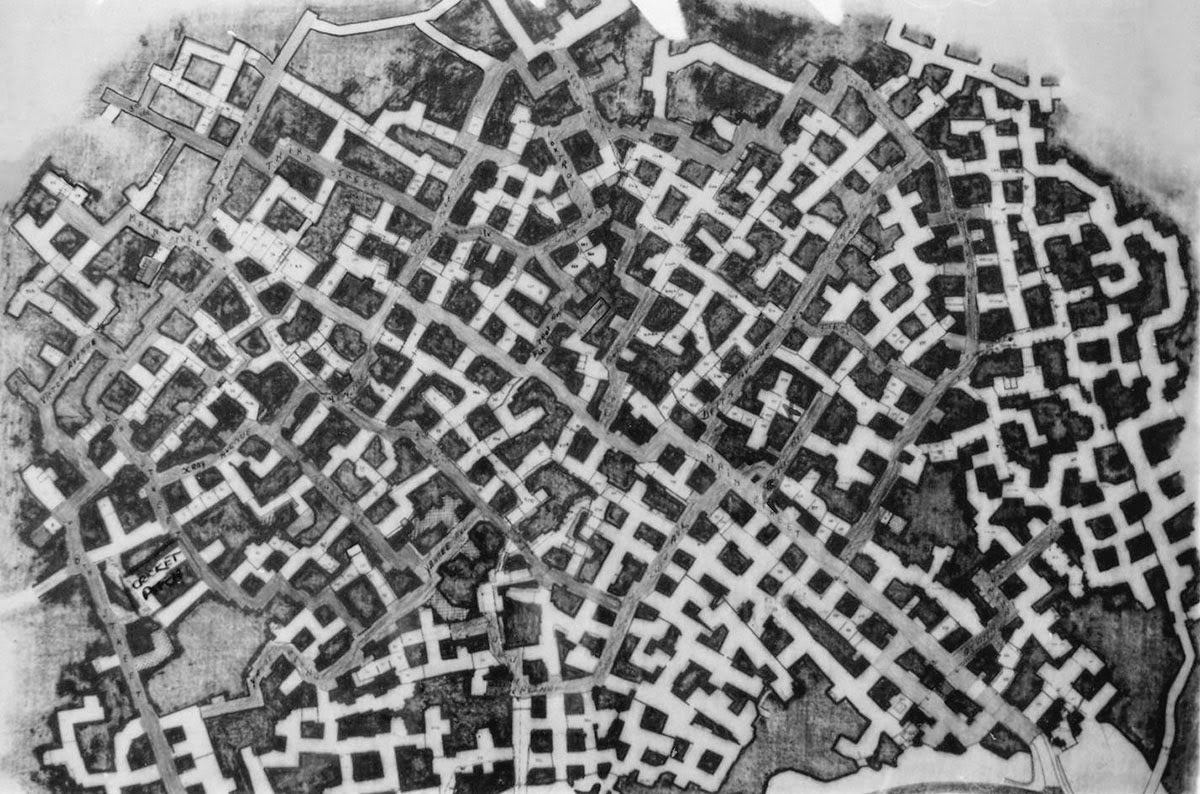
“The complex was on average 50 meters below ground covering an area of approximately 6750 acres with eight miles of corridors, 400 branches and 399 individual offices,” SubBrit explains. There were escape tunnels, as well, “one going out to the banks of the Albert Canal in Belgium, and one which came out in a farmer’s potato store in the village of Kanne.” It had its own water supply and even a dedicated wine cellar for NATO officers, who might need a glass of Europe’s finest chardonnay to help feel calm enough to launch those missiles.

Just look at this thing’s mind-boggling floor plan.

The “streets” were named, but not always easy to follow; however, this didn’t stop officers stationed there from occasionally going out to explore the older tunnels at night. A former employee named Bob Hankinson describes how he used to navigate:
Most corners were roughly 90 degrees, but only roughly. Going through the caves was an exercise in left and right turns every 50 feet or so. Navigation was helped by street names. Unlike in the USA, where streets are numbered on a sort of grid pattern, these were zigzag streets. My office on Main Street and J Street, so if I got lost I would just keep walking until I came to either Main or J, and join it. If I went the wrong way, eventually the street would peter out either at the perimeter or a T-junction, and you would just turn round and go back the other way.

As another former employee—a man named Alan Francis—explains, “If I did have spare time, I would wander through the dark tunnels where there were very few lights on at night, thinking how strange it was to be working in a Roman stone quarry.”

Writing in Subterranea, SubBrit explains that “nothing ever came out.” This was “a strict rule: apart from people, anything that went in never came out. All waste material ranging from redundant furniture to foot waste was dumped in one of the sixteen underground landfill sites” designated within this sprawling whorl of rooms and passages. Shredded documents were even mixed with water and applied directly to the walls as a kind of fibrous paste, used for insulation.

Such was the secrecy surrounding this place that it was officially classified as “a ‘forbidden place’ under the Protection of State Secrets Act which forbade people to even talk about it.”

One reason why the underground galleries are so vast, meanwhile, is apparently because of the character of the limestone they were carved through; in fact, “the limestone was so soft that the workers used a chainsaw to cut it.”

The notion that I could just cut myself a whole new room with a chainsaw—just revving this thing up and carving an entire new hallway or corridor, pushing relentlessly forward into what looks like solid earth, possibly even sawing my way into the roots of another country—is so awesome an architectural condition that I would move there tomorrow if I could.

Just imagine building this titanic doorway into the earth with a small group of friends, a case of beer, and a few chainsaws. It’s like Cappadocia by way of the Cold War. By way of Husqvarna.

[Image: An entrance into the NATO complex; via this thread].

Sadly, the whole place is contaminated with asbestos and has been badly saturated with diesel fuel. At least one environmental analysis of the underground maze found that “diesel fuel from the [copious emergency fuel] tanks had leaked into the porous limestone over a long period and had penetrated to a depth of about forty feet into the rock.”

You can imagine the weird bonfires that could have resulted should someone have been stupid enough to light a match, but “this area had to be removed and disposed of,” we read—presumably by chainsaw.

Nonetheless, today you can actually take a tour of this place—this now-derelict doomsday logistics hub that straddles international borders underground—courtesy of the Limburg Landscape Foundation.

If you can take the tour, let me know how it goes; I’d love to visit this place in person someday and would be thrilled to see any photographs.

(If you like the sound of underground NATO quarries and want to see more, don’t miss these vaguely related photo sets: NATO Quarry, N.A.T.O. Quarry, N.A.T.O. Quarry, France, Urban Explorers Discover Corroding Military Vehicles in Abandoned Subterranean Bunker, and Nato Quarry, Paris Suburbs May 2011).

Landmarks of the Chinese Cryosphere

Nicola Twilley of Edible Geography (and also my wife) spent a large part of this past winter exploring the world of artificial refrigeration in China for The New York Times. The results of that trip are now out in this weekend’s New York Times Magazine, called “The Price of Cold,” and she’s put together an accompanying travelogue on Edible Geography that takes you to “Ten Landmarks of the Chinese Cryosphere.”

These new spatial monuments to the control of thermal energy include the dreamlike “Room of the Sleeping Fish” in Jinan, which sounds like something out of an early Rupert Thomson novel, where live fish are effectively refrigerated into a state of hibernation during which they can survive outside of water; the delightful, Willy Wonka-like “Yogurt Control Room” in Tianjin, where vats of active bacteria grow and proliferate under laboratory supervision; the more or less self-explanatory Beijing Vegetable Research Center; and a variety of wet markets, shops, and restaurants where you, too, can experience the electrically-powered, human-induced winter that is slowly spreading its tentacles across the nation.

Beneath the Forest, Buildings

[Image: Photo by Heiko Prumers, courtesy of LiveScience].
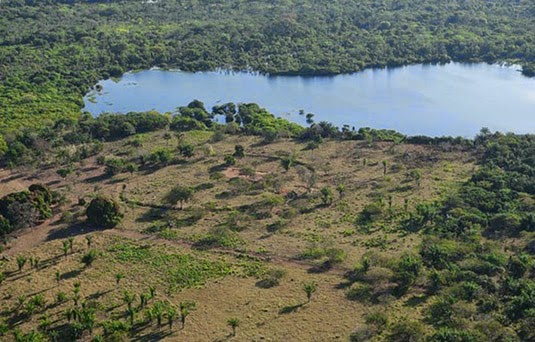
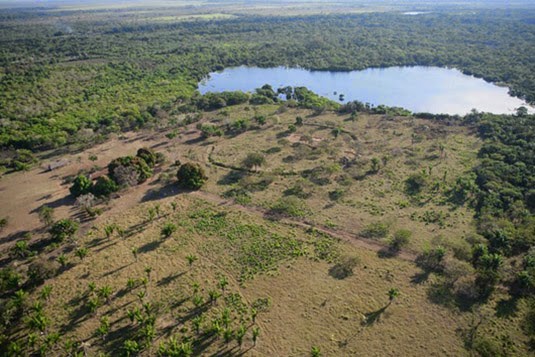
The remains of artificial structures that pre-date the Amazon rainforest have been found beneath the trees in Bolivia and Brazil. The forest actually grew up and around their ruins, we read, gradually consuming these structures altogether as the rainforest we see there today slowly spread over hundreds of years and conquered the landscape.

“A series of square, straight and ringlike ditches scattered throughout the Bolivian and Brazilian Amazon were there before the rainforest existed,” LiveScience reported earlier this month.

Based on the research of a postdoctoral graduate student named John Francis Carson, the report suggests that “the diggers of these ditches created them before the forest moved in around them. They continued to live in the area as it became forested, probably keeping clear regions around their structures.”

[Image: Photo by Heiko Prumers, courtesy of LiveScience].
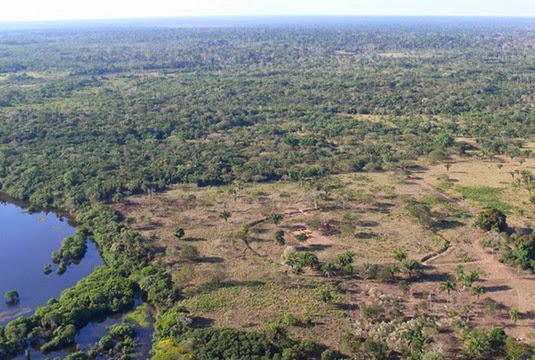
One of the most intriguing suggestions of the study is that the rainforest we see there today is actually, at its origins, what Carson calls “a coproduction between humans and nature.”

“It’s very likely, in fact,” he explains, “that people had some kind of effect on the composition of the forest… People might favor edible species, growing in orchards and things like that, [or] altered the soils, changing the soil chemistry and composition, which can have a longer-lasting legacy effect.”

In other words, the deliberate, long-term selection and cultivation of plant species preferred by humans would have led to a distinct type of forest growing in the region, not just a “wild” expanse of whatever plants could naturally survive.

The ancient forest was pruned, tended, and gardened, Carson’s research suggests, and therefore has a kind of unnatural origin, not unlike an abandoned garden gone to seed.

[Image: Photo by Heiko Prumers, courtesy of LiveScience].

In fact, this brings to mind the fascinating work of UC Berkeley anthropologist Christine Hastorff, who has pointed out that many of the heavily vegetated Central American landscapes we inaccurately and over-simplistically describe as “rainforest” are actually “feral gardens“: plots of artificially cultivated plants, vines, and trees, similar to orchards, that only later took on the appearance of wilderness after their gardeners were exterminated by Europeans.

Hastorff—like Carson—suggests that traces of this human-induced artificiality at the scale of an entire ecosystem can still be detected in the landscape, following detailed investigations into what combinations of plants grow in what areas, and then comparing these to what we would expect to see growing without human interference. These landscapes are not really wild forests at all, then, Hastorff explains, but “Maya village community garden plants that have gone feral. That isn’t the forest that was there before humans landed in the Americas.”

In any case, Carson’s work on the “mysterious earthen rings” found beneath the tree cover of the Brazilian and Bolivian Amazon is certainly fascinating for its glimpse of human settlement patterns—that is, architecture—hidden beneath an incredible landscape. However, its even more intriguing take away is that this very landscape was—at least in part—cultivated and influenced by the people who built the “earthen rings” we see in these photographs. Developing the implications of this “has only just started,” he tells LiveScience.