Emerging Geopolitical Constellations

For the next five days, I’ll be hosting and moderating an online discussion as part of the Glass House Conversations, sponsored by the Philip Johnson Glass House in New Canaan, Connecticut.

Every week this autumn, the Glass House Conversations have presented one question, posed by a new host each week, for general discussion online; previous queries have come from designers, writers, architects, critics, and educators, including 2×4, Steven Heller, John Maeda, Alice Twemlow, Alice Rawsthorn, Alissa Walker, and many more.

Click through to read the specific question I’m asking, and feel free to chime in; hopefully we can generate a good exchange over there throughout the week (note that the commenting function closes Friday evening).

On the art of drinking ice cores

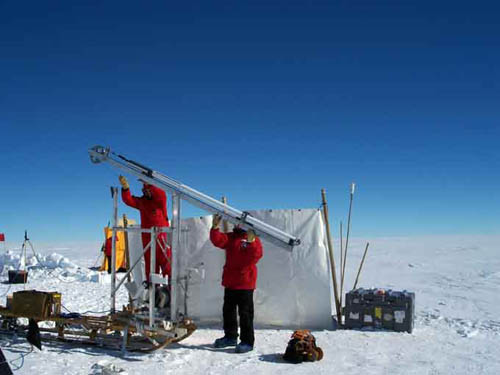
[Image: From the 2006-2007 U.S. ITASE expedition to Antarctica].

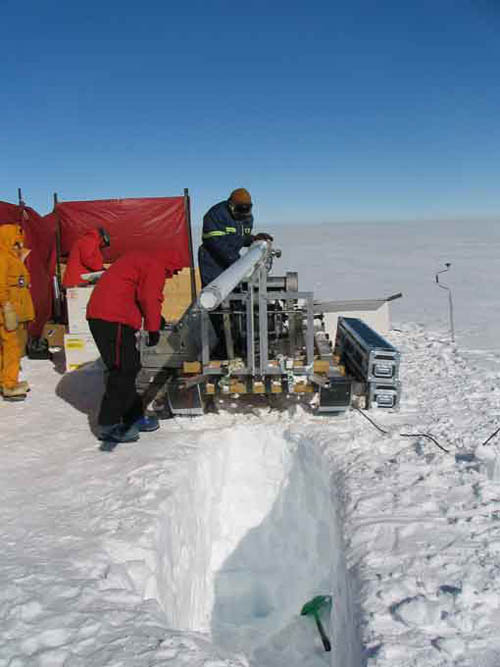
Edible Geography has a fun interview up this morning with glacial scientist Paul Mayewski, director of the Climate Change Institute at the University of Maine. The interview is remarkable not only for its descriptions of the technicality of drilling, shipping, preserving, and studying ancient ice cores removed from landscapes as far afield as Greenland and Tibet, but also for Mayewski’s confession that unneeded ice cores are sometimes melted down and drunk by the scientists.

[Image: From the 2006-2007 U.S. ITASE expedition to Antarctica].

“But, you know,” he clarifies, “it’s not as if we have a lot of ice lying around and we drink the water on a regular basis. We are pretty careful to restrict it to pieces that we know we don’t need for any measurements, and that come from places where they could be repeated if need be. We have to be sure that they’re not valuable to anybody. And we only use them for special events—we don’t drink it very often.”

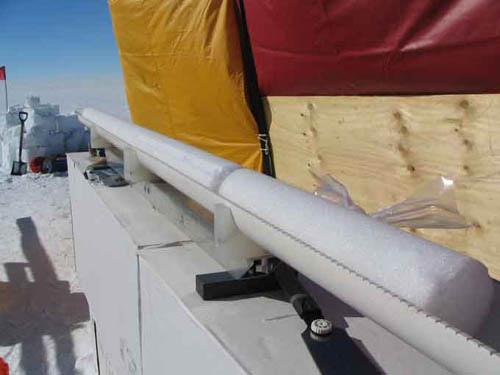
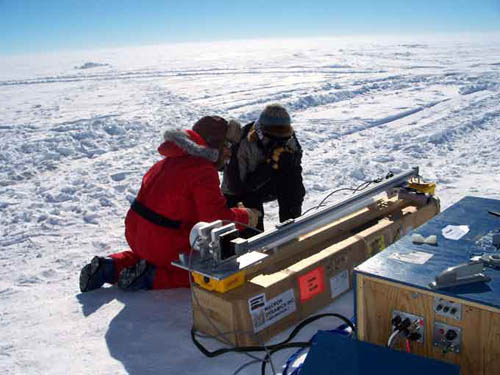
[Images: From the 2006-2007 U.S. ITASE expedition to Antarctica].

These special events include wedding receptions, where shavings of ancient ice, dropped into water, bubble and pop like champagne, Mayewski explains:

Probably the most exciting thing about it is when you have real ice—that’s where the snow has been gradually compacted and eventually formed into ice, and the density has increased. When that happens, if the ice is old, it will often trap air bubbles in it. Those air bubbles can contain carbon dioxide from ten thousand years ago or even a hundred thousand years ago. And when you put an ice cube of that ice in a glass of water, it pops. It has natural effervescence as those gas bubbles escape. You get a little a puff of air into your nostrils if you have your nose over the glass. It’s not as though it necessarily smells like anything—but when you think about the fact that the last time that anything smelled that air was a hundred thousand years ago, that’s pretty interesting.

Atmospheres trapped for a half-a-million years suddenly freed, as wedding guests inhale these vaporous paleoarchives.

[Image: From the 2006-2007 U.S. ITASE expedition to Antarctica].

The whole interview, though long, is a quick and good-spirited read.

Design and Existential Risk

I’m thrilled to be kicking off this fall’s Design and Existential Risk lecture series, hosted by Ed Keller and the Parsons School of Design in New York. Things kick off tomorrow, Saturday, October 9th, at 6pm EST, with a simulcast lecture featuring myself here in Los Angeles and legendary writer Bruce Sterling in New York.

As you can see from the flyer, above, the whole series will address the strategic use of science fiction-inflected scenario planning and the rise of “extreme existential risks” at this particular point in human history.

As we enter the second decade of the 21st Century, we are challenged by unprecedented planetary scale events—resource wars, climate change, emerging diseases—which increase in frequency and pose unprecedented problems for mapping and design. What can the role be for design when the reality that faces us is more extraordinary than the worlds we have imagined in science fiction?

Each lecture in the series will thus “explore the ways design thinking engages sustainability and indeed our very survival across near term (5 years), mid term (20 years), through very, very long term (tens of thousands of years and longer) time frames.”

Tomorrow will involve some technical intricacies—such as getting a video feed of myself and architect Ed Keller recorded live here in Los Angeles broadcast into the auditorium in New York City where Bruce Sterling will be interviewed by Carla Leitao and introduced by Elizabeth Ellsworth. But it should work. If all hell breaks loose, though, and the video feeds fizzle, you can still attend Bruce Sterling’s talk in person at Kellen Auditorium, 66 5th Avenue, and videos from both Bruce’s and my talks will be released online later this fall.

Other speakers in the series include Benjamin Bratton, Jeffrey Inaba, Jamie Kruse of Smudge Studio, Keller Easterling, David Gersten, and many more.

Check out the program’s website for more info.

An Ancient Comedy of Urban Errors

[Image: From Andrejs Rauchut’s thesis project at the Cooper Union].

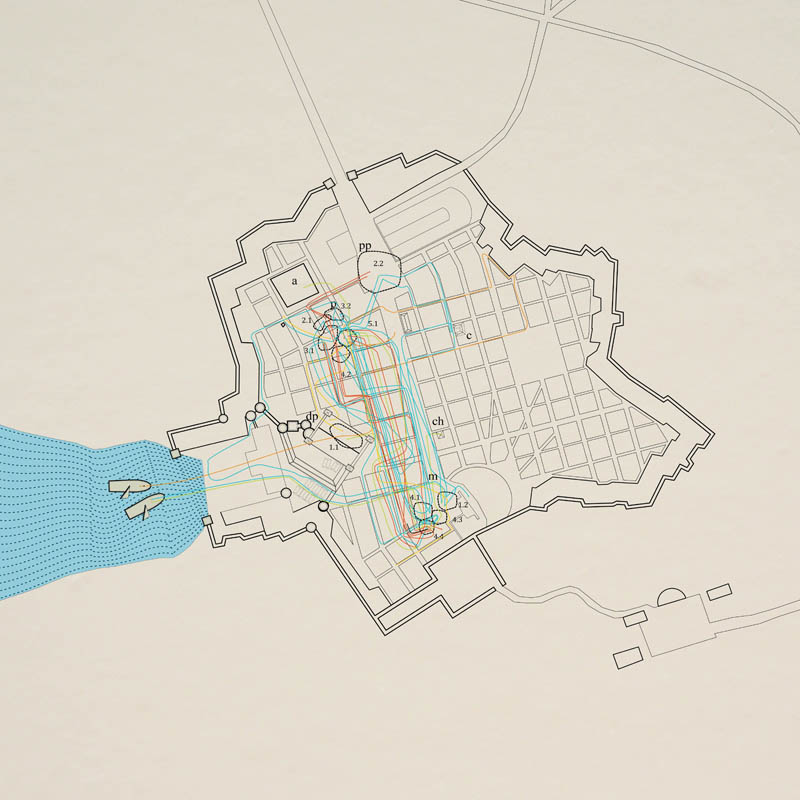
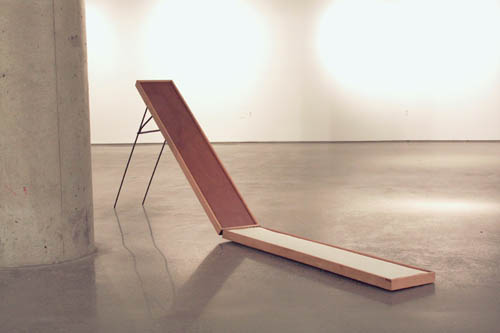
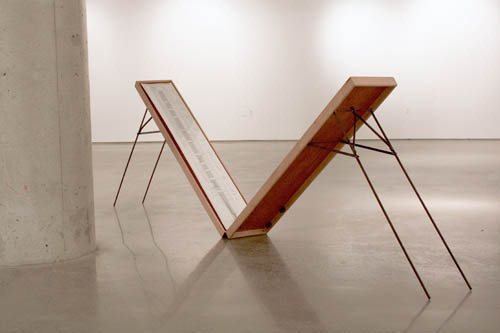
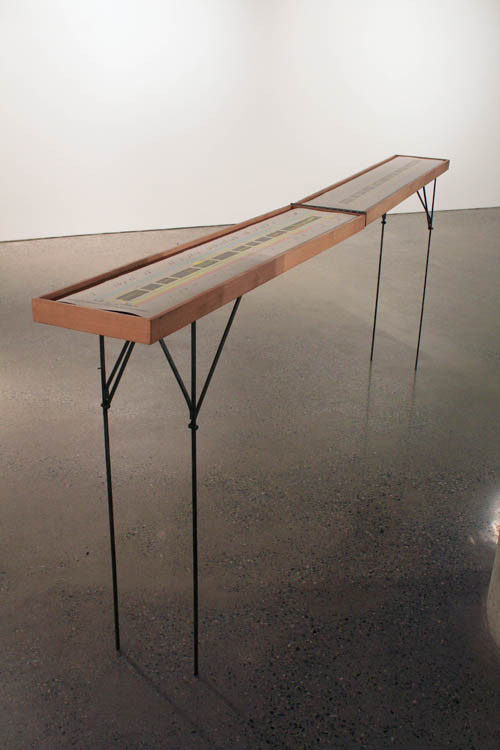
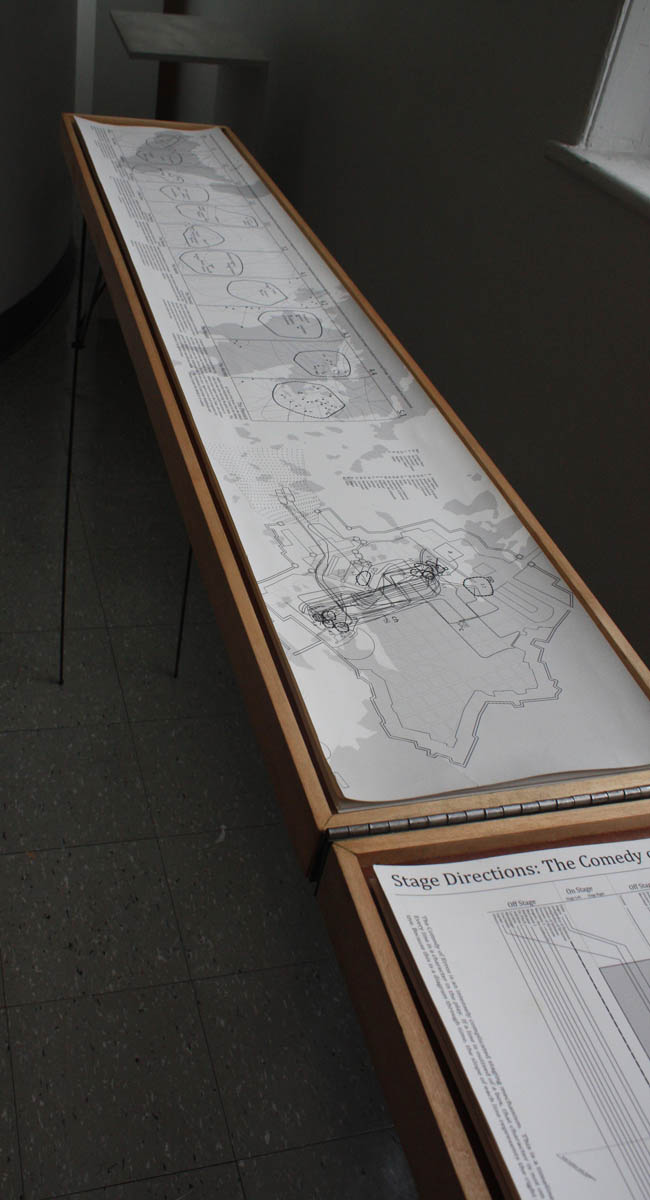
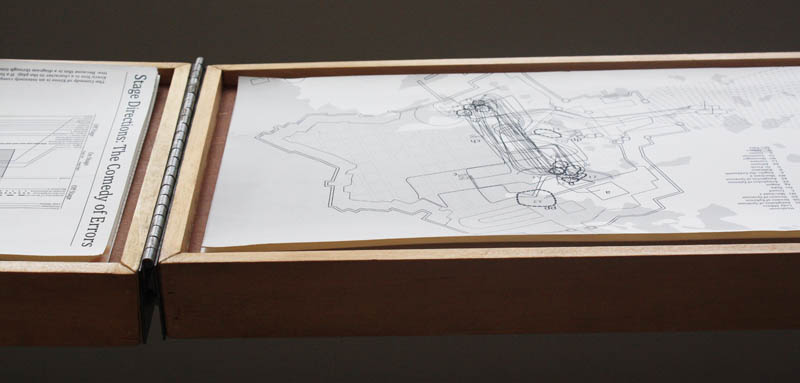
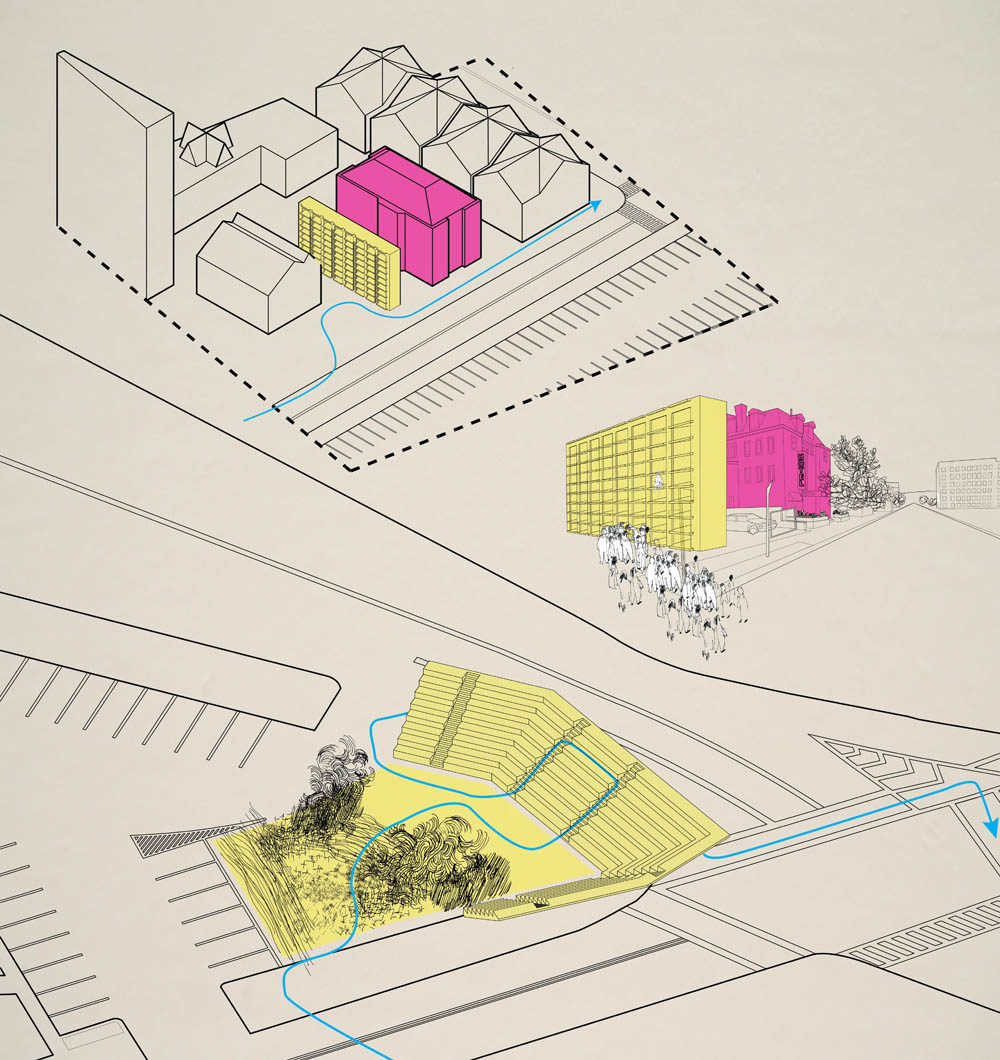
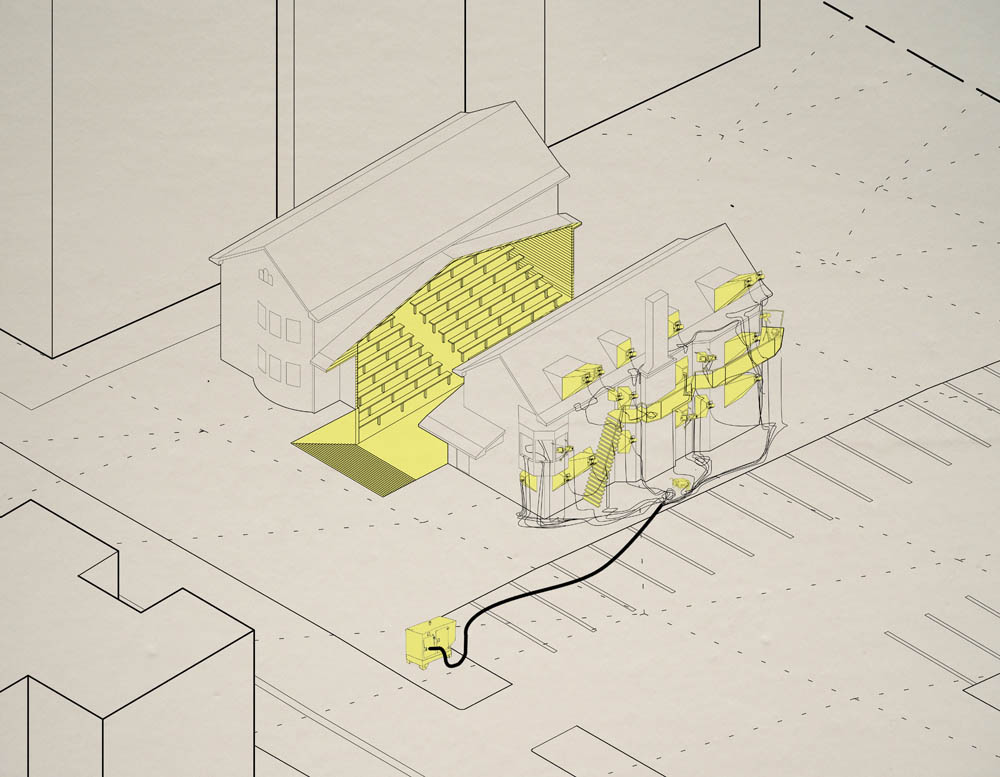
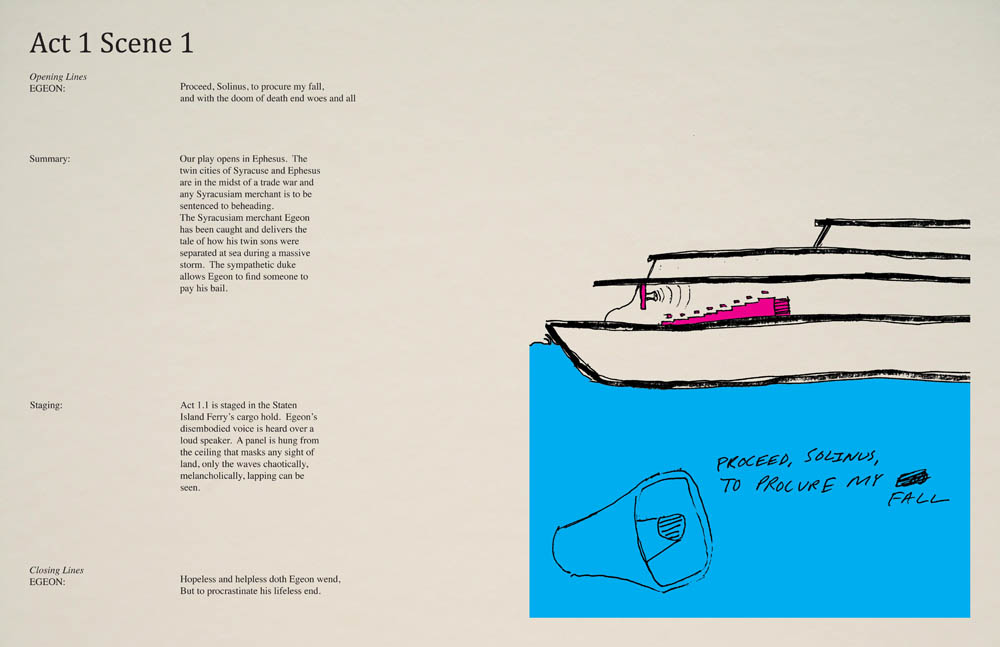
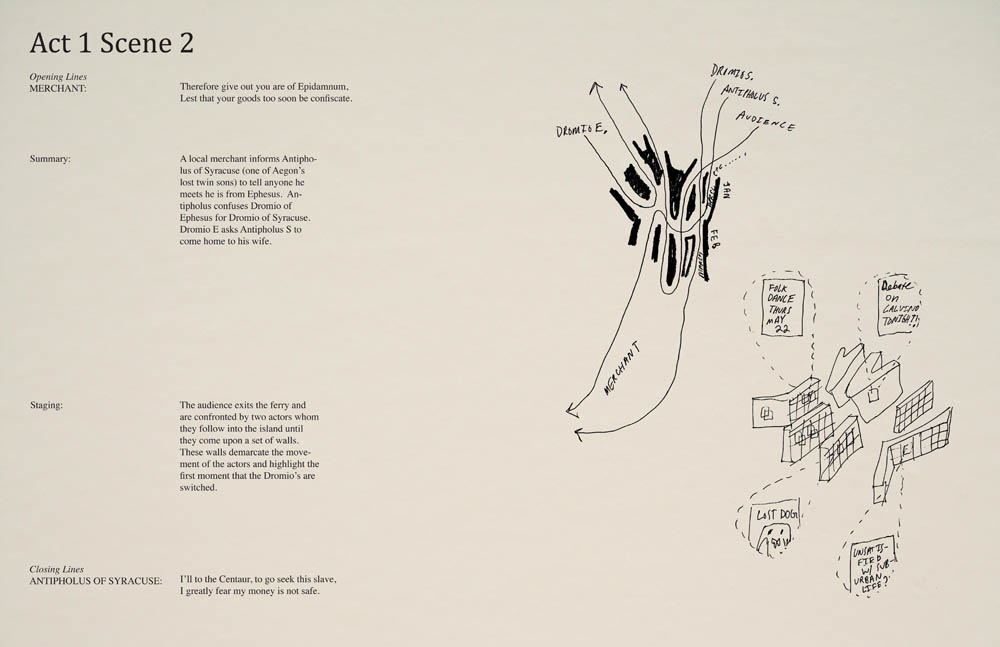
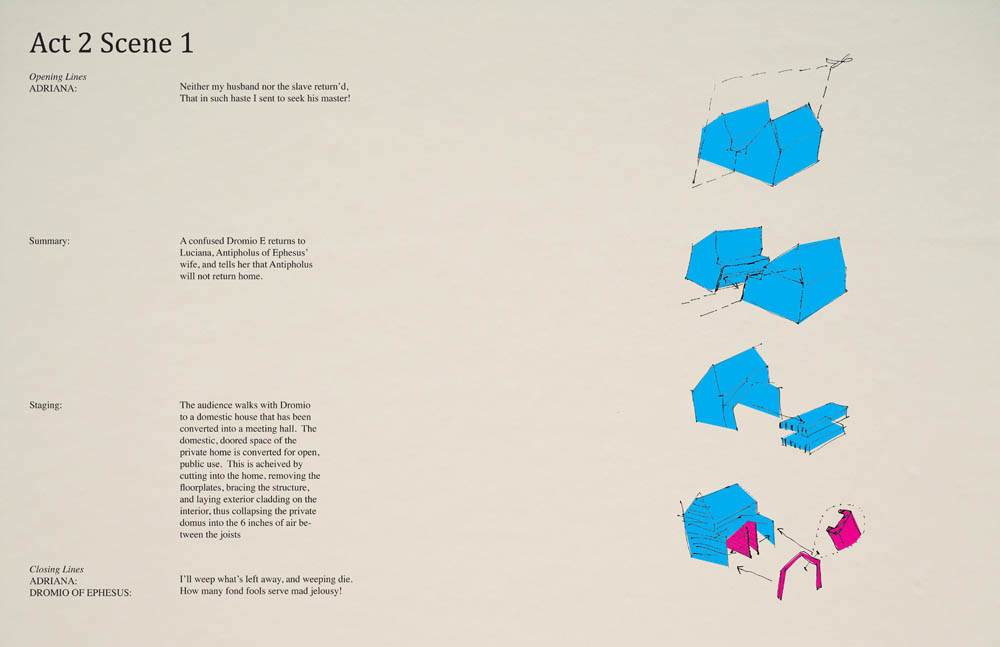
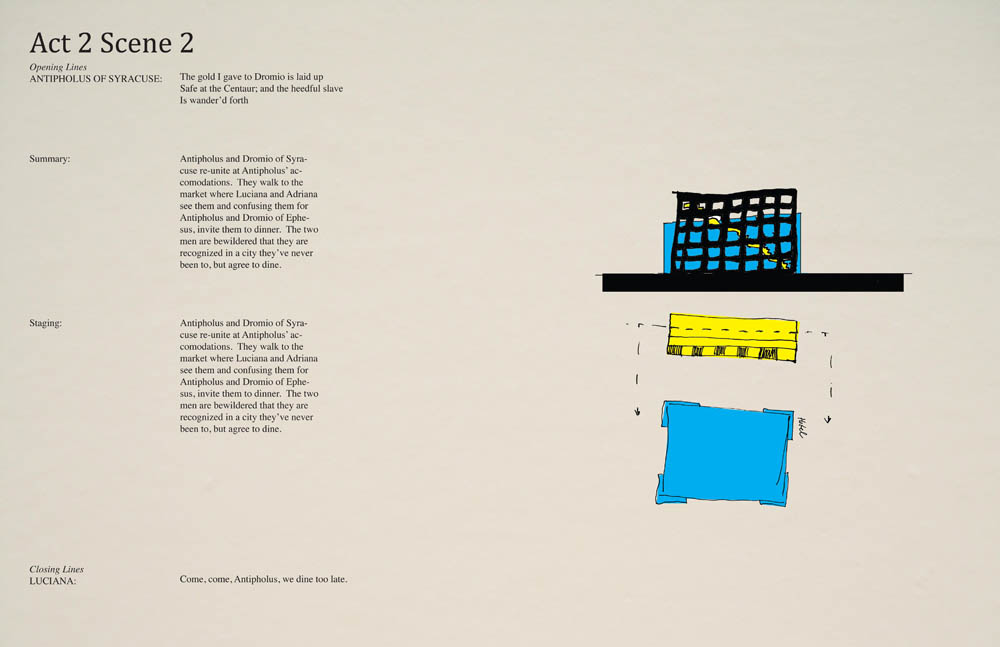
For his final thesis project this year at the Cooper Union in New York City, student Andrejs Rauchut diagrammed and modeled “a constellation of architectural set pieces” meant for “a day-long performance of The Comedy of Errors” by William Shakespeare. Rauchut’s project presentation included an absolutely massive, wood-bound book: it started off as a flat chest or cabinet, before opening up as its own display table.

[Images: From Andrejs Rauchut’s thesis project at the Cooper Union].

The diagrams therein are extraordinary: they map character movement not only through the ancient city of Ephesus, where Shakespeare’s play is set, but through the “constellation” of set pieces that Rauchut himself later designed.

[Image: From Andrejs Rauchut’s thesis project at the Cooper Union; view larger!].

As Rauchut describes it, The Comedy of Errors “follows a single day in the life of the port city of Ephesus through the eyes of its commuting citizens, from the high perch of the duke to the city’s prostitutes.” This has interesting spatial implications:

The shrewdest and most elaborate part of the play is its circuitous, knotted plot. The city starts to fold in on itself when a merchant named Antipholus arrives in Ephesus unaware that his long-lost twin brother now lives in Ephesus. The local citizenry misidentify the brothers as each Antipholus is shuffled in and out of scene. A complex strand of chaos breaks out throughout the city that climaxes with one of the brothers attempting to publicly murder his wife out of shear frustration. While the play investigates how the circulation patterns in a city can be hijacked to create chaos, it also demonstrates how, through the art of gathering, peace can be obtained via discussion and the exchange of information. We see this in the last act when all the characters gather and finally make sense of the day’s events.

Urban design becomes public dramaturgy.

[Image: From Andrejs Rauchut’s thesis project at the Cooper Union].

The bulk of Rauchut’s work went into producing a series of timelines and graphic depictions of character movement in Shakespeare’s play.

[Image: From Andrejs Rauchut’s thesis project at the Cooper Union].

In the massive image seen above, for instance, “Each box represents the time and space of an act and the crossing of a box by a line signals a character’s entrance onto the stage. One can see that it is in the final act, when nearly all the lines collectively intersect the last rectangle, and all the characters are on stage, that they can finally straighten out the events of their collective day. Up to this point, as the timeline demonstrates, the characters have been weaving in and out of contact with one another, multiplying the fragmented misinformation that spreads throughout the city.”

[Images: From Andrejs Rauchut’s thesis project at the Cooper Union].

He then went on to experiment with overlaying these character paths onto Staten Island, part of the New York City archipelago, as if trying to draw an analogy between the seafaring, splintered island geography of the ancient Mediterranean—with its attendant heroes and unacknowledged gods—and the contemporary commuter landscape of greater New York.

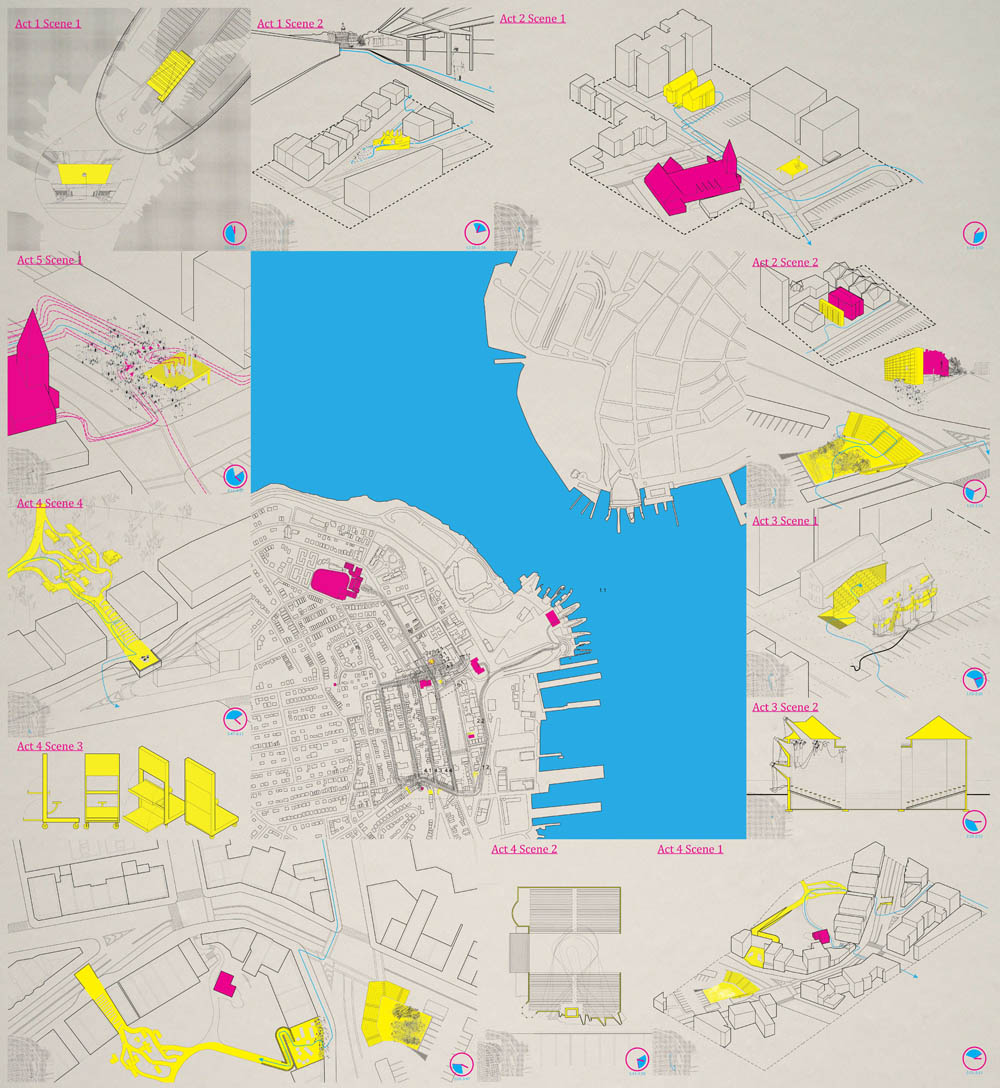
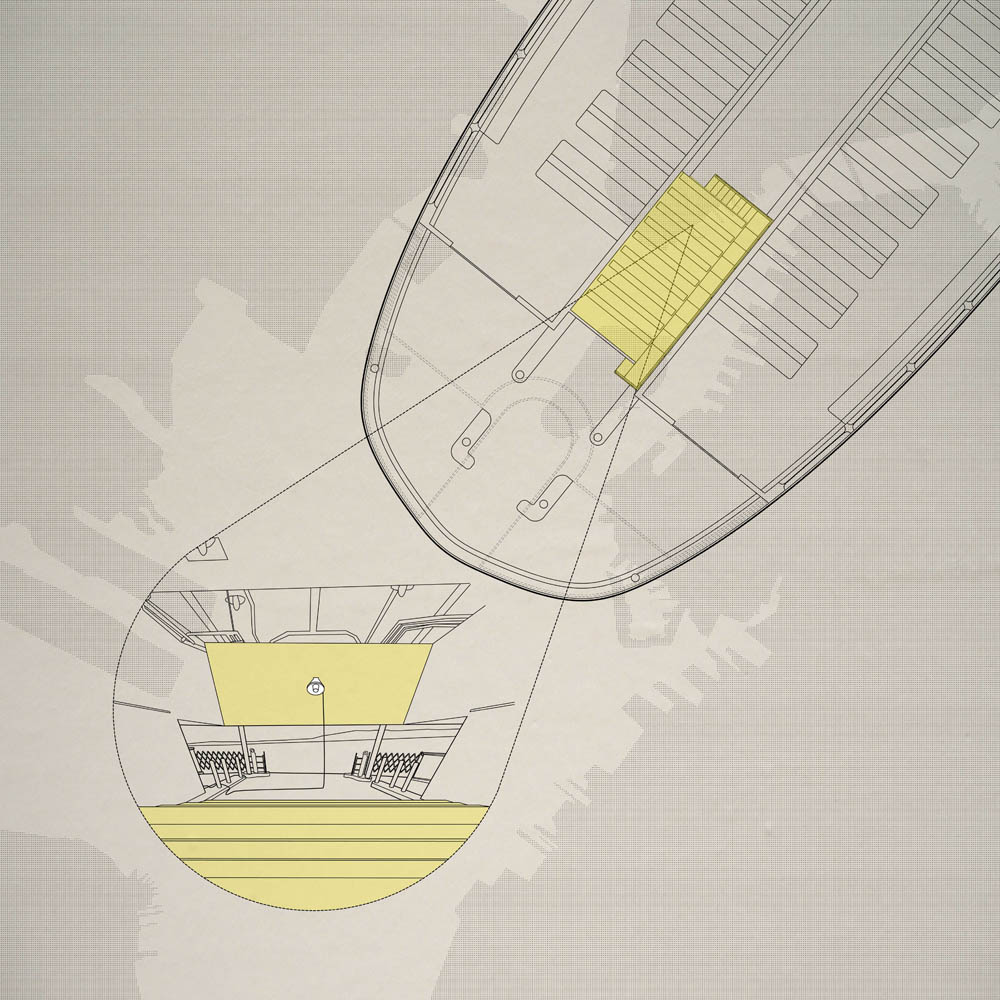
This transposition of Shakespeare’s characters’ movements onto Staten Island, Rauchut explains, became “the backbone for the design of a series of architectural set pieces inserted into the suburban fabric of Staten Island. At each of the points where characters interact, an architectural set is built.”

[Image: From Andrejs Rauchut’s thesis project at the Cooper Union].

Ultimately, the project aimed for the indirect choreographing of a public, urban event—it was to be a “guerilla instigator of public space,” as Rauchut describes it:

The final design is a constellation of architectural set pieces that would be used for a day-long performance of The Comedy of Errors. Actors would travel along their scripted routes through the city dressed in plain-clothes crossing paths and delivering lines. The audience would consist of interested citizens, gathering, following, growing, leaving, and occasionally returning as they continue through their daily routines.

“After the play is over,” he concludes, “the architecture would remain and would be used by the locals of Staten Island”—the remnants of a play incorporated into everyday urbanism.

To be honest, I’m not a huge fan of that sort of participatory street theater, but the spatial ideas underlying Rauchut’s project—that is, the precipitation of architectural forms from the public passing of an unannounced literary event—is certainly thought-provoking and could have some pretty awesome effects applied elsewhere, with different texts. Books become clouds, raining events and built forms onto the city.

(Thanks to Hayley Eber for inviting me to see Andrejs Rauchut’s project at midterm last spring! Of possible earlier interest: Bloomsday).

Urban Optometry

[Image: From The Solitary Life of Cranes by Eva Weber].

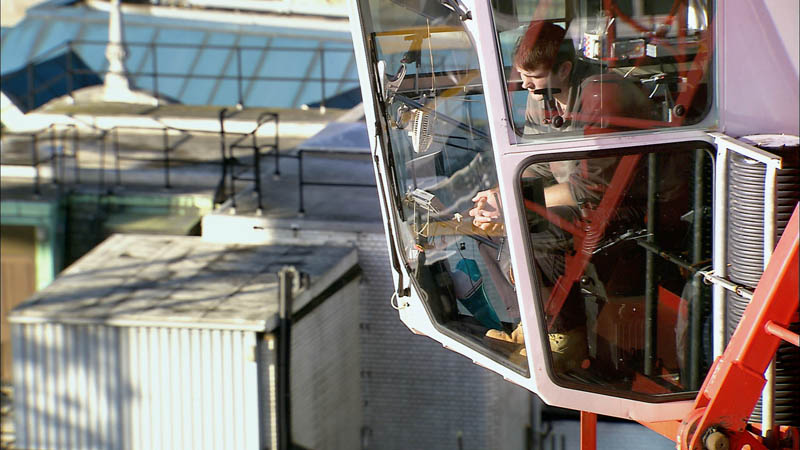
The Solitary Life of Cranes is a short film by Eva Weber about the work performed by construction crane operators in London. I’ve mentioned it many times in various talks I’ve given over the past year, but I realized last night that I never actually posted about it—so I thought I’d correct that. It’s a great film, and it’s worth seeking out. At only 27 minutes in length, as well, it’s also quick to watch.
[Image: From The Solitary Life of Cranes by Eva Weber].

As the film describes itself:

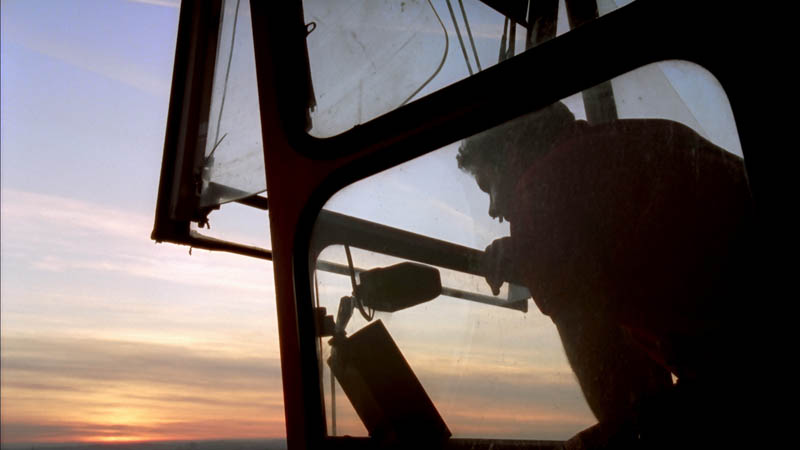
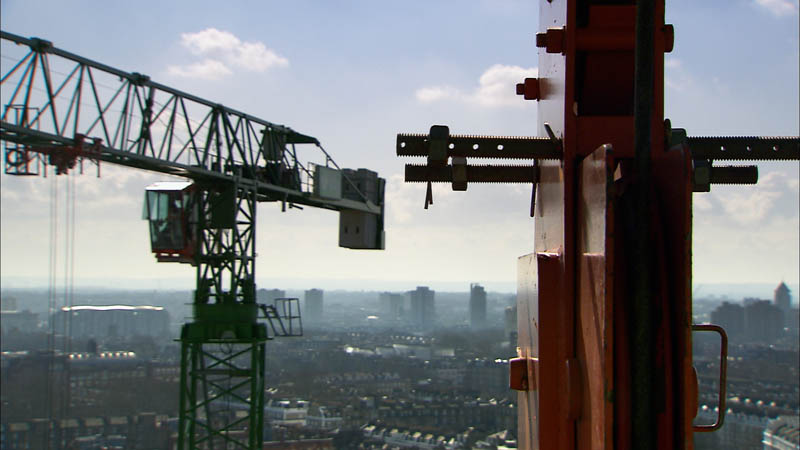
Part city symphony, part visual poem, The Solitary Life of Cranes explores the invisible life of a city, its patterns and hidden secrets, seen through the eyes of crane drivers working high above its streets. (…) From their elevated positions, crane drivers are the unsung chroniclers of our ever-changing metropolis: the bulk of their time is spent waiting, looking, observing the wind, the weather, and the people down below. From their airy towers, they do not only have the best overview of the construction site and some of the most impressive panoramic views of the city but also an unparalleled insight into any of the buildings surrounding them.

Looked at one way, Weber has made an oral history of crane operators: documenting where they work, what they think about, what they see, and—perhaps most interestingly—how they view the city.
[Image: From The Solitary Life of Cranes by Eva Weber].

These operators, I would suggest, have a view of the metropolis that architects and planners have little or no access to, an optical insight into city life that often gives their job an almost mystic feel. “Many people don’t know that there’s somebody up there, don’t even think that there’s somebody up there,” one of the operators suggests. “They’re quite surprised when you tell them, ‘yeah there’s a guy up there, you know and this guy is me’.”

There are moments of both inadvertent and advertent voyeurism in the process. “You see really private moments of people’s lives… because people can’t see you or aren’t aware of you.” Indeed, “There’s a couple of people in—how can I put this now without sounding like a voyeur? There are flats right opposite me with the same people in, every day, if you know what I mean, and they’re there, you cannot not look.”

“If you did meet the same person on the street,” one of them says, “then you’d think twice… you wouldn’t introduce yourself, but you stop and think and turn your head when they walk by, you know, as if to say, look I’m part of your life but you don’t know it.”

[Image: From The Solitary Life of Cranes by Eva Weber, like a shot from Michael Wolf’s book The Transparent City].

One of them even compares the experience to living and working inside a cloud: “Coming down… it’s like coming out of a cloud. You sort of come down it, and it just disappears and then you’re back on normal ground again. You think, ‘Jesus, what a different way of life down here than what it is up there’.”

This terrestrial dislocation is not necessarily a good thing: “We’re getting operators that we all call ‘cab happy’, and they just want to stay on the cab all the time. You know, it’s hard to get them out… I think all crane operators, to a certain degree, I think they’re ‘cab happy’—when you’re on the floor you always miss being in the crane.”
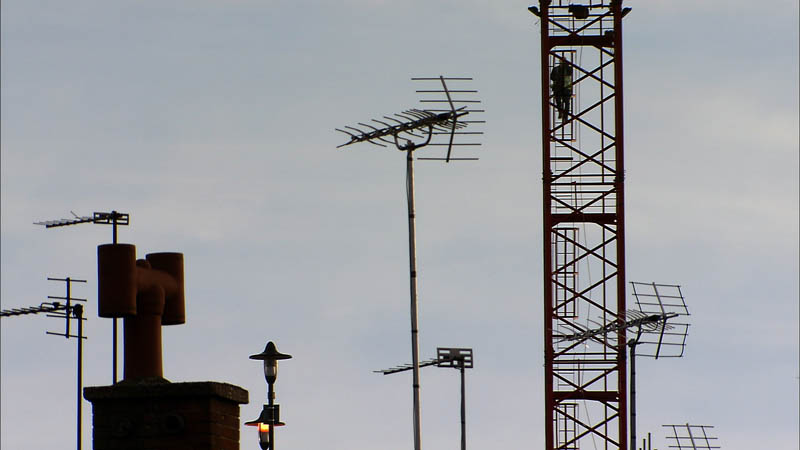
[Image: From The Solitary Life of Cranes by Eva Weber].

One of my favorite moments in the film is when we hear an operator talk about storms. “You can see a storm develop,” he says, looking out over the city, “sort of 10-15 miles away, you can see the cloud shapes, you know, you can watch the rain come in,” and we see moving fronts of English weather cross over the city, “and the rain physically comes in as a wall. You can see that curtain,” he says, “moving across the town, moving across the city.”

[Image: From The Solitary Life of Cranes by Eva Weber].

When I talked about this film at an event in New York City last winter, architect Ed Keller, the event’s host, compared these crane operators to Daedalus figures, looking down into the labyrinth that they themselves have built—only here the labyrinth is London, and the there is not one Daedalus but thousands, and they are awake all the time in overlapping shifts, keeping eyes on the city from above, in perpetuity.
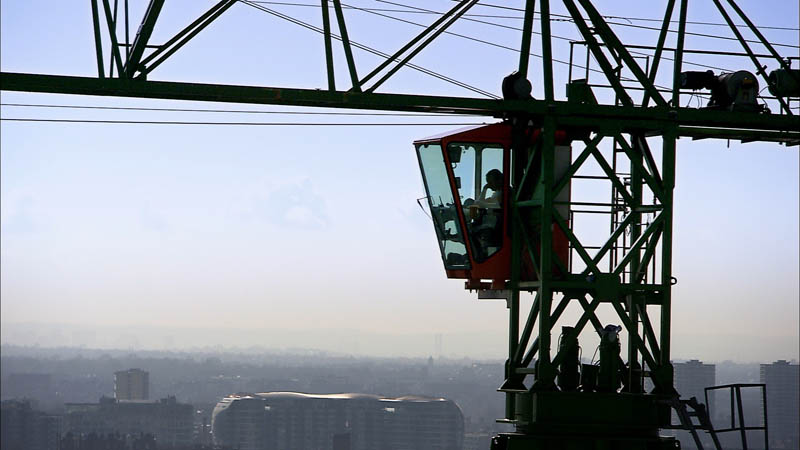
[Image: From The Solitary Life of Cranes by Eva Weber; the building in the lower left of this image is actually the London office of Foster and Partners].

“The sky is full of stories,” as author Sukhdev Sandhu wrote in an essay for the book A Manual For the 21st Century Art Institution. Looking at the social, economic, and even narrative implicatons of architectural verticality in East London, Sandhu specifically cites Weber’s film:

These men, perched in their metal boxes, invisible to ground-bound Londoners, speak with precision and poetry about the beauty they are afforded by their enhanced perspectives—about the pale delicacy with which the sun rises above the city, the lush greenery of far-off hills, the way streets curve and snake into the distance. They are blessed with the opposite of tunnel vision, able to spot oncoming storms at a distance of fifteen miles, and witnesses to the teeming life that takes place above pavement level: roof-garden parties, office workers taking fag breaks, pigeon fanciers chatting to their birds. London, one of them observes, consists of a series of layers.

Sandhu calls for a need “to gaze out across the callous metropolis—and conjure forth connections,” taking advantage of these unprecedented viewpoints, perspectives on the city that were literally impossible before these buildings and cranes came along, to help fashion a new understanding of how the metropolis works, how people live within it, and where it might yet go. As if the building boom brought with it a new optics of the city—a new picturesque—an angled optometry of everyday space.
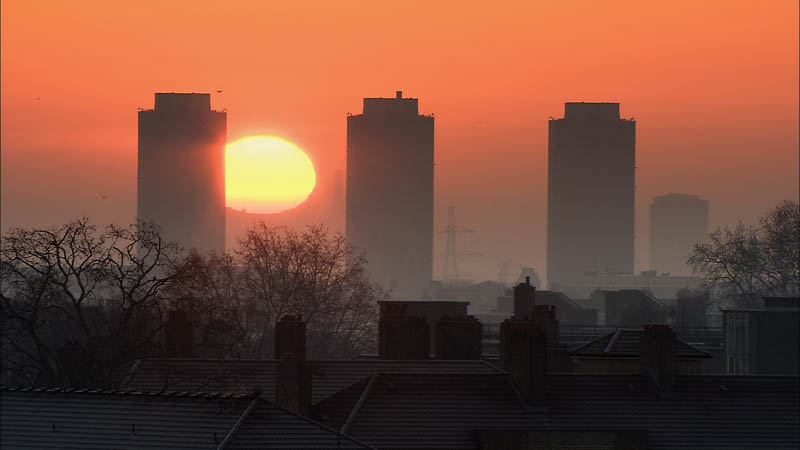
[Image: From The Solitary Life of Cranes by Eva Weber].

Briefly, I’m reminded of the story of Babu Sassi, a crane operator atop the Burj Dubai/Burj Khalifa who, the legend goes, didn’t come down to earth for a full year, as it would have taken too long to make the trip. You can read more about Babu at that earlier post, but the overall question would be the same: how does your understanding of the social world change after spending time inside these massive, temporary constructs without names or fixed addresses, as if only unofficially present in the built landscape that surrounds them? They are towers that disappear, never to be seen again in the same location, and you are perched there, like some rogue landscape theorist, at fantastic height above the very thing you both assemble and secretly study.
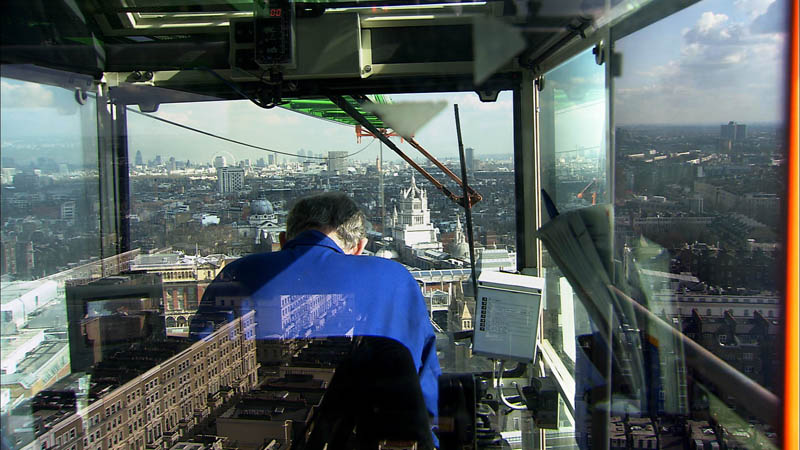
[Image: From The Solitary Life of Cranes by Eva Weber].

More information about the film can be found at its—unfortunately Flash-based—website, and the film itself is worth seeking out.

Building Lifter

[Image: Proposal image for Skylifter, capable of “delivering whole buildings to remote locations”].

Before I realized that Up is actually an unwatchable film about talking dogs, I probably would have used it as an analogy here: an Australian firm called Skylifter has devised what Popular Science describes as “a better way to transport heavy equipment to remote areas that are beyond the reach of railways, roads and runways.” The Skylifter system can lift up to 150 tons, which means it “could be [used for] delivering whole buildings to remote locations” within just a few short years (after they, you know, figure out how to make it work).

But, yes, please: I would like to air-lift Angkor Wat to a small town in northern Wisconsin. Thank you. Imagine the hijacking scenarios! In fact, I can imagine a whole new cable television series emerging from this, like Ice Road Truckers gone airborne, in which amazed home viewers watch the international building-transportation industry literally take off: whole villages of detached buildings drift across the sky, disappearing over the nearest horizon.

Upside Dome / Architectural Understudy

[Image: “Upside Dome” by Gijs Van Vaerenbergh; photo by Jeroen Verrecht].

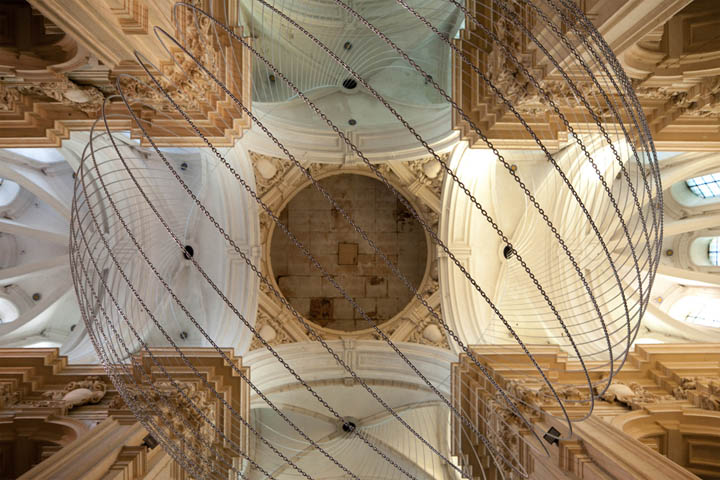
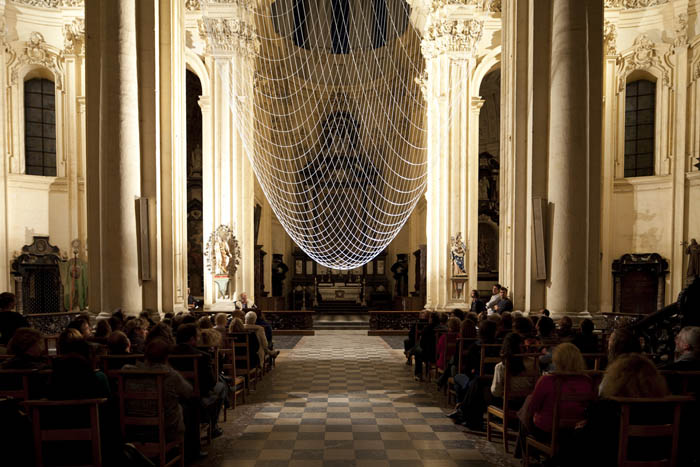
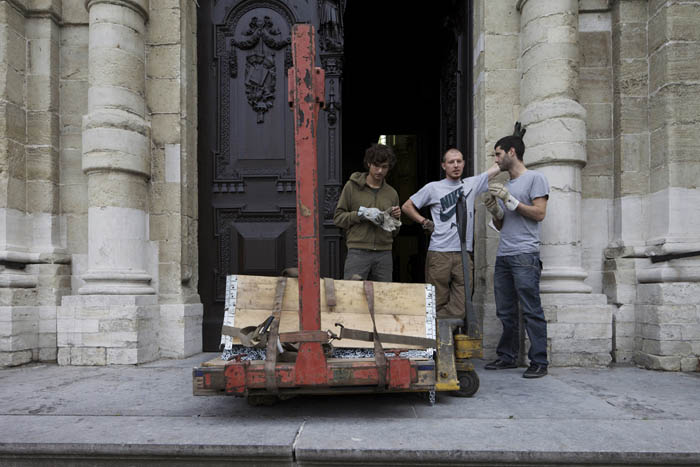
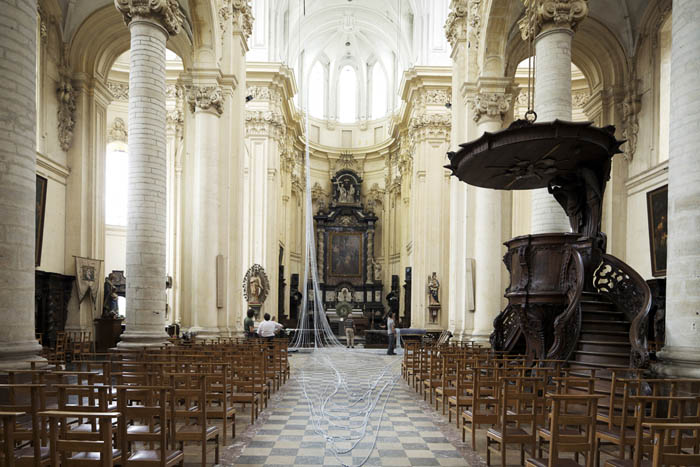
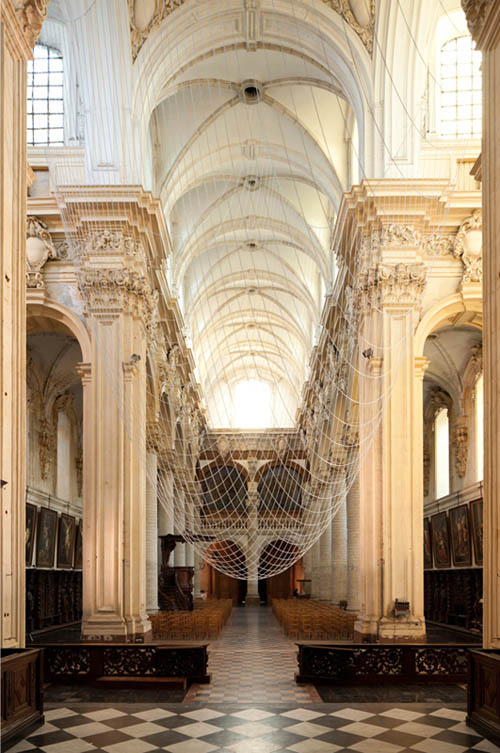
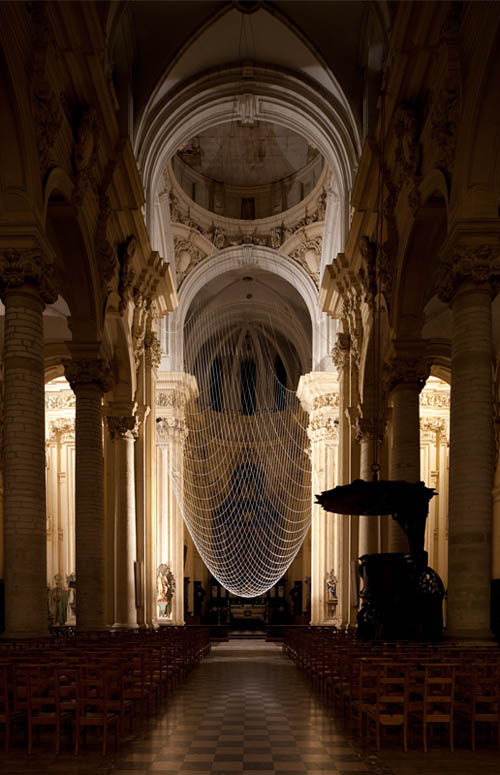
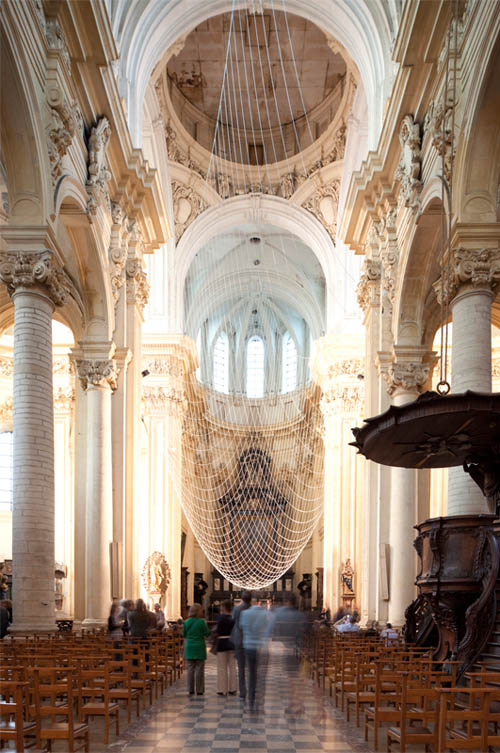
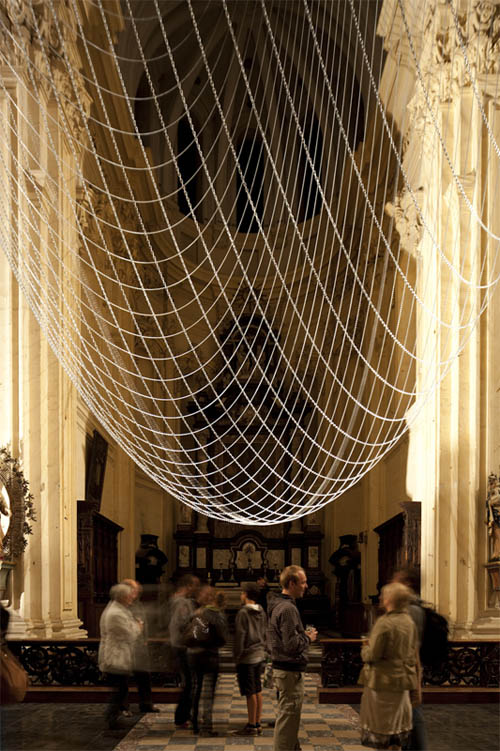
Looking at “Upside Dome” by Gijs Van Vaerenbergh, installed inside the St. Michiel Church in Leuven, Belgium, is like seeing the underlying geometric logic of Western space bleed through from a hidden dimension.

The project was at least partially inspired, the architects write, by their recognition that the church itself actually has no dome: their intervention “takes this seemingly trivial fact as a starting point and generate[s] the missing dome in a remarkable way.”

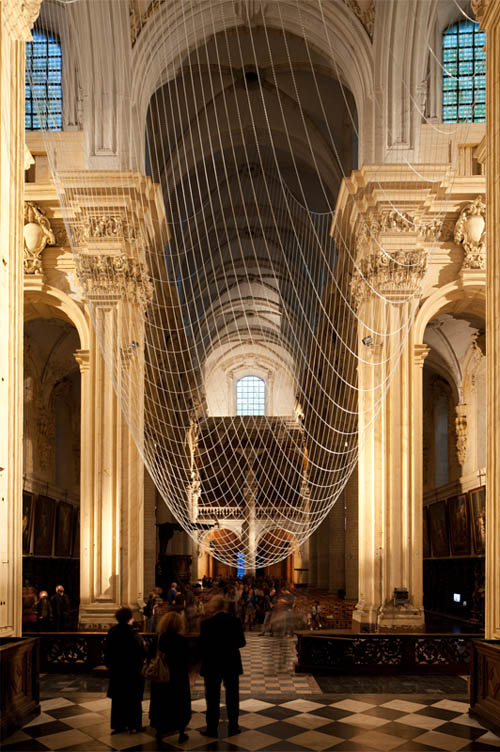
Using the design technique of the catenary, a new structure emerges in the church. The Upside Dome is a real size scale model, comprised of hundreds of meters of chain, which is literally and figuratively the counterpart of the unfinished dome.

Abstract, bulbous, heavy with itself, this network of chains thus forms an inverted counter-dome—a reflective surrogate, a back-to-front double, an upside dome—inside the nave.

[Image: “Upside Dome” by Gijs Van Vaerenbergh; photo by Jeroen Verrecht].

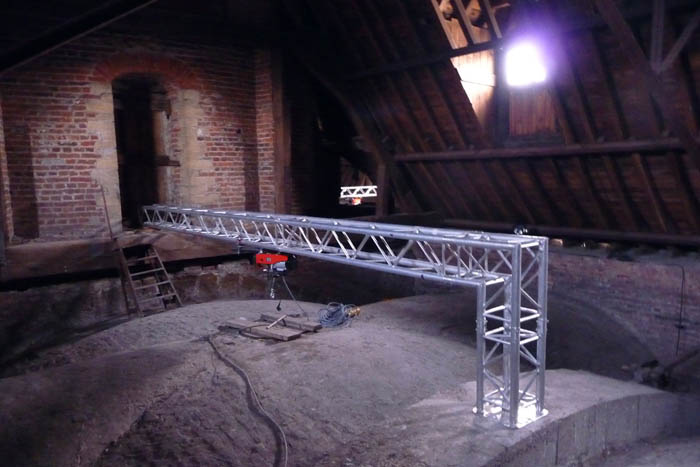
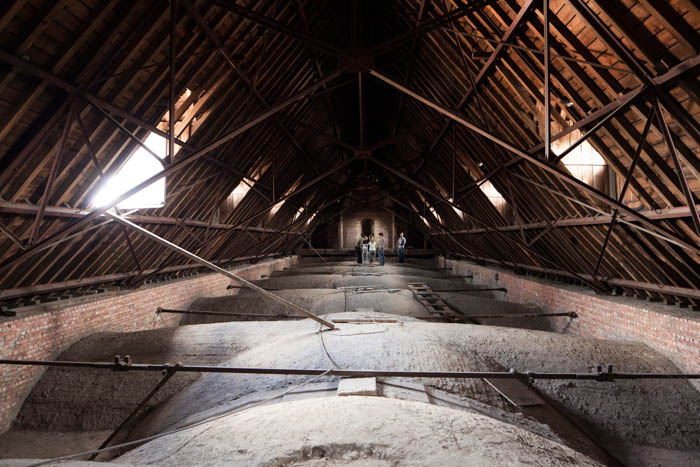
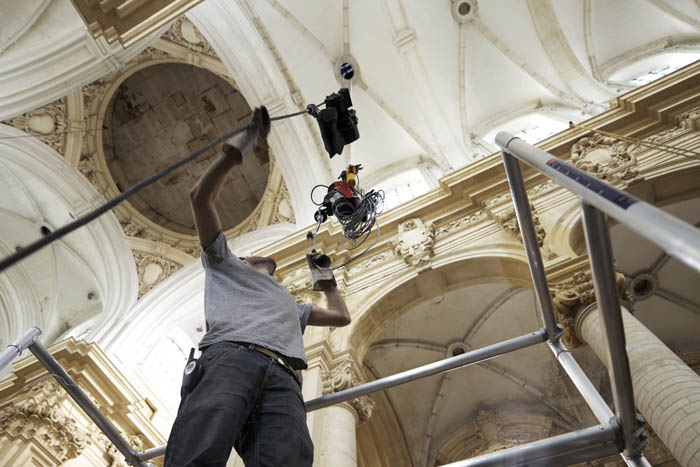
The actual installation shots are pretty cool, as well: glimpses of the church’s innards—its otherwise unseen attics and backspaces—complete with long chains dropped down from above.

[Images: “Upside Dome” by Gijs Van Vaerenbergh; photo by Jeroen Verrecht].

The final result is both model and realization, then, simultaneously a demonstration and the final product.

[Image: “Upside Dome” by Gijs Van Vaerenbergh; photo by Jeroen Verrecht].

In a sense, the geometry of gravity itself collides with the ornamental excess of Baroque architecture in a surprisingly appropriate and optically interesting way: the installation suggests a kind of minimalist Baroque, where emerging nests of curved surfaces take shape, mocking and repeating the logic of the buildings around it.

[Images: “Upside Dome” by Gijs Van Vaerenbergh; photo by Jeroen Verrecht].

Way back in March 2005, meanwhile, I caught a lecture by architect Mark Goulthorpe at the University of Pennsylvania, where he demonstrated a piece of software that I believe had been produced in-house at his firm; it allowed the architect to model the hanging of chains in virtual catenary curves, and thus to generate a huge variety of possible architectural shapes for future projects. He produced, with the click of a mouse, live there in the lecture hall, new species of curves in space.

[Image: “Upside Dome” by Gijs Van Vaerenbergh; photo by Jeroen Verrecht].

But the method of analog calculation seen in “Upside Dome“—that is, drooping pieces of chain or string through space until they stabilize—gives force and form to gravity and to the potential architecture tucked away in empty space.

Las Vegas Death Ray

By now, you’ve no doubt heard of the so-called “death ray” in Las Vegas, caused by the curved surface of the newly constructed Vdara Hotel. The hotel’s facade acts as a parabolic reflector, concentrating solar heat into a specific target area—enough to melt plastic drinking cups and even burn people’s hair. It’s the future of urban thermal warfare, perhaps: hotels armed against other hotels in a robust defense posture defined by pure heat.

Of course, Frank Gehry’s Disney Concert Hall here in Los Angeles had its own “microclimatic impact,” as this PDF makes clear. Back in 2004, USA Today explained that “the glare off the shimmering stainless steel curves at the Frank Gehry-designed Walt Disney Concert Hall is so bad, it’s heating up nearby condos at least 15 degrees and forcing owners to crank up their air conditioners.”

[Image: By Sean Lally, Andrew Corrigan, and Paul Kweton of WEATHERS].

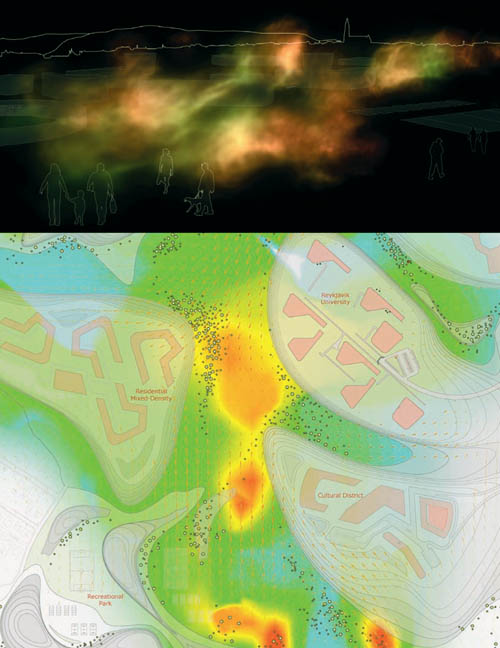
Oddly, though, this same heat-reflection effect came up recently in a course I’m currently teaching; a student and I were looking at a project by Sean Lally, Andrew Corrigan, and Paul Kweton of WEATHERS (previously documented on BLDGBLOG here).

That project proposed not really building anything at all but simply tapping the geothermal energy available beneath the Icelandic capital of Reykjavik to create “microclimates” around the city. “Heat is taken directly from the ground,” they explain, “and piped up across the landscape into a system of [pipes and] towers.”

However, the question here would be: could you deliberately design an architecture without walls, using only thermal gradients—defining areas of public use and congregation solely based on heat? Could these and other parabolic reflections of solar energy be deliberately used as a tactic of architectural intervention and urban design? CTC™: Controlled Thermal Concentration.

Minneapolis-St. Paul, for instance, gets a series of strange pavilion-like stands topped with polished reflectors—and they’re ugly as hell, and they make no sense at all except as bad public art, until you stand right next to them. All the snow around them has melted, you first notice, and you can actually stand there without a jacket on even in the depths of winter.

They are “buildings” without definable perimeter, shimmering with daily changes in heat—not a blur building, we might say, but a mirage. Which, I suppose, brings us back to Las Vegas

Vs.

1) Constructed Territory: “A juried exhibition of work integrating the use of maps, cartography, or environmental and topographical explorations.” Submissions due: May 14, 2010.

2) made up: “This call welcomes designers, filmmakers, architects, scholars, researchers, and artists to submit proposals for design-driven research projects to be conducted in Summer 2010 in the Graduate Media Design Program studio [at the Art Center College of Design in sunny Pasadena]. We are looking for projects that are motivated by research questions and that use design/making as a mode of inquiry. We are particularly interested in projects that address the theme ‘made up’ which explores the role of fiction in design.” Submissions due: March 23, 2010.

[Image: From Mine the Gap].

3) Mine the Gap: “An international design ideas competition dedicated to examining one of the most visible scars left after the collapse of the real estate market in Chicago: the massive hole along the Lake Michigan shore that was to have been—and may yet be—the foundation for a singular 150-story condominium tower designed by an internationally-renowned Spanish architect, a tower which was to have become a new icon for the city and region. What to do with the gap?” Submissions due: “anytime between March 22, 2010 and May 3, 2010.”

4) All That Glitters Is Good: “How do you prepare your architectural drawings? What mediums do you allow yourself in your quest to explain three dimensional intent and ideas on a two dimensional surface? Answer truthfully, when was the last time you did anything beyond hitting print?

All That Glitters Is Good asks you to submit your most accomplished architectural representation that uses glitter. This includes new drawings made with glitter, old drawings pepped up with a little sparkle, as well as anything else that you can imagine so long as it satisfies two criteria:

1. It’s a drawing of architecture.
2. It uses glitter.”

Submissions due: March 15, 2010.

5) You just missed: GOOD magazine, Studio-X, and PRE Office teamed up to judge Spontaneous Architecture—the results of which can be seen at that latter link. For some background to that call-for-ideas, read Studio-X’s Gavin Browning debate with Cameron Sinclair about the efficacy of design competitions inspired by natural disasters over at Building Design. While you’re there, refresh your memory about Building Design‘s stance on climate change.

(Constructed Territory spotted via Katie Holten; made up spotted via Anne Burdick).

Ermita

[Image: “Santissima Trinidad (Iturgoyen)” by Sebastian Schutyser, used with permission].
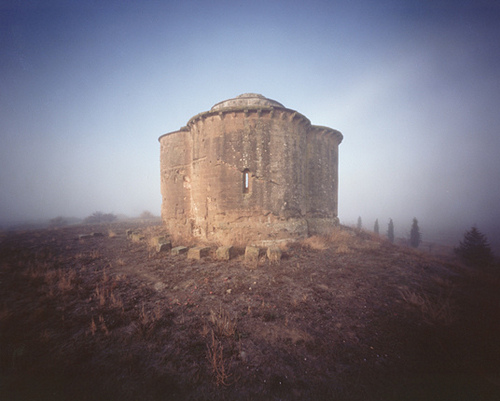
I was recently in touch with photographer Sebastian Schutyser—previously featured here on BLDGBLOG for his gorgeous photos of the mud mosques of Mali, as collected in the book Banco: Adobe Mosques of the Inner Niger Delta.

[Images: (top) “Nuestra Señora de los Dolores (Monflorite)” and (bottom) “Nuestra Señora de las Viñas (Quintanilla de las Viñas)” by Sebastian Schutyser, used with permission].

Schutyser has been working on a new project, which he calls Ermita.

[Image: “San Juan Bautista (Barbadillo del Mercato)” by Sebastian Schutyser, used with permission].

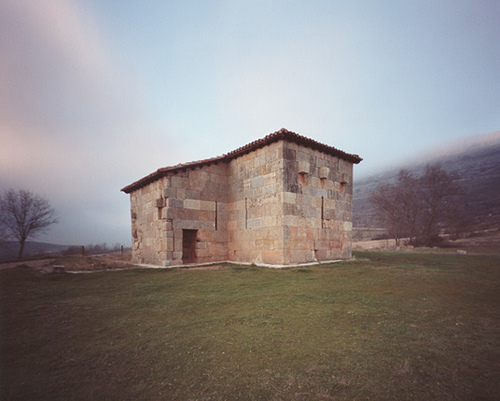
“During the last seven years,” he writes, “I photographed 575 Romanesque and Pre-Romanesque ermitas,” using a pinhole camera—which he describes as “a poor man’s camera for the poor man’s church.”

The word ermita, which has a similar structure in all languages derived from Latin, holds the same meaning as its equivalents in non-Latin languages. It always refers to an uninhabited or isolated place. In Romance languages it comes from the Latin word eremus, again derived from Greek eremos, which means deserted. In Spain, the use of the hermitage, or ermita, has shifted throughout history, but it has always been an isolated sanctuary or chapel. Hermits have been living in them alone, or in other times, in small groups. Other hermitages were built by travelers, who tried to implore divine protection on their voyages. Finally, some hermitages were erected for pastoral cults, or to house religious brotherhoods.

The isolation of these hermit-structures gives them an almost in-built photographic frame: distinguished from the landscapes they sit within, surrounded by snowbanks, hillsides, or the foundational remnants of earlier buildings.

[Images: (top) “San Juan de Busa (Larrède),” (middle) “Virgen de Berzosa (Palazuelos de Villadiego),” and (bottom) “Nuestra Señora de las Viñas (Quintanilla de las Viñas)” by Sebastian Schutyser, used with permission].

Schutyser, who is hoping to assemble a book from these photographs, explains the architectural history of these minor structures:

The span between the disintegration of the Roman Empire and the triumphant birth of Romanesque art in Spain produced some remarkable Christian art and architecture, known as Pre-Romanesque. First the Visigoths left their traces up to the year 711, date of the Islamic invasion. A second important phase, starting from the beginning of the Reconquista in the 8th century till the early 11th century, became known as Mozarabic. Whereas the Visigothic artistic development was abruptly severed by the Muslim occupation, Mozarabic art took form as a result of northern migration of Christians under Muslim pressure. The skills of these Mozarab—or would-be Arab—migrants were strongly influenced by the Islamic arts and culture. Some of the most remarkable hermitages in Spain stem from these Pre-Romanesque times.

In the very design language of medieval Christian structures, then, we see the flickering presence of “would-be Arab” influence.

Tangentially, I’m reminded of the original World Trade Center towers, designed by Minoru Yamasaki: as William Fox writes in his book Aereality: On the World from Above, Yamasaki came to New York immediately after working on a new terminal for the Dhahran airport in Saudi Arabia; there, he “gave the facility a long facade of pointed arches, a minaret for an air control tower, and prefabricated concrete forms that resembled the traditional tracery of Islamic art and architecture.” Yamasaki, however, “was so taken with his Islamic modernism,” as Fox writes, “that he used it in numerous other projects—including the World Trade Center, which he was commissioned to design the year after the Dhahran Airport was finished.” Indeed, “the architect deliberately echoed the plan and features of Mecca’s courtyard with its two minarets on the New York site. The pointed arches at the base of the towers, and the filigree of the exterior truss of the buildings, were overt references to traditional Islamic architecture.”

I mention this by way of highlighting the perhaps quite surprising presence of so-called Mozarabic design motifs in some of these explicitly Christian structures—they are switchboards of influence in architectural form.

But it’s also the physical state of many of these buildings that intrigues me: arches eroded down so extensively they appear to be the roofs of caves, as others collapse in on themselves over time to reveal a crazed stratigraphy of bricks and wooden roof frames.

[Images: (top) “San Vicente (Cervera de Pisuerga),” (middle) “Virgen del Vallejo (Alcozar),” and (bottom) “Virgen del Carmén (Cadalso)” by Sebastian Schutyser, used with permission].

The windowless walls of others evoke a tomblike silence that I find fantastically compelling.

[Image: “San Millan (Velilla de los Ajos)” by Sebastian Schutyser, used with permission].

The “humble and too often forgotten cultural heritage” of these ermitas deserves, at the very least, a photographic inventory, though Schutyser hopes that his visual catalog will inspire a more sustained form of explicit preservation.

After all, “While they survived many centuries, the last few decades dropped too many of them into a terrible state of abandon, or worse, a subject to destructive theft and vandalism.”

[Image: “San Bartolomé (Ucero)” by Sebastian Schutyser, used with permission].

More of Schutyser’s photographs can be explored on his website, along with the photographer’s other often architecturally-themed series.

Keep your eyes peeled for a resulting Ermita book, meanwhile, which I hope finds its way into production soon.

Special effects of a timestretched present

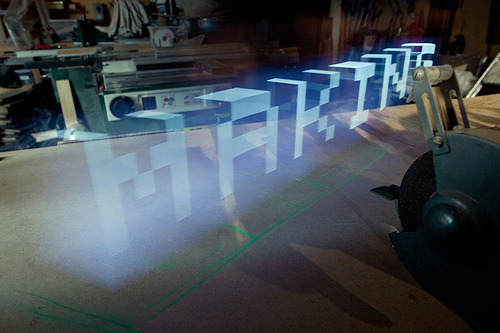
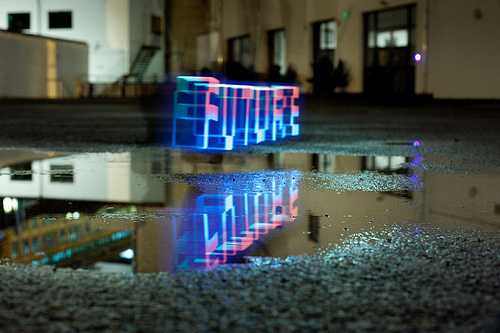
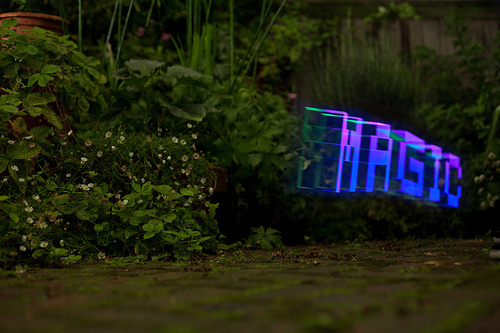
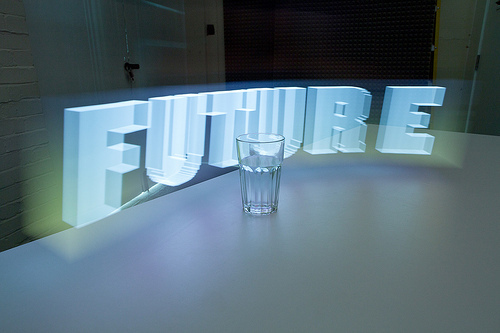
A new post on City of Sound reminded me to post this short film by BERG/Dentsu London, embedded above.

[Images: From Making Future Magic by BERG/Dentsu London, courtesy of BERG Studio].

As City of Sound writes, the film suggests that the “grain” of experimental future media—or, rather, the experimental reuse of existing media—will always start off “slightly awkward, incomplete, jittery, fizzing in and out of focus. And yet magical. Coverage is patchy, positioning vague, interaction is compromised yet the capabilities of people, buildings and cities are extended nonetheless.”

[Image: From Making Future Magic by BERG/Dentsu London, courtesy of BERG Studio].

This particular effect—caused by images that have been animated on the screen of a moving iPad that is then photographed in timelapse—could easily be scaled up. Everything from LEDs on the bottoms of glass-walled elevators to special lights in passing cars and buses could be given three-dimensional content: unexpected forms of content projected into the urban air and only detectable, or legible, on a different temporal register.

The optical future of architectural ornament: light with content.

That is, you get home with your digital camera and you click back through to see what you’ve photographed—and there are words, shapes, and objects hovering there in the street, or inside the buildings you once stood within, visual data only revealed through long-exposures.

[Image: From Making Future Magic by BERG/Dentsu London, courtesy of BERG Studio].

The possibilities for creating 3D information displays hidden in a kind of acute angle to the present moment—literally on display right in front of you but only visible later, when filtered through a timestretched medium—are mindboggling. It’s like the present moment is coinciding with a much larger holograph—the present moment as an airplane flying through a cloud.

[Image: From Making Future Magic by BERG/Dentsu London, courtesy of BERG Studio].

To say that this exact technique will soon be popping up as a special effect in feature films is, I think, an understatement. It’s the new bullet time, perhaps: little screens attached to automated tracks, whirling around a film set, spinning words, ghosts, and images through space.