Altered Landscape

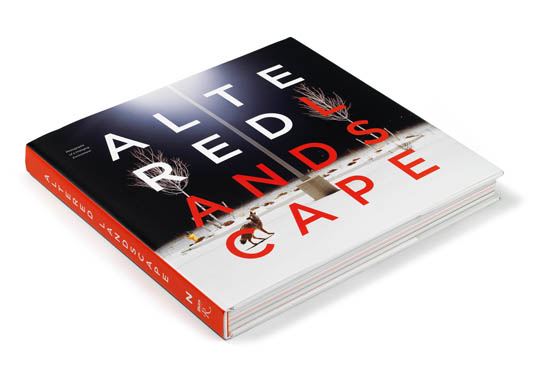
[Image: The Altered Landscape: Photographs of a Changing Environment edited by Ann M. Wolfe].

I just received a copy of The Altered Landscape: Photographs of a Changing Environment, edited by Ann M. Wolfe, and it’s well worth highlighting here.

The book primarily documents the “Altered Landscape” photography collection at the Nevada Museum of Art. Its images “show the phase of natural history that is sometimes called the anthropocene, when human alterations of the environment have begun to surpass natural disasters such as earthquakes and volcanoes,” in the words of art historian W.J.T. Mitchell. As Mitchell adds, these images are more complex than simple calls for environmental action: they paradoxically include “what I can only describe as the aesthetics of sublime melancholy that cannot avoid celebrating, even as it criticizes, the gargantuan scars and inscriptions that the human species is carving into the planet.”

[Image: “Howl” (2007) by Amy Stein; from The Altered Landscape edited by Ann M. Wolfe].

Works by Terry Evans, David Maisel, Richard Misrach, Amy Stein, Edward Burtynsky, Michael Wolf, Kim Stringfellow, Emmet Gowin, Michael Light, Sharon Stewart, Toshio Shibata, Todd Hido, and dozens more fill the book, depicting California suburbs and deep desert weapons-testing facilities, oil pipelines, hydroelectric dams, and quarries; there are clearcut forests and solar plants, Arctic radar fields and National Park parking lots.

In “Howl” by Amy Stein, seen above, a wolf lost in the glare of light pollution breaks the silence of an abstract landscape, turning to the artificial astronomy of the municipal grid—its surrogate moons and constellations of streetlamps—to reorient itself in the snow. However, it’s worth pointing out that the wolf is, in fact, stuffed: Stein’s work simultaneously stages and documents what she calls “modern dioramas of our new natural history.”

[Image: “Coolidge Dam, San Carlos, AZ” (1997) by Toshio Shibata; from The Altered Landscape edited by Ann M. Wolfe].

Short essays by the book’s editor Ann M. Wolfe, Nevada Museum of Art director David B. Walker, W.J.T. Mitchell (as it happens, my former thesis advisor), writer/curator Lucy Lippard, and myself round out the book.

The Altered Landscape: Photographs of a Changing Environment is published to coincide with an exhibition of the same name, which opens at the Nevada Museum of Art tomorrow, Saturday, September 24th.

Tunnel / Countertunnel

For a variety of reasons, I was recently looking at a May 2011 report from the Air Force Research Laboratory on “Robotics: Research and Development.”

[Image: From an Air Force Research Laboratory presentation on “Robotics: Research and Development”].

There—amidst plans for unmanned robotic ground convoys and autonomous perimeter defense systems for future bases and cities, not to mention fleets of robotic bulldozers field-tested for use in mine-clearance operations—there was one slide about something called “counter tunnel robotics.”

Being obsessed with all things underground, this immediately caught my eye—especially as this is a program whose goal is to “develop an unmanned system with the capability to access, traverse, navigate, map, survey, and disrupt operations in rough subterranean environments.” A “miniature mapping payload” is under development, one that will allow for accurate cartographic surveys of complex underground spaces; but, because current methods “will not work in the more challenging (non-planar) tunnel environments,” the Air Force explains, the new focus for R&D “will be on developing 3D mapping techniques using 3D sensors.”

From last month’s Association for Unmanned Vehicle Systems International—or AUVSI—conference in Washington D.C., where this technology was discussed in detail:

The [Counter Tunnel Robotics] system is an innovative all-terrain mobility platform capable of accessing tunnel systems through a small (8 inch) borehole and traversing adverse tunnel terrain including vertical obstacles up to 2ft in height and chasms up to 2ft in length. The system’s function is to provide a platform capable of carrying a small sensor package while navigating and overcoming terrain obstacles inside the tunnel. Counter tunnel technologies are needed to support intelligence gathering and safety of troops and personnel in unmapped and unknown tunnel environments. The system is the initial step in achieving a fully autonomous counter tunnel system.

A few things worth pointing out here include the mind-boggling image of “a fully autonomous counter tunnel system” operating on its own somewhere inside the earth’s surface, like something out of a Jonathan Lethem novel, surely fueling the imaginations of scifi screenplay writers the world over—a planet infested with artificially intelligent tunneling machines. But it is also worth noting that these systems will very likely not be confined to use on—or in—the earth. In fact, autonomous tunnel-exploration robots will find a very hearty market for themselves exploring caves on the moon, on Mars, on asteroids, and perhaps elsewhere, in a fairly clear-cut example of military research finding a productive home for itself in other contexts.

However, I also want to mention how fascinating it is to see that the Air Force Research Laboratory is involved in this, as it actually penetrates the surface of the earth and is very much a project of the ground. It is a landscape project. But the implication here is that these autonomous spelunking units are perhaps seen as a new type of ordnance—that is, they are intelligent bombs that don’t explode so much as explore. They are artillery and surveillance rolled into one. Imagine a bomb that doesn’t destroy a building: instead, it drops into that building and proceeds to map every room and hallway.

But, much more interestingly, there is perhaps also an indication here that a conceptual revolution is underway within the Air Force, where the earth itself—geological space—is seen as merely a thicker version of the sky. That is, the ground is now seen by Air Force strategists as an abstract, three-dimensional space through which machines can operate, like planes in the sky, navigating past “terrain obstacles” like so much turbulence. In a sense, the inside of the earth becomes ontologically—and, certainly, technically—identical to the atmosphere: it is an undifferentiated space that can be traversed in all directions by the appropriate machinery.

Flying and tunneling thus become elided, revealed as one and the same activity; and the Air Force is understandably now in the business of the underground.

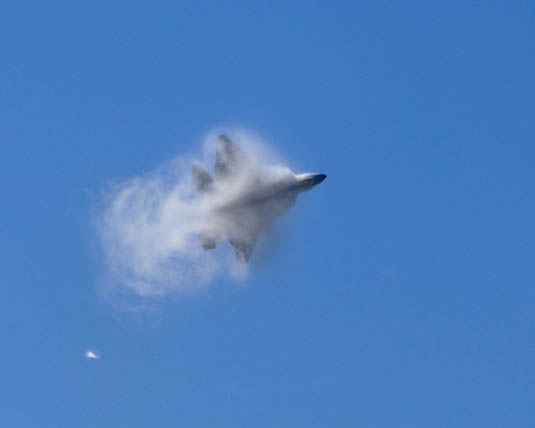
[Image: “A U.S. Air Force F-22A Raptor Stealth Fighter Jet Executes A Maneuver Through A Cloud Of Vapor”—that is, it tunnels through the sky—”At The 42nd Naval Base Ventura County Air Show, April 1, 2007, Point Mugu, State of California, USA”; photo by Technical Sgt. Alex Koenig, United States Air Force; Courtesy of Defense Visual Information and the United States Department of Defense].

That, of course, or it was simply an issue of the wrong office receiving research funds for this, and, next fiscal quarter, the Army dutifully takes over…

(For a bit more on underground military activity, see this older post on BLDGBLOG).

On the Beach

I’m quite late hearing this for the first time, but I was thrilled to discover composer Pierre Sauvageot’s Harmonic Fields project, a participatory landscape of wind-activated musical instruments temporarily installed on the beach near Birkrigg Common, Cumbria, England. The haphazard plinks, drum rolls, whistles and drones is often mesmerizingly beautiful, as the following video makes clear. It’s a kind of weather plug-in, constructed as a sequence of very different movements in space.

It was intended as an actual sound trail—”a symphonic march for 1,000 aeolian instruments and moving audience,” in the composer’s words, quoted by the Guardian, and “it’s important that it is not just a circuit of weird noises,” he quickly adds. “The experience develops through individual movements.”

From the Guardian:

You are introduced to the quarter-mile trail with a prelude for 300 Balinese wind chimes, followed by an adagio slalom of tuned bamboo pipes, which gives way to a reflective passage for suspended cellos and deckchairs and a pentatonic interlude of turbine-driven glockenspiels. It concludes, like a proper symphony, with a coda drawing together all the elements in a climax of either frenzied dissonance or a soft, extended diminuendo, depending on the weather conditions.

There is a hint that this might come to New York City, which would be a dream for at least this new east coast resident; and, even better, Sauvageot is described as a “true meteorological connoisseur,” with an obsessive eye on wind systems and local weather around the planet, always looking for a new place to install his work. “The dry, warm sirocco of north Africa; the crisp, chilled chinook in the Rocky Mountains—I’d love to hear how they might sound,” he tells the Guardian.

Personally, if Harmonic Fields does come to New York, I’d love to see it installed on or near my favorite buildings in the city, which are the subway and tunnel ventilation structures visible on the watery fringes of the archipelago—

[Image: The Holland Tunnel Land Ventilation Building].

—and sometimes in the heart of the city. After all, there are also weather systems artificially generated inside the earth by construction projects and large-scale pieces of urban infrastructure, whole subterranean climatologies of moving air that would not otherwise exist without the implanting hand of architecture, as if surgically grafted there. Atmospheric cut-and-cover. A weather reserve beneath the sidewalk.

In any case, the idea that a region’s climate—its seasonal weather systems and thermal particularities—might become something more than mere background through a simple act of musicalization—that you could install Sauvageot orchestras in places all over the world to turn storms into symphonies—is amazingly suggestive for future design projects. From low-pressure systems in central Russia to the Santa Ana winds of suburban Los Angeles, architecture becomes a musical generator, an acoustic ornament activated by the sky.

Landform Building

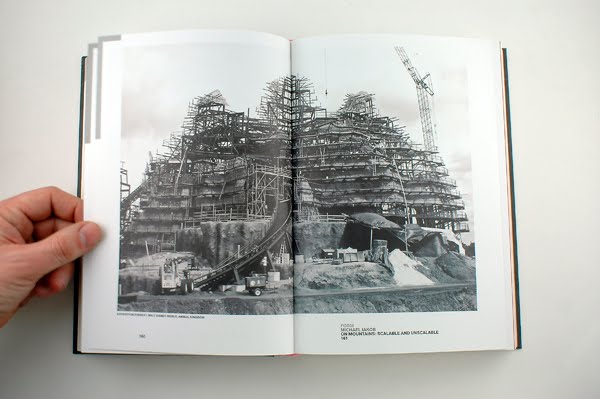
[Image: From Landform Building: Architecture’s New Terrain, designed by Thumb Projects].

This evening, Saturday, September 17, down at the BMW Guggenheim Lab, Marc McQuade and Stan Allen will be celebrating the release of their recent book Landform Building: Architecture’s New Terrain, designed by Thumb Projects.

[Image: From Landform Building: Architecture’s New Terrain, designed by Thumb Projects].

The book is a sustained look at “the evolving relationship between architecture and landscape,” with a specific focus on geomorphic megastructures—that is, buildings that look like mountains and other earth forms—vegetative ornament, including green roofs, and complex interpenetrations between architecture and the surface of the earth (semi-subterranean structures, structures penetrated by bedrock, and so forth).

You can see some shots of the book itself here—

[Images: From Landform Building: Architecture’s New Terrain, designed by Thumb Projects; see more].

—and you’ll learn much more about the publication at tonight’s book launch. There, you’ll hear from McQuade and Allen themselves, but also from Alejandro Zaera-Polo, Lucia Allais, Eric Sanderson, and Nina Katchadourian.

[Image: Landform Building launch at the BMW Guggenheim Lab].

I’m excited to be participating in this evening’s event, as well, with a short, pecha kucha-style presentation, looking at everything from constructed hills in Rome to artificial glaciers, and from the particularly vertiginous paranoia of a manmade earth to Celtic myths of the Hollow Hills. The quasi-mystical appeal of ground-penetrating radar, muon detectors in the rain forest, and methane-ventilation technology used in landfill construction will all make brief appearances.

Things kick off at 6pm; here is a map. Hope to see some of you there!

The last few weeks have been a logistical nightmare, having found that the new apartment we’d been told we could move into by August 22 was, in fact, only ready a few days ago, which means—among other things—that instead of settling in here in New York, getting Studio-X NYC up and running again, and maintaining BLDGBLOG, I’ve been lost in a labyrinth of wastefully overpriced hotel rooms, rental cars, long drives back and forth between NY and the Philadelphia suburbs, and endless personal favors asked of my family there; and, even now that we are surrounded by boxes again in our own place, a month late, and things are theoretically back to normal, we’re having absurd internet installation problems. So I’m beginning to feel that I’m cursed. Either way, expect intermittent posting—at best—over the next week or two here as things continue their glacially slow process of getting back on track.

The Shape of War

I’m excited to invite everyone to another evening at Studio-X NYC, with photographer Simon Norfolk and journalist Noah Shachtman, who will participate in two back-to-back live interviews discussing new spaces and technologies of conflict in the 21st century.
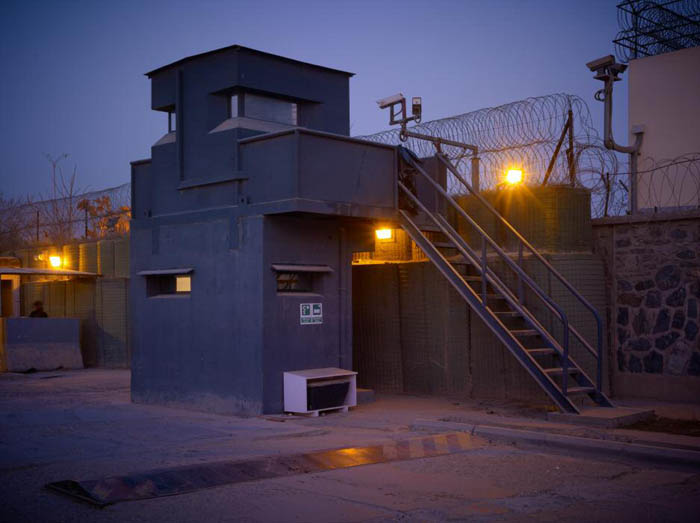
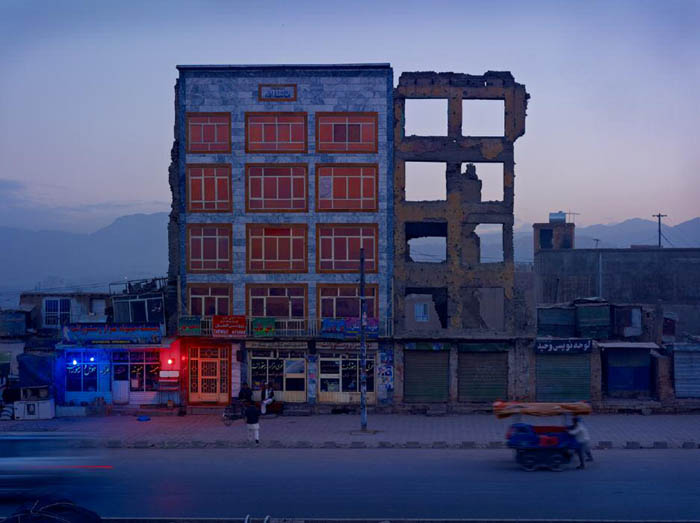
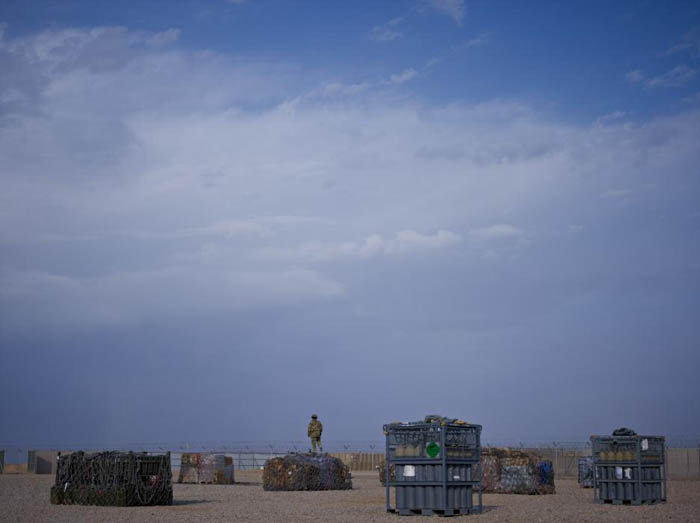
[Image: Photo by Simon Norfolk, from Burke + Norfolk: Photographs from the War in Afghanistan].

Long-term readers of BLDGBLOG will remember Simon Norfolk from his interview here on the site back in 2006.
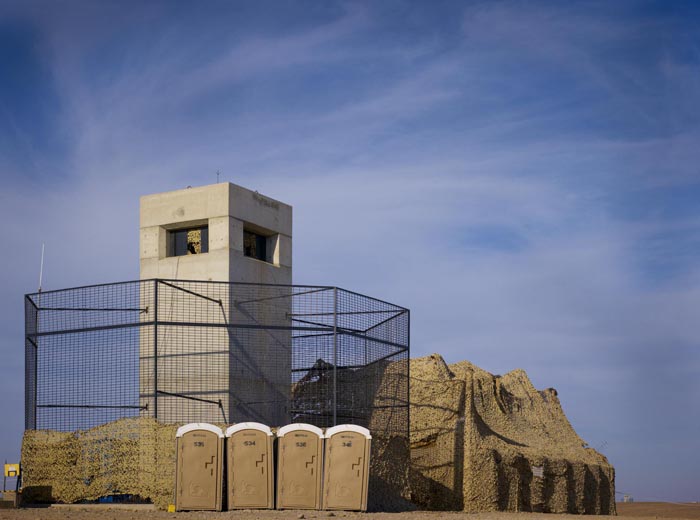
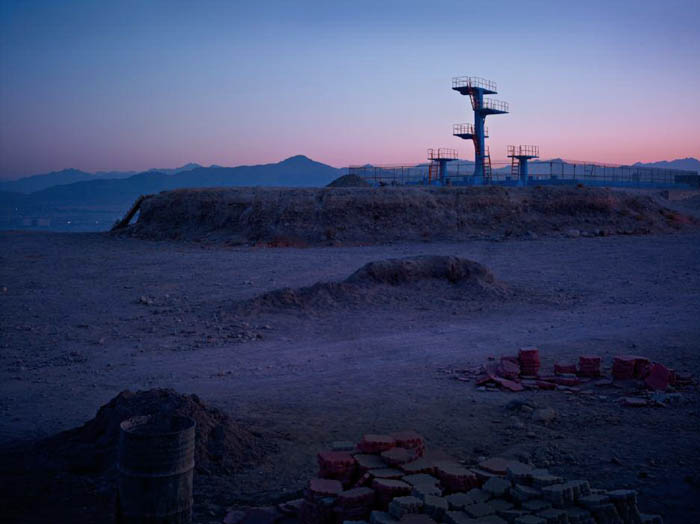
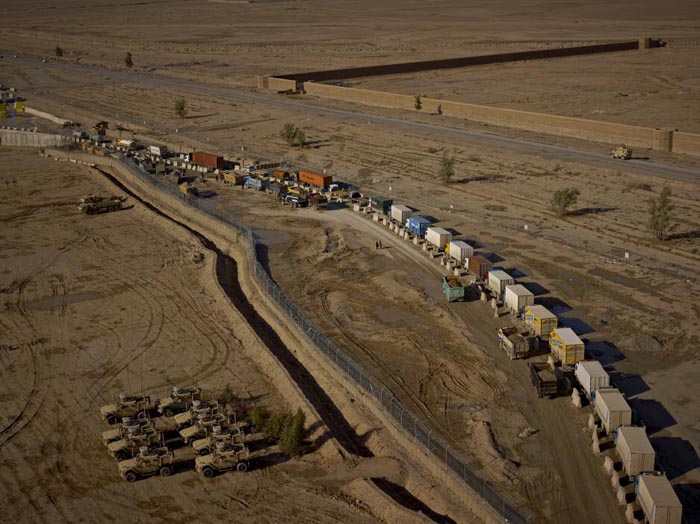
[Image: Photo by Simon Norfolk, from Burke + Norfolk: Photographs from the War in Afghanistan].

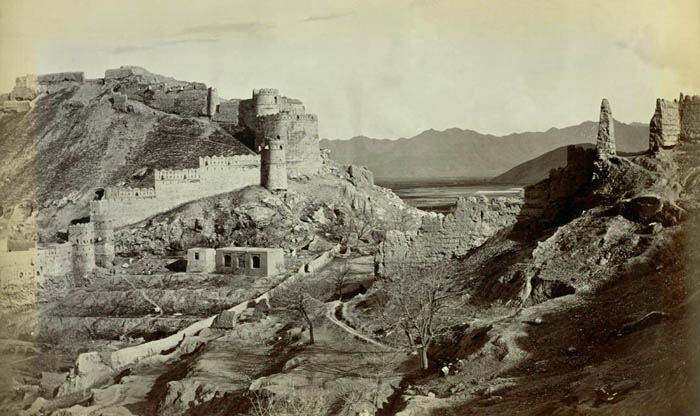
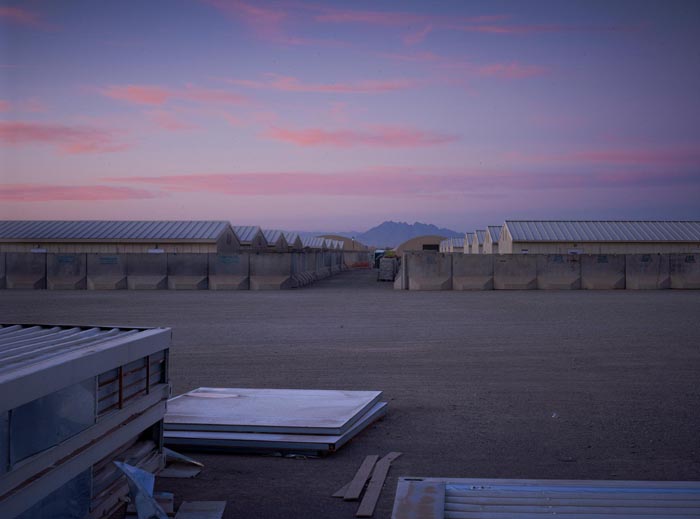
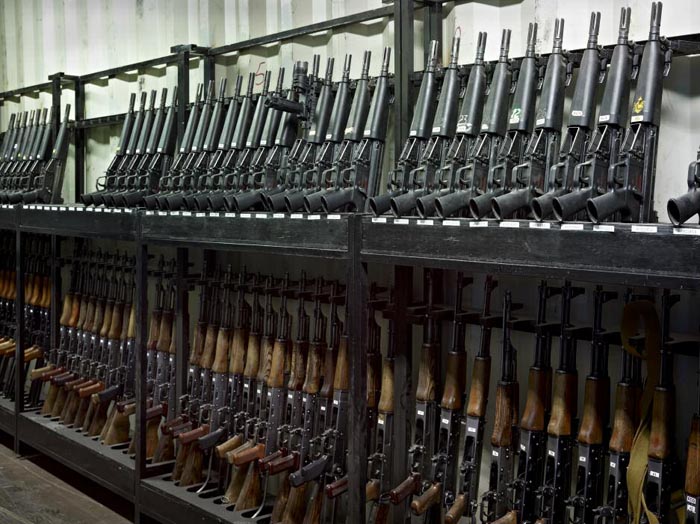
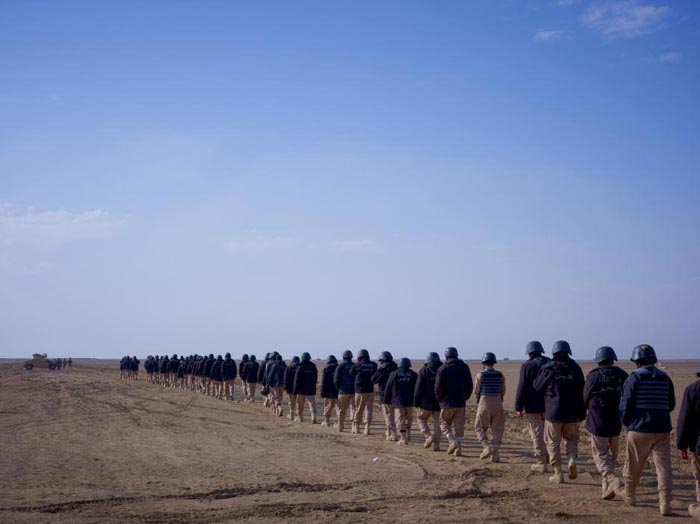
Tuesday’s conversation will revisit many of those same themes, but it will do so in the provocative context of Norfolk’s newest project, a photographic tour of Afghanistan in the footsteps of photographer John Burke:

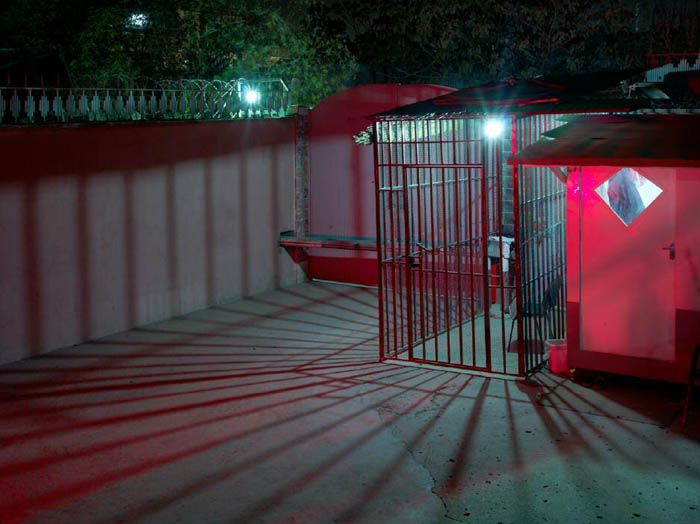
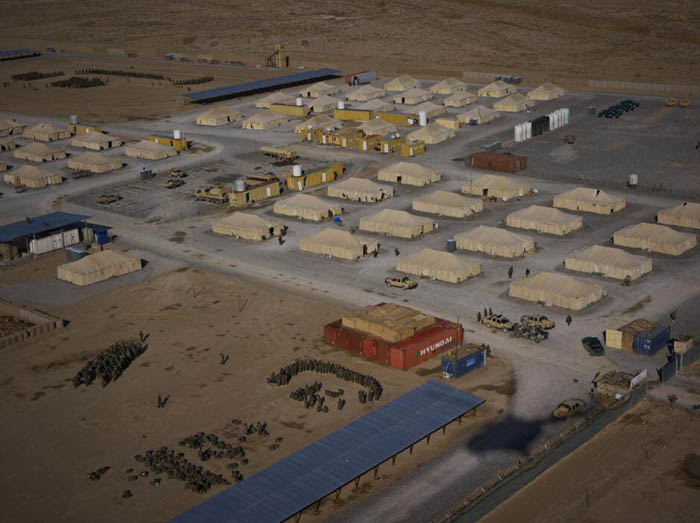
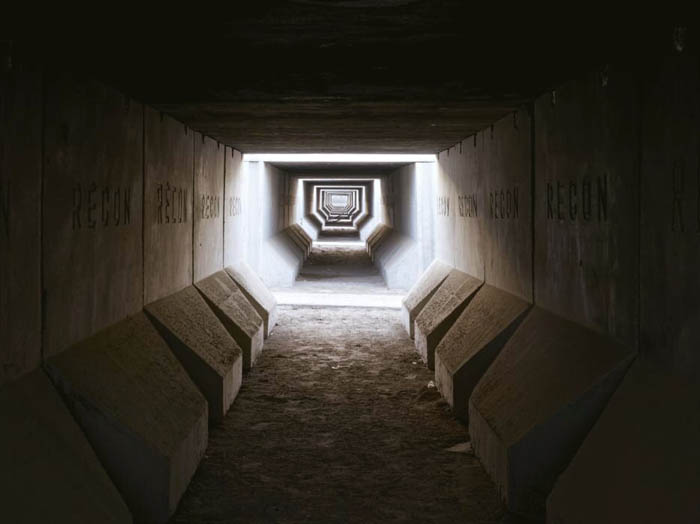
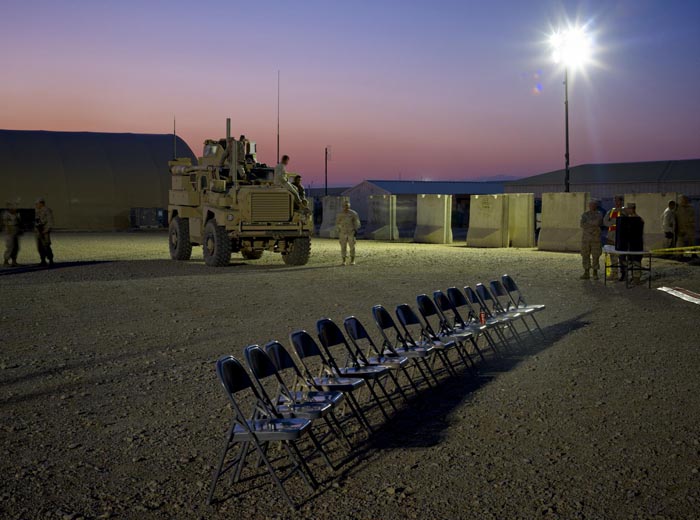
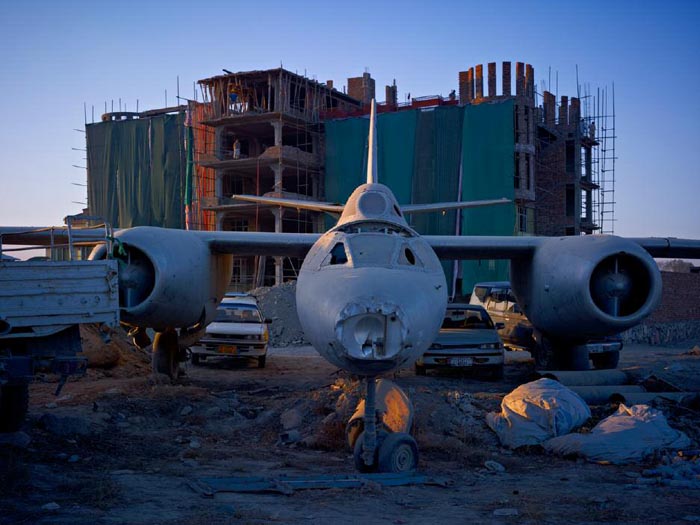
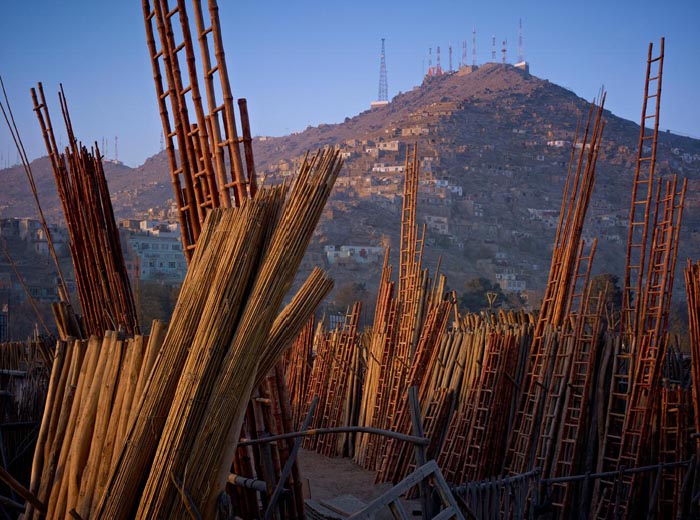
In October 2010, Simon Norfolk began a series of new photographs in Afghanistan, which takes its cue from the work of nineteenth-century British photographer John Burke. Norfolk’s photographs reimagine or respond to Burke’s Afghan war scenes in the context of the contemporary conflict. Conceived as a collaborative project with Burke across time, this new body of work is presented alongside Burke’s original portfolios.

We will take a look not only at the resulting photographs—a selection of which appear here—but at the often overlapping responsibilities of the photojournalist and the artist in documenting political events in conflict zones around the world.
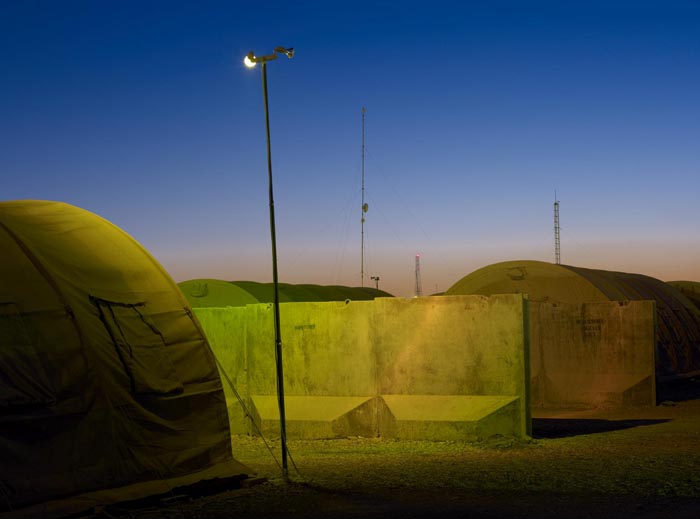
[Image: Photo by Simon Norfolk, from Burke + Norfolk: Photographs from the War in Afghanistan].

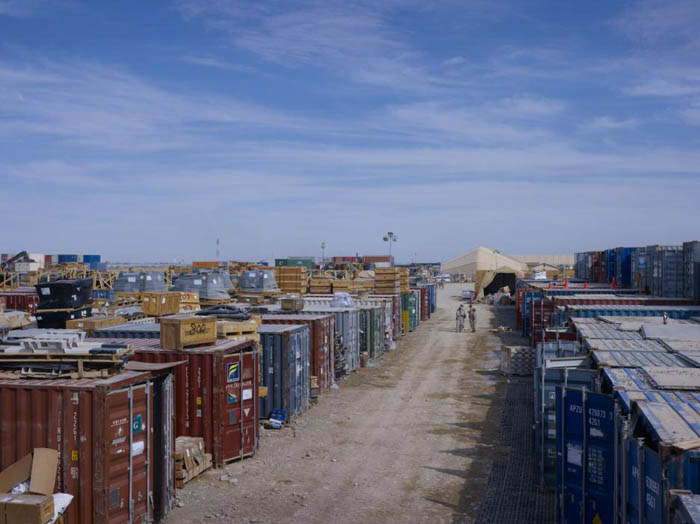
As you can see in the photos reproduced here, Norfolk has an eye for complex stratigraphy: where US and UK basecamps overlap with Afghan townscapes, which in turn visually—and politically—repeat earlier scenes from a different era of misbegotten imperial adventures in Central Asia.

It is all simply “a cycle of imperial history,” Norfolk suggests, one in which a “lack of historical perspective on the part of the West allows them to blunder back for the fourth time thinking that you can turn Afghans into western liberal democrats and feminists by bombing them.” Norfolk doesn’t mince words: “the prosecution of the war makes me furious,” he explains in a long conversation hosted on his website.
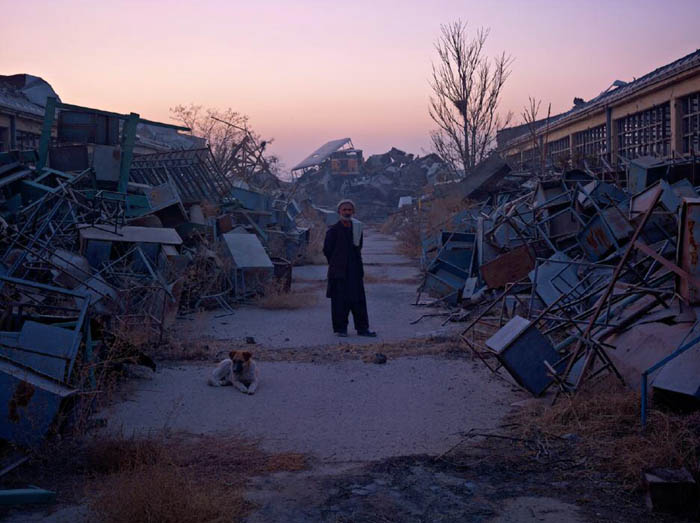
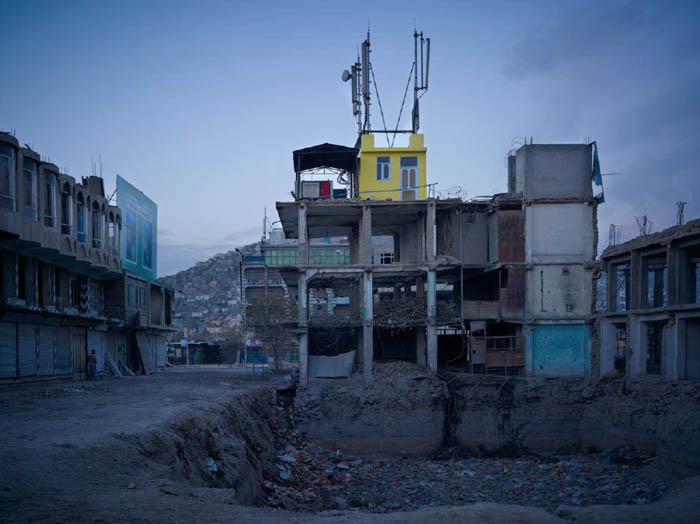
[Images: Photos by Simon Norfolk, from Burke + Norfolk: Photographs from the War in Afghanistan].

Noah Shachtman‘s reputation as a journalist and editor has been firmly solidified over nearly a decade. Beginning with DefenseTech, a site Shachtman founded in 2003, and continuing with the current reign of Wired’s Danger Room, Shachtman has been prolific, engaged, and highly active in helping to set the agenda for national defense coverage in the post-9/11 world.
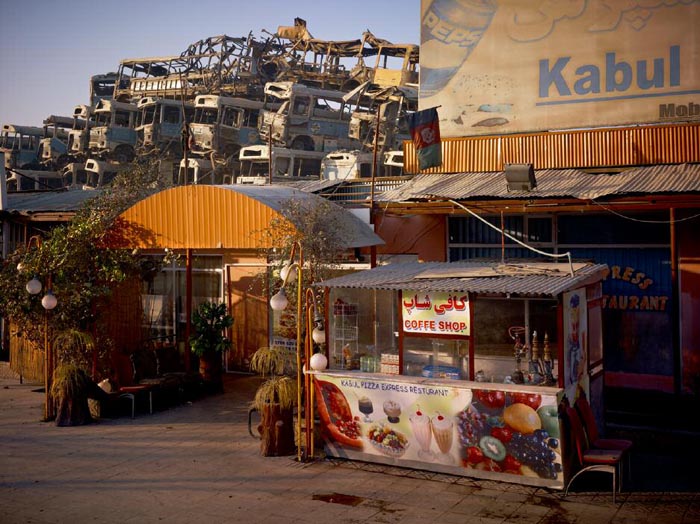
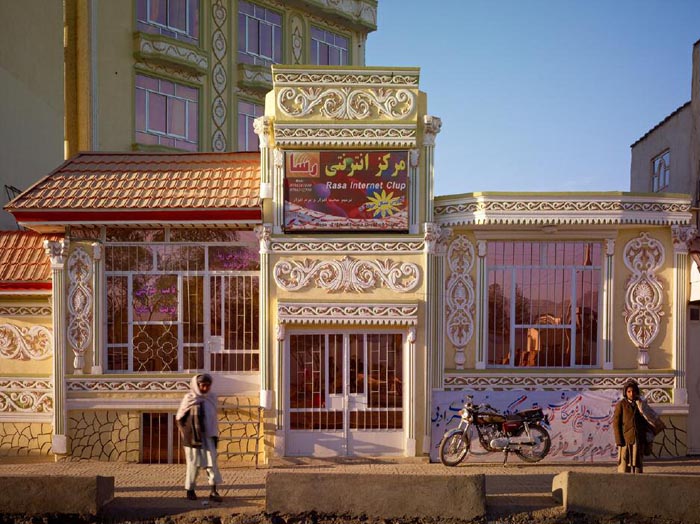
[Images: Photos by Simon Norfolk, from Burke + Norfolk: Photographs from the War in Afghanistan].

We’ll be asking Shachtman about everything from the limits of the battlefield—where war chaotically begins and unclearly ends—to new technologies of surveillance, and from the strategic requirements of a journalist covering today’s sites of conflict to the possible urban futures Shachtman might detect in current military headlines.
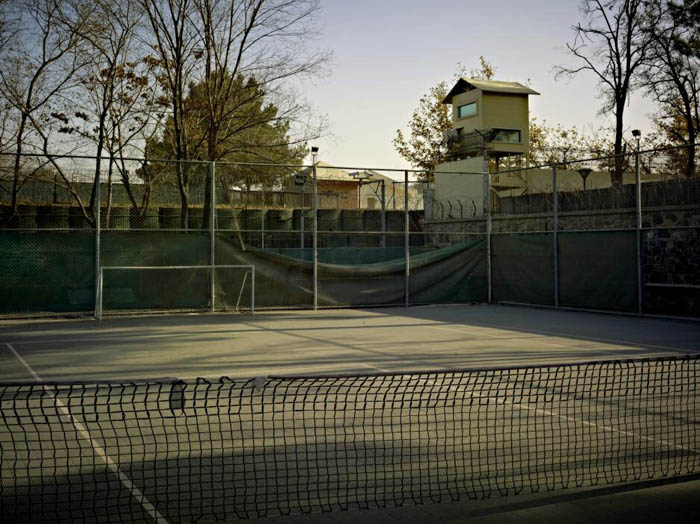
[Images: Photos by Simon Norfolk, from Burke + Norfolk: Photographs from the War in Afghanistan].

I’m genuinely looking forward to this, and hope to see many of you there. The format will be as follows. From 6:30pm to shortly after 7pm, we will be engaging with Simon Norfolk in a live interview about his work; then, till roughly 7:40pm, we will be interviewing Noah Shachtman. These will be stand-alone interviews, conducted back-to-back.

The final stretch of the night, from 7:45 to 8:30pm or so, will be an open conversation with both Norfolk and Shachtman, featuring questions from anyone who might have them. This will allow us to discuss similarities and differences between their work, and to tease out other themes that might have been passed over in the individual interviews.
[Image: Photo by John Burke, from Burke + Norfolk: Photographs from the War in Afghanistan by Simon Norfolk].

Unfortunately, I have to ask that you RSVP to studioxnyc [at] gmail [dot] com if you plan to attend. Otherwise, the event is free and open to the public.

You will find us at 180 Varick Street, Suite 1610, in Manhattan. Here is a map.
[Images: Photos by Simon Norfolk, from Burke + Norfolk: Photographs from the War in Afghanistan].

Meanwhile, please feel free to go back through BLDGBLOG’s interview with Simon Norfolk in full—it’s one of my personal favorites on the site, and is a great read—and to click through Noah Shachtman’s own website, including the overall resources of Danger Room.
[Image: Photo by Simon Norfolk, from Burke + Norfolk: Photographs from the War in Afghanistan].

As Norfolk says in the BLDGBLOG interview, and which perhaps serves as a useful conceptual umbrella for the entire forthcoming evening:

All of the work that I’ve been doing over the last five years is about warfare and the way war makes the world we live in. War shapes and designs our society. The landscapes that I look at are created by warfare and conflict. This is particularly true in Europe. I went to the city of Cologne, for instance, and the city of Cologne was built by Charlemagne—but Cologne has the shape that it does today because of the abilities and non-abilities of a Lancaster Bomber. It comes from what a Lancaster can do and what a Lancaster can’t do. What it cannot do is fly deep into Germany in the middle of the day and pinpoint-bomb a ball bearing factory. What it can do is fly to places that are quite near to England, that are five miles across, on a bend in the river, under moonlight, and then hit them with large amounts of H.E.. And if you do that, you end up with a city that looks like Cologne—the way the city’s shaped.

So I started off in Afghanistan photographing literal battlefields—but I’m trying to stretch that idea of what a battlefield is. Because all the interesting money now—the new money, the exciting stuff—is about entirely new realms of warfare: inside cyberspace, inside parts of the electromagnetic spectrum. Eavesdropping, intelligence, satellite warfare, imaging—this is where all the exciting stuff is going to happen in twenty years’ time. So I wanted to stretch that idea of what a battleground could be. What is a landscape—a surface, an environment, a space—created by warfare?

I hope to see you at 6:30pm on Tuesday, September 13th.
[Image: Photo by Simon Norfolk, from Burke + Norfolk: Photographs from the War in Afghanistan].

Impact / Collapse

[Image: A ghostlike “sonographic image” taken from part of Mark Bain’s sound file].

On the 10th anniversary of the 9/11 attacks, sound artist Mark Bain has released the full audio file of the sound of the Twin Towers collapsing, a melancholic howl terrestrially amplified by the region’s geology. You can listen to it here:

What you’re hearing is the “audification of the seismological data record,” as Bain explains it, “which occurred in the area of New York State, New Jersey, and New England during the collapse of the World Trade Center buildings on September eleventh, 2001.”

The data streams were acquired from Columbia University’s Geological survey lab, which run a network of earth monitoring stations in the area; with the closest being 34 km away from the epicenter of the event. A process of data conversion and signal translation was used to make the normally inaudible seismic waveforms both audible and to play back in real-time as the event unfolded. No other processing or effects were added to the tracks. The registration includes four events, two impacts and the two collapses along with the inbetween sounds of the drone of the earth. The heaviest impact of the collapse registered 2.4 on the Richter scale, a signal which traveled throughout the earth.

The piece is not intended as a memorial, Bain adds, but as “a bell-like alarm denoting histories in the making.”

Geologic City

[Image: Geologic City by Smudge Studio].

Tomorrow night at Studio-X NYC, we’ll be hosting a book launch for Geologic City, a new pamphlet by Elizabeth Ellsworth and Jamie Kruse of Smudge Studio and Friends of the Pleistocene.

Things kick off at 6pm, at 180 Varick Street, Suite 1610; here’s a map. At least for the time being, we unfortunately must ask that you RSVP, to studioxnyc [at] gmail [dot] com, but the event is otherwise free and open to the public, and copies of Geologic City will be for sale.

[Images: Spreads from Geologic City by Smudge Studio].

In the tradition of such books as Richard Fortey’s The Hidden Landscape—or his more recent magnum opus, EarthGeologic City looks at the geological understructure of the city of New York. In the authors’ own words, it “takes you to 20 sites where you can sense the geologic pulse of New York City.”

More than just a handbook for finding exposed outcrops of bedrock, however, the pamphlet explores the broader material economy through which the city is constructed and managed, from strategic gold reserves to scrapyards and cemetaries. As they write in the booklet’s introduction:

In 2010, we set out to create a field guide for New York City residents and visitors who want to sense for themselves the forces of deep time that course through the City and give it form, dynamism and material reality. We began to identify geologic materials that make up iconic pieces of New York architecture and infrastructure, trace them to their origins, and place them on the geologic time scale. But we soon realized that the materials and forces we were encountering were not things. They were lively actors.

Liz and Jamie will also be using the 16th-floor windows at Studio-X NYC as framing devices through which to point out and narrate regional sites of geologic influence on urban form and function.

[Images: Window and floor diagrams in place for tomorrow’s launch of Geologic City by Smudge Studio; photos by Nicola Twilley].

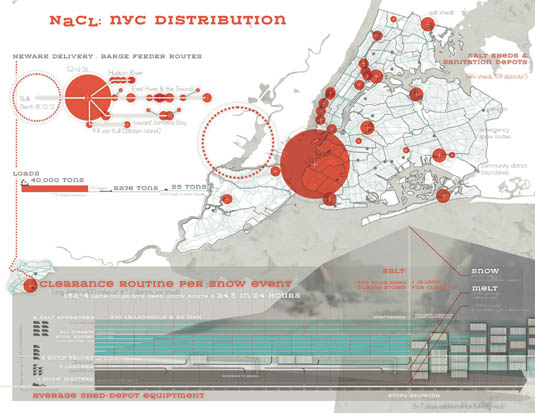
Presenting work alongside them tomorrow night will be sound artist Kevin Allen and Meg Studer, whose maps of the global road salt industry are worth exploring in detail (and will appear in a forthcoming post here on the blog shortly).

Hope to see some of you there tomorrow night! And congrats to Jamie and Liz for seeing the pamphlet through to completion.

Test City

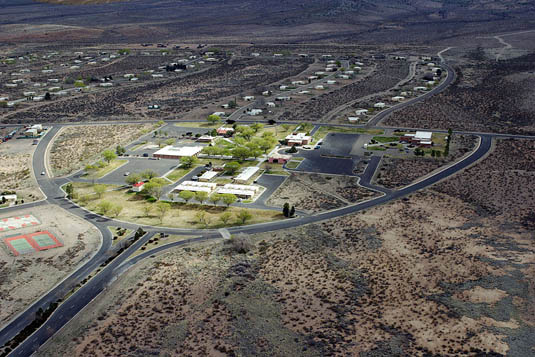
[Image: An otherwise unrelated photo of Playas, New Mexico—a different kind of “test city”—taken by Steve Rowell for CLUI].

A private consulting firm in Washington D.C. is developing a “test city”—one “with no permanent population”—in the New Mexico desert, according to the Albuquerque Journal. It will be “a privately financed, small city on 20 square miles in New Mexico for testing and evaluation of new and emerging technologies,” run from afar by Pegasus Global Holdings.

This as yet unnamed location will be devoted to the “‘real world’ testing of smart grids, renewable energy integration, next-gen wireless, smart grid cyber security and terrorism vulnerability,” making it a life-size trial for private sector urban management—Cisco’s city-in-a-box and IBM urbanism wrapped in one.

I’m inclined to ask what it might look like if other corporations were to launch their own “test cities” in the desert somewhere—an REI city, complete with artificial whitewater rapids, campfires, and outdoor climbing walls; a Playboy city, complete with unlockable shared doors between neighboring bedrooms; an AMC city, with screens and streetside auditoriums, and massive projectors on cranes like new constellations in the sky.

What if the city you live in is simply an immersive product demonstration for a group of private companies? Or is that what cars did to the American city long ago?

(Thanks to Chris Kannen for the tip!)

Bridges are Acoustic Information

Sound artist Rutger Zuydervelt and designer Gerco Hiddink have teamed up to organize a new audio project called Bridges.

[Image: From Bridges].

The project asked a group of eight well-known improvisational musicians to “react” to four Dutch bridges (or, more accurately, to field recordings made on, under, and near those bridges). The project is thus as much about musical improv as it is about infrastructural acoustics—a structural ecology of sound vibrantly humming in the spaces around us.

[Images: From Bridges].

As The Wire explains in a short article about the project, Zuydervelt and Hiddink “paired the eight musicians not to play together, but to react separately to the field recordings, which he then mixed together with the primary field recordings.”

The resulting sound works have just been released, and can be previewed here.

[Image: Album design by Gerco Hiddink for Bridges].

As it happens, there’s a surprisingly strong artistic interest in turning bridges into sound.

A few years ago, for instance, a project called “Singing Bridges” made the news. It was “a sonic sculpture, playing the cables of stay-cabled and suspension bridges as musical instruments,” and the artist behind it—Jodi Rose—wrote that she aimed to “amplify and record the sound of bridge cables around the world.”

Artists Bruce Odland and Sam Auinger, meanwhile, explored the acoustics of an urban bridge with their project “Harmonic Bridge” (which I had the pleasure of hearing during its run at MASS MoCA). That project, as the museum explained it, produced a roiling “eddy of sound in the midst of intersecting streams of traffic. Cars pass by heading north or south on Marshall Street and east or west on the Route 2 bridge, but this linear motion is counterpoised by a rolling, humming C as calming as the rhythm of ocean waves.”

More broadly, the artists add, “The bridge becomes an instrument played by the city revealing hidden harmonies within the built environment.”

[Image: “Harmonic Bridge” by Bruce Odland and Sam Auinger, courtesy of MASS MoCA].

Releasing drone-bursts, buzzes, rumbles, and bells, bridges are the ignored instruments of the city, strongly suggesting that the urban context so often prized by architects and designers should also include an awareness of that region’s acoustics—a neighborhood zoned for singing bridges and harmonic roads, given rhythm by the thumping and amplified tectonics of the subways. The bridge becomes an Aeolian harp—infrastructure gone acoustic—its formal sonic properties activated by the turbulent motions of the environment around it.

(Environmental sounds elsewhere: Dancing About Architecture).