The “Situationist Drawing Device” is a backpack-sized mechanism for recording the experience of landscape. Designed by Ji Soo Han and Paul Ornsby, and operating by way of mirrors, the Device “records a journey taken in an altered state of perception through drawing.” It is an “intermediary and interpretative tool,” the designers add, one that stands between the human body and the landscape it exists within and explores.
It is spatial equipment—an optical exoskeleton. Navigational clothing.
“As each eye retina receives different images, both conditions blur into one and simultaneously alternate—phasing in and out over the other,” the designers write. “This blurring effect, as known as retinal rivalry, creates a new perception of the site. The device was initially adapted from the pseudoscope (Greek, false view) which is a binocular instrument that reverses depth perception. The idea of reversing left and right eye vision was adapted to reverse forward and backward vision.”
You advance by looking backward, walking into layered optical phantoms of the place you’ve left behind. It is both mnemonic and projective.
The key detail, though, is that the backpack also registers, through drawing, your experience of wearing it; a small, Iron Man-like disc (see opening image) on the user’s back serves both to house and to produce those vaguely seismological sketches. It is a mystical drawing pad for upstart Situationists.
That proposes a bridge that would stride across its own curved shadows and reflections, which are meant to be seen as a form of spatial notation, the structure registering itself in the landscape.
Devices have shared a long and complex history with architecture. The machines of Vitruvius and Leonardo da Vinci were devised in times of peace and war for both the construction and destruction of the built form. Today, kinetic intelligent systems are incorporated into building facades for environmental and aesthetic control. The device, however, has simultaneously followed a parallel trajectory—the Victorians invented a proliferation of devices, often ingenious, rarely of much practical use; Heath Robinson’s contraptions displayed the absurd length to which devices were invented to satisfy our convenience and curiosity; his illustrations, sometimes carrying satirical and political overtones, are best remembered for their humor. Similarly, many of today’s devices no longer perform quotidian practical tasks but are the results of artistic endeavor and are housed in galleries and museums.
The “Situationist Drawing Device” is what happens when an unironic Vitruvian sensibility is crossed with the willful absurdity of Situationist urban exploration, by way of mirrors and pens: an unfeasibly complicated piece of clothing through which the experience of built space is memorably upended.
This preview for an independent film called Henry Waltz, by Emil Goodman, is hard to decipher on a narrative level, but it unfolds in a Jasper Morello-like world of steampunk shadow puppets and wireframe cities on circular space frames, with underwater crystal submarines and fluttering machine-butterflies crossing monstrous landscapes. Humans in motorized glass domes chase one another through a maze of iron columns—which is where something like a plot must lie, though it’s hard to tell exactly what it might be. Read more on the Henry Waltz website, including a link to this short making-of video.
Allied bombing raids during World War II “inadvertently experimented on the weather” in England by creating massive concentrations of artificial clouds as the planes roared off toward continental Europe. Researchers quoted by New Scientist claim that “where the aircraft circled and assembled into formation,” on one particular day back in 1944 for which military, meteorological, and even anecdotal eyewitness records are available, “it was significantly cloudier and 0.8°C cooler than the area upwind of the bases.”
In many ways, this is both obvious and uninteresting, as, of course, any uniquely large-scale act of artificial cloud-production—such as aircraft contrails—would have at least some effect on local weather.
But what, to me, seems most remarkable about this story is the darkly poetic idea that war brings with it its own meteorology, its own skies, storms, and atmospheres, literally altering the very firmament beneath which human affairs take place. World War II becomes an even more frightening event, as sun-obliterating cloudfronts of mechanized combat roll eastward over the ruined cities of Europe.
A digital image-processing system under development since 2007 will allow photographers “to artificially create photos taken from a perspective where there was no photographer.” It uses “a computer-vision technique called view synthesis to combine two or more photographs to create another very realistic-looking one that looks like it was taken from an arbitrary viewpoint,” as New Scientist explains.
One expert quoted refers to this as “anonymizing the photographer.”
The images can come from more than one source: what’s important is that they are taken at around the same time of a reasonably static scene from different viewing angles. Software then examines the pictures and generates a 3D “depth map” of the scene. Next, the user chooses an arbitrary viewing angle for a photo they want to post online.
The photo then goes through a “dewarping” stage, in which straight lines like walls and kerb angles are corrected for the new point of view, and “hole filling,” in which nearby pixels are copied to fill in gaps in the image created because some original elements were obscured.
While the article rightly emphasizes the political implications of this—writing that the technology “could help protestors in repressive regimes escape arrest—and give journalists ‘plausible deniability’ over the provenance of leaked photos”—there are, of course, other possibilities inherent in the technique that seem worth exploring. These include virtualizing photographs taken of a landscape, building, person, or city, producing views, angles, and perspectives never actually seen by human beings. This would be like something out of the work of Piranesi—specifically as interpreted by Manfredo Tafuri in The Sphere and the Labyrinth—in which impossible scenes overlap to produce a single, far from comprehensive spatial reality.
Perhaps some editor somewhere could send Iwan Baan and Fernando Guerra out to shoot a new building together, then “hole fill” their images to create a virtual, third photographer. Every image thus published in the resulting article documents a viewpoint neither photographer either experienced or saw. It is the building as seen by no one, virtually extruded from otherwise real-world photographs.
To throw another gratuitous theory reference out there, it’s like Foucault’s analysis of “Las Meninas” in The Order of Things, where we read that the painter may or may not have included an obscured vantage point from which his painting was supposedly painted. To translate Foucault’s hypothesis into New Scientist‘s terms, this would be “location privacy,” that is, “a way of disguising the photographer’s viewpoint.”
Or, imagine, for instance, an entire film assembled from “dewarped” images—intermediary, falsified frames precipitated out from between the cameras—creating an uncanny motion picture of interstitial imagery. Virtual films between films; films recombined to create a third cinema of gaps; virtual still images taken from virtual films, overlaid and dewarped to form fourth and fifth and sixth films generationally removed from the original, in an infinite splintering of derivative film stills. We won’t document the world as everyone sees it; we’ll document it from places where no one’s ever been.
For their project Log Chop Bench (2011), the Canadian design firm The Practice of Everyday Design used “a logger’s brute strength and surgical precision to carve out seats on a reclaimed log.”
Seats made from “fine, hand-sewn upholstery by a motorcycle saddle maker” were then added to the spaces chopped into the log, creating a surreally massive piece of high-end furniture.
Here is the log’s chopper—a lumberjill—in action, as well as the sketch it was all based on.
I would love to see a movie theater or lecture hall furnished with two or three dozen of these, with higher backs for long-term seating but each individual perch unique.
This has been a long summer of hotel rooms, from Las Cruces, New Mexico, to Blue Bell, Pennsylvania, and an incredible range of interesting stories has passed by that I didn’t have a chance to post. So I thought I’d briefly reach back into the past three weeks or so and salvage a couple things I wish I’d had a chance to cover when they first popped up. In other words, you’ve probably already seen these—but they’re worth the attention, nonetheless.
1) The video documenting Markus Kayser‘s solar-powered 3D printer—capable of producing complete glass objects from loose desert sand—has been viewed more than half a million times on Vimeo, presumably because the design implications of his experiment are so compelling.
As Kayser explains, the “process of converting a powdery substance via a heating process into a solid form is known as sintering and has in recent years become a central process in design prototyping known as 3D printing or SLS (selective laser sintering).”
These 3D printers use laser technology to create very precise 3D objects from a variety of powdered plastics, resins and metals—the objects being the exact physical counterparts of the computer-drawn 3D designs inputted by the designer. By using the sun’s rays instead of a laser and sand instead of resins, I had the basis of an entirely new solar-powered machine and production process for making glass objects that taps into the abundant supplies of sun and sand to be found in the deserts of the world.
Watch the video yourself, if you haven’t yet seen it:
As you can see, the objects produced are quite rudimentary, but it’s hard not to imagine something like this scaled up—an urban-sized glass factory in the desert, out of which strange future objects are released—or even mobilized, wandering the dunes, sintering Great Wall-sized pieces of desert architecture directly into the landscape, perhaps even dune-sailing across the hills of another planet, printing forward operating bases into that alien terrain.
If you haven’t yet seen the following video, meanwhile, it makes an interesting partner with Kayser’s project. Here, we watch as a parabolic mirror concentrates sunlight to a point so hot it melts rock:
Perhaps solar-powered bedrock-sintering is the next logical step for Kayser’s technology: 3D-printing whole mountain landscapes from artificially produced magmatic lumps, like something from a fever-dream by Vicente Guallart.
2) A couple years ago, we looked at an artist’s book called 15 Lombard Street by Janice Kerbel. Kerbel’s book is “a rigorously researched masterplan of how to rob a particular bank in the City of London”:
By observing the daily routine in and around the bank, Kerbel reveals the most detailed security measures such as: the exact route and time of money transportation; the location of CCTV cameras in and around the bank along with precise floor plans that mark the building’s blind spots. Kerbel’s meticulous plans include every possible detail required to commit the perfect crime.
A similar idea was taken up recently by architect Armin Blasbichler. For an architecture seminar at the University of Innsbruck, Austria, Blasbichler’s students “had been assigned to pick up a bank in the city, study it, identify its Achilles’ heel and plan a bank robbery,” as We Make Money Not Art explains.
Although Blasbichler’s interview with WMMNA is worth reading, my own interest in his course is less in the idea that, as Blasbichler suggests, bank robberies are a way to foreground “the continuing marginalization of the role of the architect.” What interests me more is the idea that bank robbers have a very specific, albeit highly illegal, understanding of architectural space—indeed, we might even say that bank robbers understand the city better than architects do, and, in the event of a successful heist, better even than the police meant to patrol it.
Of course, I am using the phrase bank robbery to refer to a specific type of heist, a uniquely ambitious form of breaking-and-entering: tunneling into a vault, dodging security cameras, picking locks, exploding whole walls or doorways, not merely handing a note to the teller and walking out with sacks of money.
But in this sense, the bank robbery becomes a very specific kind of spatial operation, one that cuts through architecture along unprecedented obliques and diagonals. It is counter-space: an illicit misuse of plan and section. In the process, the bank robbery produces and exploits perforations in the built environment; it operates by way of gaps, sudden accelerations and pauses unplanned for by the bank’s own protective administrators. In one sense, the bank robbery proceeds by asking a simple question: how do we move through this building as if the building is not really there?
3) The so-called “internet in a suitcase” is an astonishing example of soft infrastructure. As the New York Times explains the overall idea:
The Obama administration is leading a global effort to deploy “shadow” Internet and mobile phone systems that dissidents can use to undermine repressive governments that seek to silence them by censoring or shutting down telecommunications networks.
The effort includes secretive projects to create independent cellphone networks inside foreign countries, as well as one operation out of a spy novel in a fifth-floor shop on L Street in Washington, where a group of young entrepreneurs who look as if they could be in a garage band are fitting deceptively innocent-looking hardware into a prototype “Internet in a suitcase.”
This suitcase “will rely on a version of ‘mesh network’ technology, which can transform devices like cellphones or personal computers to create an invisible wireless web without a centralized hub.” This means that files “could hop directly between the modified wireless devices—each one acting as a mini cell ‘tower’ and phone—and bypass the official network” altogether.
A similar technology is referred to in the article as an “expeditionary cellular communication service.”
[Image: Internet-in-a-suitcase, via the New York Times].
The Jason Bourne-like, black ops thrill of this is clear: you parachute in behind enemy lines—or you smuggle, by way of some dusty, unpoliced airfield unmarked on official maps—a suitcase-sized portable internet. A kind of electromagnetic nervous system unfolds like living origami from your luggage, creating a “stealth wireless network” through which you and your fellow rebels can remain connected to data from the rest of the world.
The internet-in-a-suitcase thus joins the city-in-a-box in the annals of on-demand infrastructural utopias, spatially influential packages theoretically outside of political control.
On the other hand, I can’t help but think that this is all a bit like Gordon Gecko’s infamous cellphone from the movie Wall Street: an almost absurdly clunky solution that will be replaced sooner than we might expect by something much more sleek, embedded, and ubiquitous, requiring not even the weight of a carry-on bag but operating through something as small as an RFID chip.
It will be the internet-from-nowhere, a connective ghost whose quasi-magical presence has been promised to us not only by the gurus of modern technology and political liberation, but by ancient myths and folktales: a cloud of voices from afar to which we are invisibly connected at every moment, everyday.
1)Arup Foresight and the Bartlett School of Architecture have teamed up to gather what they call “responses to some of the world’s most pressing issues as featured in the publication, Drivers of Change. We would like you to tell us your Stories of Change.” Original films, texts, and architectural designs are all eligible and welcome; the texts could even “be a poem, a letter, a blog-post, even a currated collection of tweets.” Which is good news, but the deadline is approaching quickly: Friday, 24 June 2011. See the Stories of Change website for more.
2) For its new call for papers, the Bauhaus-Universität’s Horizonte journal begins by quoting architect Raimund Abraham: “From earliest times,” Abraham writes, “architecture has complied with that order of logical forms which is contained in the nature of each material. That is to say: each material can only be used within the limits imposed by its organic and technical possibilities.” This fourth issue of the consistently well-designed journal explores the materiality of building: the issue thus “challenges the constraints and possibilities of architectural production, in order to reflect on the material and constructive methodologies of the present day.” I imagine essays and even speculative fiction covering everything from genetically engineered building materials to 3D printers—to new types of brick to artisanal craftwork—would be of interest. Your deadline is 8 July 2011.
3) The Architectural League wants to give New York the Greatest Grid:
On the occasion of the two hundredth anniversary of the 1811 Commissioners’ Plan for New York, the foundational document that established the Manhattan street plan from Houston Street to 155th Street, the Architectural League invites architects, landscape architects, urban designers, and other design professionals to use the Manhattan street grid as a catalyst for thinking about the present and future of New York. For two centuries, the Manhattan street grid has demonstrated an astonishing flexibility to accommodate the architectural gestures and urban planning theories of successive generations of architects, urban designers, private developers, and city officials. Given its capacity for reinvention, how might the Manhattan grid continue to adapt and respond to the challenges and opportunities—both large and small—that New York faces now and into the future?
Your deadline is 26 September 2011; see the competition website for much more information.
4) A new Advanced Architecture Contest has been announced, sponsored by the Institute for Advanced Architecture and Hewlett Packard. The theme this year is “CITY-SENSE: Shaping our environment with real-time data.” Aim to submit “a proposal capable of responding to emerging challenges in areas such as ecology, information technology, architecture, and urban planning, with the purpose of balancing the impact real-time data collection might have on sensor-driven cities.” Read more at the Advanced Architecture Contest website; the deadline is 26 September 2011.
5) The California Architectural Foundation, in partnership with the Arid Lands Institute and the Academy for Emerging Professionals, has launched what it calls “an open ideas competition for retrofitting the American West.” The Drylands Competition seeks new ways of “anticipating, mitigating, and adapting to projected impacts of climate change” and other “critical challenges” facing the region. These challenges include water scarcity, obsolete infrastructure, and even the growing gap between scientific knowledge and public policy. “Design teams are invited to generate progressive proposals that suggest to policy makers and the public creative alternatives for the American west, ideas that may be replicated throughout the world.” Register by 15 November 2011; see their website for much more info.
6) Meanwhile, across the pond, the Architects Journal is seeking essays of up to 1,500 words, by writers under the age of 35, for their £1,000 AJ Writing Prize (the money will be split amongst all winners). The jury consists of Christine Murray, Alan Berman, Joseph Rykwert, and Mary Banham; you only have until 30 June 2011 to participate, so get cracking.
7) Finally, this one doesn’t open till September 2011, but it sounds fascinating. Sponsored by Architecture for Humanity, [un]restricted access is “a design competition that will re-envision the future of decommissioned military space. This is an open invite to the global design and construction community to identify retired military installations in their own backyard, to collaborate with local stakeholders, and to reclaim these spaces for social, economic, and environmental good.” As I say, thought, it doesn’t launch until September, but keep your eyes on the [un]restricted access website for emerging info.
I’m heading out of town on yet another summer trip, so I wanted to give any Coloradans out there a quick heads up that I’ll be speaking on the subject of “urban spelunking” at this Friday’s Mixed Taste event at the David Adjaye-designed Museum of Contemporary Art in Denver.
There will be two short, 20-minute lectures: one by myself, on the subject of the underground, from contemporary London and the Mole Man of Hackney to ancient Cappadocia and Moscow’s Metro-2; the other lecture will be an unrelated talk by Chef Jorel Pierce on the subject of “blood sausage.” As the Museum writes, these are “tag team lectures on unrelated topics.” You can buy tickets here.
While I’m on the subject of Denver, Nicola Twilley from Edible Geography will also be speaking at the MCA this weekend; she’ll be part of the Colorado Cocktail Project, a “two-day event where Colorado’s bartenders and distillers compete to create a signature state cocktail, made from Colorado spirits.” You can get tickets for that here.
A recent article of mine for Domus, on the “critical foreign dependencies” list revealed last winter by Wikileaks, is now online, in case you missed it here, complete with some maps and infographics.
[Image: Map by, and courtesy of, Domus, “in homage to Buckminster Fuller’s famous Dymaxion projection, and showing the locations of 259 critical infrastructures”; see it folded up, courtesy of David M.A.].
Check it out if you get a chance—and thanks again to Domus for the opportunity to explore this topic.
Here is some of Vaughn’s own work, from demolition sites and windowless buildings to humid forest roads behind gas stations. Check out his various websites for more—including the aforementioned Chicago Screenshots.
Waiting for the River is a 125-foot-long inhabitable bridge, complete with dormitories, outdoor eating areas, and a bathroom, built by Dutch art group Observatorium back in 2010. The project was constructed in anticipation of the newly cleaned and renaturalized Emscher River, whose waters will soon flow through the surrounding landscape.
As the artists themselves describe it: “In ten years time the river Emscher—now a sewer canal between dikes—will be a natural river again… Observatorium symbolizes the anticipation of better times and a better environment by building a covered bridge for a river that is not there yet. We invite people to wait 24 hours.”
As the Art & Architecture Journal Press puts it, the project, made from reclaimed timbers, “sits over the waste land that will be the site of pastoral landscape in ten years time.”
You could thus book a small bed in the dormitory and fall asleep, in anticipation of a future landscape to come.
It’s a kind of temporally inverted High Line: a popular sight-seeing infrastructure constructed in advance of the very thing it’s meant to help the public see.
It is the preparation of the landscape that becomes the spectacle, an otherwise unremarkable spread of fields and small thickets suddenly taking on a sign of impending—but still strangely unpredictable—transformation. Something is meant to happen here, some kind of terrestrial event; the structure exists because of this predicted shift in the earth.
But where exactly the braided meanderings of this future river will go—one that has yet to flow through, and thus format, the landscape—seems too difficult to anticipate. So this piece of architecture simply waits there, straddling what it presumes to be the currents of a future riverbed, its anticipatory landscape tourists fast asleep inside.
The Observatorium’s Andre Dekker will actually be speaking later today—Saturday, 18 June, at 4:30pm—at the Los Angeles Design Festival; hopefully he’ll present a bit more about this project.

 [Image: The “Situationist Drawing Device” by Ji Soo Han and Paul Ornsby].


 [Images: The “Situationist Drawing Device” by Ji Soo Han and Paul Ornsby].
 [Images: The “Situationist Drawing Device” by Ji Soo Han and Paul Ornsby].

 [Images: The “Situationist Drawing Device” by Ji Soo Han and Paul Ornsby].
 [Images: The “Scrap Metal Refinery” by Ji Soo Han].


 [Images: The “Scrap Metal Refinery” by Ji Soo Han].
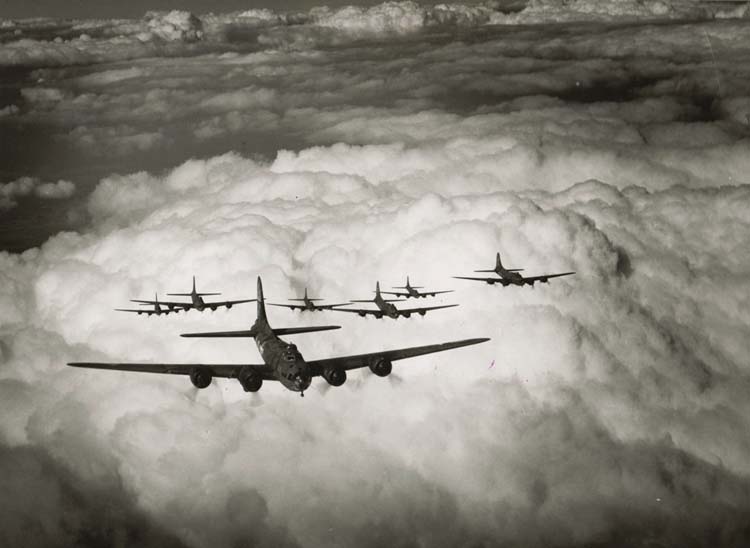 [Image: Allied bombers in World War 2; via
 [Image: The infrastructure of
 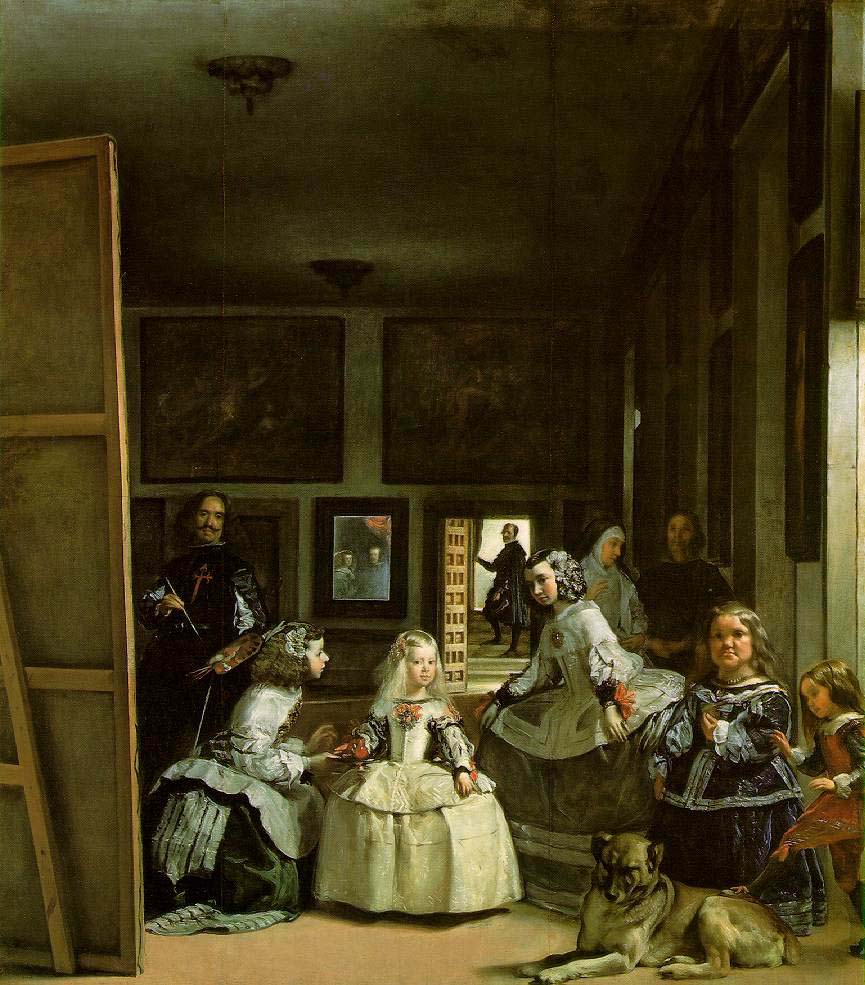 [Image: “
 [Image:
  [Image:
 [Images:
  [Image:
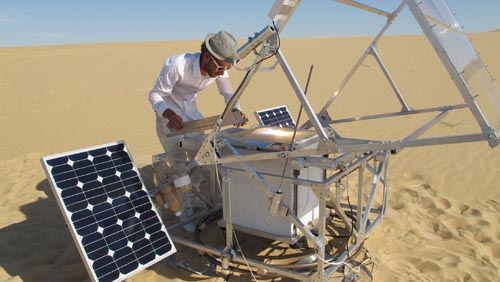 [Image:
  [Image:
  [Image:
  [Image: From Armin Blasbichler’s bank robbery course; via
  [Image: From Armin Blasbichler’s bank robbery course; via
  [Image: Internet-in-a-suitcase, via the
 [Image: “
 2) For its new
  3) The Architectural League wants to give New York the
  4) A new
  5) The California Architectural Foundation, in partnership with the
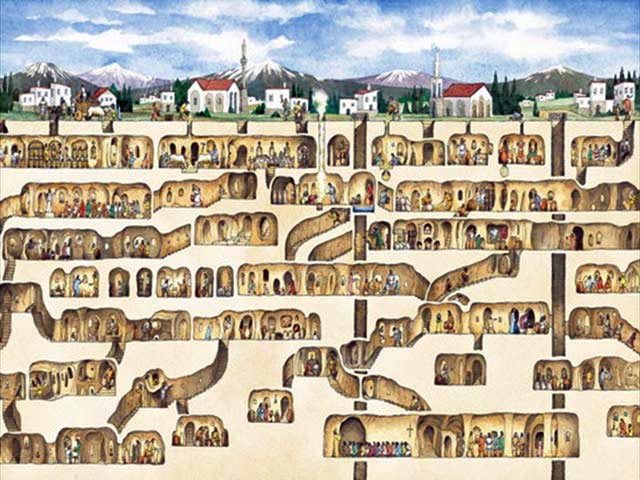 [Image: The underground city of
  There will be two short, 20-minute lectures: one by myself, on the subject of the underground, from contemporary London and the Mole Man of Hackney to ancient Cappadocia and Moscow’s Metro-2; the other lecture will be an unrelated talk by
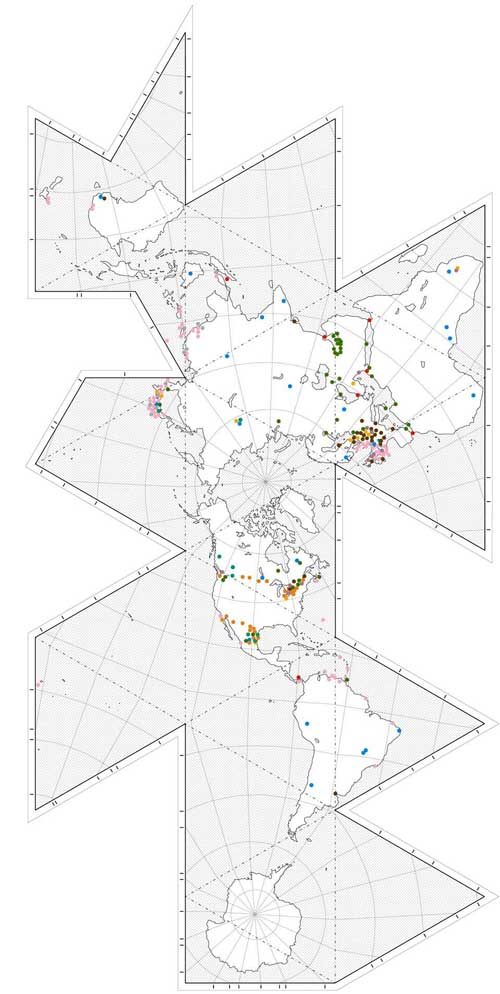 [Image: Map by, and courtesy of,
 [Image: Photo by
  [Image: Photo by


 [Images: All photos by
 [Image: “Waiting for the River” by
  [Image: “Waiting for the River” by
 [Image: “Waiting for the River” by
  [Image: “Waiting for the River” by
  [Image: “Waiting for the River” by
  [Image: “Waiting for the River” by