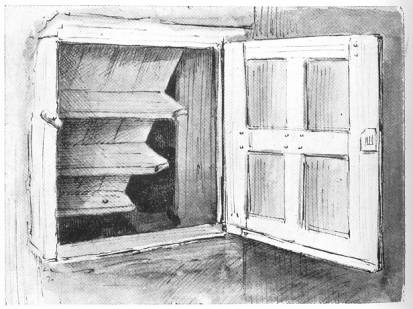
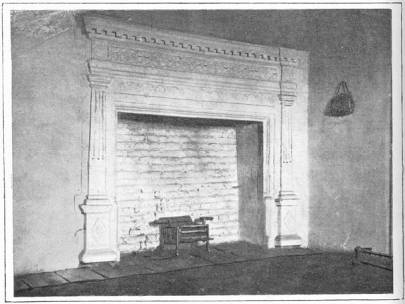
RoboVault

RoboVault describes itself as a Maximum Security Robotic Storage facility.
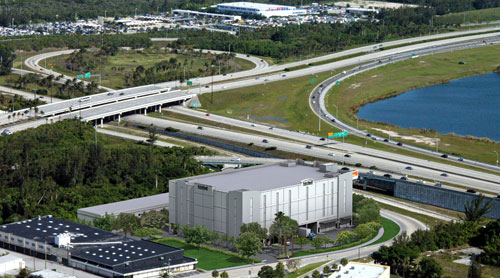
Hurricane-resistant, fully insured, and protected by biometrics, RoboVault is proposed for “an extraordinary location at the crossroads of several major roadway arteries including Port Everglades and the Hollywood/Fort Lauderdale International airport.”

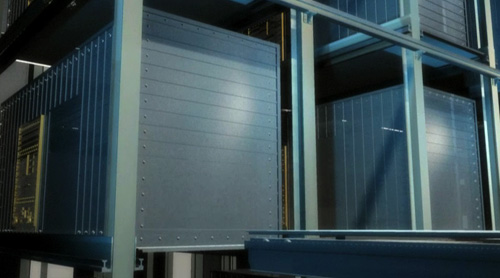
[Image: A glimpse inside RoboVault].

“No one enters the storage part of the facility,” we read; this has the effect of “minimizing the risk of theft or damage.” Indeed, “This revolutionary concept in storage uses robotic parking garage technology, allowing you to operate your rented storage unit automatically, so you can store and retrieve your possessions when you want.”
Which raises the question: How much longer must we wait before robotic parking garage technology crosses over into other architectural typologies? Single-family homes (you move your bedroom to the ground floor every morning), libraries (where’s that book? oh, that’s right… whoosh), football stadiums (your seats greet you at the entry gate).
In fact, for me, this whole complex sounds more like something out of a design studio at SCI-Arc, combining transport infrastructure, personal consumption, import/export laws, national sovereignty, exurban geography, climate control (the building offers “atmospheric consistency,” we’re told), new business models, biometrics, and the mechano-Derridean future of the archive – together with the narrative possibilities of architectural representation.
“What’s your building’s story?” the concerned professor asks.
You could even invent a new – presumably quite boring – party game. Take a proposed building or business model from anywhere in the world and then work backward: Try to imagine the design studio in which that project would first have been proposed. Try to imagine what they read. Try to imagine the keywords.

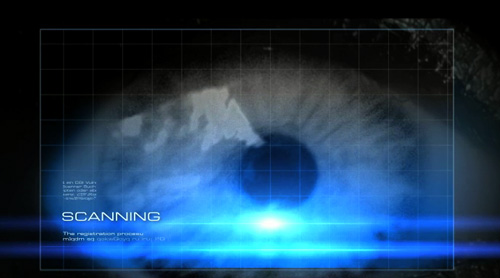
[Image: The biometrics of RoboVault].

In any case:

Here’s how it works: If you rent a RoboVault Space, you simply place your prize possession on the elevator, use the retinal eye scan and keypad security features and your property is safely stored away in a matter of seconds. You use the same process to retrieve your possession. Since there are no floors or entries, you don’t have to worry about theft or vandalism. With RoboVault Spaces, you’re buying peace of mind!

It all seems to have been designed solely to be featured in an as-yet-unannounced Jerry Bruckheimer film.

[Image: RoboVault‘s “extraordinary location at the crossroads of several major roadway arteries including Port Everglades and the Hollywood/Fort Lauderdale International airport”].

If you’ll excuse the long quotation, this reads like the opening scene of Bad Boys III or Mission Impossible IV – or even Blade: Miami Nights:

A vehicle arrives at the overhead door and notifies the office of their impending entry. The overhead door is raised and the vehicle drives into the building after which the overhead door is then closed. The client is the only person/vehicle in this secure area. The client removes the contents to be stored from the vehicle and accesses the interior door by use of a pin code and biometric scan. When this occurs, the office staff is notified and meets the individual to provide access into the safe deposit box room. Once inside the dual locking system can be accessed by the client and RoboVault staff. The client then has the option to enter into one of two small viewing rooms. Exiting of the safe deposit box room will occur much in the same manner. An important feature is that there is one entry and exit out of the safe deposit box room. Each member of RoboVault personnel is bonded and have gone through background checks to ensure complete reliability.

Et cetera.
I love the idea, though, that certain building types – certain works of architecture – can actually catalyze new business models, complete with ripple effects outward into the worlds of insurance, tax law, and even the private behaviors of everyday citizens.

[Image: RoboVault].

And then you’ll franchise this building type, and build one in London, and wild new filmic possibilities arise. Bank Job 2. National Treasure 3.
Architecture built only for the purpose of inspiring Hollywood sequels.

(Thanks to Adam S. for the link!)

Setting Up Shop in the Apocalypse

[Image: South China Mall, photographed by Philip Gostelow for The National].

Last week, Jonathan Shainan of Abu Dhabi’s The National newspaper sent in a link to their recent article about a rather interesting mall over in China.
That mall, we read, is “not just the world’s largest. With fewer than a dozen stores scattered through a space designed to house 1,500, it is also the world’s emptiest – a dusty, decrepit complex of buildings marked by peeling paint, dead light bulbs, and dismembered mannequins.”

What sets the South China Mall apart from [other dead malls], besides its mind-numbing size, is that it never went into decline. The tenants didn’t jump ship; they never even came on board. The mall entered the world pre-ruined, as if its developers had deliberately created an attraction for people with a taste for abandonment and decay. It is a spectacular real-estate failure – but it is also, as I saw when I spent two days exploring the site in May, a strangely beautiful monument to the big dreams that China inspires.

Briefly, this description reminds me of some towns along the Hudson: originally built out as if to attract their own Manhattanization – all lights, retail, grand theaters, and futurity – they found that those storied residents of tomorrow never came. Schenectady, Troy, Albany. But one need only look as far as the subprime super-suburbs, on the rims of U.S. cities and elsewhere, to see that speculative developments of this kind are not at all a thing of the past.
Like the South China Mall, these are spaces that don’t simply go into decline: their expected populations just never show up.
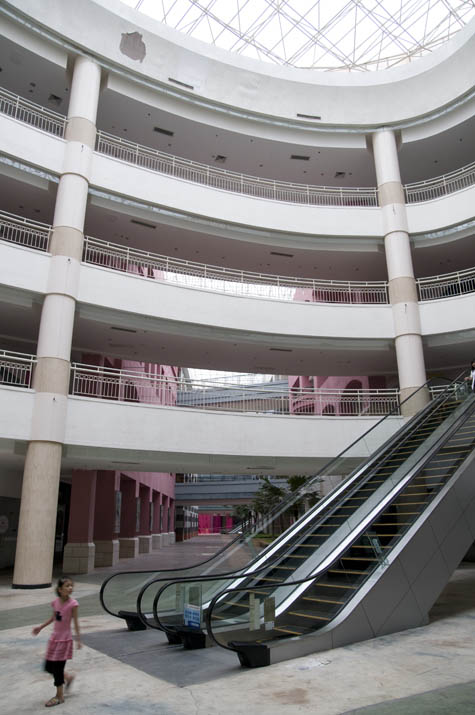
[Image: South China Mall, photographed by Philip Gostelow for The National].

In any case, the architecture of the South China Mall is itself meant to inspire:

The big attraction of the South China Mall was supposed to be its “foreign” design. Learning from Las Vegas, where replicas of European monuments and New York landmarks draw throngs of tourists, the Dongguan mall modeled seven zones after various exotic world locations. Its rooftops reflect at least twenty different influences, from Czech town halls to Turkish mosques.

The mall even includes “fake herons in an indoor rain forest,” a scale model of the Arc de Triomphe, a “553-meter flying railway known as Kuayue Shi Kong, or ‘Moving Through Time and Space’,” and, perhaps best of all, an entire wing, modeled after Venice and Amsterdam, whose construction was never completed. The buildings there thus have “ornate, generically European facades, but their insides remain shells filled with puddles, unrailed staircases, and random stacks of tile and concrete. The exotic palm trees lining the sidewalk have been invaded by homegrown south-China weeds.”
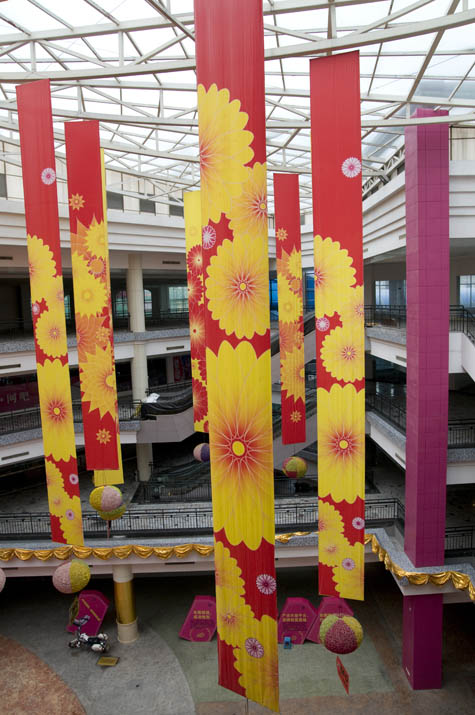
[Image: South China Mall, photographed by Philip Gostelow for The National].

The article’s author, Michael Donohue, soon finds himself walking past drained indoor water park rides, bored security guards, and “escalators sheathed in dust-covered plastic.”
“It’s not very exciting,” a 23 year-old shopper comments to Donohue. She is sitting on the edge of a decorative pond somewhere deep in the emptiness.
The rest of the article is worth reading. It explores how leasing difficulties led to this situation in the first place, and how China’s burgeoning “mega-middle class” has simply not arrived on time to coincide with the opening of the mall.
But what kind of future might such a giant space hold? I’d suggest that it’d make an ideal setting for an architectural studio, if such a thing hadn’t been done before. Boing Boing readers suggest turning it into a venue for paint ball, or even a set for future zombie films.
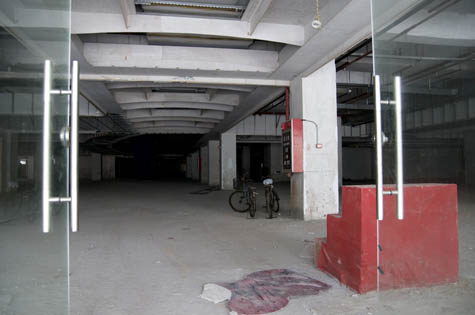
[Image: South China Mall, photographed by Philip Gostelow for The National].

Less tangentially, Jonathan Shainin also sent me this link to an earlier article in The National about globe-trotting mega-mall designer – turned architect of whole Middle Eastern cities – Eric Kuhne. Kuhne – who is not responsible for the South China Mall, and I don’t mean to imply that he is – has become somewhat notorious for his work designing Bluewater, the giant retail “city” outside London in northern Kent. Interestingly, that mall stands in the footprint of an old quarry.
My own first sense of the cultural hostility directed at Bluewater came while reading the 2002 novel Flood by Richard Doyle, wherein the whole complex is obliterated by the rising waters of an insurgent Thames. If I remember correctly, one of the characters is trying on clothes in a changing room when water begins to seep upward through the carpeted floor.
The National article suggests that, because “Kuhne himself described Bluewater as ‘a city rather than a retail destination,’ it is safe to assume that his cities may resemble his malls.”

This possibility excites Kuhne; he has faith in retail. “Retail,” he tells [an] audience in Dubai, “is the only industry that can manage our city centres… We are the only ones who deal with experience. We are the only ones that understand how to customise and modify and release and replan and reorganise and administer a luscious experience for a group.”

Kuhne goes on to explain that malls should be “retail destinations,” not “soulless concrete boxes,” and that, through retail, these malls will “dignify the heroic routine of everyday life.”
“He views himself,” the article suggests, “not as a megamall designer turning cities into supermegamalls, but as a humanistic master planner creating ‘mixed use’ spaces that help people live and thrive together gracefully.”
In any case, what imaginative role will the South China Mall, like some massive architectural folly, play in the region? Will it take up a place in urban legends, or in video games, or in films?
Or perhaps the South China Mall will be flooded in a new, bestselling novel by a young writer from Shanghai…
Perhaps, on the other hand, China’s fabled mega-middle class will arrive just in time to make it thrive. This strange ruin will then see its walls replastered and its escalators fixed, and crowds of children will walk through its cavernous toy stores unaware that the space all around them had once been an uninhabited shell.

(Thanks to Jonathan Shainin for sending both article links and the photographs by Philip Gostelow!)
Pandemonium

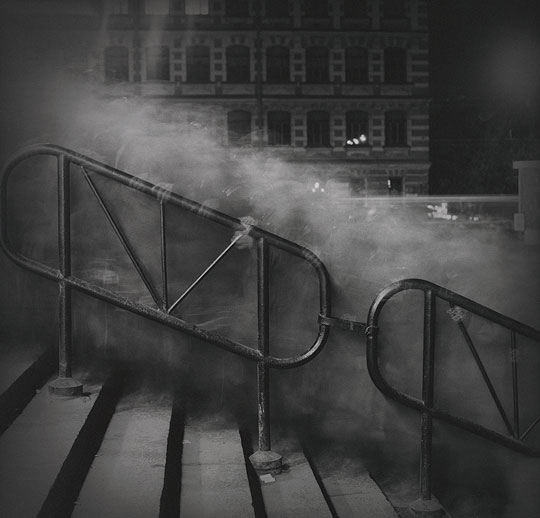
[Image: From “City of Shadows” by Alexey Titarenko].

Some of the coolest photographs I’ve seen recently are these long exposure shots of crowds in St. Petersburg, Russia. They were taken by Alexey Titarenko for a project called “City of Shadows.”
What I think is so interesting about this is that an otherwise unremarkable technique – the long exposure – has the effect of transforming these assemblies of people into demonic blurs, black masses moving through the city. These look more like scenes from Jacob’s Ladder or Silent Hill.
In the photograph below, for instance, the repeating glimpse of a hand pulling itself up the banister seems strangely unnerving –

[Image: From “City of Shadows” by Alexey Titarenko].

– and, in the next photo, the crowd takes on the appearance of a machine, hauling itself through human gears up the stairs of old buildings. A mechanism of bones from the afterlife.

[Image: From “City of Shadows” by Alexey Titarenko].

But I suppose this is what the world would look like if we could see the residue of everyone who’s ever passed through – a vast, multi-limbed creature made of tens of thousands of human bodies, winding its way through streets and buildings, looking for some place to go.
See more from this project and others at Alexey Titarenko’s website.

(Thanks to Adam Billyeald for the tip!)

Lost and Found

[Image: The world’s oldest Christian church? A cave in Jordan, via the BBC].

Some archaeology for a Tuesday evening:

1) Is a cave in Jordan the world’s oldest Christian church? “The cave is beneath the ancient church of St Georgeous, itself one of the oldest known places of worship in the world,” the BBC reports. “According to Dr. Abdul Qader Al-Hassan, the director of the Rihab Centre for Archaeological Studies, the cave site shows clear evidence of early Christian rituals that predate the church.” This subterranean place of worship has been tentatively dated at 70 A.D.

[Image: The re-discovery of Egypt’s missing pyramid, photographed by Amr Dalsh of Reuters and Nasser Nasser of the Associated Press].

2) This is the same week, of course, that a “lost” pyramid was re-discovered in Egypt – re-discovered, because it had previously been lost.. and discovered… only to be lost… and re-discovered.
According to CNN, “the pyramid, of which only the base remains, is believed to be that of King Menkauhor, an obscure pharaoh who ruled for only eight years more than 4,000 years ago.” It seems to have been first dug up in the 1840s by a German archaeologist – only to disappear again beneath the desert sands.

[Image: Macchu Picchu photographed by Flickr-user Eric in SF].

3) Another German archaeologist was recently in the news, however: Augusto R. Berns, who “discovered” Macchu Picchu back in 1867, a good four decades earlier than anyone thought, only to “ransack” the place.
From the Telegraph:

In a letter [Berns] boasts of finding “significant rustic buildings and underground structures that have been closed with stones,” believed to be the first written description of Machu Picchu.
These, he speculates, would “undoubtedly contain objects of great value and prove part of the treasure of the Incas.”
In the same document, he claims that he has the backing of the “Supreme government” to access and sell the treasures.

So where might all those treasures now be? Sitting in a library somewhere, gathering dust? Or are they set to be rescued in a future film starring Shia LaBeouf?

4) And while this last bit is neither news nor to be believed, I find it interesting nonetheless. Is there a “subterranean city located beneath the former Inca capital of Cuzco”?

In 1952, a mixed group of twelve French and American explorers managed to gain access [to this underground city] with enough provisions to last for five days as they embarked upon what they termed “the greatest discovery since Machu Picchu.”

The team ventured into the [tunnels] and nothing further was heard from them until fifteen days later, when French explorer Phillipe Lamontierre emerged from the hole suffering from acute dementia, with visible signs of malnourishment and even the bubonic plague… The broken survivor indicated that his fellow adventurers had died, and some of them had even fallen down unfathomed abysses. Among the objects he brought back was an ear of corn made of solid gold, which was later entrusted to the Cuzco Museum of Archaeology.

5) This doesn’t really have anything to do with this, but I’m increasingly curious what the world’s reaction would be if we someday discovered that the Andes – in all their continent-spanning, mountainous immensity – were really manmade.
You’re on a road crew, blasting through the mountains outside Quito, deep in the compression and strain of old bedrock, with incomprehensible stratigraphies arching with strike and dip all around you… when you scrape away some rock and find a serial number.
The mountains were manufactured.
There’s even a number you can call for customer complaints.

Night Vision

[Image: “Micro Marsh” by Troy Paiva, from his new book Night Vision. Troy’s own beautifully surreal caption for the photo reads: “A marsh grows in the pool outside the gym at the long abandoned Air Force base on the mountain above San Jose, CA. Mysterious animals were splashing and rustling around in the pool.”]

Over the weekend, Ballardian posted a long interview with photographer Troy Paiva. Troy is the author, most recently, of Night Vision – the black-backgrounded pages of which practically leak color across your desk.
In the interview, Troy explains one of many origins for his attraction to desert dereliction and decay:

When I was 13 my family went on a road trip, one of many, and we somehow found ourselves bouncing down 15 miles of bad dirt road to the classic “wild west” ghost town of Bodie, arguably the most authentic ghost town in America. Today Bodie is kept in a state of “arrested decay” and is a major tourist destination. Much of the road is paved and the parking lot is filled with tour buses, and in the summer the town is crawling with thousands of tourists from around the world. But back in the early 70s you could drive right into the center of town and park. When we climbed out of the car we found we were the only ones there! I wandered that town alone for hours, slack-jawed at the thought that people would just walk away from furnished houses and businesses, a whole city, and never come back. I was hooked for life.

Read the rest at Ballardian – and stop by Troy’s Flickr sets.

[Image: “Downtown” by Troy Paiva, depicting Darwin, “a (mostly) ghost town west of California’s Death Valley.”]

Briefly, though, this reminds me of a moment in BLDGBLOG’s earlier interview with author Patrick McGrath:

BLDGBLOG: I’m also curious about weather and climate. For instance, a wet climate – with thunderstorms, humidity, and damp – seems to play a major, arguably indispensable, role in the Gothic imagination. Your own novels illustrate this point quite well: from rain-soaked country homes to the Lambeth marshes, from coastal fishing towns to Central American swamps. But can aridity ever be Gothic? In other words, if the constant presence of moisture contributes to a malarial atmosphere of decay, mold, infestation, and disease, might there be a whole other world of psychological implications in a climate where things don’t decay – where there is no mold, where bodies turn to leather and everything can be preserved? Is indefinite preservation perhaps a Gothic horror of its own?

McGrath: Aridity does interest me. It’s an unusual application of the Gothic mood. You usually think of northern European or north American climates and landscapes, but that’s merely because, traditionally, that’s where these sorts of stories have been set. But I can very well imagine aridity being a place, or a site, for such a story.

I think you could safely say that one of the themes of the Gothic is the sins of the father being visited upon the sons – in other words, there is no escaping the past. The past will always haunt the present. And this is certainly true of Gothic stories that are set in crumbling old houses: there’s always some piece of evil that has occurred in a previous generation that will work itself out on the current generation. So that continuation – or persistence – of the past is what you’re expressing: it’s the skeleton that can’t be disposed of.

What new sorts of cultural hauntings exist, then, in the desert Gothic, where the past never manages to fade and we’re left staring at a whole world of things that were supposed to disappear? It’s the “sins of the father” in material form: here, in Troy’s work, abandoned air warfare ranges, roadside automobile dumps, and entire lost towns lit by nothing but the moon.

Sounding Rooms

For some reason, when our upstairs neighbors came home tonight, their footsteps sounded different – as if someone had come up a staircase I didn’t know about, only to begin speaking inside a room I’d never known was there, located somehow behind the kitchen wall – which got me thinking.

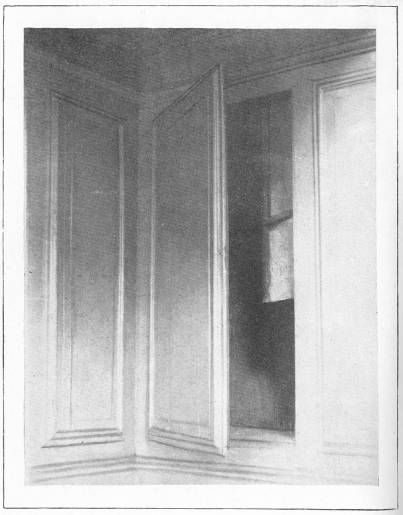
[Image: From the Secret Chambers and Hiding-Places by Allan Fea].

You’ve been living in an apartment for almost a year, one of three apartments in an otherwise unremarkable building on a street somewhere in the city. You know the building fairly well; you’ve had brief glimpses inside the other apartments; and, with neighboring buildings directly on either side, there should be no major architectural surprises in store.
But one day someone new moves in – and the acoustics of the building begin to change.
You’re suddenly hearing people walk up and down a staircase whose position in the house should be impossible, and you’re picking up conversations that sound as if they’re taking place in rooms that simply cannot be there – voices coming through the walls of the closet, or down through the ceiling of a room that’s supposed to have no rooms above it.
What is going on? Have your neighbors stumbled on some weird system of rooms that no one else ever knew about – and, if so, should they pay more rent?
Or perhaps someone has moved into an apartment in the building next door – only it acoustically overlaps with yours in strange and unpredictable ways.
It’s like something out of Alice In Wonderland, or even Gormenghast. Schrödinger’s Cat as retold by Rem Koolhaas: a potentially unreal maze of interconnected architectural spaces enshrouding you on all sides like a halo. Saint Crawlspace.

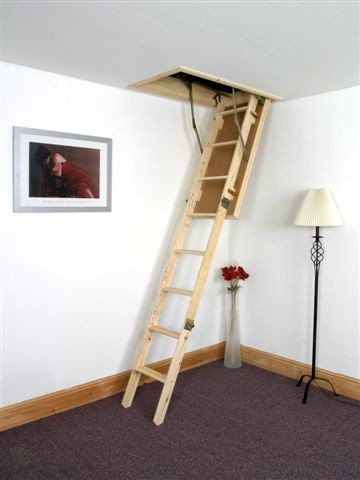
[Image: Via. As if we could travel infinitely upward through architectural space, mapping a labyrinth of trapdoors].

So you begin an investigation. You even record brief snippets of these murmuring conversations to see if the voices match your new neighbors – after all, you’ve spoken to them in the building’s foyer, and you don’t remember them sounding anything like this.
One night a TV seems to be playing – from behind a wall in your bedroom.
It’s too much.
Except then you notice that many walls in the house, particularly down in the entry hall, are actually sealed-over doorframes – and some of the doors in your apartment had once simply been hammered right through the old walls. The interior of the house has been rearranged several times, you see – but of course: how else convert a single-family house into a three-apartment complex?
You even find trace evidence in the back of the kitchen cupboard of a staircase that’s no longer there.
But you’re not hearing ghosts – you don’t believe in ghosts. So is some weird new acoustic effect being demonstrated?
It is the rainy season, your best friend points out; maybe all that moisture in the air has somehow changed the way sound travels through the building… You should talk to an architect, he says, or just dig up old plans of the house. Phone your landlord.

[Image: From the Secret Chambers and Hiding-Places by Allan Fea].

Instead, you start knocking on walls, tapping around for hollow spots. You tell yourself after work each day that you’ll bob into a hardware store and buy some kind of stud-finder, some technical way to peer through walls, looking for adjacent spaces.
But you never do; you’re too tired – and a stud-finder sounds expensive.
You start daydreaming about radar: you will turn around slowly in the center of your bedroom, holding a machine in both hands, recording the electro-acoustic presence of unknown rooms around you.
It’ll be like that scene in Aliens, you joke to yourself, except you’ll be detecting architectural space.
Perhaps you’ll even find a room that moves, you think. A distant but invisible space, approaching.
Radio astronomy in architectural form.

[Image: From the Secret Chambers and Hiding-Places by Allan Fea].

But then it stops. The sounds go away. The conversations cease. There is no more radio hum or late-night TV chatter, and when your neighbors come home from work each night it sounds the way it did before. There are no more hidden stairways. No more unexpected rooms.
And so you think it’s all over – till you’re hanging a picture one day. Your hammer goes through the drywall, revealing what looks like a newly furnished room, just hanging out back there in the darkness.

I’ll be in London next month, hosting an event at the Pop Up Storefront, so I was asked to put together a quick list of architectural events in the city; that list is now up.

[Image: The London Architecture Diary; view larger].
It’s by no means exhaustive, focusing almost entirely on the London Festival of Architecture which opens there later this month – and it refers only to events in June – but hopefully at least one lecture, place, event or exhibition on the list will be of interest. And I’ll have more information about the Pop Up Storefront event within about two weeks…

Mapping dryness

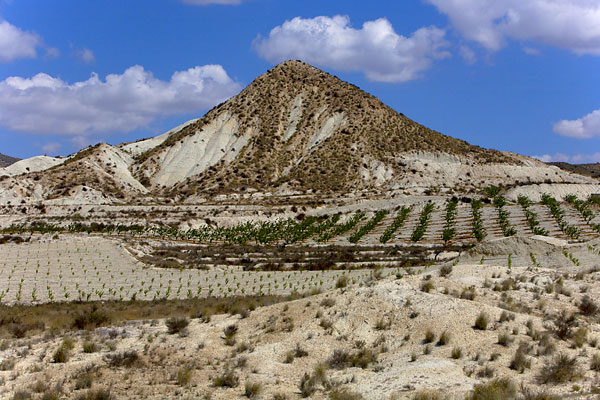
As Spain heats up – “the average surface temperature in Spain has risen 2.7 degrees compared with about 1.4 degrees globally since 1880,” the New York Times reports – we are seeing the “Africanization” of its climate.
The Sahara, you could say, is spreading north.

[Image: Monica Gumm for The International Herald Tribune].

Previously lush hills are now barren of plantlife; soil is turning to dust; streams have dried up and farms are dying.
But golf courses and casinos are still being built, and hotels, so far, have kept their pools full.
“Grass on golf courses or surrounding villas is sometimes labeled a ‘crop,'” we read in the New York Times, “making owners eligible for water that would not be allocated to keep leisure space green. Foreign investors plant a few trees and call their vacation homes ‘farms’ so they are eligible for irrigation water.”
It’s the hydrology of leisure.
“No one knows if it goes to a swimming pool,” the head of a local water board says.
On a purely bureaucratic level, this is genius: reclassifying your backyard as an agricultural zone so that you can get water rations from the government.
But will this really be the last gasp of southern European civilization, as the dunes roll in, leaving unfinished resorts surrounded by dead olive tree orchards, burying half-drunk British tourists alive beneath surprise evening dust storms? Is well-watered leisure really the only option available to us here – or will a new kind of strategic xeriscaping save us from endemic thirst?
More practically, all of this brings to mind an ongoing interest of mine in a future landscape design project: mapping zones of desertification in southern Europe.
You go around for the summer with a landscape architecture class, a box full of GPS devices, and some graph paper, producing a new cartography of aridity. France, Italy, Greece, Spain, Portugal. Whoever finds the northernmost point of desert – some strange and growing patch of dust outside Berlin – wins something.
But the minute any territory anywhere in Europe is officially named part of the Sahara Desert will be a very surreal moment, indeed.
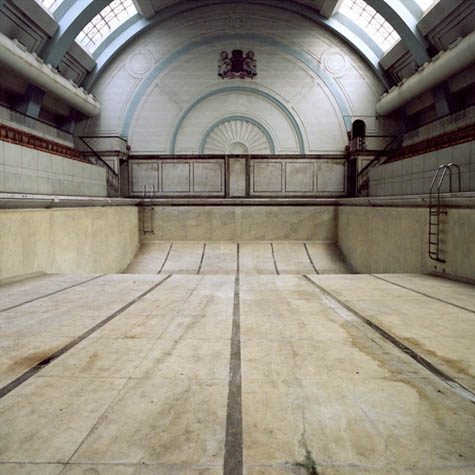
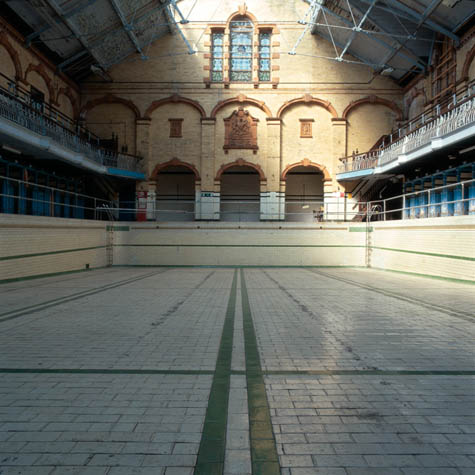
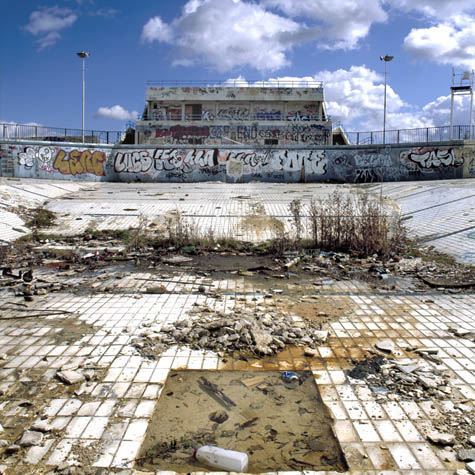
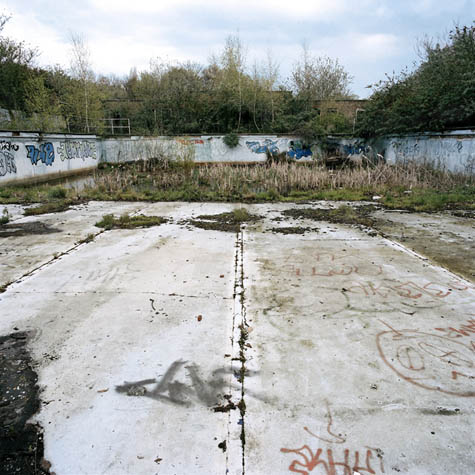
After all, the Sahara “was once lush and populated” – and so was Europe, future caravans camped out around drained swimming pools will someday say.

I was recently interviewed by National Public Radio’s On The Media for a show that aired this past weekend. We talked about architectural models, Die Hard, special effects and renderings, Saddam Hussein, Albert Speer, and so on. I sound pretty inarticulate, to be frank, but I’m still excited to have been on NPR. You can read a transcript of the show here, or you can download the MP3. The entire program was about urban and architectural space: check out all the segments through On The Media’s website.