Infrastructural Opportunism

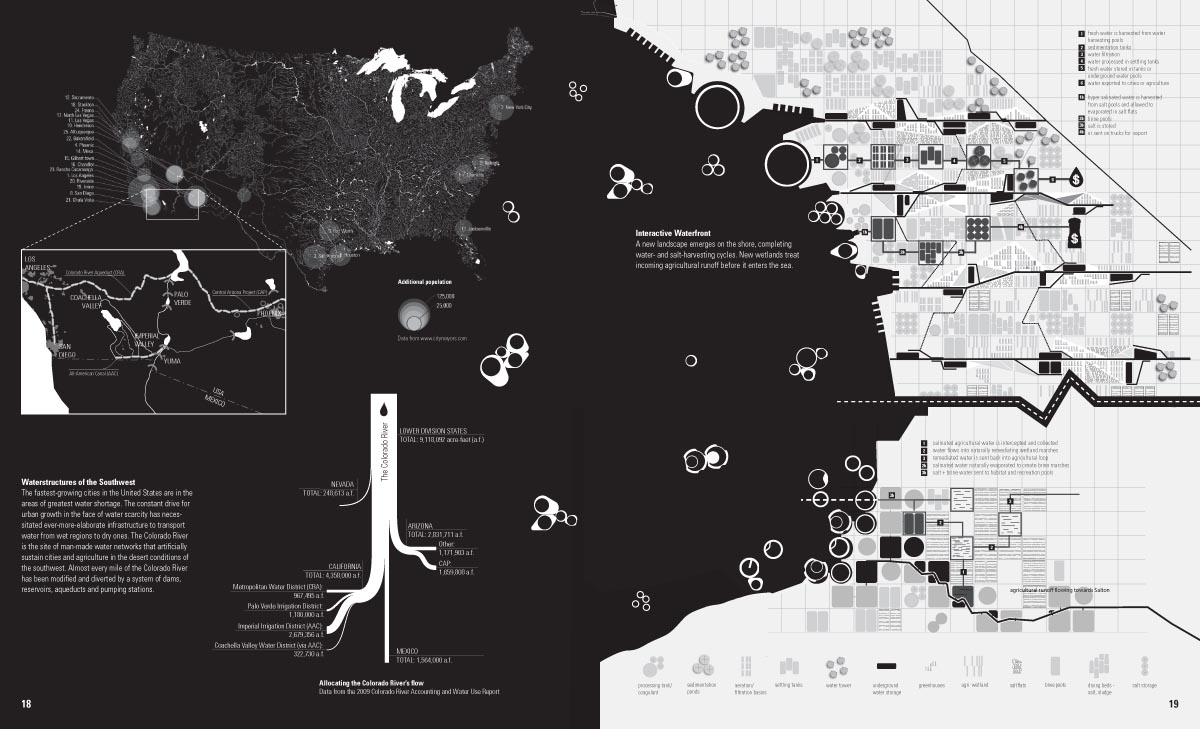
[Image: From Coupling: Strategies for Infrastructural Opportunism by Lateral Office/InfraNet Lab].

Going all the way back to the fall of 1997, my own interest in architecture was more or less reinvigorated—leading, by way of a long chain of future events, to the eventual start of BLDGBLOG—by Mary-Ann Ray’s installment in the great Pamphlet Architecture series, Seven Partly Underground Rooms and Buildings for Water, Ice, and Midgets.

To this day, the pamphlet format—short books, easily carried around town, packed with spatial ideas and constructive speculations—remains inspiring.

The 30th installment in this canonical series is thankfully a great one, authored by Lateral Office and InfraNet Lab, a design firm and its attendant research blog that I’ve been following for many years.
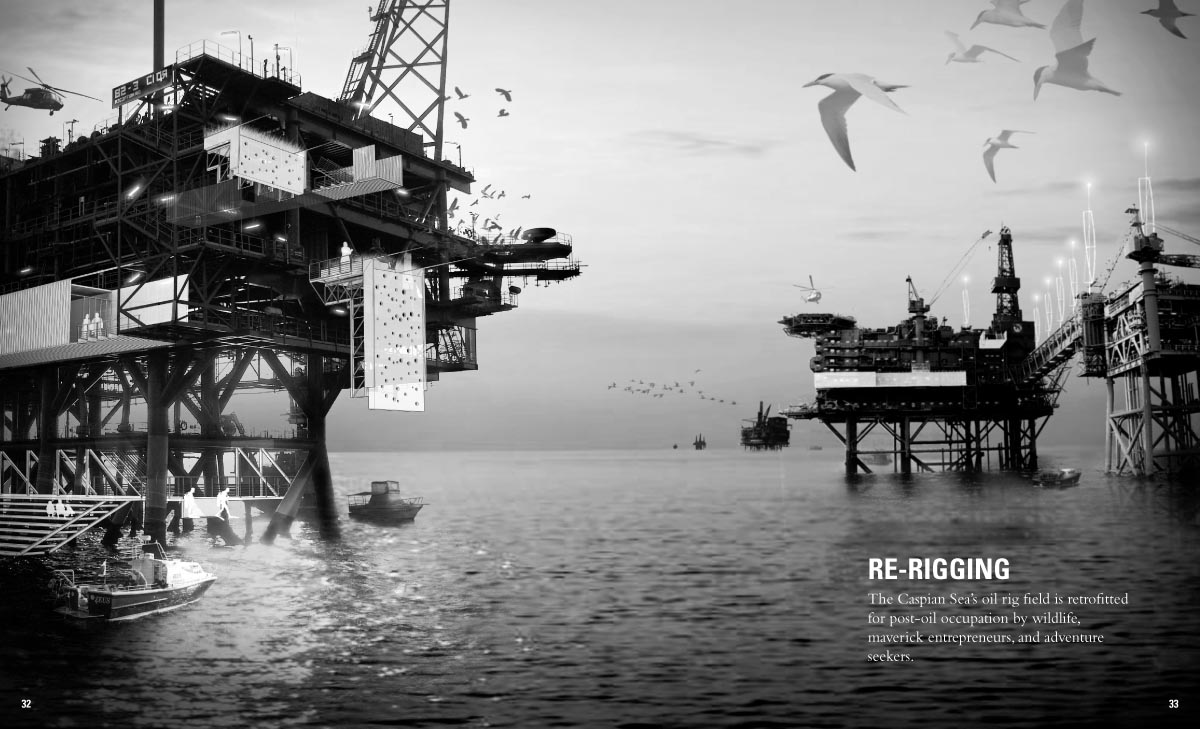
[Image: From Coupling: Strategies for Infrastructural Opportunism by Lateral Office/InfraNet Lab].

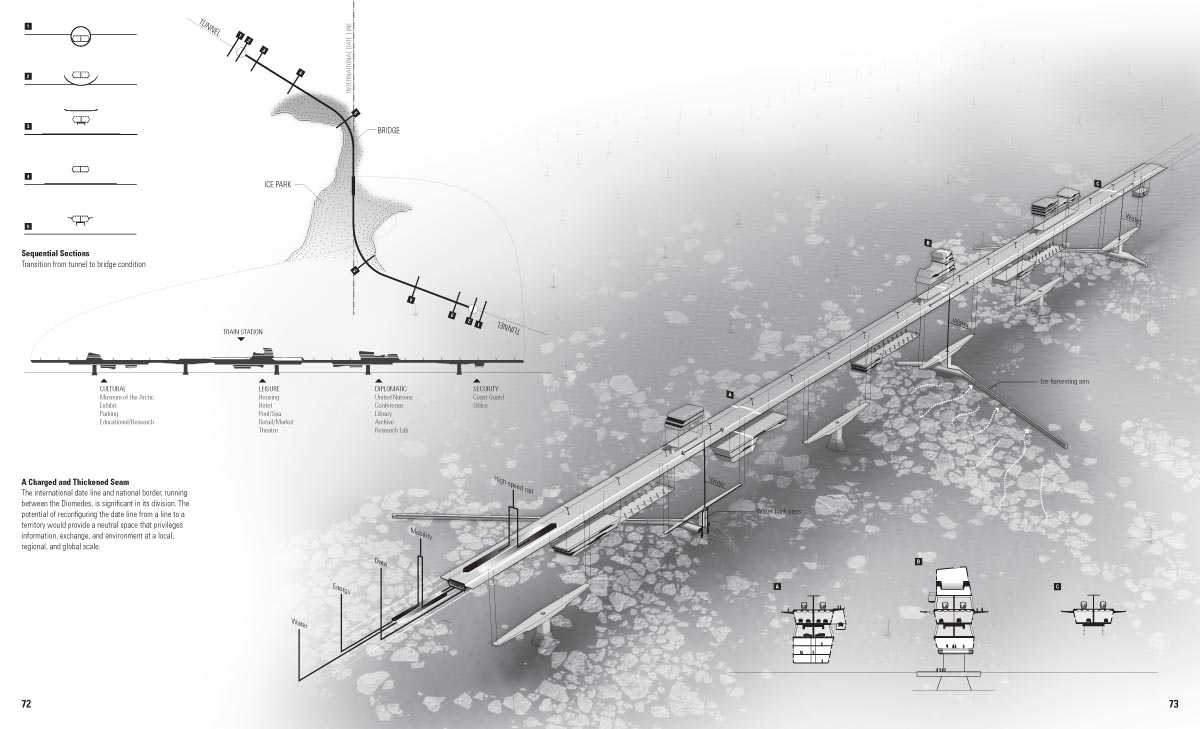
The premise of the work documented by their book, Coupling: Strategies for Infrastructural Opportunism, is to seek out moments in which architecturally dormant landscapes, from the Arctic Circle to the Salton Sea, can be activated by infrastructure and/or spatially reused. Their work is thus “opportunistic,” as the pamphlet’s title implies. It is architecture at the scale of infrastructure, and infrastructure at the scale of hemispheres and ecosystems—the becoming-continental of the architecture brief.

In the process, their proposed interventions are meant to augment processes already active in the terrain in question—processes that remain underutilized or, rather, below the threshold of spatial detection.

As the authors themselves describe it, these projects “double as landscape life support, creating new sites for production and recreation. The ambition is to supplement ecologies at risk rather than overhaul them.”
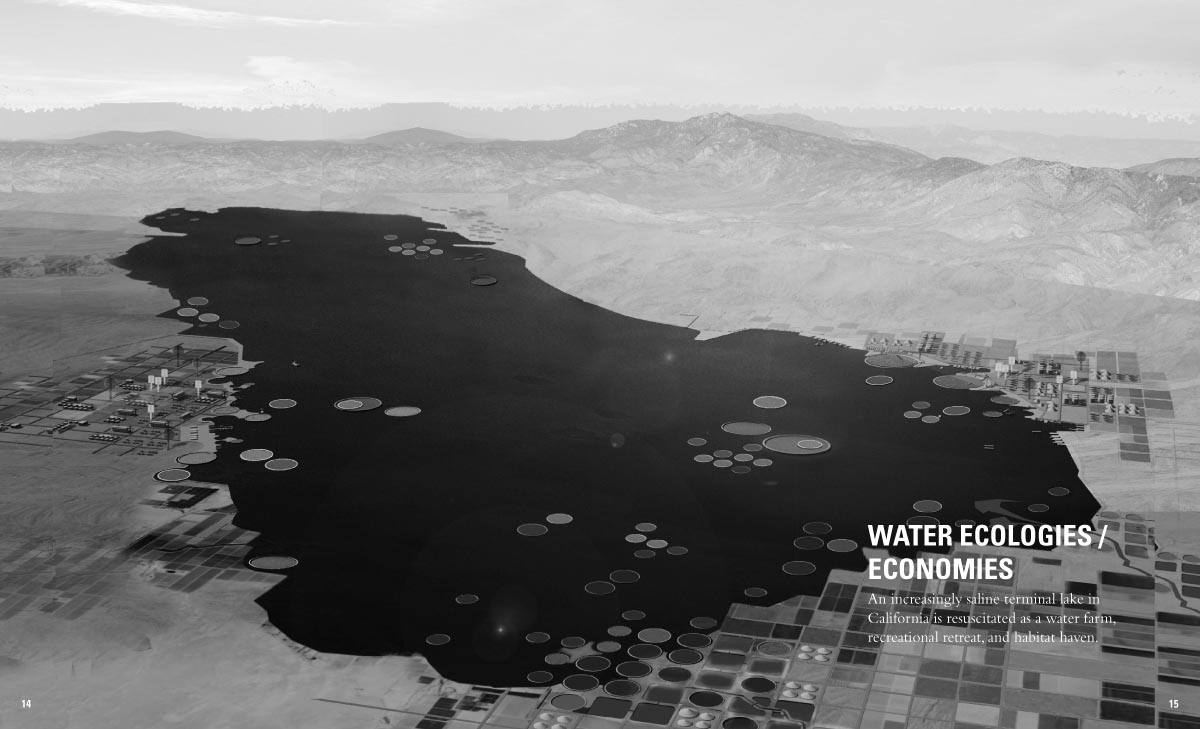
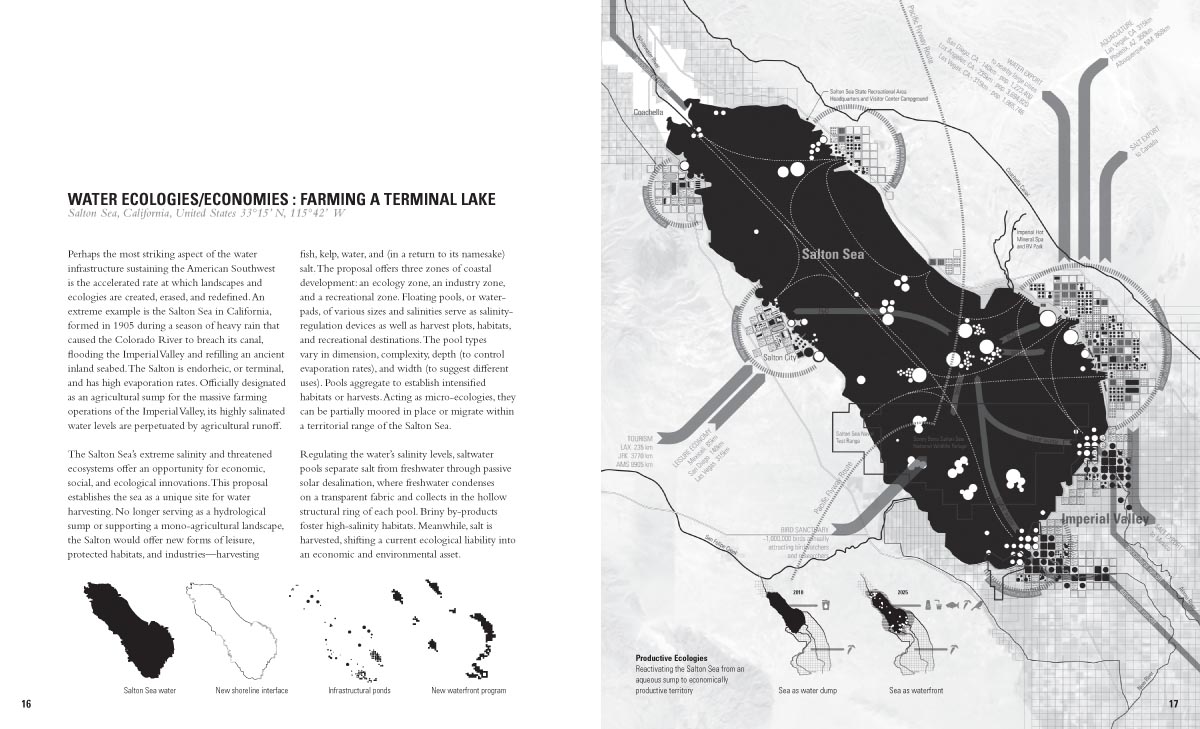
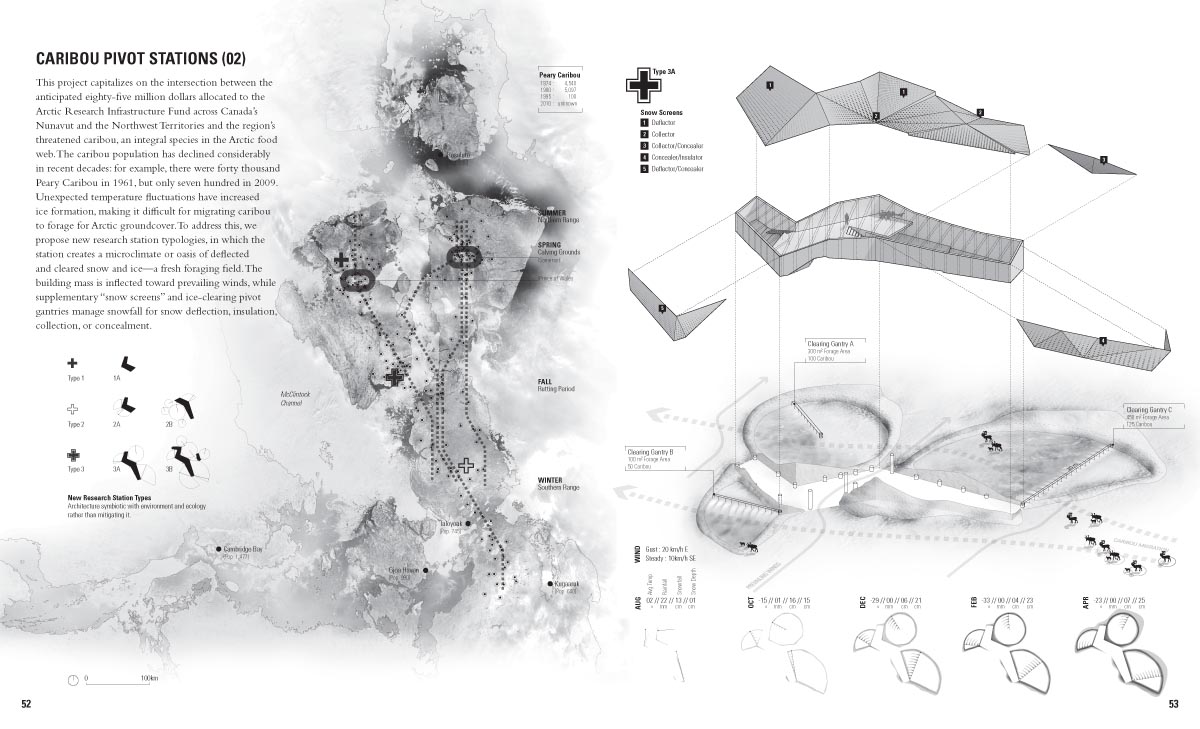
[Images: From Coupling: Strategies for Infrastructural Opportunism by Lateral Office/InfraNet Lab].

One of the highlights of the book for me is a section on the so-called “Next North.” Here, they offer “a series of proposals centered on the ecological and social empowerment of Canada’s unique Far North and its attendant networks.”

Throughout the twentieth century, the Canadian North had a sordid and unfortunate history of colonial enterprises, political maneuverings, and non-integrated development proposals that perpetuated sovereign control and economic development. Northern developments are intimately tied to the construction of infrastructure, though these projects are rarely conceived with a long-term, holistic vision. How might future infrastructures participate in cultivating and perpetuating ecosystems and local cultures, rather than threatening them? How might Arctic settlements respond more directly to the exigencies of this transforming climate and geography, and its ever-increasing pressures from the South? What is next for the North?

Three specific projects follow. One outlines the technical possibility of building “Ice Road Truck Stops.” These would use “intersecting meshes,” almost as a kind of cryotechnical rebar, inserted into the frozen surfaces of Arctic lakes to “address road reinforcement, energy capture, and aquatic ecologies.”

The mesh is installed at critical shorelines just below the water’s surface, serving to reinforce ice roads during the winter and invigorate lake ecologies during warmer seasons. As trucks travel over the ice road, a hydrodynamic wave forms below the ice, which the mesh captures and converts to energy through a proposed buoy network.

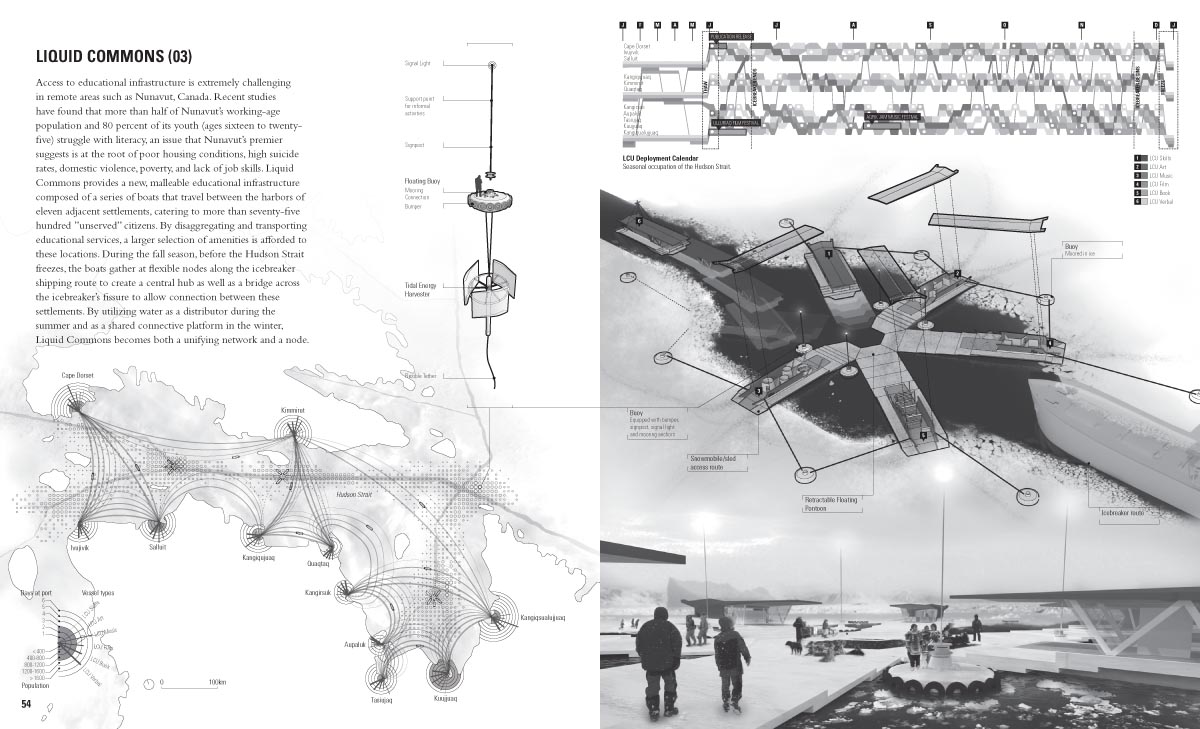
There is then a series of “Caribou Pivot Stations”—further proof that cross-species design is gathering strength in today’s zeitgeist—helping caribou to forage for food on their seasonal migrations; and a so-called “Liquid Commons,” which is a “malleable educational infrastructure composed of a series of boats that travel between the harbors of eleven adjacent communities.” It is a mobile, nomadic network bringing tax-funded educational opportunities to the residents of this emerging Next North.

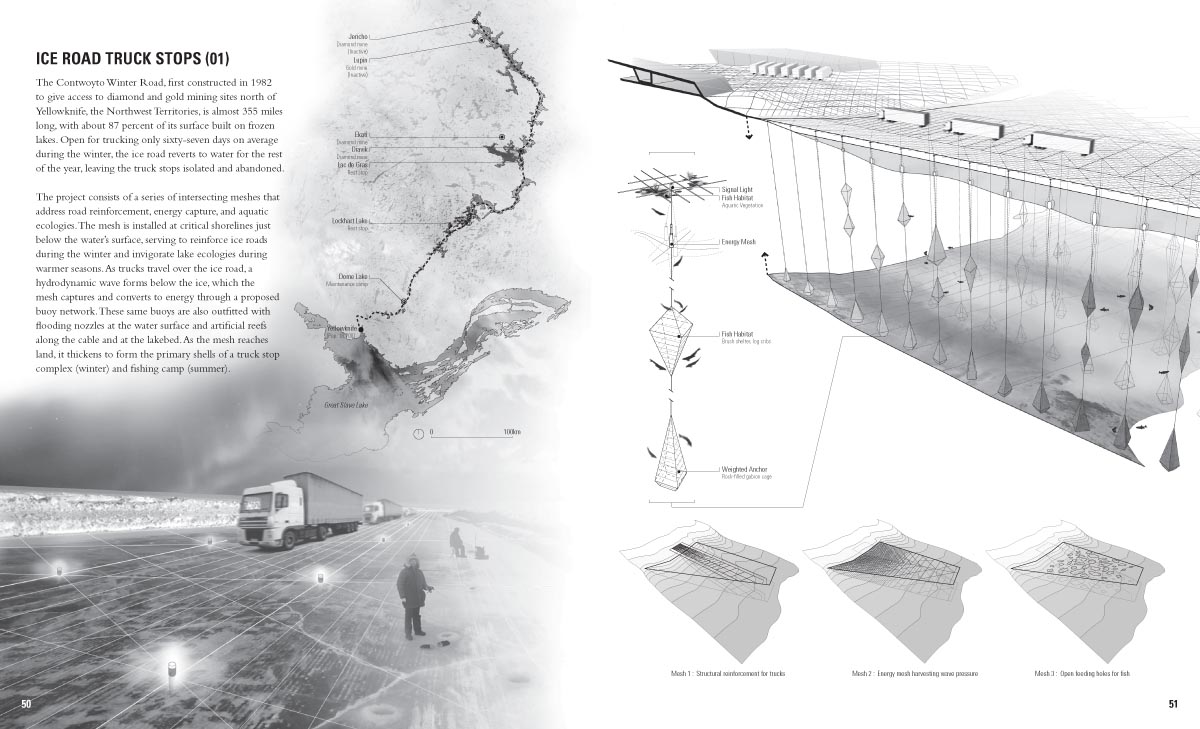
[Images: From Coupling: Strategies for Infrastructural Opportunism by Lateral Office/InfraNet Lab].

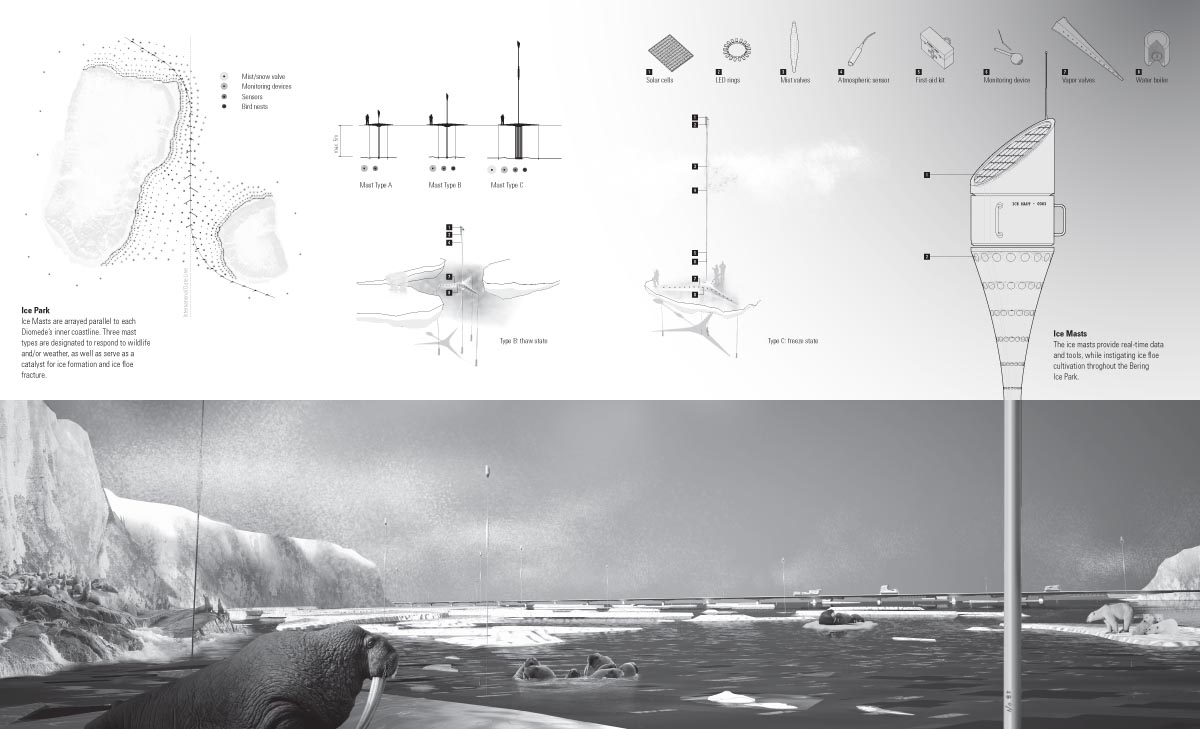
Here, I should point out that the book has an air of earnestness—everything is very serious and technical and not to be laughed at—but the projects themselves often belie this attitude. It’s as if the authors are aware of, and even revel in, the speculative nature of their ideas, but seem somehow rhetorically unwilling to give away the game. But the implication that these projects are eminently buildable—shovel-ready projects just waiting for a financial green light to do things like “cultivate” ice in the Bering Strait (duly illustrated with a Photoshopped walrus) or “harvest” water from the Salton Sea—is a large part of what makes the book such an enjoyable read.

After all, does presenting speculative work as if it could happen tomorrow—as if it is anything but speculative—increase its architectural value? Or should such work always hold itself at an arm’s length from realizability, so as to highlight its provocative or polemical tone?

The projects featured in Coupling have an almost tongue-in-cheek buildability to them—such as recreational climbing walls on abandoned oil platforms in the Caspian Sea. This opens a whole slew of important questions about what rhetorical mode—what strategy of self-presentation—is most useful and appropriate for upstart architectural firms. (At the very least, this would make for a fascinating future discussion).
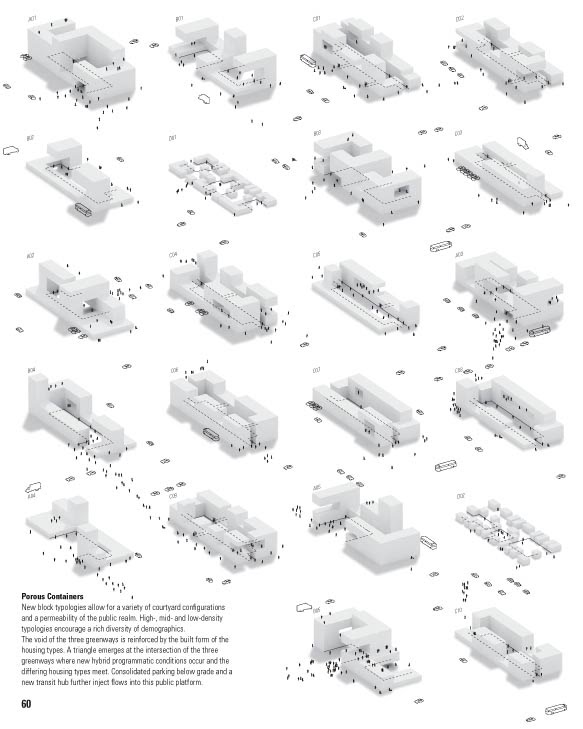
[Image: From Coupling: Strategies for Infrastructural Opportunism by Lateral Office/InfraNet Lab].

In any case, the book is loaded with diagrams, as you can see from the selections reproduced here, including a volumetric study (above) that runs through various courtyard typologies for a hypothetical mixed-use project in Iceland. For more on that particular work, see this older, heavily-illustrated BLDGBLOG post.
[Images: From Coupling: Strategies for Infrastructural Opportunism by Lateral Office/InfraNet Lab].

Essays by David Gissen, Keller Easterling, Charles Waldheim, and Christopher Hight round out the book’s content. It’s a solid pamphlet, both practical and imaginative—made even more provocative by its implied feasibility—and a fantastic choice for the 30th edition of this long-running series.

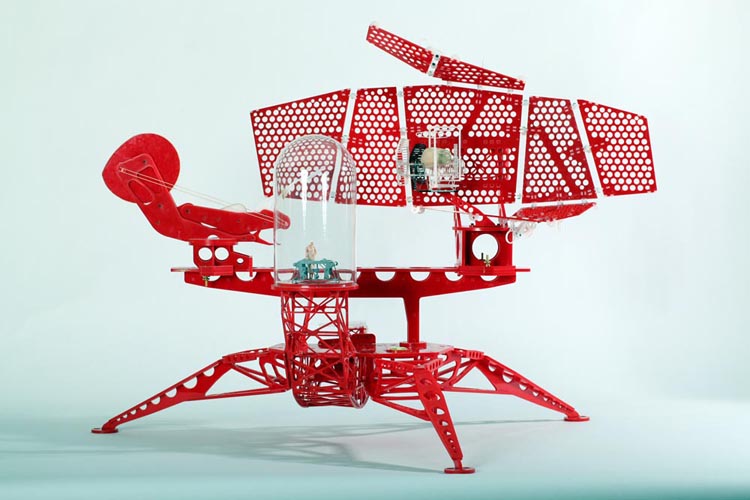
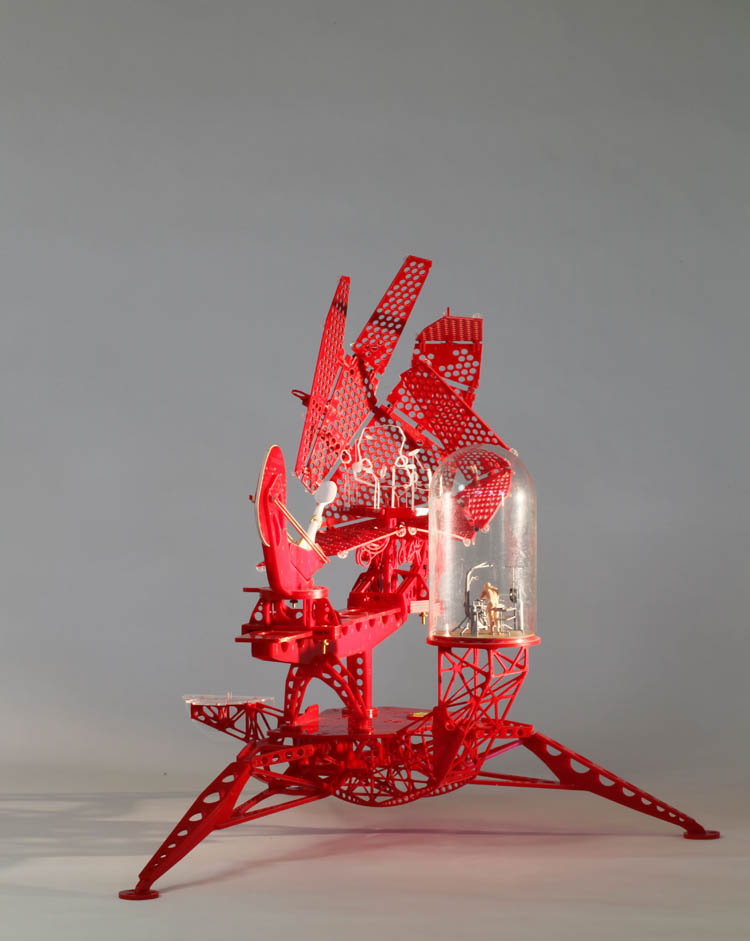
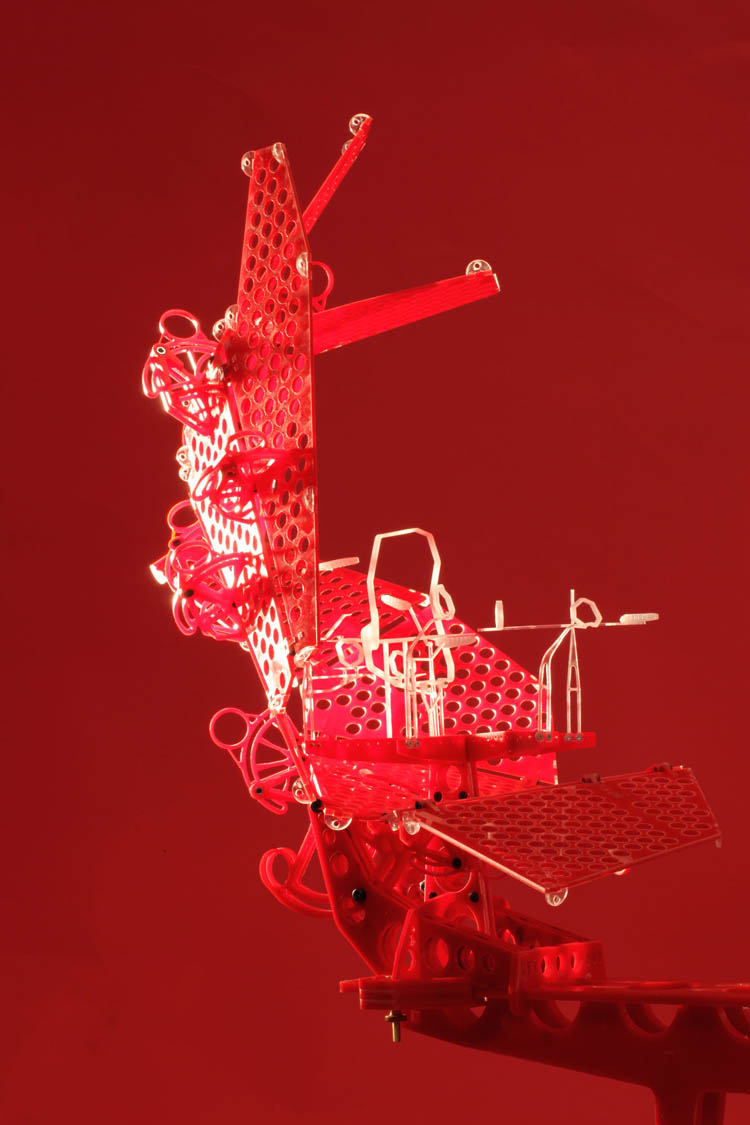
Stealth Objects and Scanning Mist

The London-based architectural group ScanLAB—founded by Matthew Shaw and William Trossell—has been doing some fascinating work with laser scanners.

Here are three of their recent projects.

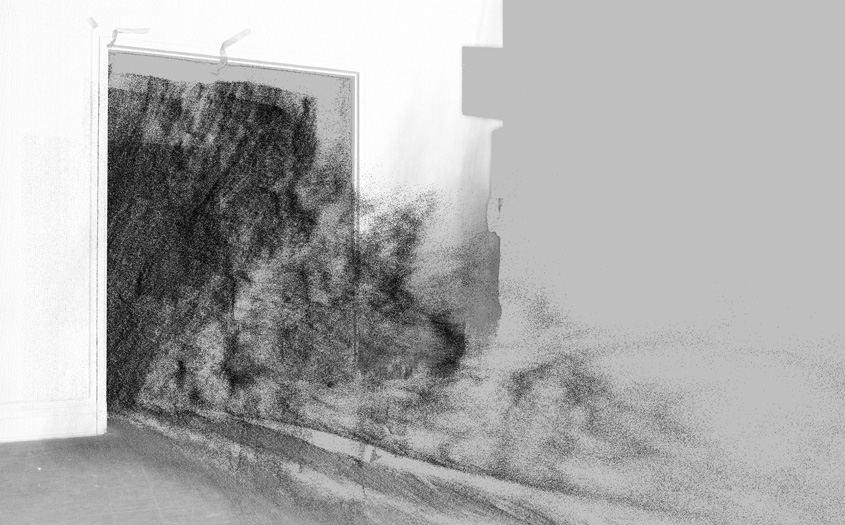
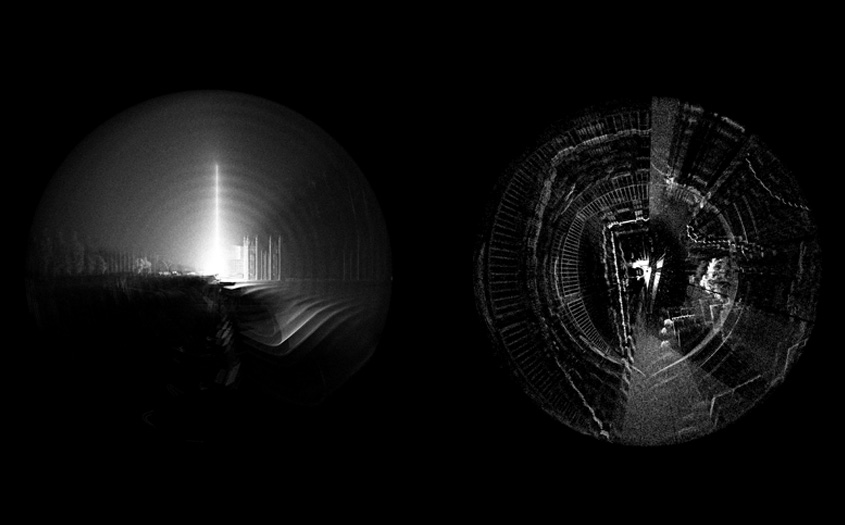
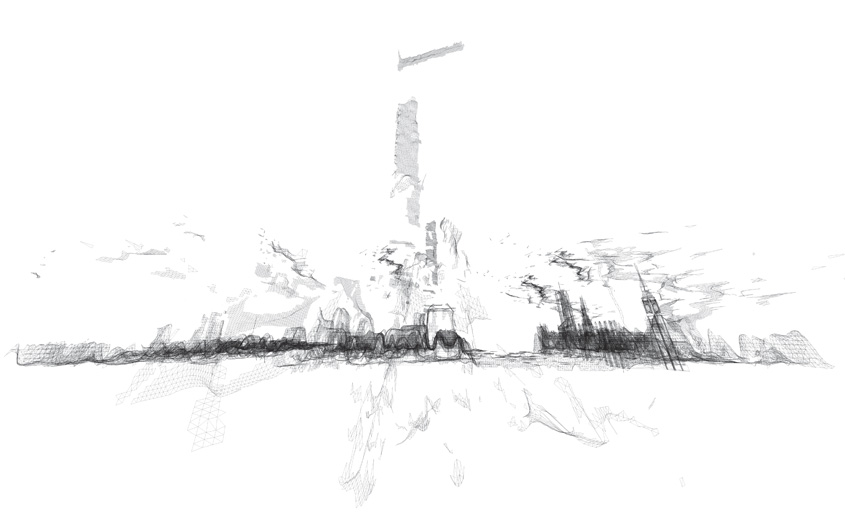
1) Scanning Mist. Shaw and Trossell “thought it might be interesting to see if the scanner could detect smoke and mist. It did and here are the remarkable results!

[Images: From Scanning the Mist by ScanLAB].

In a way, I’m reminded of photographs by Alexey Titarenko.

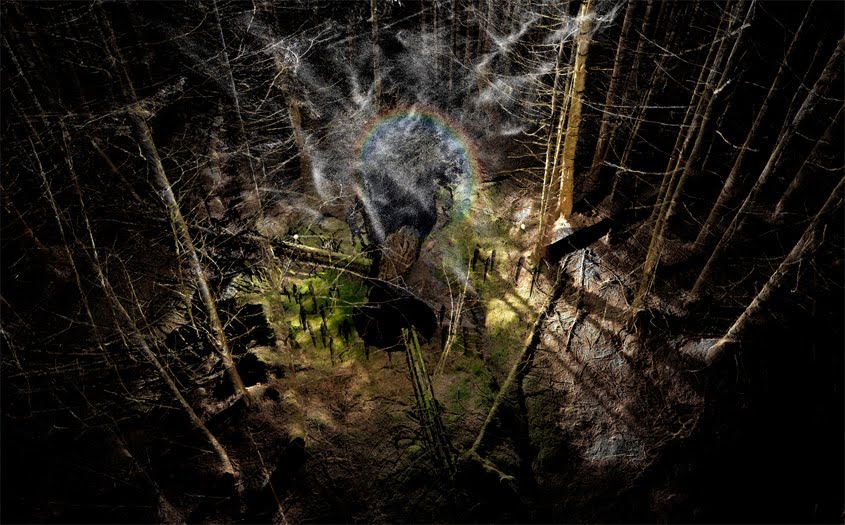
2) Scanning an Artificial Weather System. For this project, ScanLAB wanted to “draw attention to the magical properties of weather events.” They thus installed a network of what they call “pressure vessels linked to an array of humidity tanks” in the middle of England’s Kielder Forest.

[Image: From Slow Becoming Delightful by ScanLAB].

These “humidity tanks” then, at certain atmospherically appropriate moments, dispersed a fine mist, deploying an artificial cloud or fog bank into the woods.

[Image: From Slow Becoming Delightful by ScanLAB].

Then, of course, Shaw and Trossell laser-scanned it.

3) Subverting Urban-Scanning Projects through “Stealth Objects.” The architectural potential of this final project blows me away. Basically, Shaw and Trossell have been looking at “the subversion of city scale 3D scanning in London.” As they explain it, “the project uses hypothetical devices which are installed across the city and which edit the way the city is scanned and recorded.”

Tools include the “stealth drill” which dissolves scan data in the surrounding area, creating voids and new openings in the scanned urban landscape, and “boundary miscommunication devices” which offset, relocate and invent spatial data such as paths, boundaries, tunnels and walls.

The spatial and counter-spatial possibilities of this are extraordinary. Imagine whole new classes of architectural ornament (ornament as digital camouflage that scans in precise and strange ways), entirely new kinds of building facades (augmented reality meets LiDAR), and, of course, the creation of a kind of shadow-architecture, invisible to the naked eye, that only pops up on laser scanners at various points around the city.

[Images: From Subverting the LiDAR Landscape by ScanLAB].

ScanLAB refers to this as “the deployment of flash architecture”—flash streets, flash statues, flash doors, instancing gates—like something from a short story by China Miéville. The narrative and/or cinematic possibilities of these “stealth objects” are seemingly limitless, let alone their architectural or ornamental use.

Imagine stealth statuary dotting the streetscape, for instance, or other anomalous spatial entities that become an accepted part of the urban fabric. They exist only as representational effects on the technologies through which we view the landscape—but they eventually become landmarks, nonetheless.

For now, Shaw and Trossell explain that they are experimenting with “speculative LiDAR blooms, blockages, holes and drains. These are the result of strategically deployed devices which offset, copy, paste, erase and tangle LiDAR data around them.”

[Images: From Subverting the LiDAR Landscape by ScanLAB].

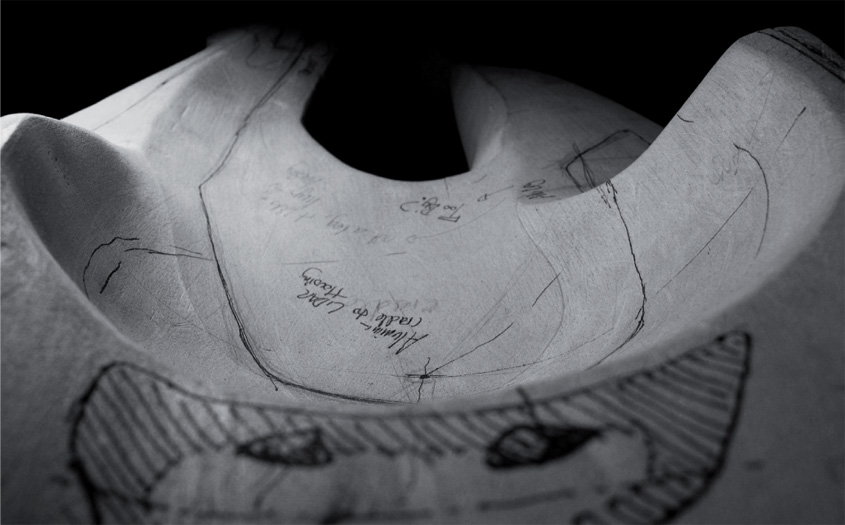
Here is one such “stealth object,” pictured below, designed to be “undetected” by laser-scanning equipment.

Of course, it is not hard to imagine the military being interested in this research, creating stealth body armor, stealth ground vehicles, even stealth forward-operating bases, all of which would be geometrically invisible to radar and/or scanning equipment.

In fact, one could easily imagine a kind of weapon with no moving parts, consisting entirely of radar- and LiDAR-jamming geometries; you would thus simply plant this thing, like some sort of medieval totem pole, in the streets of Mogadishu—or ring hundreds of them in a necklace around Washington D.C.—thus precluding enemy attempts to visualize your movements.

[Images: A hypothetical “stealth object,” resistant to laser-scanning, by ScanLAB].

Briefly, ScanLAB’s “stealth object” reminds me of an idea bandied about by the U.S. Department of Energy, suggesting that future nuclear-waste entombment sites should be liberally peppered with misleading “radar reflectors” buried in the surface of the earth.

The D.O.E.’s “trihedral” objects would produce “distinctive anomalous magnetic and radar-reflective signatures” for anyone using ground-scanning equipment above. In other words, they would create deliberate false clues, leading potential future excavators to think that they were digging in the wrong place. They would “subvert” the scanning process.

In any case, read more at ScanLAB’s website.

Earthquake Sounds, Tsunami Rocks, Future Trenches

[Image: Photo by Ko Sasaki, courtesy of the New York Times].

1) “This webpage contains earthquake ‘sounds’ created from seismic recordings around the world generated by the 2011/03/11 Mw9.0 Tohoku, Japan earthquake. They provide a unique way for us to listen to the vibration of the Earth that is otherwise inaudible to us, and to decipher the complicated earthquake physics and triggering processes.”

2) “The stone tablet has stood on this forested hillside since before they were born, but the villagers have faithfully obeyed the stark warning carved on its weathered face: ‘Do not build your homes below this point!’ Residents say this injunction from their ancestors kept their tiny village of 11 households safely out of reach of the deadly tsunami last month that wiped out hundreds of miles of Japanese coast and rose to record heights near here. The waves stopped just 300 feet below the stone… Hundreds of so-called tsunami stones, some more than six centuries old, dot the coast of Japan, silent testimony to the past destruction that these lethal waves have frequented upon this earthquake-prone nation.”

3) “Europe may be starting to dive under Africa, creating a new subduction zone and potentially increasing the earthquake risk in the western Mediterranean Sea… For millions of years the African plate, which contains part of the Mediterranean seabed, has been moving northward toward the Eurasian Plate at a rate of about an inch every 2.5 years (a centimeter a year). Now studies of recent earthquakes in the region indicate that a new subduction zone may be forming where the plates are colliding along the coasts of Algeria and northern Sicily… [M]ost established subduction zones are marked by giant undersea trenches. A similar trench should eventually form in the Mediterranean—but certainly not overnight.”

Architectural Ecology

It’s not difficult to imagine finding unexpected affinities between a specific animal species and certain types of architectural ornament, whether it’s pigeons nesting on the tops of ruined columns in Rome, bats colonizing the attic windows of single-family Victorian homes, or bees, moths, wasps, and other bugs breeding in the cracks of terracotta egg-and-dart.

[Image: A bird in Rome].

However, it would be interesting to see if any of the following scenarios might be true:

1) Ornamental details from a particular phase of, say, the Baroque—or the Gothic, or Dravidian temple design—are found to attract a specific species of bird, whose size, nesting needs, etc., correspond exactly to the proportional details of this decorative style. Because of the foods those birds eat, however, and, thus, what seeds they later spread around their flight paths, their guano results in a very specific kind of forest growing around each building (or its ruins). The buildings catalyze their own ecological context, in other words, ringed by forests they indirectly helped create.

2) A particular type of early modern warehouse or other such industrial structure is found to house a specific species of bird, perhaps because only its frame can fit through gaps in the brickwork, precluding colonization by other species. Thus, while all other bird species in the local ecosystem have gone extinct—due to habitat loss, food-web collapse, or whatever—these birds, regally ensconced inside their protective warehouses, manage to survive. They are thus saved by 19th-century architecture—perhaps even by one architecture office’s work. A species that only lives inside buildings by Anthony George Lyster.

3) When the type of stone used to build a region’s churches erodes, weathering away to nothing, its remnant minerals fertilize a specific type of weed or small flowering plant, one that would otherwise eventually have died off. Thus, whenever you see a particular flower, you can deduce from its presence that a church built during this particular phase of architectural history once stood there. The flowers are archaeological indicators, we might say: botanical traces of architectural history.

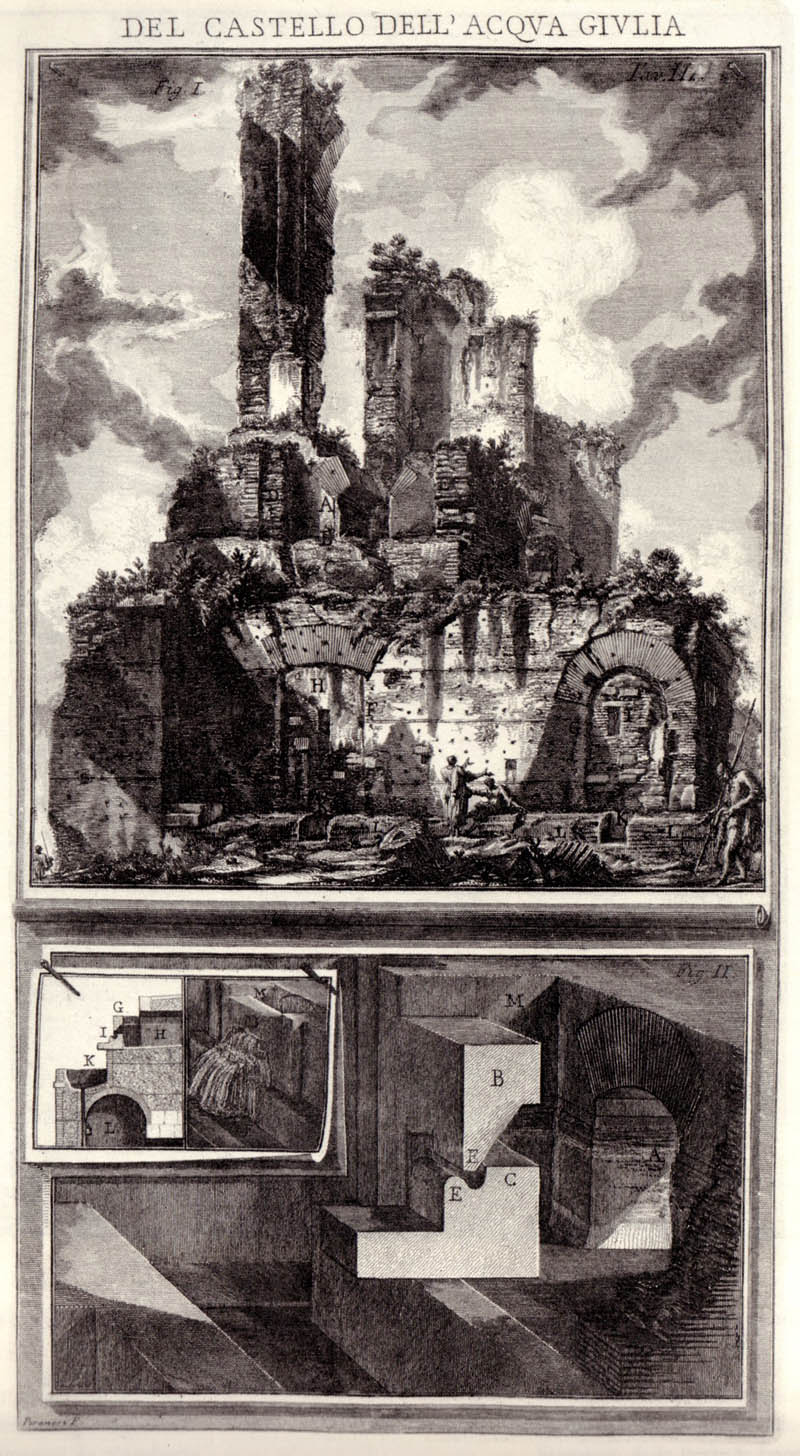
[Image: Del Castello dell’Acqua Giulia by Piranesi].

In all three cases, these buildings’ unanticipated side-effects would ripple outward to influence the evolutionary development of other, future species, whose ecological origins are thus at least partially predicated on the existence of a specific phase of, for example, Baroque architecture or 19th-century warehouse design. So when those architects were designing their buildings, they were also indirectly designing future species.

Fiction and the city

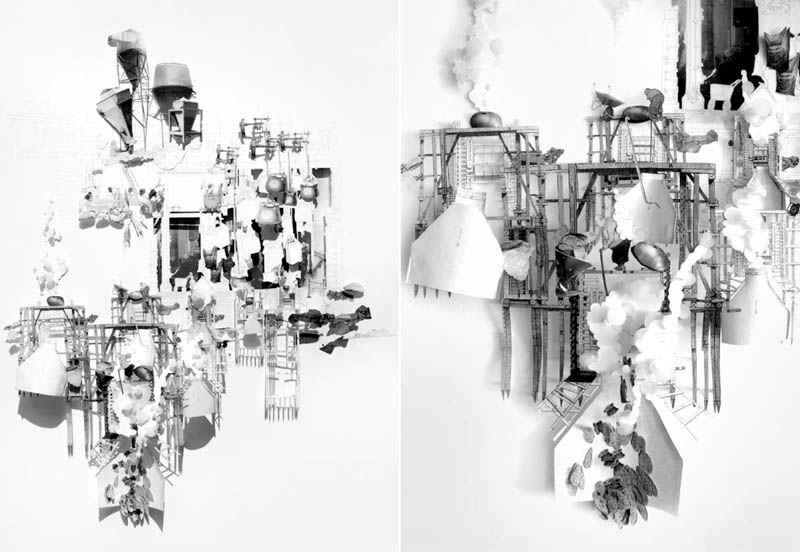
[Images: From “Dream Isle” by CJ Lim/Studio 8 Architects with Thomas Hillier, Maxwell Mutanda, Rachel Guo, and Ed Liu, from Short Stories: London in Two-and-a-Half Dimensions].

I’ve just received a copy of the forthcoming book Short Stories: London in Two-and-a-Half Dimensions by CJ Lim and Ed Liu, and I thought I’d include a few glimpses of it here.

[Image: From “Carousel” by CJ Lim/Studio 8 Architects with Maxwell Mutanda, from Short Stories].
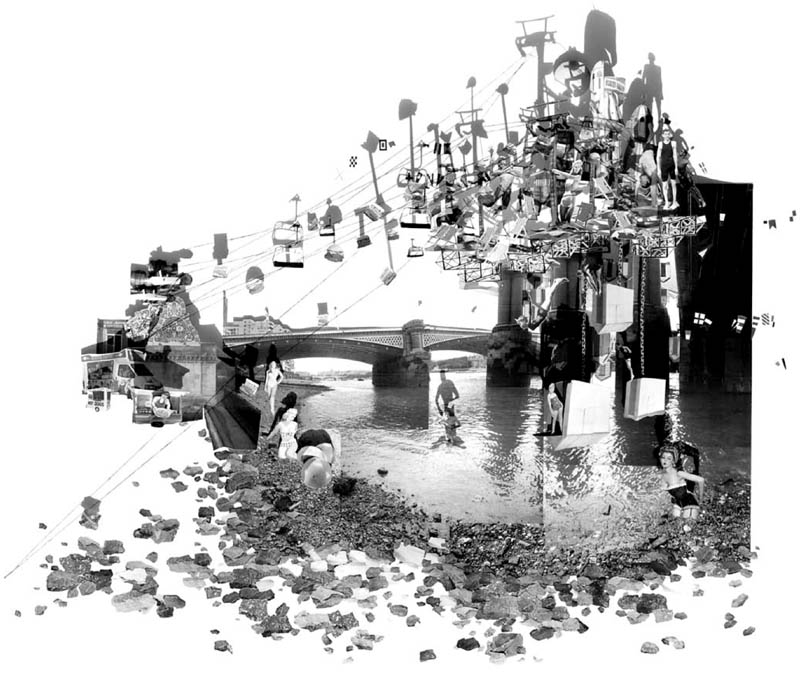
The book is ostensibly a collection of spatial short stories in which “unexpected environments and places transform into active protagonists.” The stories are “laced with a healthy dose of myth and locational specificity,” as the authors write in the book’s preface.

They continue:

The short stories of this book’s title are set in different time periods of London, intentionally locating themselves in the liminal territory between fiction and architecture to provoke an engagement between readers and their two-dimensional counterparts occupying the depicted city. The stories are neither illustrated texts nor captioned images; the collages represent a network of spatial relationships, and the text, which splices genre such as science fiction, magical realism and the fairy tale, a thread that links some of the nodes of that network together.

In the two following images, for instance, produced by the authors in collaboration with Maxwell Mutanda and Tomasz Marchewka, we see a fictive bridge connecting what are described as the warring tribes of north and south London. There are 214 bridges over the Thames, this story goes, but every year a new connective filament appears: a 215th bridge.

This bridge, “in contrast to its predecessors, is a transitory connection joining the two halves of the metropolis only between the summer months of June and September, during which a common amnesty is held.”

[Images: From “Discontinuous Cities” by CJ Lim/Studio 8 Architects with Maxwell Mutanda and Tomasz Marchewka, from Short Stories].
In other stories, Alice in Wonderland collides with the Playboy Mansion, which arrives for one night, and one night only, in the parks of London, where “underground chambers, replicating the hole through which Alice follows the white rabbit, had been scattered through the garden, capped with circular lenses and mirrors,” optically augmenting this hedonistic underworld.

A “roving telescopic contraption” roams the streets; a leather suitcase pops open and “the habitable spaces within extend and unfold each morning to provide a stage for grooming, relaxation and formal dining”; a landscape illuminated by falling stars is discovered to be watered from below by “networks of metal piping” that “mirrored the arrangement of flowers above.”

Elsewhere, a baker works himself to exhaustion “every day without fail,” perfuming the city with fresh bread from within his “synaesthetic pleasure dome,” its “glorious landscape of smells shifting from fermenting acidity to caramelizing sweetness, a riot of auburn and amber reflecting the fires of the bakery and street lamps outside, a symphony of hissing steam and the pummeling of dough.”

The two images, below, show “nebulous clouds of steam,” like an artificial weather front—its “topiaries of water vapour will become indistinguishable from clouds,” we read—being produced in the baker’s garden.

[Images: From “The Baker’s Garden” by CJ Lim/Studio 8 Architects with Safia Qureshi, from Short Stories].
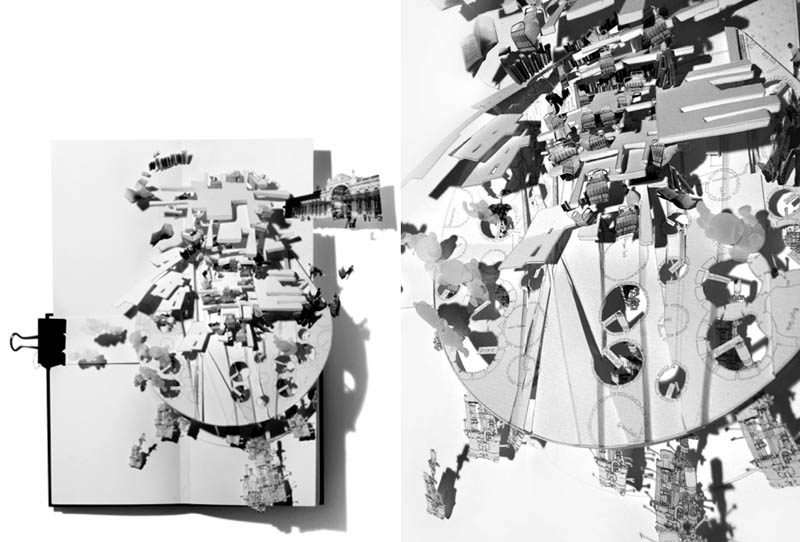
There are dragons and summer solstices and mechanical animals roving the streets; butchers’ towers, police on horseback, and a fictional interview with the director of something called the New Battersea Centre for Dogs, who explains how she managed to transform vast circular gasometers into greyhound racing parks.

As novelist China Miéville explained to BLDGBLOG in an interview published here last month, London is a city peculiarly well-suited for these sorts of literary and spatial phantasmagoria: “For various reasons, some cities refract, through aesthetics and through art, with a particular kind of flamboyancy. For whatever reason, London is one of them. I don’t mean to detract from all the other cities in the world that have their own sort of Gnosticism, but it is definitely the case that London has worked particularly well for this.”

[Images: From “The Nocturnal Tower” by CJ Lim/Studio 8 Architects with Barry Cho, from Short Stories].
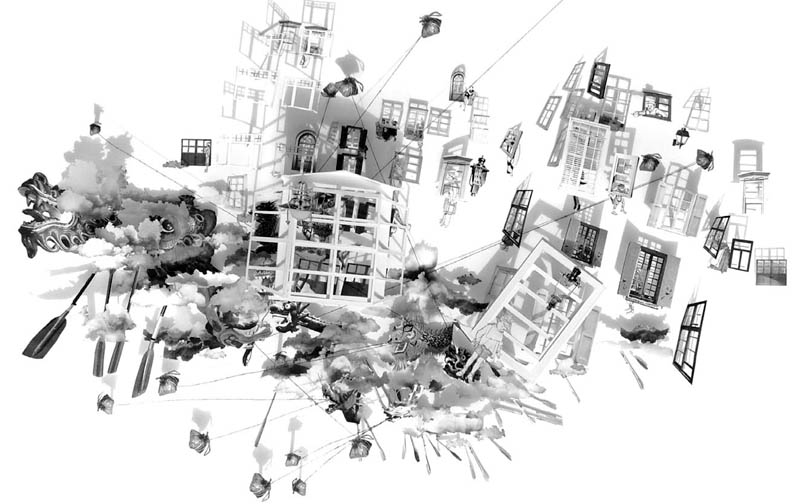
In Short Stories—where myths are told through photographs of pop-out paper figures and propped-open books—London becomes a city architects will always have the freedom to re-dream, and architecture itself becomes a way to undo the spatial straightjackets we find ourselves within.

But does all this mean that the architect is thus politically neutered, reduced to the role of court jester, telling stories of impossible urban boroughs while the real city takes shape, a graph of nothing but the financial needs of absentee developers, hypnotized by fairy tales of a metropolis that can never be built?

[Images: From “The Celestial River” by CJ Lim/Studio 8 Architects with Maxwell Mutanda and Sarah Custance, from Short Stories].

Not at all: architects telling stories with and through complex spatial representations—rather than merely supplying construction documents—brings them into contact with all the arts and sciences that have always and already used the built environment as a framework for larger, abstract ideas. Architectural mythology doesn’t cede anyone’s right—or political ability—to change the city, any more than cinema, games, music, poetry, or narrative fiction might do, despite fundamentalist claims that these operate as nothing but middle-class distractions; in all cases, these and other speculative entertainments are often precisely the reason why new visions of human community, spatial justice, and cathartic well-being arise in the first place.

Of course, spatial tales will inspire some people simply to daydream, but that hardly sabotages architecture’s undeniable power to push others to pursue, with great fervor and enthusiasm, the means of seeing such strange and hallucinatory sights someday come true.

Science fiction is no substitute for science itself, but it is a valuable, if not conceptually indispensable, tool for generating, discussing, and communicating often radical ideas.

And the same is true for architecture’s relationship with architectural fiction: thankfully, the latter will not replace the former—but, again, that’s not its point.

The point of “combining place and fiction,” as Short Stories describes it, is not so that we can sit around infantilizing one another with fairy tales, treating the world as empty spectacle, but to reveal, through projects of great imaginative power, that another world is possible, and architects have a unique ability to chaperone this future earth into existence.

Canal Street Cross-Section

[Image: From Canal Street Cross-Section by Alan Wolfson].

Alan Wolfson’s Canal Street Cross-Section, a miniature depiction of the New York street and subway station, will be on display this summer as part of the forthcoming group exhibition, Otherworldly: Optical Delusions and Small Realities, at the Museum of Arts & Design in New York, starting 7 June.

[Images: From Canal Street Cross-Section by Alan Wolfson].

Wolfson explains that he “wanted to build a piece that resembled a core sample of a city street. As though you took a street, dug it up, and lifted it straight off the earth.”

The resulting urban core sample has the look of a toy oven or vending machine—as if, in the latter case, we could someday just a few quarters into a streetside machine and walk away holding complete miniature rooms, intact down to their ads and posters, extruded from some kind of self-replicating master-model.

[Image: From Canal Street Cross-Section by Alan Wolfson].

“The problem,” as he explains it, “was to make all that architecture work together and make sense visually. I was able to do that by having windows on the sides of the piece to accommodate the cross views. I gave the subway platform a sense of depth by using a carefully placed mirror at the far end. As with almost all of my projects, the sight lines were critical.” The piece, we might say, required a kind of Piranesian optical correction so that all its cross-angles and counterviews could be spatially comprehensible.

You can see many, many more photographs of Canal Street Cross-Section over on Wolfson’s website, as well as dozens of other, often quite incredible “miniature urban sculptures,” as the artist describes them.

(Spotted via Thomas Pollman and Joe Alterio; earlier on BLDGBLOG: Romecore).

Time, Photography, and Spatial Devices

[Image: From the “Bird Automata Research Test Track” by Nat Chard].

Fabricate is underway over in London, wrapping up in only a few hours (read a bit more about it here).

One of the conference’s many speakers is Nat Chard, from the University of Manitoba, who recently got in touch with some fantastic project images, showing mechanisms and devices of various functions and scales.

[Images: From the “Bird Automata Research Test Track” by Nat Chard].

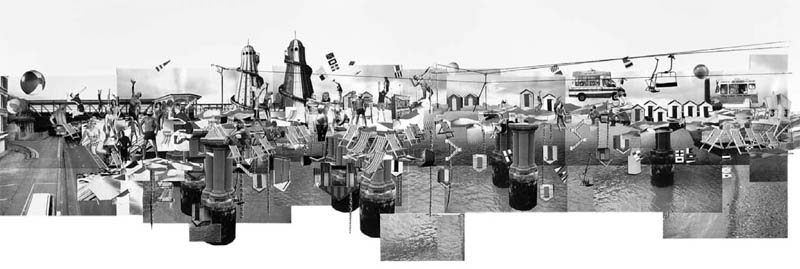
The first project seen here is the “Bird Automata Research Test Track.” It’s a spatial condensation and narrative reenactment of early attempts to photograph the anatomical movements associated with bird flight.

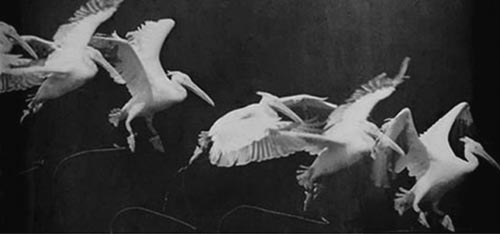
The set-up is a reference to the work of early artist-scientists such as Étienne-Jules Marey and Eadweard Muybridge, who sought to develop a technical means for analyzing physiological activity as a series of discrete, individual moments—or bodily freeze frames, if you will—using chronophotography.

[Image: A chronophotograph by Étienne-Jules Marey].

As Jussi Parikka describes this in his recent book Insect Media, for late 19th-century and early 20th-century scientists, animal life represented “a microcosmos of new movements, actions, and perceptions”—it was seen as “something akin to a foreign planet of perceptions waiting to be excavated and reproduced.”

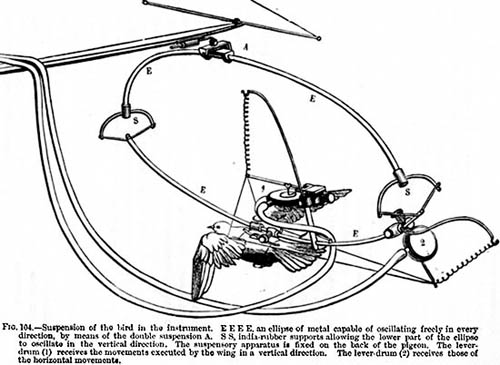
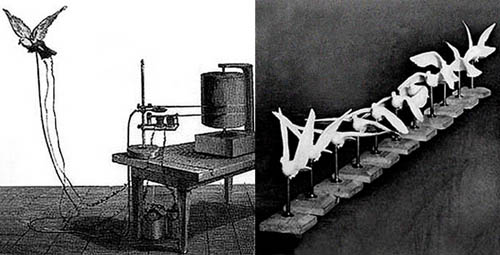
Whole new branches of technology were therefore developed in order to record and study how these unfamiliar anatomies interacted with the surrounding environment.

[Image: The spatial apparatus behind bird chronophotography].
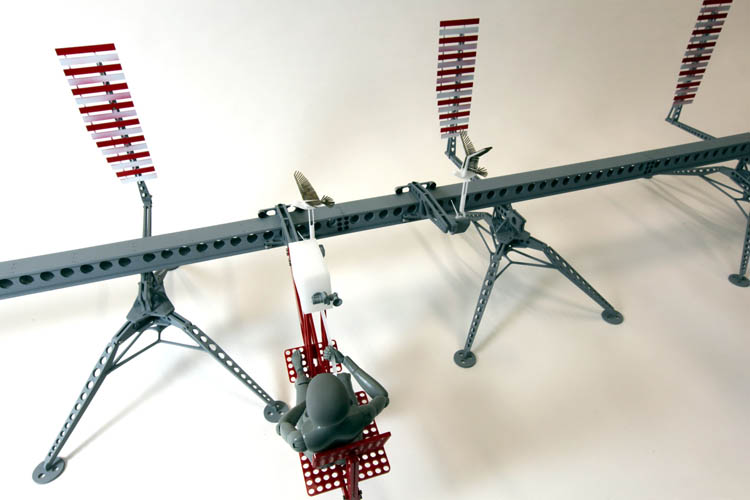
Chard’s bird track is thus an exploration of “representational stop animation… witnessed by researchers from two camera positions.” But the birds are not natural, living creatures; they are automata, machines: “A researcher tracks one of the birds in elevation, the other camera is sited at the end of the track watching the approaching birds. There is a stair cantilevered off the start of the track to allow access to set up the automata for a flight.”

[Images: From the “Bird Automata Research Test Track” by Nat Chard].

The spatial implications of chronophotography—which visually shatters the passage of time into a series of discrete moments extracted from an event-sequence of otherwise unfixed length and duration—leads to a reference, in a text on Chard’s website, to the fact that criminologists, physicists, and even paranormal investigators all also began to use “the emerging potential of photography to further their research.” In the process, those researchers “developed new sorts of architecture particular to the demands and opportunities of the medium and the way they were using [them]. There are many research institutions that display the emergence of a new architecture with very little typological precedent.”

I might refer to this instead not as architecture, though, but as spatial equipment for the measurable demarcation of fixed events. Or, if it is architecture, it is architecture as a piece of gear—a device, an instrument—that lets you measure the very thing it simultaneously helps set into motion.

[Image: From the “Bird Automata Research Test Track” by Nat Chard].

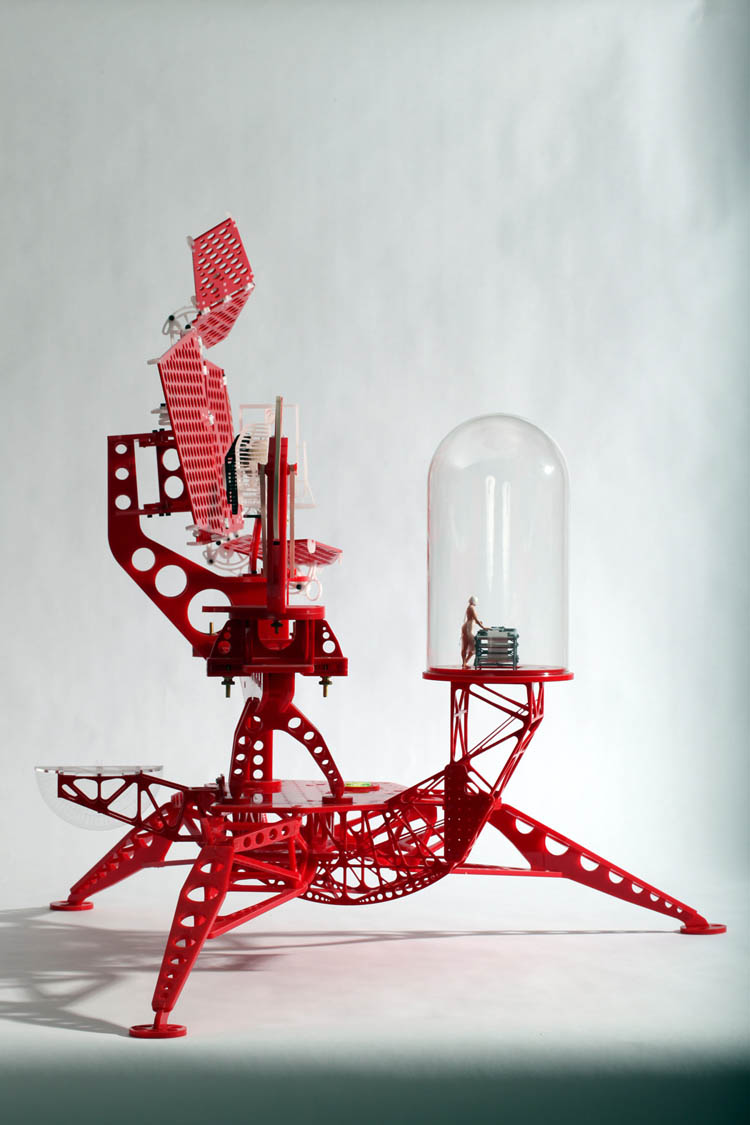
In any case, these ideas also animate Chard’s other, ongoing work: designing “variable picture plane drawing instruments” that graphically record spatial events.

[Image: From a series of spatial drawing instruments by Nat Chard].

They are optical devices that seem to flicker in and out of phase with themselves—little stage-sets that whir, self-camouflage, and take photos of their own future repositions and alterations.

Here, where we see that the equipment is actually photographing itself, I’m reminded of Edward Gordon Craig, a stage-set designer (and the son of an architect), whose “architectonic scenery,” as M. Christine Boyer describes it in The City of Collective Memory, turned the architectural backdrops themselves into the only action an audience was meant to watch, even proposing the elimination of actors altogether.

Craig “proposed that a stage in which walls and shapes rose up and opened out, unfolded or retreated in endless motion could become a performance without any actors,” Boyer writes. “The stage thus became a device to receive the play of light rhythmically, creating an endless variety of mobile cubic shapes and varying spaces. Deep wells, stairs, open spaces, platforms, or partitions created a stage of complete mobility, which Craig believed appealed to the imagination.”

The fascinating thing here is the idea of “a performance without any actors”—it would be pure space, pure architecture, pure equipment, pure device.

You’d simply sit in the dark and watch mechanized stage sets endlessly self-transforming.

[Images: From a series of spatial drawing instruments by Nat Chard].

Chard sent along parts of a still in-process essay that will soon be published in an issue of AD, edited by architect Bob Sheil, of sixteen*(makers), whose “probe field” project was featured on BLDGBLOG back in December.

[Image: From a series of spatial drawing instruments by Nat Chard].

Chard’s essay throws a variety of ideas into the mix, including the mystical (and unfortunately nonexistent) technology of “thoughtography,” i.e. the direct translation of thoughts into photographic images; the myth of the “genius sketch,” an image produced by someone (or, as his work intriguingly suggests, something) uniquely qualified and technically skilled enough to pull off instantaneously perfect acts of visual representation; and the geometric difficulties of representing 3D urban space on 2D surfaces, specifically looking at back at the history of drawing and surveying equipment, with references to the trigonometry of modern aerial bombers and Renaissance artillerymen, both of whom relied upon precise spatial calculations in order to map the targets that they would then set about trying to destroy.

At the heart of all these examples is the trick—the magic, one might say—of spatial representation: how to distill, translate, carry across, or otherwise re-enliven something from one field or context into another.

Chard’s devices are spatial equipment that document the very places they also frame and help define.

[Image: From a series of spatial drawing instruments by Nat Chard].
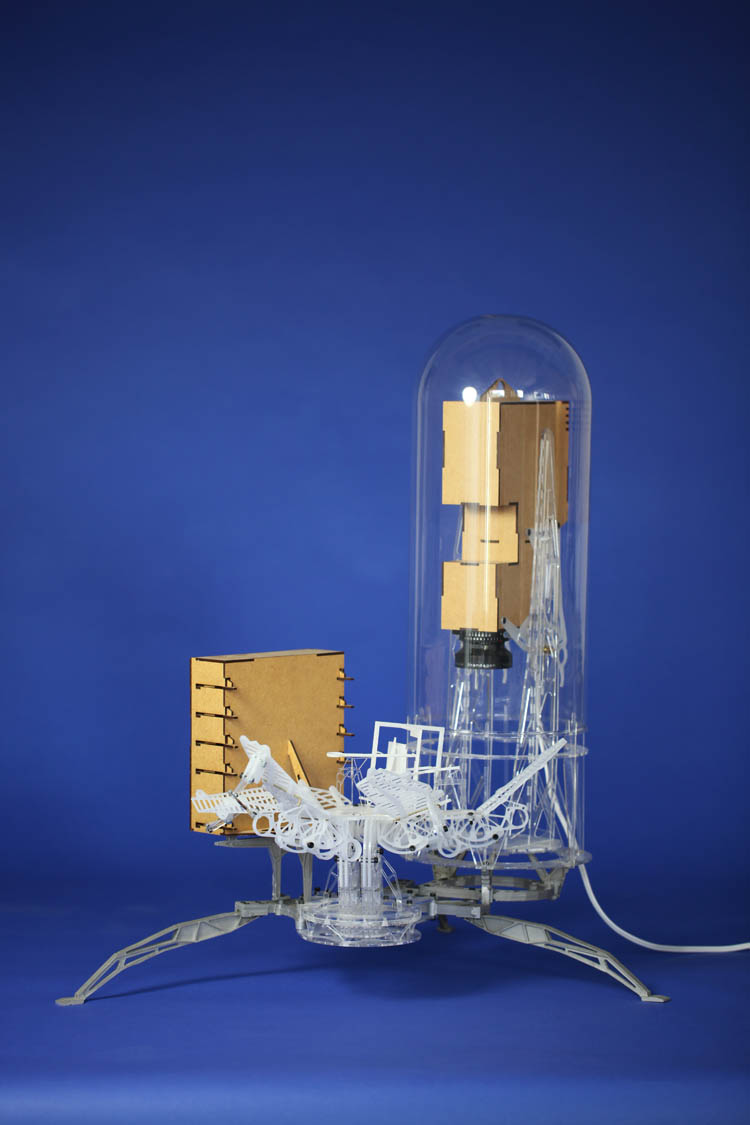
Chard’s machines are surprisingly playful—indeed, almost toylike—inhabited by small human figures and seemingly ready for mass-assembly (which would be amazing: imagine a generation of children raised not on Lincoln Logs but on Chard Devices, rewiring kids’ brains through the toys they play with).

[Images: From a series of spatial drawing instruments by Nat Chard].
The issue of AD edited by Bob Sheil, featuring Chard’s essay, should be out at some point in the near future, so keep your eyes peeled for that. In the meantime, I’ve posted some images of Chard’s work to give you a sense of the project’s ongoing directions and research possibilities.

[Images: From a series of spatial drawing instruments by Nat Chard].

Until then, check out Nat Chard’s website for a bit more info, or check out his book Drawing Indeterminate Architecture, Indeterminate Drawings of Architecture (though I should note that I have not yet seen a copy myself).

Water Towers of Ireland

[Image: From Water Towers of Ireland; photograph by James Young].

An exhibition up—possibly for just one more day—over at University College, Dublin, features photos by James Young. For the last 10 months, Young has been assembling a typological study of water towers in Ireland. Young describes it as “part inventory, part photographic essay and part history.”

Of course, Young’s work has presumably been greeted with very many comparisons to the work of Bernd & Hilla Becher.

[Images: From Water Towers of Ireland; photographs by James Young].

Many of the structures are militaristic and even explicitly fortress-like. They are prisons for water.

[Image: From Water Towers of Ireland by James Young].

Others could be mistaken for ornamental menhirs, functionless and inexplicable totems standing patiently in the fog and rain.

[Image: From Water Towers of Ireland by James Young].

I just wanted to post a few of my favorite images here, but then urge you to look through the many other examples over at the Water Towers of Ireland website.

[Images: From Water Towers of Ireland; photos by James Young].

You’ll see, among other things, that many of the more forensic portraits, as seen above, have been twinned with casual, souvenir-like Polaroid shots—such as this one, in Castlemoyle, the very first tower posted on Young’s site.

[Image: From Water Towers of Ireland; photo by James Young].

Perhaps this last one heralds the aborted start of a new branch in architectural history, that of mycological brutalism.

Ground Conditioning

[Image: An abandoned golf course leaves traces in the landscape in northern Los Angeles].

Golf runs in my family, although I don’t seem to have inherited that gene; I was nonetheless interested to read about an air-conditioning network embedded in the ground itself at this year’s Masters Tournament, dehumidifying the course from below.

In an article called the “Weather Underground,” published in the May 2011 issue of Golf Digest, author David Owen describes something called the SubAir system. SubAir was invented in the 1990s by Marsh Benson, Owen explains, a senior grounds manager at August National. The first model consisted of “a stove-size machine,” as Owen describes it, that was “attached to the existing network of drainage pipes beneath the putting surface [where it] was acting like a giant Shop-Vac, hoovering moisture from below.”

A project director at SubAir explains to Owen that “the concept is to supply fresh air into the root zone and help provide a more optimal growing environment for the greens.” Indeed, as SubAir’s website explains:

The SubAir aeration and moisture removal system promotes healthier and stronger playing surfaces through moisture content management, subsurface aeration, and root zone temperature control. As a result, SubAir provides optimum aerobic subsurface growing conditions. SubAir is integrated underground with no impact on the golf course design options.

Further, “Since the SubAir system can be installed on a progressive basis, adding pieces incrementally makes putting together the SubAir puzzle easy and affordable.” This latter turn of phrase explains the company’s tagline: SubAir: Adding Pieces to the Puzzle.

Indeed, I have to assume, considering the system’s incremental expandability, that we will someday see a suburb somewhere—presumably on a golf course—where the SubAir system has been preemptively installed on every private lot, like any other utility, providing an electrically intensive drainage and lawn-management system for the entire neighborhood. Wired with terrestrial HVAC.

[Image: The system goes from suck to blow; images courtesy of SubAir].

At least two things immediately come to mind:

1) The “refrigerated beach” in Dubai that “will have a network of pipes beneath the sand containing a coolant that will absorb heat from the surface.” This self-parodically indulgent mechanism built on the scale of a landscape will ensure, as the Times explains, that “hotel guests can walk comfortably across the sand on scorching days.”

The management of terrain from below by subterranean machine-strata embedded in the earth itself is surely an extravagance whose accepted price of operation does not include its long-term environmental cost; but the vertiginous implications of being managed from below by unseen machinery even compels Owen, writing in Golf Digest, to joke that the world of golf is actually “a Matrix-like simulation created by green-jacketed aliens.” We could call it an encounter with the geological uncanny: an artificial stratigraphy that makes the earth itself into a manufactured object.

On the other hand, this verticalization of grounds-management strategies is no different, I would argue, from the massively horizontal sprawl of flood-control measures in the Netherlands, as but one example, with its Herculean gates, dikes, levees, and depolderized sacrifice zones, a protective network of unseen machines that makes that nation terrestrially possible.

Neither the Dutch water defense line nor SubAir is entirely sound, environmentally speaking; but my larger point is that if we would find ourselves outraged by one (SubAir) for its apparent extravagance, then we should not overlook the invisible systems on which our everyday landscapes already rely—the pumps that keep New York’s subways from flooding, the dams, canals, and levees that make New Orleans and Sacramento inhabitable, the aqueducts that feed Phoenix and Los Angeles, the South-North Water Transfer project, the Great Man-Made River of Libya—when we look for something to critique.

SubAir, in this context, is but one minor symptom of a larger, civilization-wide dependence on what we might call terrestrial life-support systems: machines actively and constantly re-formatting the surface of the planet for often fleeting human needs and desires.

[Image: A path originally meant to follow a now-abandoned golf course in northern Los Angeles].

2) Having said all that, I’m curious if SubAir could actually play a much more ambitious ecological role somewhere, whether that’s in forestry, gardening, brownfield remediation, wetlands management, or even in a partial automation of urban parks.

After all, if SubAir’s “aeration and moisture removal system promotes healthier and stronger [land surfaces] through moisture content management, subsurface aeration, and root zone temperature control,” and if, “as a result, SubAir provides optimum aerobic subsurface growing conditions,” then why not see what this might do for, say, indoor farms, recovering forests, or experimental gardens of a more botanically radical kind?

Imagine, for a minute, a SubAir system powered entirely by renewable energy, aerating, pressurizing, and vacuuming the soil from below in some highly engineered series of fields or enclosed growth chambers, producing the “optimum aerobic subsurface growing conditions” out of which specialty foods, medicines, or biofuels will emerge; what would the moral objection to such a system be, and how would this not simply be but one more device of environmental-conditioning grafted onto an already highly complex bundle of other such networks?

At the very least, I suppose, discovering that an otherwise pristine forest is actually being air-conditioned from below by a geographically extensive, underground air-plumbing network would induce a sense of terrestrial vertigo, as described above; ideally, it would also be working to encourage ecological health and self-repair.

(Thanks to Nick Sowers for pointing me to the Golf Digest article!)

Urban Hypotheticals

[Image: The “Grow House” by Carey Clouse, with the Hypothetical Development Organization].

Tonight in New Orleans, the Hypothetical Development Organization, spearheaded by G.K. Darby, Ellen Susan, and Rob Walker, will celebrate a public launch at the Du Mois Gallery on Freret Street.

Their strategy is to propose and render a series of speculative architectural detours and additions to the city, “dedicated to the recognition and extension of a new form of urban storytelling.” Each project, they explain, is merely a “hypothetical addition to the built environment,” an “absurdly impractical solution”—some of them based on “nonexistent technologies”—to the many problems facing New Orleans today.

[Image: The “Snooze Tower” by John Becker, with the Hypothetical Development Organization].

As the organizers describe it:

Members of this organization begin the narrative process by examining city neighborhoods and commercial districts for compelling structures that appear to have fallen into disuse—“hidden gems” of the built environment. In varying states of repair, these buildings suggest only stories about the past, not the future.

That’s where the Hypothetical Development Corporation comes in:

As a public service, H.D.O. invents a hypothetical future for each selected structure. Unlike a traditional, reality-based developer, however, our organization is not bound by rules relating to commercial potential, practical materials, or physics. In our view, plausibility is a creative dead end. That is to say: We are not trying to fool anybody.

The resulting projects are then printed as posters and displayed in public, at the sites their creators have chosen.

[Image: The “Theater of Escape” by Michael Doyle, with the Hypothetical Development Organization].

It goes without saying that many people will object to the notion of dreaming up deliberately impossible solutions to very real socio-economic problems; indeed, this argument would go, if you’re going to spend so much time coming up with ideas, raising money to print glossy posters, investing in the effort to hang those images up around the city, and then go on to advertise the project online, why not simply create, say, a food bank or a homeless shelter or even a nomadic school? Why not buy a bookmobile and bring mobile libraries to the city’s most under-served parish?

These are valid questions, and any speculative project needs to consider the implications of how it uses its time.

[Image: The “Mobile Cornucopia” by Candy Chang, with the Hypothetical Development Organization].

However, speaking only for myself, I have never believed that speculative work or writing—fiction, broadly speaking, whether it’s architecture fiction or literary fiction—exists in an either/or relationship with social and political activism. We don’t need either speculative writing about architecture, for instance, or politically engaged critical writing about real buildings; we need both. Some people are better at the former than they are at the latter; some are better at the latter than they are at the former. It should never be assumed that someone impassioned by the speculative potential of new ideas is somehow against the existence of soup kitchens or grass roots community groups—or that someone working at or relying upon a soup kitchen, shelter, hostel, or church would not be inspired by whimsical utopias and bizarre ideas.

My point is that urban speculation is not some politically dangerous variant on “the opium of the people,” cruelly hypnotizing people with intellectual spectacle so that they no longer seek to transform their everyday spatial circumstances; speculation, in fact, is often the very reason they seek out—and physically embark upon—urban change in the first place.

In any case, the fact that these projects deliberately amplify the impossible doesn’t bother me. Starting from the miraculous, the marvelous, the utopian, the crazed and working backward from there to fashion a new world is a worthwhile design strategy and it needs to be pursued more often, not less.

Nonetheless, when I first heard about this project, I was afraid that the resulting posters for hypothetical developments might come off not as aspirational signs of the urban fantastic, but more as a kind of taunting—as if a bunch of architects had come along with their posters to show you all the things that your city is not, all the things we wish you could be good enough to be, that we wish you could pull yourself together long enough to become—like a deranged husband taunting his wife with the Sports Illustrated swimsuit issue—but, well, just look at you: you’re all weeds, empty lots, and abandoned buildings, and, even worse, you’re poor. We architects don’t appreciate the ramshackle street you live on or the old five-and-dime where you shop everyday; you’re not science fiction enough for our tastes.

In a sense, this is the aggressive undertone of all real estate development ads. The world you live in right now is not up to scratch, those ads say, and this development only proves your current inadequacy.

But there are many ways in which the Hypothetical Development Organization works to avoid—or at least lessen—this fate, in large part through its selection of sites—genuinely abandoned or destroyed lots around the city—but also through the project’s tone. It is still whimsical, to be sure; but that’s both its strategy and its point.

If an architectural proposal can catalyze local efforts toward remaking the neighborhood—which doesn’t mean clearing empty lots so that Walmart can move in or someone can build million-dollar condos—or if that proposal can simply push residents to re-conceive how they physically engage with their surroundings, then it has successfully revealed, at least in part, the transformative potential of spatial ideas and other urban hypotheticals.

In any case, if you’re in New Orleans tonight, stop by the Du Mois Gallery to learn more; if you’re unable to go, check out the Hypothetical Development Organization‘s website.

Animal Architecture

Animal Architecture, founded in 2009 by Jonathan LaRocca and Ned Dodington, is currently on the hunt for “exciting projects that engage the lives, minds and behaviors of our alternate, sometimes familiar companion species—insects, birds, mammals, fish and microorganisms—each one with unique ways of world-making.”

[Images: The “Bee Station” by Jamie Hutchison].

Animal Architecture thus “invites your critical and unpublished essays and projects to address how architecture can mediate and encourage multiple new ways of species learning and benefiting from each other—or as we say it here: to illustrate cospecies coshaping.”

[Images: The “Bat Billboard” by Chris Woebken and Natalie Jeremijenko].

Designing either with or for nonhuman species can offer, LaRocca and Dodington suggest, “a greater understanding of biotic and ecological relationships [that] can influence design, reshape our cities, and restructure our homes—benefiting the human and non-human animals that interact with and around them.” For instance, “what making friends with a duck can teach us about urban design.”

Such projects can occur across multiple spatial and temporal scales, whether at the level of landscape infrastructure, through such things as wildlife corridors, national parks, and even zoos (for instance, the forthcoming project by TN Plus, described later on in this post), or through much more intimate interventions, such as Jamie Hutchison’s “Bee Station” or the “Animal Estates” project by Fritz Haeg.

[Images: From “Animal Estates” by Fritz Haeg].

On the other hand, of course, there is another, equally fascinating strategy of spatial inhabitation—available to humans and nonhumans alike—and that is is infestation.

From suburban homes taken over by honeybees and wildcats, to the labyrinthine stratigraphies of rats that colonize our cities from below, nonhuman species have their own ways of using—sometimes wildly repurposing—architecture.

Seen in this light, the spatial strategies of the pest-control industry are as much a question of “animal architecture” as the design of underground ant cities or termite mounds.

This final project, below, is, at first glance, a more traditional type of “animal architecture.” This is a recent design by Paris-based landscape architects TN Plus for a zoo in St. Petersburg, Russia.

“Our fabricated urban development,” the designers write, “will evoke Pangaea, the supercontinent described by German meteorologist and astronomer Alfred Wegener.”

[Images: From a design for a zoo in St. Petersburg, Russia, by TN Plus].

Accordingly, the project is a kind of virtual reconstruction of that now-absent supercontinent:

The main idea of the project for the new Saint Petersburg zoo is to reunite in one place pieces of lands which are separated today, but which were once in connection. The project takes symbolic core samples all over the world from various biotopes to assemble them in the Saint Petersburg zoo in the form of an archipelago. Every island of the project must be considered as a sample of a particular zone of a continent.

TN Plus thus hope for the resulting archipelagic complex—which will include its own microclimates and “biozones”—to be “an intriguing, mysterious, attractive, off-kilter strategy at the service of the animals and their well-being, to become the icon of new cultural and scientific life in Saint Petersburg.”

[Image: An archipelagic zoological park in St. Petersburg by TN Plus].

What fascinates me here is the prospect that cross-species interaction can take on a particular spatial form—or series of spatial forms—turning landscape architecture into a kind of biological speech act.

In other words, the ideal zoo could be seen as a kind of landscape cryptography: an immersive, trans-species conversation in which the terrestrial forms, plantlife, and climatological special effects are actually signs, intended for a nonhuman audience, simulating—i.e. actively referring to—otherwise locally absent environments.

The “zoo” thus presents a kind of spatial conversation “between man and animal,” as the designers describe it.

The question, then, is how we can appropriately evaluate the success of such a project. What can be realistically achieved during the resulting encounters “between man and animal,” how can these moments of inter-species communication be most effectively fostered by spatial design, and, again, how do we then measure a particular landscape’s tactical success?

[Images: A future zoo in St. Petersburg by TN Plus].

As I wrote here several years ago, also in reference to a zoological park by TN Plus, it would seem that zoos can be thought of as a kind of spatial hieroglyphics: an elaborate system of reenactments and signs through which humans attempt to communicate with other species.

It’s as if there is a spatial grammar of zoological communication, and it takes shape, here, as landscape architecture.

Zoos, in this way of thinking, can be at least partially subject to rhetorical analysis: do they express what they are intended to communicate, how has this meaning been produced, and how do we measure the success of its reception? Further, what are the risks of miscommunication?

In any case, there are so many directions to go with this discussion of “animal architecture”—theoretical, practical, speculative, critical, and otherwise—that I can’t wait to see what sort of things are submitted to the Animal Architecture project. Register by 15 May 2011 to submit your own essays and designs.

Further information—including the names of the editorial jury, which features Sanford Kwinter, Joyce Hwang, Neeraj Bhatia from InfraNet Lab, myself, and many others—can be found on the Animal Architecture website.