Residual Landscapes

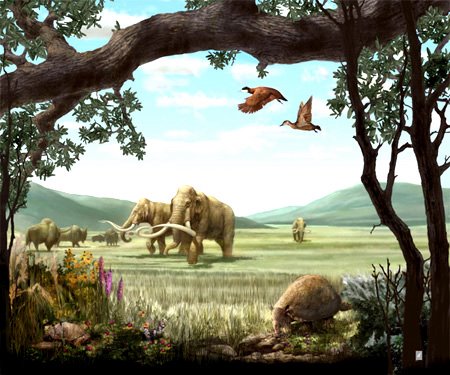
Sergey Zimov – “a hardy Russian biologist” – “is trying to recreate a landscape not seen on Earth for nearly 10,000 years, since the end of the last ice age – complete, if possible, with woolly mammoths. The project is called Pleistocene Park, but it’s not a tourist attraction,” New Scientist says.
“Zimov wants to answer some fundamental questions about the impact early modern humans had on the environment.”


[Image: New Scientist].

“During the late Pleistocene, north-eastern Siberia was part of the world’s largest ecosystem, stretching from western Europe across the Bering Strait to Canada and from the Arctic to northern China – half the land area of the planet.”
It was densely populated with “huge herds of herbivores – mammoths, bison, elk, woolly rhinos, yaks, saiga, horses, reindeer, musk oxen and moose” – till 10,000 years ago, when “the large animals died out… and the grassland that supported them also disappeared, replaced by mossy forests and tundra.”
So what happened? Zimov blames the arrival of human beings (I’m imagining a century or two of intensely aromatic, Conan the Barbarian-style outdoor barbecues), and, to prove this, he’s organized the Pleistocene Park.
The park will sit “in 160 square kilometres of meadows, forests and willow shrublands in the Kolyma river basin,” a “remote corner of Siberia, once a final destination for exiled Soviet dissidents.”
It may even be re-populated with cloned mammoths; then the ecological experiment will begin.


[Image: Spotted at Pruned].

Upon further reflection, I’m thinking at least four things: 1) it seems a very odd coincidence that the exact same thing is being proposed right now for central North America; 2) why only the Pleistocene? let’s rebuild the Hadean era, or bring back some Devonian seas; 3) why does it have to be an ecosystem? why can’t we rebuild the architectural world of, say, the Holy Roman Empire? or pre-war Europe? cool roads and little chapels everywhere, tiny villages – the Minoan labyrinth!; and 4) if a forward-thinking restaurant did this, they’d have the most amazing supply of ingredients in the world.

[For other preserved landscapes, see BLDGBLOG’s Silicon Gardens].

art/space

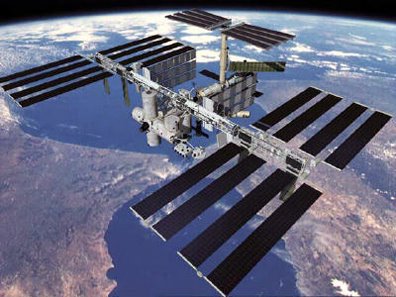
The International Space Station shouldn’t be used only for scientific experiments, proposes the London-based group Arts Catalyst, which is currently studying ways to turn the ISS into an orbiting cultural institution.
That’s right: an art gallery in space.


“Attaching objects to the exterior of the ISS or launching things into orbit from the station are among the more intriguing concepts that have been proposed,” writes Seed Magazine. More interesting, at least from my standpoint, is the idea of “creating artificial auroras in the Earth’s atmosphere” (something already discussed on BLDGBLOG), or – and I love this, too – “sending artificial meteors into reentry burn.”
Yet others have proposed “using the ISS as a site in which to explore acoustics.” Anechoic Bach.


In addition to so-called “artistic experiments in weightlessness,” Seed describes the cinematic possibilities of anti-gravitation, including “a film, shot during parabolic flight, that observes the movements of Chinese chiming spheres in glycerine, oil and water as they move through the intense gravitational fields attained during the flight.” (You can actually watch that film here).
In any case, you can read a bit more about all this in The Guardian; while I sit here dreaming of ways to get BLDGBLOG a few weeks’ residency aboard the floating gallery. Writers in space. Sponsored by Honda.
Or new utopian cities built from sticks, hovering anti-gravitationally above your desktop. Post-terrestrial structures. Harvard’s got some cash – surely they could send their best architecture grads into orbit for a while…

Roof-farming southeast London


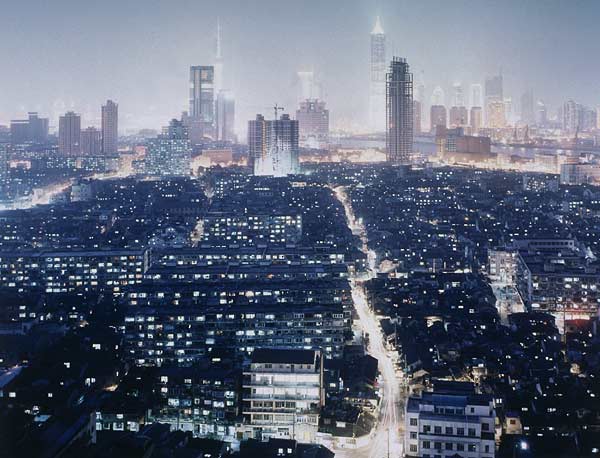
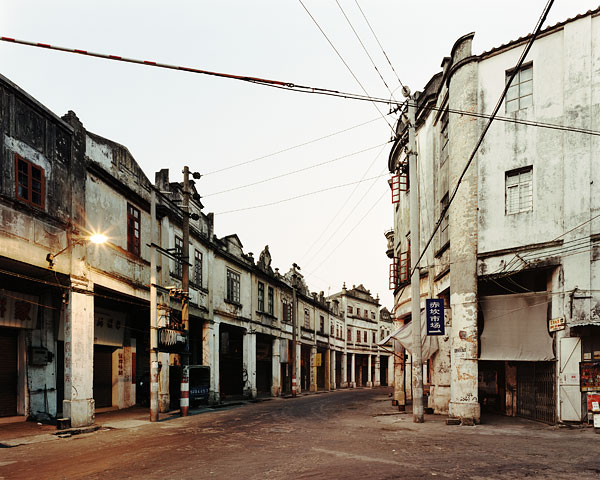
Swiss Cheese City, by London-based architecture firm Agents of Change (AOC), proposes that “vacancy in cities” is really “a starting point for a new urban form.” Accordingly, the project hopes to “generate new possibilities from holes in the built fabric,” such as “Special Cultivation Zones (SCZs).”
Special Cultivation Zones are an urban land-bank, defined by “temporary boundaries within which land can’t be bought or sold, and emerging skills, social networks and locally-grown produce are cultivated in the ‘vacant’ city fabric.”
(For more on urban farming, see Pruned or Inhabitat).
Then there’s AOC’s Croydon Roof Divercity project –


– which radically rethinks the landscape of Croydon’s roofs (and sounds really, really fun): “Taking the flat roofs of Croydon as our testbed,” they write, “we propose a new roofscape for the city – beaches, ice rinks, golf courses, allotments, skateboard parks and pasture refresh Croydon’s tired concrete.” How about a shooting range? (For more on green roofs, see Inhabitat).
After all, AOC asks, how could London be adapted “to an agricultural logic – the logic of rotation, seasons, ground and growth?”
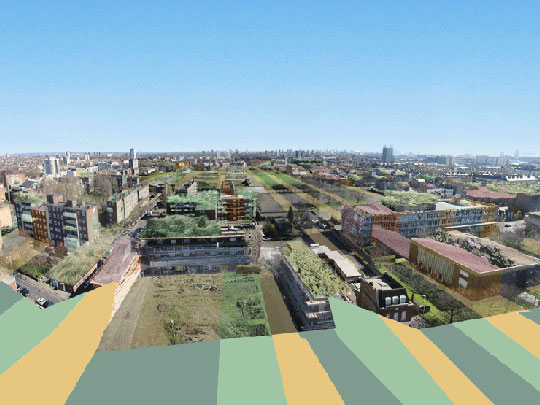
Thus, with a vision straight out of sci-fi, they describe Hackney New Garden City, complete with an “Agricultural Action Zone (AAZ).” This would include “a self-sufficient ecology of grass roads, localised rainwater collection, organic solar films and biological compost systems… liberating the ground’s agricultural potential.”


[Images: Hackney New Garden City, before and after].

For another place you could put those ideas to work, see Philadelphia’s Urban Voids; then check out these photos of “arbortecture” – or, plants growing out of buildings. (Via Pruned).

Architecture 2030

“Unknowingly, the architecture and building community is responsible for almost half of all U.S. greenhouse gas emissions annually,” we read at Ed Mazria’s new Architecture 2030. “Globally the percentage is even greater.”


In a mind-blowing-if-true statistic, by 2035 “three quarters of the built environment in the U.S. will be either new or renovated. (!) This transformation over the next 30 years represents a historic opportunity for the architecture and building community to reverse the most significant crisis of modern time, climate change.”
Ed Mazria’s interest in sustainability is long-standing; you can read more about him at Metropolis.

The hedge-bridge

There was a show in London last summer, organized by RIBA, called Fantasy Architecture: 1500-2036. (You can read a review of it here, with images).
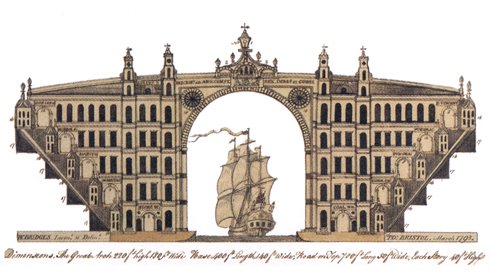
The show included this amazing bridge design, which has been tacked to a bulletin board behind my desk for nearly a year; I finally scanned it.


[Image: A bridge over the River Avon, by “W. Bridges”].

An excellent companion book was produced for the exhibition, making a worthy and stimulating start to the new year –


– yet that initial bridge also reminds me of a post on Pruned, about the unbuildable, speculative architectural designs of Alexander Brodsky and Ilya Utkin, which included this insane kind of bio-architectural hedge-bridge. Houses growing atop houses.


Combining this and the bridge above, however, I’m left wondering if you could grow a bridge out of coral? A whole continent-wide system of Roman aqueducts? Somehow train the coral, or guide its barnacled growth, upward into an arc – then walk over it. Sail ships under it.
Or would that form the first legally-recognized case of landscape abuse? Mistreating your living bridges?
(See Pruned or the nonist for more; then order this book).