Big Softy

Bracket 2 has been announced. This second issue of the annual design almanac seeks “critical articles and unpublished design projects that investigate physical and virtual soft systems, as they pertain to infrastructure, ecologies, landscapes, environments, and networks.”
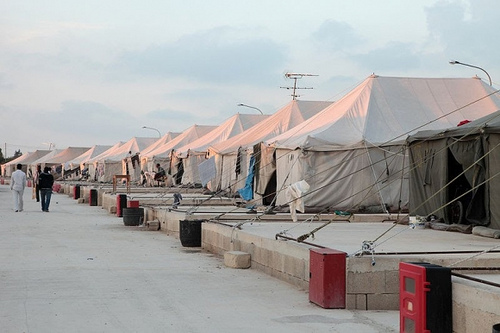
[Image: Fabric urbanism: a “tent city,” via Bracket].

If soft systems are, as the editors maintain, “a counterpoint to permanent, static and hard systems,” then what benefits do they bring, under what circumstances do they function best, and, of course, what do they look like (if they can be seen at all)?

While there is more information on Bracket‘s site, including some historical background on the emergence of soft systems in architectural planning and design, via figures such as Nicholas Negroponte and even Archigram, this issue of the journal is specifically looking for the following:

Bracket 2 seeks to critically position and define soft systems, in order to expand the scope and potential for new spatial networks, and new formats of architecture, urbanization and nature. From soft politics, soft power and soft spaces to fluid territories, software and soft programming, Bracket 2 questions the use and role of responsive, indeterminate, flexible, and immaterial systems in design. Bracket 2 invites designers, architects, theorists, ecologists, scientists, and landscape architects to position and leverage the role of soft systems and recuperate the development of the soft project.

For my own part, I’m increasingly interested in the design and implementation of what might be called soft medical infrastructure—or temporary, sometimes even inflatable, field hospitals and other on-demand medical facilities.
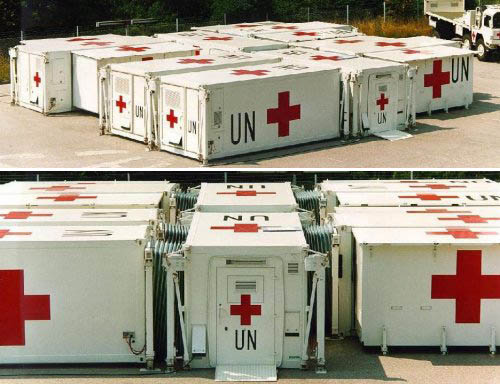
[Image: A “containerized” field hospital by the Red Cross and UN].

From a “modular air-transportable field camp” that has been “tested at the Arctic Circle” to first-responder architecture deployed on the scene of natural disasters, fires, acts of war, and terrorist attacks—and even by way of the somewhat ominous-sounding “systems for peacekeepers” devised by Kärcher Futuretech, down to the level of mobile catering units for use in remote landscapes and even inside warzones—how are architectural and infrastructural networks pushed into new design directions by extreme events?
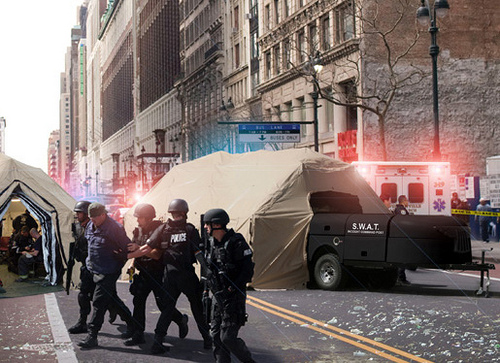
[Image: Deployable Incident Command Post (ICP) by Reeves].

Submissions are due before December 10, 2010, with a Fall 2011 publication date; the resulting book will be designed by Thumb and published by Actar.

Consider picking up a copy of Bracket 1: On Farming, meanwhile, to see how the journal works and what sorts of projects they might be looking for.
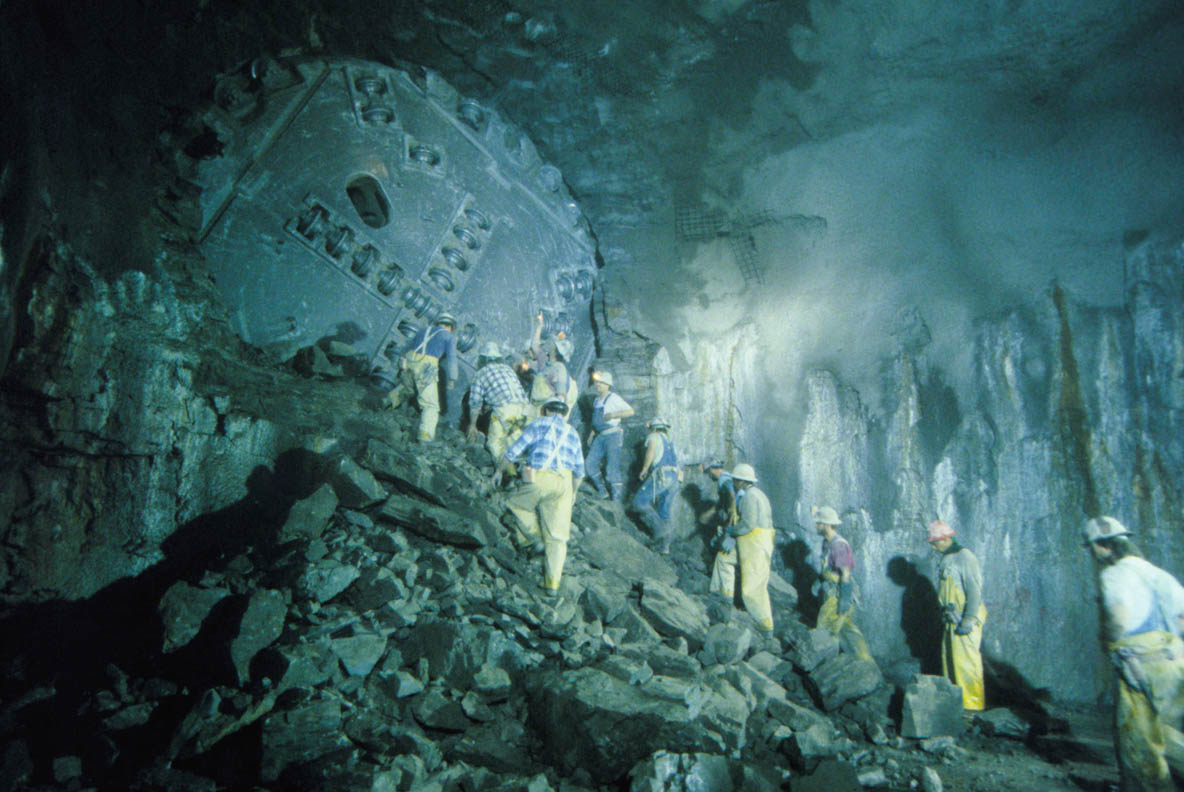
Artificial caverns expanding beneath Chicago

[Image: Tunneling beneath Chicago; view larger!].

Due to Chicago’s ongoing TARP project—its Tunnel And Reservoir Plan—there are now “109.4 miles of tunnels bored beneath the Chicagoland area.” According to Tunnel Business Magazine, this massive network of new subterranean space includes “deep tunnels, drop shafts, near-surface connection and control structures and dewatering pump stations,” all embedded beneath the city. I would love to see Michael Cook sent there as a project photographer.

Until then, the above image shows us TARP’s first phase in action, with a tunneling machine breaking through and expanding the artificial caverns that now resonate below the streets of greater Chicago. TARP’s second phase—the so-called Chicago Underflow Plan—kicked off back in 2008, its work “consisting of [the] mining and construction of several reservoirs,” vast hollows that will occasionally fill with storm runoff and rain, reknitting urban hydrology from below.

(Thanks to Anya Domlesky for the link! Download back issues of Tunnel Business Magazine here).

Space Replaced by Machines

[Image: From Robocop, via Quiet Babylon].

Architecture and technology blogger Tim Maly of Quiet Babylon fame has declared September 2010 Cyborg Month.

In the September 1960 issue of Astronautics magazine, he explains, theoreticians Manfred Clynes and Nathan Kline published a short paper called “Cyborgs and Space.” As Maly points out, “Aside from an early mention in the New York Times, this is the first time the word appears in print”:

September 1960. That’s 50 years ago. To commemorate, I’ve organized a project called “50 Posts About Cyborgs.” Over the course of the month, a whole gaggle of people have agreed to put up work ruminating on the use and abuse of the term.

This, of course, includes cyborg architecture and cyborg urbanism: neurologically interactive spaces that, directly or indirectly, integrate the built environment with a living body.

On the other hand, you might be asking, what’s a cyborg?

[Image: I have no idea what this photo is; it’s saved in my harddrive under the name “Machine Boy.jpg” It’s an infant’s gas mask from WWII].

Intriguingly, at the origin of the term we find a kind of anti-architecture. The word cyborg was coined in 1960, Maly reminds us, which was “the era of the Cold War and the Space Race”:

NASA is not yet two years old. Sputnik is not yet three. Kennedy is a year away from announcing America’s commitment to putting a man on the moon. A lot of people were getting together and asking, “How can we survive for the long term in space?” One solution is architectural. Using the latest construction techniques, you can build a little bubble of earth, and plunk it down on any old alien world. We can send people off to these environments and so long as the walls don’t burst and the air doesn’t run out, they’ve got all the comforts of home. A pair of scientists, Manfred Clynes and Nathan Kline, had a different idea. “What if we could just live in space?” they asked, “What if instead of adapting the environment to ourselves, we adapted ourselves to the environment?” To do that, they reasoned, you need a cybernetic feedback system to maintain homeostasis unconsciously. These systems need to become a part of the organism. A cybernetic organism. A Cyborg.

The cyborg, in this specific sense, then, is an organism that does away with the need for architecture—it brings its environment along with it, in the form of artificially created internal feedback systems that adapt, on their own, to often radically changing environmental conditions.

[Image: A “zombie ant” controlled by fungal brain parasites].

So what, then, is cyborg architecture—if, in the present context, there can really be such a thing? Would it be a cybernetic network or a living geotextile? And if a house is a machine for living in, then perhaps Le Corbusier was a cyborg, too. Scaling things up, what is a cyborg city—or urban planning in the cyborg vernacular? And what about cyborg landscapes and cyborg space, in its most fluid and abstract?

Unsurprisingly, Quiet Babylon has its own take on all this; a six-part series called “Cyborgs & Architects” is worth a read: Adaptation, Astronauts and Super Villains, Nomads and Homesteaders, Mobile Structures, The Invisible Infrastructure of Cyborgs, and 6 Points on a Continuum.

Stay tuned to Maly’s monthlong experiment to see what sorts of question, answers, and scenarios pop up—and consider participating yourself, simply by writing a cyborg-themed blog post. If you do, get in touch with Quiet Babylon and join the conversation. After all, there’s no reason “50 Posts About Cyborgs” can’t become 62 posts, or 75…

Growing old in architecture

[Image: New Aging asks where you’ll want to live when you get old… View larger].

On October 1 and 2, at the University of Pennsylvania School of Architecture, a conference called New Aging “will investigate recent advances in architecture and urbanism dealing with age-related challenges.” As Matthias Hollwich, the conference’s instigator, phrases it, designers can work to positively transform the aging process “not by building nursing homes for the elderly, but by creating architecture that supports a life that we personally would also be interested in living when old.”

A series of workshops—Prototyping, Envisioning, Visiting, and Applying the Future—will focus on specific innovations “that assure the best utilization with the utmost dignity for age.” Each will “search for a new type of architecture that envisions aging as a normal part of life” and that will “help reintegrate the elderly into community life.”

Age-appropriate infrastructures for the city have popped up here before—specifically, decoy infrastructures and the retiming of the metropolis to account for slower residents—and it’s a topic I’m intensely interested in exploring in more detail. If you’re able to attend the conference, I’d love to hear how it goes.

Read a bit more info on the New Aging website.

Urban Greenscreen

[Image: An outdoor greenscreen for Sony Studios].

Right around the corner from our new apartment here in Los Angeles is an outdoor greenscreen owned by Sony Studios. Something was being shot there the other night, for instance, complete with what amounted to an artificial moon held by crane at least sixty feet above the rooftops, glowing amidst evening fog like a new installation by Leonid Tishkov.

There’s something oddly Holodeck-like about having a greenscreen literally just two buildings away from us—as if at any point we might sneak out into what seems like a derelict parking lot, with some odd props scattered here and there, only to be propelled into bullet-time, the world around us dissolving in a hail of miscomposited imagery.

It’s the new urban Baroque! Install greenscreens everywhere in an optical infrastructure for the 21st century—a DIY industry of everyday special effects, little greenscreens popping up beside trees, in alleyways, behind buildings, atop roofs, the entire urban environment camera-ready and pierced like St. Sebastian by the arrows of parallel worlds, our cities become effects labs and every sidewalk a set.

We’ll host greenscreen parties, illegal raids on this empty parking lot at midnight to stage the elaborate counterphysics of our unacknowledged parallel lives.

[Image: The greenscreen peeking out from the canopy of a tree].

What, for instance, could Google Street View do with this? Every sixth billboard in Los Angeles chroma-keyed to show a new city laminated atop the existing one, phasing in and out like camouflage and opening strange new optical possibilities for urban design in an age of composite imaging.

Hydromania

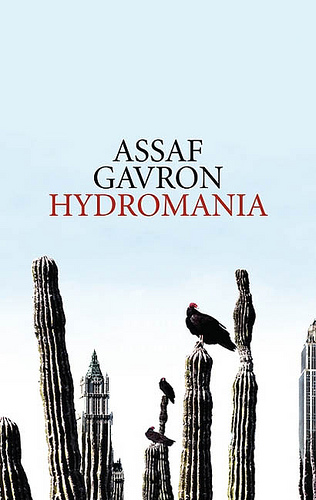
Israeli novelist Assaf Gavron’s recent book Hydromania has yet to appear in English, as far as I can tell, but I’d love to read it when it does.

[Image: The German cover of Hydromania by Assaf Gavron].

Set in a drought-stricken world “several decades into the future,” run by “water corporations from China, Japan and the Ukraine,” it follows the science fictionalized path of a “maverick water engineer” who has developed an illegal black-market technology for purifying rain water. As the website Qantara explains:

The constantly thirsty people drink “Ohiya Water” or “Gobogobo Water,” which they must buy from the companies. The private storage of water is not permitted and the ban is strictly enforced by means of an all-seeing surveillance system.

Further, the political geography of the region has been irrevocably changed:

Israeli territory has been reduced to a narrow strip bordering the Mediterranean Sea and to two major cities, one of which, Tiberias, is destroyed through Palestinian military action in the course of the novel. Israel is thus left with only its capital, Caesarea, and some surrounding districts. Countless Israelis are reduced to refugee status: the poorer living in primitive conditions aboard wrecked destroyers off the coast, whilst the better-off inhabit floating residential areas with appealing names such as “Ocean 8.”

The book’s speculative fictionalization of future water politics won the Geffen Prize in 2009, and has already been published in Hebrew and German, with a Dutch translation forthcoming next year. Anyone out there read it yet? Is it good?

House in a Can

[Image: A future site for Austin + Mergold’s House-In-A-Can].

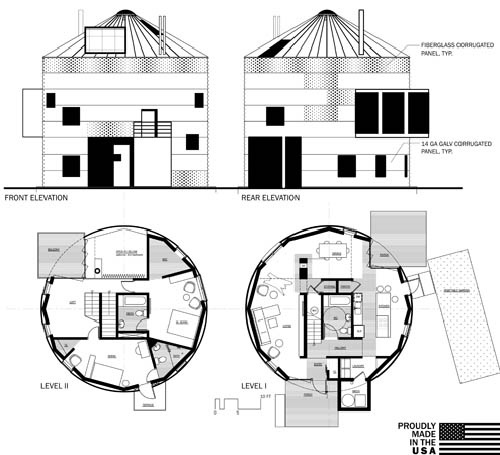
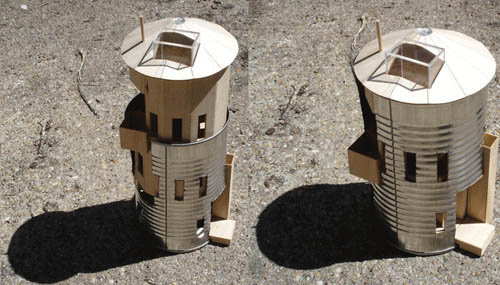
Architects Austin + Mergold have a proposal for how to reuse agricultural silos and other circular structures of the U.S. farm belt: it’s what they call A-House-In-A-Can.

Pitched for a farm in Mechanicsburg, Pennsylvania, the project comes complete with a faux-Craiglist hard sell: “36-foot in diameter American grain dryer with 2000 SF single family starter home inside. Instantly assembled off-the-shelf 14 GA galvanized corrugated steel exterior a 2000 SF developer house inside. Optional greenhouse. Buy 5 get one free!!!”

The images are all you really need to see how it would work: an internal shell is slipped inside the grain silo, services are established shortly thereafter, and the client can then schedule a move-in date. In some ways, I’m reminded of Zecc Architecten’s project for a converted water tower in Holland, or even Piercy Conner’s Martello Tower Y renovation.

[Images: A-House-In-A-Can by Austin + Mergold].

And while these study-models could use a bit more detail, in concept, they’re both delightfully absurd and inspiring.

[Images: A-House-In-A-Can by Austin + Mergold].

A thesis presentation performed as a series of metal cans extruded outward into models of inhabitable architecture… Cinema-In-A-Can. Library-In-A-Can. Gym-In-A-Can. Dome-In-A-Can Republic.

(Perviously: Austin + Mergold’s Fortifications Tour).

Semicircular and built at the base of a large rock

[Image: Jack Whitten prepping octopi on the rocky coast; photo via Art Lies: A Contemporary Art Quarterly].

Jack Whitten is an octopus-hunter—or octopus fisherman, we might say, both more and less accurately. This activity, which he performs without the use of air tanks, requires a surprisingly niche architectural knowledge: “Millions of years ago,” Whitten writes, “the octopus had a shell, but slowly they lost it through the evolutionary process. Since then, the octopus is always looking for a home. They occupy the abandoned shells of other sea creatures, cans and car tires or make their own houses, which I call ‘octopus architecture.'”

[Image: Jack Whitten prepping octopi on the rocky coast; photo via Art Lies: A Contemporary Art Quarterly].
The trick, Whitten says, is to lure the octopus out of its site of undersea domesticity using nothing but a white handkerchief; after all, “they are addicted to the color white like a bull is to red. They can’t control themselves. Thus, I always keep a white handkerchief tucked into my wetsuit, which I use to seduce them from their lair.”

Until that point, however, the hunt is as much about stalking architectural signs across the seafloor as it is about locating an animal’s body:

When hunting for octopus, one must learn to recognize the morphology of the bottom of the sea. Octopus prefer a specific setting identifiable by a certain quality of stones, sand and plant life. Octopus architecture is unique, constructed with stones, shells, wood, bits of sea glass or anything available for building a nest. And of course, they prefer white stones. The nest is always semicircular and built at the base of a large rock, which serves as an anchor. They burrow a tunnel deep beneath the rock, usually with an exit for escape if attacked. The semicircular structure is built five, six or eight levels of rock high depending on the size of the octopus. It is masonry without mortar: closely fitted, tight and fortified. Most of the time I only see the architecture.

The rest of the process involves, as you might imagine, handheld weaponry and some local cooking practices—but the predatory detection of animals by means of their lairs adds an intriguing chapter to the story of architectural history.

(Thanks to Alexis Madrigal for sending this link long ago!)

Arctic Technology

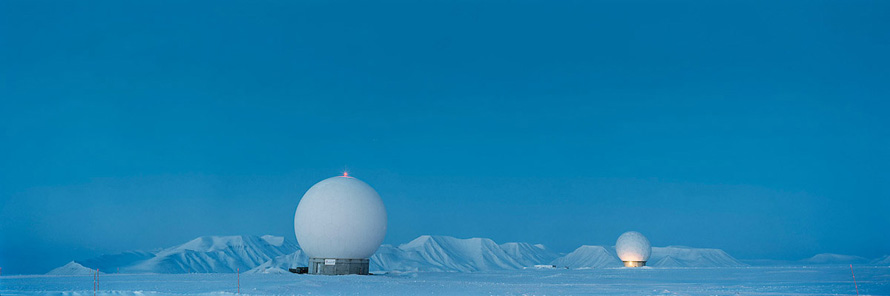
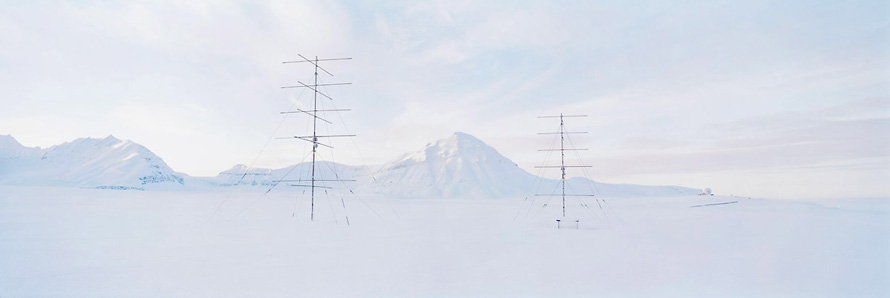
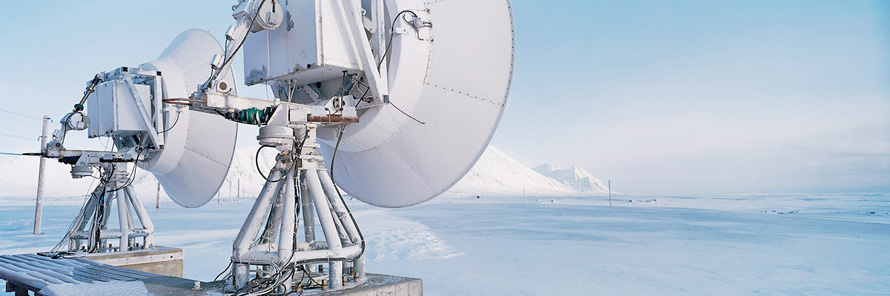
[Image: “Seeing-Outlook” (2001) from Arctic Technology by Christian Houge].

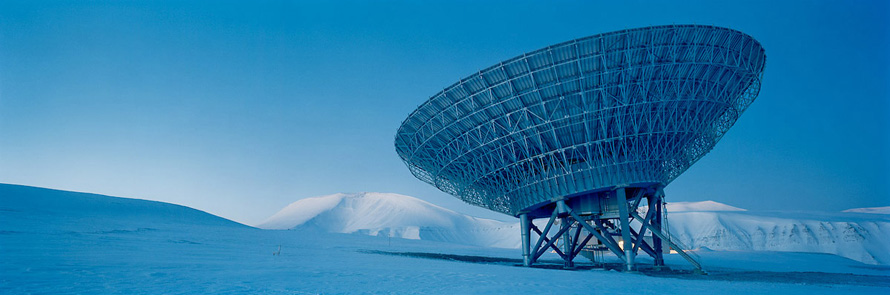
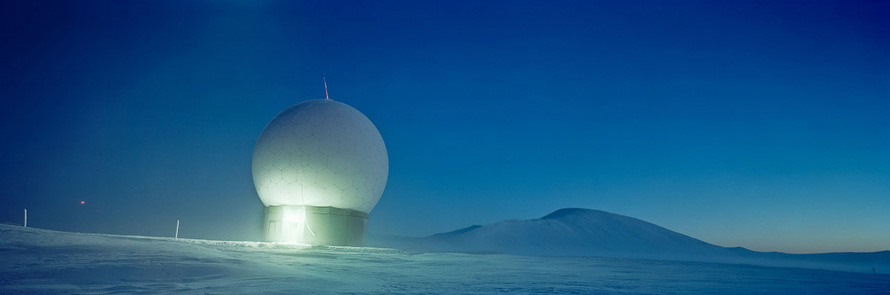
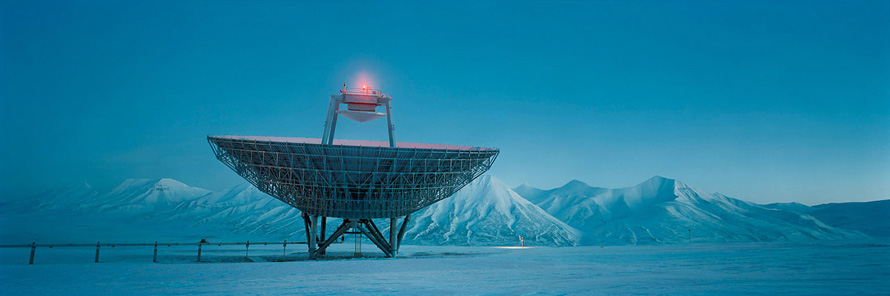
Photographer Christian Houge‘s Arctic Technology series offers a look at large-scale scientific installations on the Norwegian island of Svalbard.

[Image: From Arctic Technology by Christian Houge].

As the Hosfelt Gallery in San Francisco describes the series, several examples of which you see here:

There is an island located between Greenland and the North Pole called Spitsbergen or Svalbard (“the cold land”). The seclusion of the island results in its having the cleanest atmosphere in the world and being one of the best places to do astronomical, meteorological or climate research. Hence, the remote and pristine landscape is marked by installations of technological and scientific equipment. Since 2000, Christian Houge has been making large-scale panoramic images in this landscape, exploring the human presence in this bleak yet beautiful site.

Svalbard, of course, is also the site of the much-discussed global seed vault, making it easily one of the more interesting locations for studying extreme anthropological landscape-use.

[Image: “Snowballs” (2001) from Arctic Technology by Christian Houge].

Perhaps Svalbard needs its own, high-northern branch of the Center for Land Use Interpretation—using these photos by Christian Houge as its opening exhibition.

[Image: “Sphere at Dawn” (2003) from Arctic Technology by Christian Houge].

The extraordinary emptiness of this landscape brings to mind a recent book called The Edge of Physics, by Anil Ananthaswamy, in which the author visits sites all over the planet where massive pieces of equipment necessary for cutting-edge physics experiments are being constructed and installed.

At one point, Ananthaswamy visits the remote South African lands of the Karoo, where, in a state of “accessible desolation,” as Ananthaswamy describes it, the Square Kilometer Array (SKA) is being assembled. The task of securing this site from interference by terrestrial transmissions—cell phones, radios, TV, GPS, wireless internet, etc.—not only involves getting special legislation passed by the South African government but the creation of “special antennas,” designed with the help of global phone companies, “that will provide signals to urban pockets while beaming nothing toward the SKA site.” He cites another telescopic installation, this time in India, where a burgeoning wine industry has taken shape in what was once nearly as isolated as the Karoo. Now, “Farmers occasionally dig up the fiber-optic cables when they are tilling the land,” and “more radio and television stations, mobile phone towers, and power lines” are beginning to appear.

Thus the necessity of landscapes like the Karoo and, to a related extent, Svalbard (where it is the cleanliness of the air that adds scientific value). But electromagnetic isolation on this scale—whole landscapes quarantined from outside radio interference—presents an intriguing new branch for architectural investigation: new forms of fencing, or enclosure, scaled up to the continental, where the project site, and even its overall orientation, is based not on local aesthetic factors but on the potential, otherwise invisible interference presented by distant sources of radio waves.

It’s like a spatial arms race waged against the growing presence of electromagnetism in our everyday lives: radio-free landscapes on the very edges of the inhabitable world.

[Image: “Winternight” (2001) from Arctic Technology by Christian Houge].

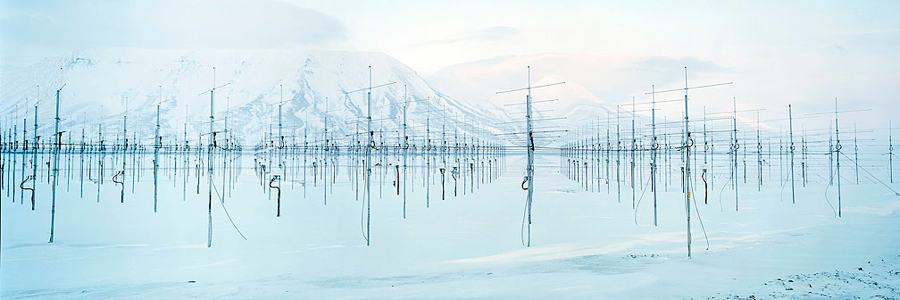
In any case, these next two photos present an extraordinary combination. The first, called “Antenna Forest” (2000), displays more of the high-tech, radio-spectral wizardry of the other images in the series—but the second image, seemingly representing a very similar such installation, does away with this illusion with its title.

[Images: “Antenna Forest” (2000) and “Sunken Ship” (2001), from Arctic Technology by Christian Houge].

That second photo is called “Sunken Ship” (2001).

Houge’s work on Svalbard began, it’s worth pointing out, as a survey of the bleak, Soviet-era mining towns of Barentsburg and Pyramid, and the photographs in that series are both haunting and well worth your viewing time. You can read more about those images here, courtesy of an essay by Basia Sokolowska, but an excerpt supplies sufficient introduction:

Houge’s photographs of Barentsburg and Pyramid are a study of a decline of a colonial culture, functioning away from the centre that gave these communities their ideological, social and aesthetic identity. The panoramic format of his photographs often allows him to include the hostile, surreal surroundings in which they are embedded and thus to emphasise their isolation from other settlements as well as from the mainstream of civilisation and its changing fashions.

One of the more striking is an image called “Therapy Wall.” In fact, an entire book could be written about that one image alone.

See much more of Houge’s work at his website—and consider reading the Ananthaswamy book, as well, as it’s quite an inspiring diversion from the field of traditional travel writing.

(Houge’s work originally spotted via the Nevada Museum of Art‘s Center for Art + Environment).

Writer In Residence

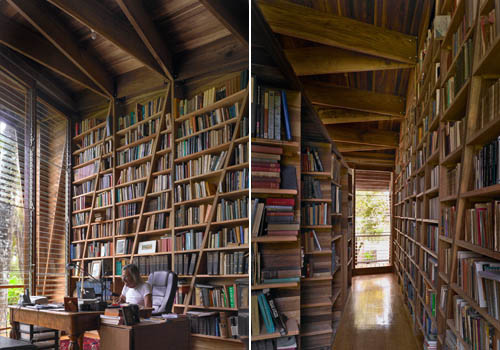
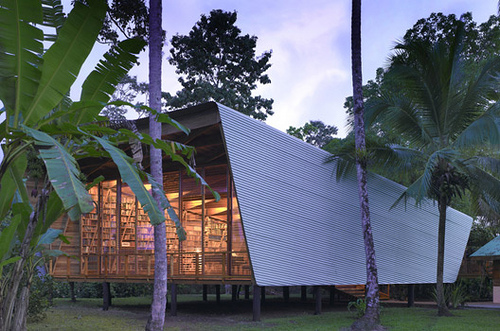
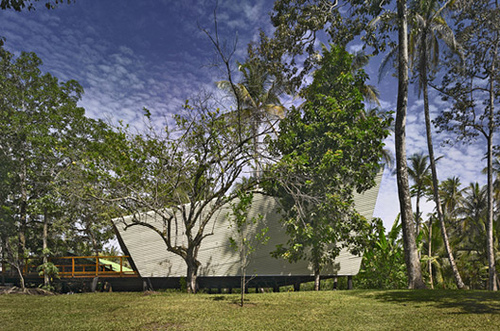
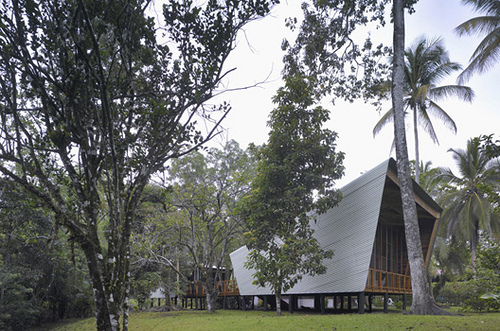
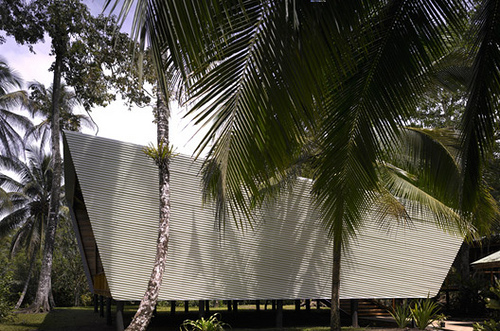
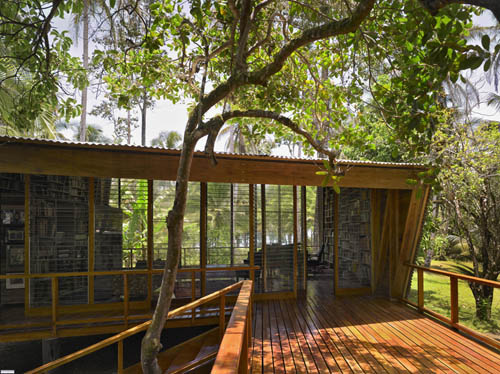
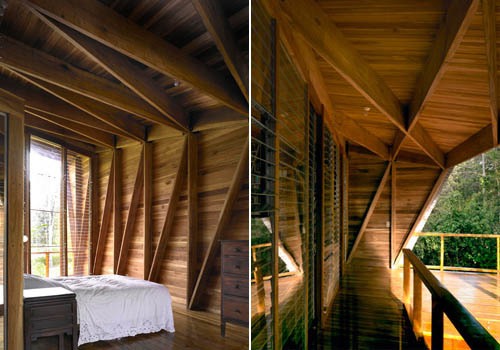
[Images: Casa Kike by Gianni Botsford Architects, photographed by Christian Richters].

Reestablishing myself here on a desktop computer that had been sitting inside a storage unit for the past 15 months, I’ve been having a good time going through old bookmarks: rediscovering what I saved way back in 2008 and 2009, and seeing whether or not I’m still interested in the stories. Articles about mining the ocean floor, about the state of California selling landmarks to raise cash, and about design competitions that came and went sit beside pages for various architecture offices and now-outdated technology reviews.

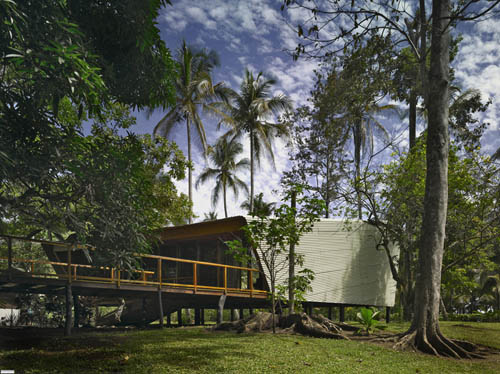
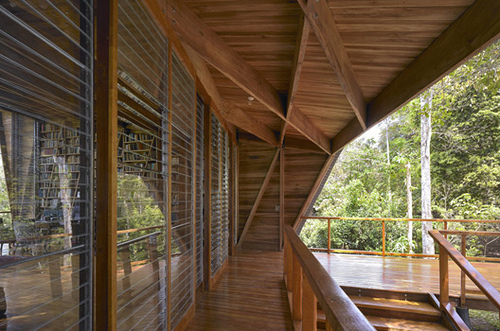
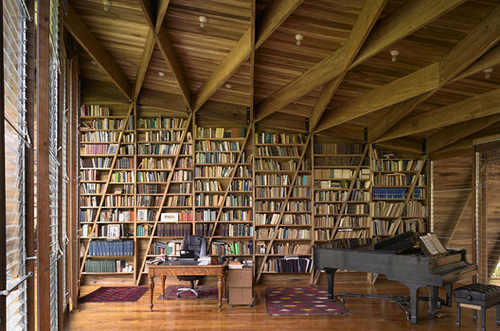
Among these old links, though, is a house I still absolutely adore, one that many of you will probably have already seen on other blogs, but is still worth posting: the Casa Kike, a private residence in Costa Rica by Gianni Botsford Architects, seen here in photographs by Christian Richters.

[Image: Casa Kike by Gianni Botsford Architects, photographed by Christian Richters].

The house is an “intimate double pavilion for a writer in Costa Rica,” with a budget that topped out at just over $100,000. From the architect’s own description:

A main studio space, with library, writing desk and grand piano, is the writer’s daytime space. The pavilion’s wooden structure, sourced from local timber, sits on a simple foundation of wooden stilts on small concrete pad foundations. Roof beams of up to 10 m long and 355 mm deep allow for an interior with no vertical columns. The mono-pitched roof elevates towards the sea shore, while the interior is through ventilated via a completely louvred glazed end façade.

There is then a second pavilion: “set at a short distance along a raised walkway,” we read, it “contains sleeping quarters and a bathroom.”

[Images: Casa Kike by Gianni Botsford Architects, photographed by Christian Richters].

I’m basically just posting these images without comment—other than to say it’s a gorgeous project, and I’m glad I rediscovered it in my bookmarks from 2008.

Predisposed

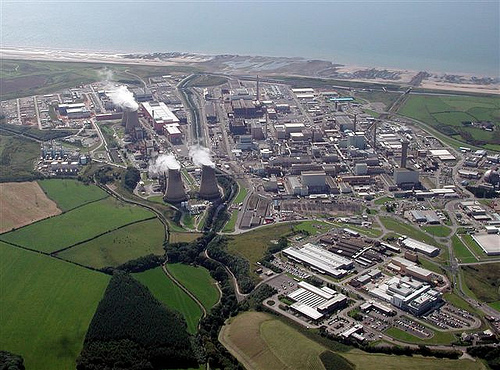
[Image: Sellafield; photo courtesy of Wikimedia/Visit Cumbria].

For some reason I woke up this morning thinking of a story from nearly two years ago: that LLWR, new owners of the English nuclear facility at Sellafield, had arrived at their new property to find so little paperwork about where nuclear waste had been stored—and by whom, and how—that they had to put an ad in the local newspaper asking if anyone else remembered where the nuclear waste was dumped.

“We need your help,” the ad began.

Did you work at Sellafield in the 1960s, 1970s or 1980s? Were you by chance in the job of disposing of radioactive material? If so, the owners of Britain’s nuclear waste dump would very much like to hear from you: they want you to tell them what you dumped—and where you put it.

In turn, having just moved back to LA last week, I’ve been thinking of a story from this past spring, when part of the the Los Angeles neighborhood of Carson was discovered to be built above a 50-acre sea of contaminated soil. “In March,” the Los Angeles Times reported at the time, “the water quality board told residents not to eat fruit or vegetables grown in their backyards. Shell Oil Co., which once stored millions of gallons of crude oil in giant tanks where the houses now stand, sent letters to more than 20 homeowners recommending they minimize contact with ‘exposed soil in your yard.'” In one case, a local resident—and avid gardener—”watched investigators pull dark, wet soil from her backyard that smelled like oil.”

[Image: A circulation diagram of the underground nuclear waste repository at Onkalo, Finland, from Containing Uncertainty by smudge studio, exhibited as part of Landscapes of Quarantine at New York’s Storefront for Art and Architecture. “Deep geologic repositories are difficult spaces to imagine,” the artists write. “They exist below us, hundreds of feet into the earth. Their spaces are not easily accessed by the public, if at all. The most challenging thing to imagine about a deep geologic repository is invisible to human eyes: its relationship to geologic time.”].
Dealing with the toxic after-effects of an earlier industry—or an earlier civilization altogether—especially if that contaminated geography remains insufficiently marked, is also the topic of a remarkable film released last spring by director Michael Madsen. Called Into Eternity, that film explores the philosophical and technical challenges involved with safely storing nuclear waste underground for a minimum period of 100,000 years. As Madsen explained to NPR, however, in slightly broken English:

100,000 years from now would most likely, in my mind, also mean another kind of human beings. It’s perhaps 100,000 years that we left Africa, the human, the Homo sapiens species; 40,000 years ago in Europe there were Neanderthals, a different kind of human species. So in 100,000 years from now, I think that we humans will be something different from today, and when you’re building something to last for that time span and to be safe under all circumstances, I thought that these people, they must have some considerations about the scenarios that might arise in the future and how to counteract upon these scenarios.

Put another way, how on earth might a transformed human inhabitant of the earth, 100,000 years from now, put out an ad in the local newspaper asking if someone whose ancestors once worked at Sellafield—or Onkalo, the repository explored by Madsen’s film, or even the coastal waters of Somalia or San Francisco—could remember if there were any life-threatening toxins buried in the ground nearby? Even if those nameless predecessors have left signs?

Or will future myths of this planet consist not of Mediterranean scenes of sun-blessed fertility—a world like none other—but lamentations of deformity and radioactive clouds, its rivers chemical weapons, its kings plagued by amnesia? Demeter replaced by Moros—forever?

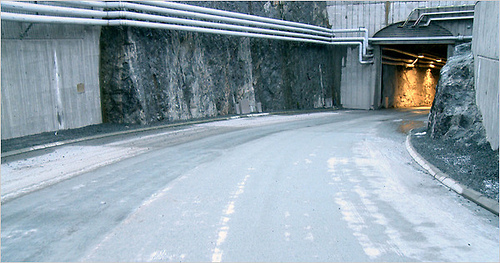
[Image: The entryway to Onkalo’s moribund underworld, from Michael Madsen’s Into Eternity].

In any case, perhaps my favorite scene in Madsen’s film—or, at least, one of the most thought-provoking—comes when the engineers in charge of blasting down through the Scandinavian bedrock to create vast artificial caverns in which copper barrels of nuclear waste will be stored, joke that they sometimes half-expect to reach the proper depths required for disposal… only to dig up a collection of copper canisters buried there 100,000 years ago by a forgotten civilization, one that otherwise left no marks, no archaeology, no traces or remnants of paperwork describing its health-threatening (mis)deeds.

(Thanks to Nicola Twilley for the Sellafield link. Related: One Million Years of Isolation: An Interview with Abraham van Luik).