Future Pastoral

Earlier this week I stumbled across a series of genuinely beautiful architectural prints by Nathan Freise. These were first exhibited back in July 2008 at New York’s School of Visual Arts, and it would have been a real treat to see them in person.

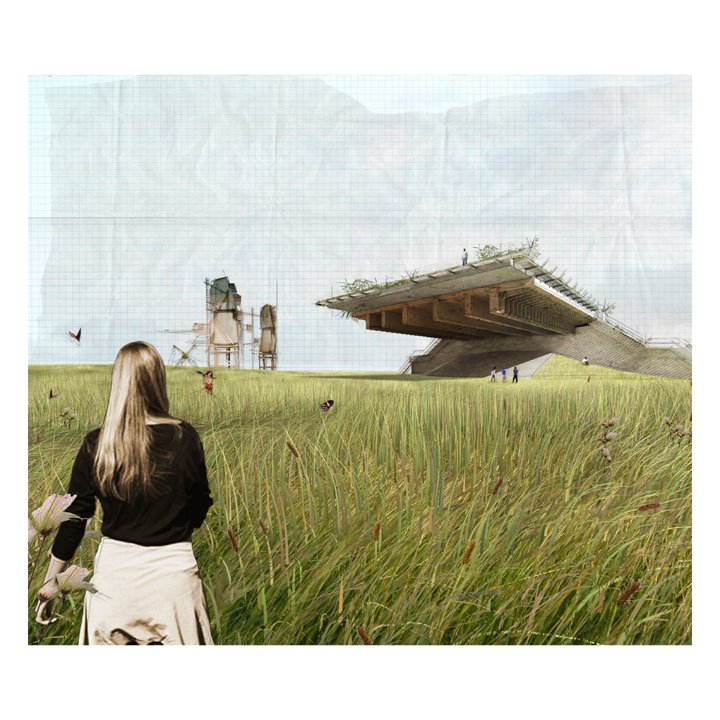
[Image: “The Garden of Machines” by Nathan Freise, from his extraordinarily well-produced Unseen Realities series; perhaps it’s Andrew Wyeth meeting the U.S. interstate highway system in a world art-directed by Guillermo del Toro].

Nathan, of course, is the brother of Adam, and the two of them together – as the Freise Brothers – also directed a short film called The Machine Stops, whose website is also worth a visit if you get the opportunity.

[Image: “The Garden of Machines (Dwell)” by Nathan Freise, from Unseen Realities; this one brings to mind some 22nd-century Charles Darwin watching the machine-birds of tomorrow’s eco-motorways, where billboards become breeding grounds for species we’ve never seen before].

The specific images here are described as follows:

Freise’s series of inkjet prints depict experimental architecture projects. His hybrid illustrations combine multiple forms of media – ink, graphite, photography and marker – with computer graphics. Freise’s representations of utopian worlds question our current conditions of suburban sprawl and urban master-planning.

They are absolutely worth checking out in their original, full size; click through to the Freise Brothers’ website and open them in their full, 1000-pixel glory.

[Image: “Transience (The Nomads)” by Nathan Freise, from Unseen Realities].

What I like so much about these is not just their technical quality but their combination of pastoral, near-Edenic landscapes with semi-unconstructed megastructures straight out of scifi. Technicolor screenprints of the architectural future!
A new Hudson River School arises, in which the flowering concrete foundations of incomprehensible buildings can be seen, scattered throughout the wild valleys, glinting with fragments of steel as the sun goes down.

[Images: “Transience (Decay and Renewal)” by Nathan Freise, from Unseen Realities].

In any case, hopefully someday someone will commission him to make more.

Excavatory Improv

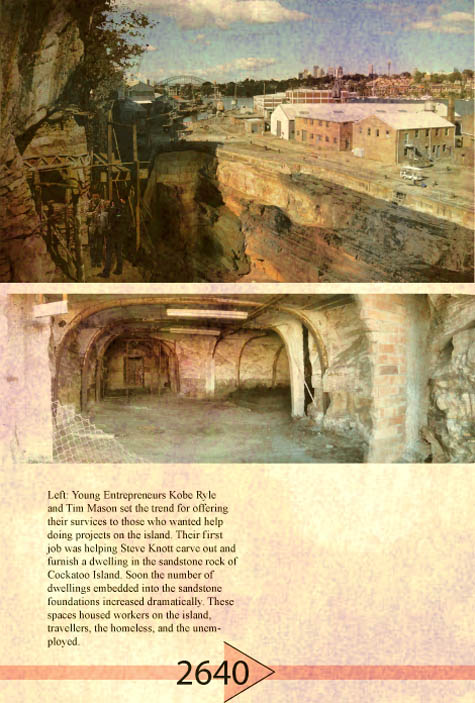
[Image: From Sean Regan’s final project at Urban Islands 2009].

For his final project at Urban Islands – hosted the other week in Sydney and previously discussed here, here, here, here, and elsewhere – Sean Regan produced a heavily-illustrated fake article for a distant-future issue of National Geographic.
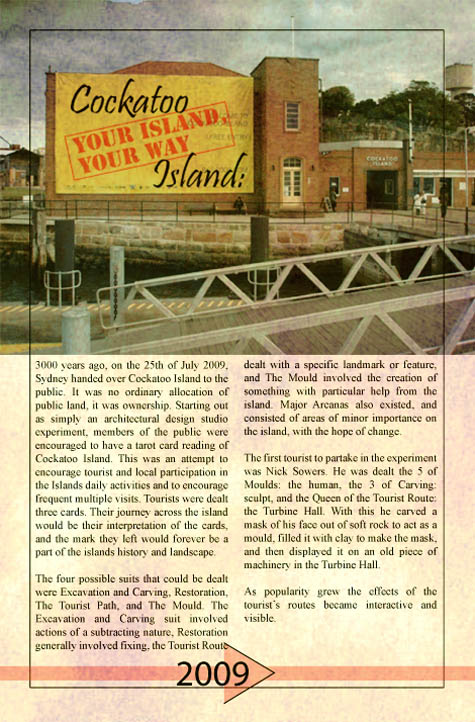
[Image: Image and text from Sean Regan’s final project at Urban Islands 2009].

Piecing together found imagery to create his own narrative exploration of Cockatoo Island, Sean addressed the following question: What would happen to the island if it was no longer historically preserved but deliberately, often violently, altered by the tourists who came to visit it?

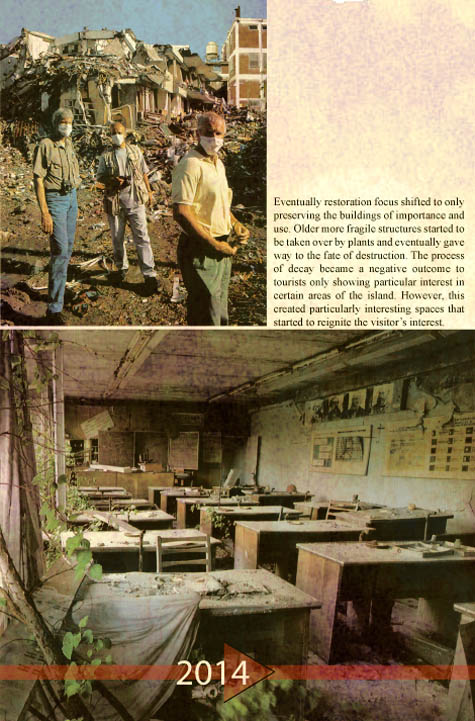
[Images: From Sean Regan’s final project at Urban Islands 2009].

That is, what if tourists were given a more or less complete freedom to carve, excavate, blast, construct, drill, tunnel, and alter their way across the island landscape?

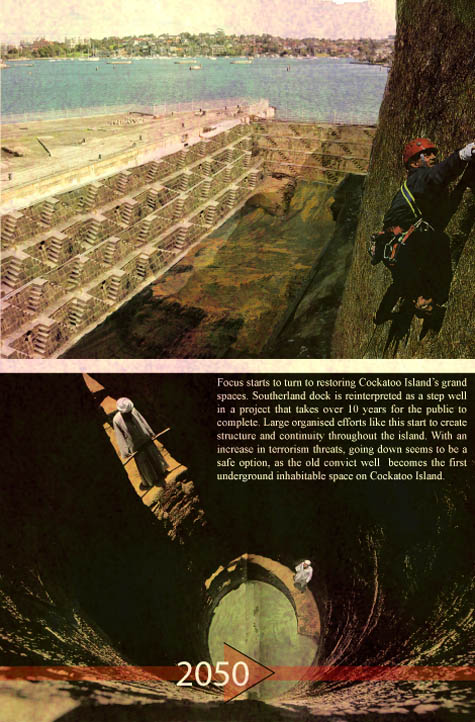
[Images: From Sean Regan’s final project at Urban Islands 2009].

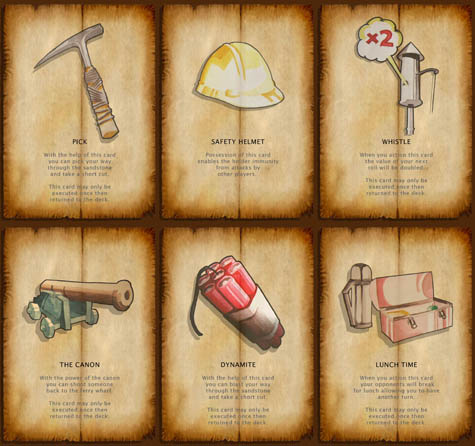
Because of the nature of the studio itself – which was based around the idea of random program generation through the design and distribution of Cockatoo Island-themed “Tarot” cards – this would take the specific form of tourists being handed a series of cards upon arrival at the island.
On these cards would be actions, sites, tools, materials, and so on that the visitors would be free to interpret – acting out their conclusions in physical form through often drastic and completely unregulated interventions into the structure of the island itself.
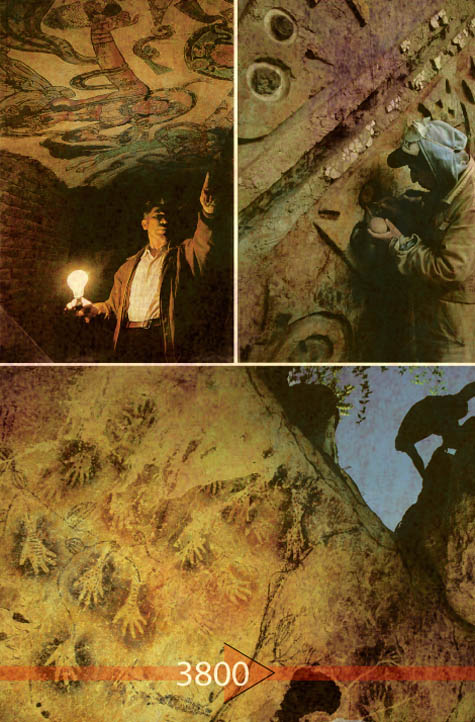
[Images: From Sean Regan’s final project at Urban Islands 2009].

Over thousands of years, then, Cockatoo Island would be transformed through tourist excavations into an increasingly subterranean mazescape of new, improvised passageways – think of it as a kind of geotechnical free jazz, burrowing its way through new forms and structures of geology.
The walls themselves become gradually covered in post-aboriginal myths and cave paintings, and anthropologists from around the world come to Sydney to study the altered massing of Cockatoo.
It was pointed out in the final studio crit, as exhaustively documented by fellow participant Nick Sowers over on Archinect, that this sort of anything-goes approach to managing Cockatoo Island’s future is diametrically opposed to the strange and disappointing historical stasis in which the island is currently trapped.
The island needn’t be frozen in place, in other words, becoming a museum of its last role (an industrial shipbuilding yard); it could, in fact, be endlessly transformed, over decades, centuries, and even thousands of years, to become a palimpsestic reduction of eras, needs, and fleeting intentions.
After all, it was pointed out, that’s exactly what Cockatoo is already: a delirium of excavations. It is sliced through with tunnels. Its cliffsides are artificial. Its shorelines have been expanded. Its native species have been replaced.
But it’s as if Cockatoo’s preservationists have been saying, “We will celebrate this island… by transforming it into the very thing it is has never been: static.”
In this context, perhaps Sean’s project isn’t merely a speculative fantasy of permanent excavation – proposing a future state of geological amnesia in which constant, superficial erasure reacts mindlessly to the past – but a necessary demonstration of how historic preservation often fails to reveal the very essence of the sites it seeks to celebrate.
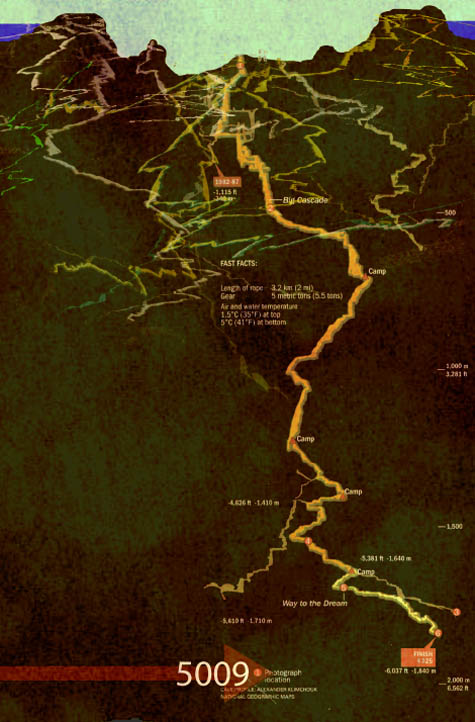
[Image: Cockatoo Island is now a warren of artificial caves extending for kilometers into the earth’s surface below. From Sean Regan’s final project at Urban Islands 2009].

In any case, the sandstone plateau of the island, the project suggests, will eventually be scraped away to levels far below the waves of Sydney Harbor, requiring the construction of massive ring dams to hold back the sea. The entire island is thus placed into a state of dry dock.
By the year A.D. 5009, Cockatoo is nothing more than an opening into the underworld, the island’s terrestrial presence having been replaced with the thousands of tunnels now spiraling away into the earth below.
Of course, the images that appear here have been deliberately aged to look as if they were found in an excavation several thousand years from now, but Sean’s collaging skills, disguised beneath those stains and discolorations, are extraordinary. It was a genuine pleasure to watch this project take shape over the second half of our two-week studio.
Graphic Analysis

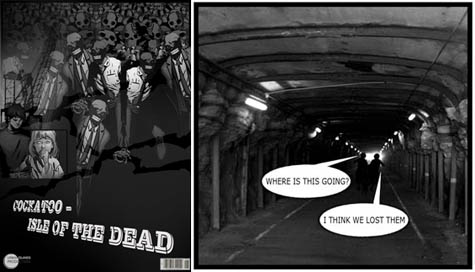
Another noteworthy project from the recently completed Urban Islands design studio down in Sydney was Yael Kaufman’s short horror comic book, Cockatoo: Isle of the Dead.

[Image: Scanned & collaged comic book images appear alongside a photo from the Dogleg Tunnel on Cockatoo Island by Yael Kaufman, Urban Islands 2009].
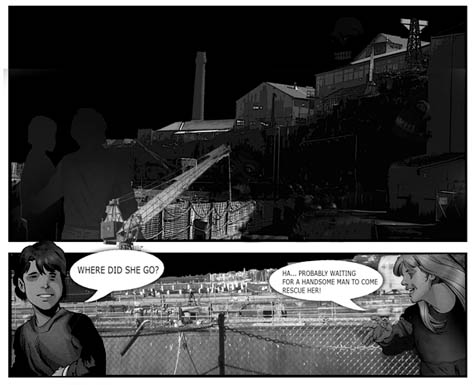
Kaufman’s Isle of the Dead tells the story of three friends who have gone out for an evening joyride on a boat in the Sydney Harbor – only to capsize, finding themselves split up, disoriented, and washed by currents onto the dark shores of Cockatoo Island.

[Image: From Cockatoo: Isle of the Dead by Yael Kaufman, produced for Urban Islands 2009].

There, two of the them get back together – only to stumble upon an industrial-scale project for the resurrection of the dead. The island’s former inhabitants – from prison wardens and ship captains to young reform school boys and girls – are being brought exhumed en masse and back to life by a horrifically repurposed shipbuilding crane.

[Image: More collaged comic book images and photos from Cockatoo Island by Yael Kaufman].

It’s a short tale of architectural history wrapped up as a tongue-in-cheek horror comic – and it’s even got a trick ending…
Of course, the reason for putting together this sort of project came from the motivating constraints of the studio itself.
As mentioned on BLDGBLOG before, the studio’s overall conceptual goal was to create 78 playing cards (designed by the students themselves and inspired both by Tarot cards and by Brian Eno’s Oblique Strategies deck); each card was based on one of the key sites, structures, events, spaces, and/or personalities from the incredible insular history of Cockatoo.
These were then randomly distributed amongst the students, who were required, finally, to produce individual design projects based upon the cards that they had received.
Kaufman was dealt The Crane, Tides & Currents, and the island’s Former Inhabitants – and so the narrative that she assembled from those elements resulted in the comic book of which we see a few spreads here.
During the process of putting it all together, during the extremely limited time frame of only four days in studio, Yael and I looked at House, a wordless graphic novel by Josh Simmons, as well as an English-language version of MetroBasel, a narratively elaborate graphic novel and site analysis produced by Jacques Herzog, Pierre de Meuron, Manuel Herz, and Ying Zhou of ETH Studio Basel. Of course, if I had it with me in Australia, I would also have pointed Yael toward BIG’s recent Yes Is More exhibition catalog/comic book.
But whether or not you like the idea of using horror stories as a way to explore a given architectural site’s history, the graphic novel as an analytic tool is something that deserves greater strategic attention – as well as something that appears quite rapidly to be catching on as a genuine option.

[Image: From Cockatoo: Isle of the Dead by Yael Kaufman, produced for Urban Islands 2009].

After all, if you can open up the range of media – and even, in Yael’s case, the range of genres (why not a love story? why not a pop song? why not a murder mystery?) – through which we discuss, argue about, and analyze architecture, then surely the range of participants in architectural conversations will simultaneously expand as well.
Put another way: comic books and graphic novels – and, yes, horror stories – are going to be written and produced, whether or not architects play any role whatsoever.
Why not, then, at the very least, slip some interesting ideas and structures into those narratives and help to expand the popular image of what constitutes architectural design?

On a sunny morning in Cairns, I’m flying back into the range of internet reception, having just spent some time up in Cape Tribulation and Daintree National Park.
Cape Trib is interesting for a variety of reasons, including the fact that it is off of the national power grid – everything is lit either by generators or solar power – and it is also where the paved road ends; the famous Bloomfield Track extends north toward Cooktown, through the imaginations of Range Rover fans, and up to connect with other dirt roads along the bewilderingly remote Cape York Peninsula, where abandoned WWII airfields sit amidst empty fuel drums being slowly entombed by jungle.
So I’ve been totally absent from posting for the past week, but we were staying on an exotic fruit farm, watching the lizard who lived in our light fixture, listening to Main against an acoustic backdrop of endless tree frogs, within walking distance of two World Heritage sites: the coastal intersection where the Great Barrier Reef meets the mangroves of Daintree on a small beach covered in stumps of coral, semi-submerged beneath tide pools. We even saw a cassowary.
But BLDGBLOG will be in Brisbane all week now, within the curtain of the internet, and I’ve got a million and one awesome links to share – such as the person who now lives totally alone inside a brand new Florida high-rise and the “rubber village” built for military training in Israel. More soon!

Island of Future Airships

As the previous post suggested, a number of great projects came out of this year’s Urban Islands.

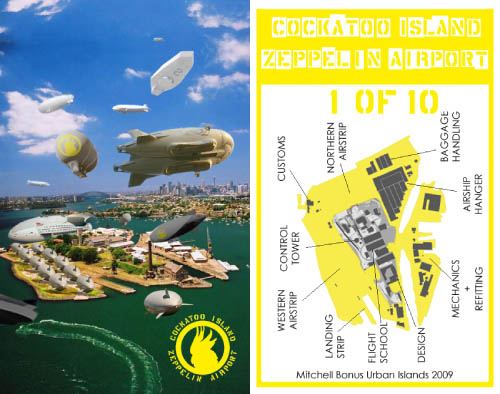
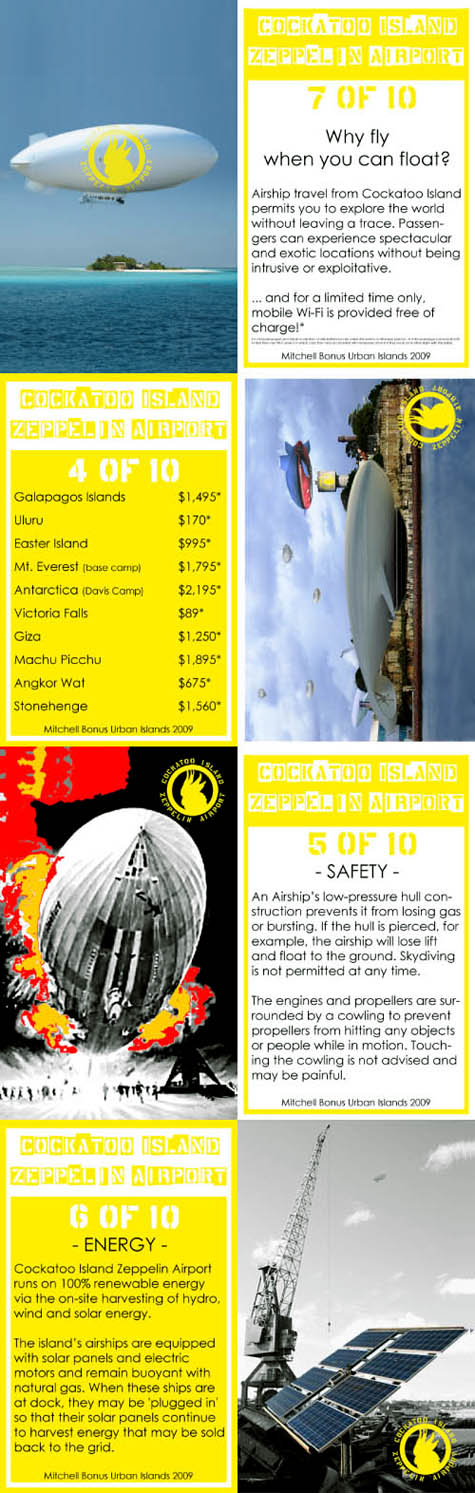
[Image: The front and back of an architectural trading card, designed by Mitchell Bonus for Urban Islands 2009].
I’ve mentioned it before, of course, but Urban Islands is a biannual architecture studio hosted out on Cockatoo Island in Sydney Harbor. For two weeks, students and their visiting international instructors – I had the huge pleasure of serving as an instructor this year – explore the spatial possibilities of Cockatoo’s abandoned landscapes.
For now, focusing solely on the work of my own students, I want to highlight five or six particularly interesting responses to the design brief (a brief I’ll describe in a later post).
The previous post was one project; the following project is by Mitchell Bonus.
Tongue firmly in cheek, Mitchell has called for Sydney’s apparently much-needed second airport to be built out on Cockatoo in the form of a solar-powered zeppelin field.
The style of his pitch, however, was strategically ingenious, well worth both study and emulation elsewhere.
Acting on the assumption that, if you want to see a new building or project take shape, then you have to stop relying on design competitions, architecture blogs, or industry publications to get the word out – that is, you need to find another way to convince the public that your design should exist, making its material realization seem more like an afterthought – Mitchell created a series of trading cards, modeled after sports cards.
He then sealed, laminated, and stuck the cards inside bags of potato chips, cigarette packs, and boxes of morning cereal.
The idea was thus that people would open up a bag of smoky bacon-flavored chips and find an architectural proposal awaiting them.
Inside their morning oat bran would be a trading card-sized vision of the future. Falling out of the cigarette box as they light up on the sidewalk would be a portrayal of some strange island future yet to come.

[Image: The fronts and backs of four architectural trading cards, designed by Mitchell Bonus].
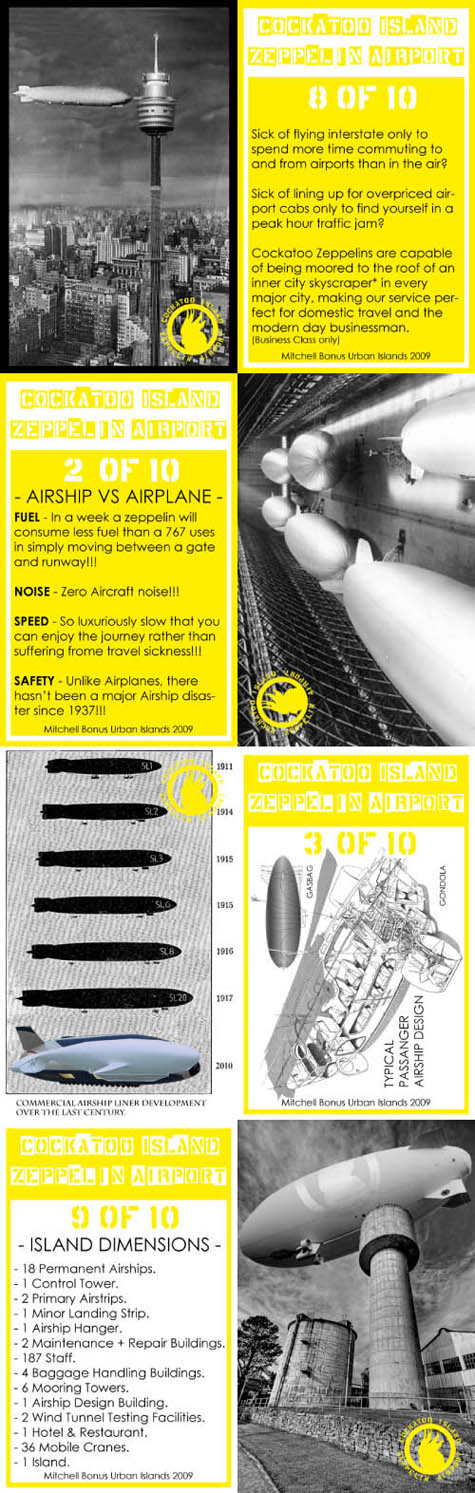
After all, why not skip Archinect, ArchDaily, Inhabitat, and Dezeen altogether and simply mass-produce trading cards of your own speculative building plans?
Then just hide those cards inside cereal boxes and wait till the ideas trickle out, burning into the collective cultural consciousness.
Gradually, it will dawn on people that, of course, there should be a new airport for zeppelins out on Cockatoo Island – or of course there should be aerial gondolas traversing Manhattan, or of course there should be a vast wheel of glass rooms, fourteen hectares in diameter, rotating over the rain forests of Papua New Guinea.
It’s like subliminal advertising for a parallel future.
Why not slip these architectural speculations into pop culture at large? Why not bypass clients and experts and just bring your vision to everyone?
Isn’t that what Hollywood set designers and concept artists have been doing all along?

[Image: Four more architectural futures cards, designed by Mitchell Bonus].
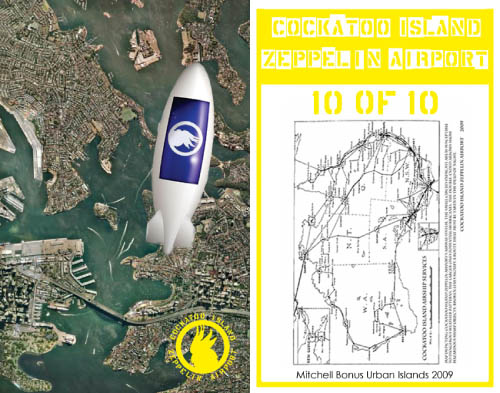
Mitchell’s project – executed in less than one week (as with all the projects that came out of my studio) – was thus presented simply as a bunch of sealed chip packets, cigarette boxes, and so on. Viewers of his presentation were handed a bag, some cigarettes, or a cereal box and, as they opened up their personal booty, they found not just an edible lunchtime snack but a well-produced act of architectural speculation.
How incredibly interesting would it be to find that, in every box of Total or, hiding at the bottom of every canister of oatmeal you open, new visions of the cities around us are patiently hiding…?
A whole new urban redesign of Tokyo awaits anyone who buys a bucket of popcorn at the start of 2012.

[Image: The front and back of one card by Mitchell Bonus, from Urban Islands 2009].

It’s a genuine challenge: publish your next architectural project not as a short article in Log, or as a press release on Dezeen, but as a series of trading cards hidden inside popular consumer goods all over the world.
Slip your vision of the future into mass consciousness both slowly and subliminally.
See what happens.

The Missing Buildings of Cockatoo Island

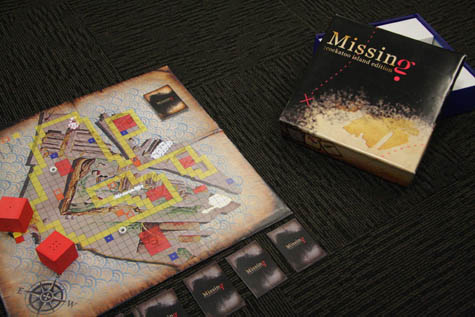
[Image: Playing Tristan Davison’s Missing: Cockatoo Island Edition].
I’m excited finally to look back at some of the work produced by my students at Urban Islands last month in Sydney, not only to bring them much deserved attention but to show how the course itself worked out.
So, with the caveat that it has been extremely difficult for me to find reliable internet access here, and that this will only get worse over the next ten days as my wife and I head north into Daintree National Park, I wanted to take advantage of some blazing wifi to start a review of the studio’s most stimulating projects.
Here, then, kicking things off, is an entire board game, called Missing: Cockatoo Island Edition, invented, painted, and produced in less than a week by Tristan Davison.
Missing uses Cockatoo Island – the abandoned industrial site, former shipbuilding yard, and derelict prison in the Sydney Harbor that formed the site of Urban Islands – as its primary setting and game-play environment.

[Image: Missing: Cockatoo Island Edition by Tristan Davison].
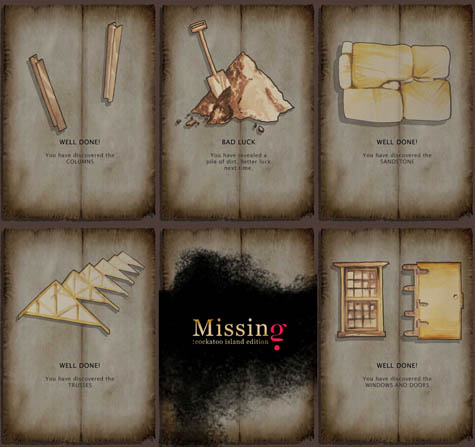
The object of the game is to re-assemble the missing buildings of Cockatoo. Players progress by strategically accumulating Action Cards and Building Cards, with the game concluding atop the island’s central sandstone plateau.
Cockatoo, for those of you who have not visited the site, is an island somewhat famously denuded of many of its former historic structures. Indeed, the island’s lost buildings are some of its most conspicuous features, their interiors still framed with a grid of iron rails in the flattened ground.

[Images: Building Cards from Tristan Davison’s Missing: Cockatoo Island Edition, produced in less than one week].
If it’s not visibly obvious, by the way, I should say that Tristan is jaw-droppingly talented, producing this entire game and many other pieces over the course of Urban Islands right there in the studio, using watercolor and ink. I was able actually to watch as many of these were outlined and colored.

[Images: Action Cards from Missing: Cockatoo Island Edition].

The board itself is incredible, for instance, layering the pathway of the game atop an aerial view of Cockatoo Island and including various safety zones that can be exploited by players along the way.

[Images: The board of Tristan Davison’s Missing: Cockatoo Island Edition].

Over the coming weeks, expect to hear more about the basic interpretive mechanism at work behind the studio, which will help to explain why Tristan produced a board game in the first place. For now, the sheer handiwork on display here, and the rapid evolution of what were basically improvised game rules, continues to amaze me.
Stay tuned for more student projects from Urban Islands!

The Bat Spiral

One of many projects collected in the first issue of P.E.A.R., released last month, is the Bat Spiral by London designers friend and company.

[Image: The Bat Spiral by friend and company].

Serving as further evidence that architecture is not solely built for humans – after all, other species build architecture, respond to architecture, and colonize architecture quite readily – the Bat Spiral offers an elevated habitat for seventeen species of British bat.
From the architects:

Twenty-four different types of timber roosts are positioned within the concrete spiral as if they were the spokes of a wheel. Each roost position is determined by the orientation of the sun, shade and prevailing winds. The roosts are painted black externally to maximize heat gain from the sun…

Inside, amidst gaps, reclaimed wood beams, and concrete spans poured in-situ, are “four levels of habitation,” including feeding perches and access holes. Optional “mating roosts” can also be added as demand requires. Prefab modular animal housing.
More images of the project are available in P.E.A.R..
I’m led to wonder, however, what non-human future might await something like ArandaLasch‘s 10 Mile Spiral if it were to be constructed – and later abandoned – amidst an ecosystem for bats…
Perhaps we are inadvertently building the future infrastructure of an animal world.

Architecture of the Blink

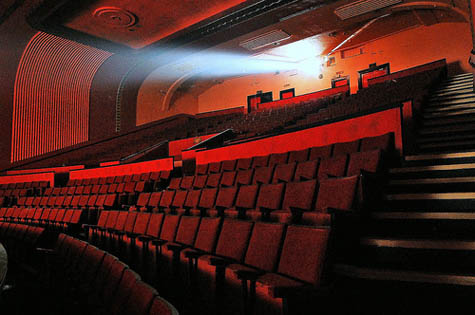
[Image: “The ghost cinema” by Phill Davison, used through Creative Commons].

An article posted today on New Scientist suggests that, over the course of a 150-minute film, audience members will miss an incredible fifteen minutes simply through the act of blinking – but also that people watching a film tend to blink at the same time.
It’s called “synchronized blinking,” and it means that “we subconsciously control the timing of blinks to make sure we don’t miss anything important” – with the addendum that, “because we tend to watch films in a similar way, moviegoers often blink in unison.” That is, they blink during “non-critical” moments of plot or action, creating a kind of perceptual cutting-room floor.
On the one hand, then, I’m curious if this means that clever editors, like something out of Fight Club, might be able to insert strange things into those predicted moments of cinematic calm – moments deemed safe for blinking – simply to see if anyone notices, but I’m also left wondering if there is an architectural equivalent to this: a spatial moment inside a building in which it seems safest for us to blink.
In other words, do people not blink when they first walk into a space like Rome’s Pantheon or into Grand Central Station – or is that exactly when they do blink, as if visually marking for themselves a transition from exterior to interior?
It would seem, then, that if film has moments of synchronized blinking, then so might architecture – but when do we choose to blink when experiencing architectural space, and do those moments tend to occur for all of us at the same time?
How could we test this?

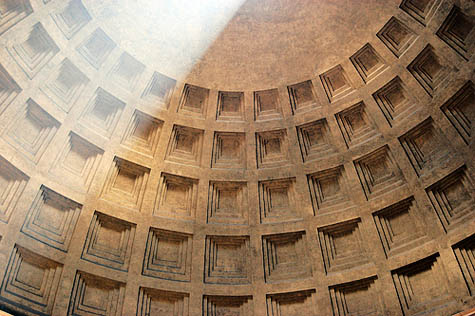
[Image: The Pantheon, photographed by Nicola Twilley].

Further, if there is, in fact, a moment inside a building somewhere where almost literally everyone blinks– say, in the lobby of the Museum of Modern Art, or in a bathroom corridor in the history building at your own university – could we say that that space is somehow yet to be fully seen?
It is the spatial equivalent of those fifteen minutes of a film that no one realized they missed.
After all, perhaps there’s a detail in your own house that you’ve never actually seen before – and it’s because you tend to blink as you walk past it. Your own body assumes, outside conscious awareness, that this must be a safe space for blinking; it’s near a window, or the colors are very dull. Perhaps that’s how spiderwebs build up: you literally don’t see them.
On a much larger scale, meanwhile, are there stretches of highway somewhere outside town where the scenery gets a bit boring – and so everyone starts to blink, more or less at the same time, thus visually removing from collective cultural awareness that McDonald’s, or that abandoned house, tucked away over there beside the trees?
And could you locate that exact moment of blindness – could you find blinkspots throughout the urban fabric – and start to build things there? Architecture becomes a three-dimensional test landscape for the neurology of blinking.

[Image: A human blink, via Wikipedia].

For instance, if people driving 65 mph travel, say, five feet with every blink, then what spatial and architectural possibilities exist within that five feet?
What are the spatial possibilities of the blink?
I’m reminded of certain zoning laws in which you need to consider the exact amount of shadow your building will cast on the neighborhood around it before beginning construction.
But what about zoning for blinks? Can you zone a building for maximum blinks?
Or perhaps the opposite: a new genre of architecture, specially designed for Halloween fun houses, in which it’s too stressful to close your eyes even for a micro-second…

(Spotted via @jimrossignol).

The Dimensions of an Island

Urban Islands continues apace down here in Sydney, with Day Five beginning in about an hour. While I’ll describe the actual studio process in some detail later on, it seems worth recounting our trip out to Cockatoo Island – a derelict shipbuilding site and former prison in the Sydney Harbor – earlier this week.

[Image: The dimensions of an island: a sign posted on Cockatoo].

We went out as a massive group of about 70 people and spent a bit more than five hours there, wandering around through old turbine halls and tunnels, walking past fenced-off but still functioning lift shafts cut directly through an eroded plateau of sandstone, and exploring former convict barracks, exercise yards, a Submarine Weapons Workshop, and the lost interiors of buildings demolished long ago, their internal walls, spaces, and bays still marked by iron rails set rhythmically in the concrete.
The first step was for our students to install small models that they’d built the night before, fitting them into cubbyholes inside an old warehouse near the turbine hall.
The cubbyholes themselves were all very strangely labeled, however, referring to old tools and other handheld pieces of industrial equipment; but the words written on them in black lettering were more like a set-list by the Aphex Twin than a serious description of useful implements: Vodex Elect, Murex Vodex, Yorkshire Flux.
After that first exercise was over – and there were some fantastic projects on display, from a conic room-amplification device to mirrored boxes and temperature-sensitive geometries – we broke up into our respective tutorial groups, approximately 16 students per group, and headed outside to sit amidst that old iron grid in the concrete, looking out through a missing interior that still seemed to haunt the island’s perimeter.

[Image: The gridded rails of a lost interior, Cockatoo Island, in Sydney Harbor].

I’ll explain in another post what it is that I’m having my students do – though I will say that it involves what I hope is an exciting mix of formal landscape analysis, combinatorial mythology, and Tarot cards (yes, Tarot cards) – but this first day out on the site was more of an introduction to the spectacular historical landscapes on display there in the harbor.
From recently discovered “convict structures” under active excavation at the top of a hill to the long stories of ships constructed on Cockatoo – warships drifting outward in an endless archipelago of micro-islands – by way of the extraordinary Mould Loft, where massive ribs and geometries for future ships were outlined with chalk drawings on the floor, cut into wood, sent down piece by piece to be remade in metal, and then assembled again, like dinosaur skeletons, into boats and submarines, Cockatoo is a three-dimensional catalog of unique situations and spaces.
When does a ship cease to be a part of the island that created it? Perhaps ships are to Cockatoo as pollen is to flowers.
There is electrical equipment still sitting there like something from The Prestige, converting DC current from mainland Australia to the island’s AC needs; there is a locked switchboard room inside of which phonecalls used to be connected through grids of wires; and there are entire missing hillsides – artificial cliffs still marked with drilled incisions for dynamite – that you then realize aren’t missing at all, they’ve simply been transformed into the ground you’re standing on, the island having been expanded in size nearly fourfold through a coastal growth that pushed the island’s perimeter further and further out to the sea, like terrestrial rings for a maritime Saturn.
There are moving walls formerly used to plug-up the dry docks; there is ship-launching equipment; there was the deliberate feeding of harbor sharks to turn them into a living security fence against the island’s 19th-century prisoners; and there is the incredible angular cross-bedding of ancient sand dunes now frozen into permanent form as the island’s central plateau.
There is a filled well; a campground for tourists; inflatable “slave docks” that could temporarily expand the outer edge of the island; and all around us were things that had yet to be constructed, from viewing platforms planned by the Harbour Trust to our own students’ future installations.

[Image: Cockatoo Island in profile].

While I suppose all islands lend themselves well to mythology, Cockatoo seems particularly well-suited to a kind of over-the-top symbolic analysis – the bizarrely preserved film set from Wolverine, the space of the Turbine Hall so immeasurably huge that they had to install visual guide tags for laser-based surveying equipment, the escaped ship that beached itself on a neighboring island – that it seems impossible to believe architects working there could not foreground the narrative potential of the site. Even if only as a way to recombine and situationally understand the possibilities of an island, delving into the mythology of Cockatoo seems both incredibly fun and architecturally necessary.
It’s an history full of plane crashes and visiting aviators, with a backwards warship that arrived without a bow to be temporarily repaired by workers on inflatable slave docks, and there are the hollow voids of old grain silos visible in section on the sides of collapsed hills, connected onward to an internal network of rock-cut drains and reservoirs…
Obviously, I hope my own studio here – breaking down Cockatoo into its major and minor spatial types and material details for the purpose of performing an oblique combinatorial analysis – will draw on these histories and forms, but we’ll have to see if two weeks is enough time even to begin exploring such extraordinary symbolic potential.

(For a bit more about Urban Islands, check out Design + Build and these two posts by Nick Sowers of Soundscrapers fame).

Submarine-Repair Facilities, Mushroom Farms, and the Abandoned Islands of Sydney, Australia

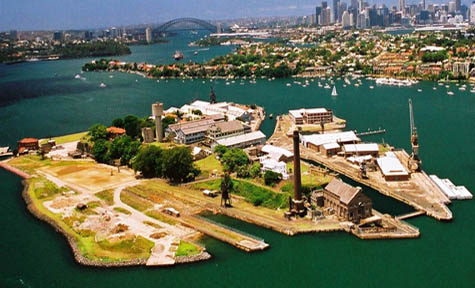
[Image: Sydney’s Cockatoo Island, site of Urban Islands].

As I mentioned several months ago, I’m in Sydney, Australia, for the next two weeks to teach a design studio here called Urban Islands.
It’s a studio inspired by the amazing Cockatoo Island, an abandoned industrial site – former prison, former shipyard, former quarry, present campground and concert venue, ongoing archaeological site, future megastructural weather-altering agri-utopian astronomy research station at sea (or whatever our students decide to make it) – in Sydney Harbor.
The studio, in fact, starts in about three hours (as I have insane jetlag and have been up since 4am).
My fellow instructors here are awesome – including Mark Smout of Smout Allen and Mette Ramsgard Thomsen – and it’s all been put together by the wizards behind lean productions.
I have to say that I am genuinely excited about my own studio – I’ve got some cool ideas in mind, and I hope to post not only the design brief itself but the resulting student work here on the blog – and I’m also looking forward to the wide variety of subsidiary events.
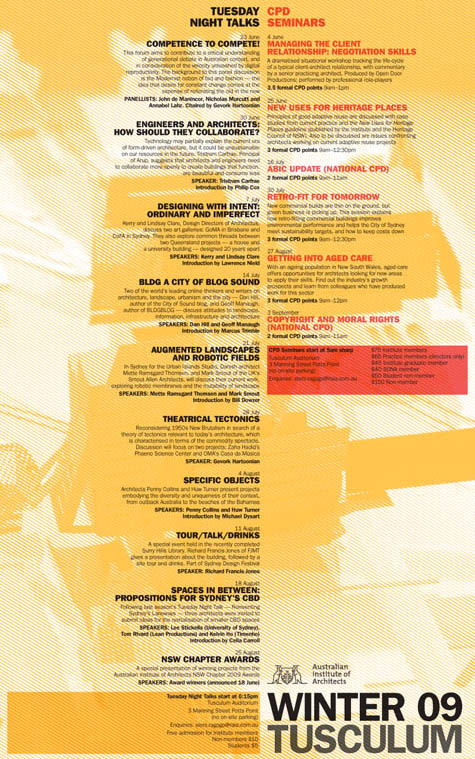
One of those takes place tomorrow evening here in Sydney, at a place called the Tusculum, run by the Australian Institute of Architects. I’ll be speaking about blogging, digital publishing, information, the city, public interfaces, etc. etc., with two legends of the blogosphere I’ve long admired: Dan Hill of City of Sound and Marcus Trimble of Super Colossal. It costs $10 for non-AIA members, it starts at 6:30pm, and it’s at 3 Manning Street in Potts Point.
Next Tuesday, 21 July, at the same time and place, Mark Smout and Mette Ramsgard Thomsen will be presenting – don’t miss it.

[Image: This season’s lecture schedule at Sydney’s Tusculum; view larger].

If you’ll excuse the rambling nature of this post, meanwhile, my wife and I are actually staying in Potts Point, and we’re located basically right across the street from a Saturday morning farmers’ market where we got into a conversation early on our first morning here with a man selling gourmet mushrooms that were grown, he said, inside repurposed railroad tunnels south of the city in Mittagong. I would love to visit those tunnels!
Cockatoo Island, in fact, is actually honeycombed with old tunnels dug directly out of the site’s bedrock – so perhaps some strange form of subterranean myco-agriculture might pop up in a few student designs over the next two weeks. Mushroom farming in the underworld. Or perhaps even the high-tech cultivation of pharmaceutical biocompounds by UV light in what used to be a submarine-repair facility (the island also houses a former submarine-repair facility!)…
In any case, I hate to sound like a broken record but this could very well mean that I will be short on posts for the next bit – and July could thus continue to be a pretty slow month (although thanks to all the new readers coming in from various reviews of The BLDGBLOG Book! good to see you here).
So if you stop by the site ten days from now and it looks more or less the same – now you know why.
However, I can always be found on Twitter: @bldgblog.
And if you want to keep up on the action at Urban Islands, Twitter’s your friend: @urbanislands.
Otherwise, more soon!

The Thirteenth Room

For his or her latest project, a well-known (but not necessarily well-liked) artist convinces a number of architects – from dRMM, ECDM, and Vaillo + Irigaray, to SOM, mos, Beckmann N’Thepe, and INABA – to include in some future building a small room that the artist has designed.
It’s the exact same room, and it will be repeated again and again, throughout numerous structures around the world – but it will be done without any public acknowledgement that the rooms exist. It’s an art project no on knows about.
These rooms’ presence inside the buildings will thus be kept a secret; no one will know that they exist, let alone where they all might be.
A hotel in Barcelona, a library in Wales, a private home somewhere in Midi-Pyrénées, a pharmaceutical HQ outside Singapore: these and other projects all contain a room.
Within a year, reports surface on various travel blogs about intense spells of déjà vu experienced by visitors to one or more of these buildings.
Gradually, urban myths even appear – and soon Nick Paumgarten of The New Yorker reports on the rise of something called the “room-detection industry,” researching whether or not certain buildings contain identical internal spaces.
It’s all very strange and a discussion quite limited to the world of global frequent flyers; the art world, understandably, takes no notice of these rooms at all.
But then the project is revealed a decade later, unexpectedly, in an exclusive interview with Artforum. All ten rooms have been installed, and their locations are made known, complete with an interactive map posted on artforum.com; one of the rooms, however, was demolished in 2011 when the building it was in was taken down (…or was it?, PhD students ask, writing term papers at Princeton).
Many people are amazed by this story; most people don’t really care, considering it pure wankery.
Some, however, are thrilled beyond imagining, having themselves long suspected that they might have encountered this very project – a room at the Tokyo airport, or deep inside an outer London convention center – but they had simply filed it away as faulty memories.
But it was real: they really did experience the same environment twice, with no explanation, inside two radically different buildings on opposite sides of the planet.
However, reports of further rooms begin circulating, literally as early as the comments thread on the interview. People simply do not believe that the project is over. There’s an eleventh room, some say, in a Seattle hospital – and they’ve got photographs to prove it. There’s a twelfth room in Morocco; a well-known journalist claims to have been there just last week.
Then the knock-offs begin to appear: illegally pirated interiors designed to fool the wary.
None of which would really have interested you, had you not yourself just opened the door of a temporary flat-sit in Sydney, where you’ll be for the next two weeks, only to drop your bags to the floor in sheer wonderment.
You’ve seen this room before…, you realize. It’s the thirteenth room…