The Castle

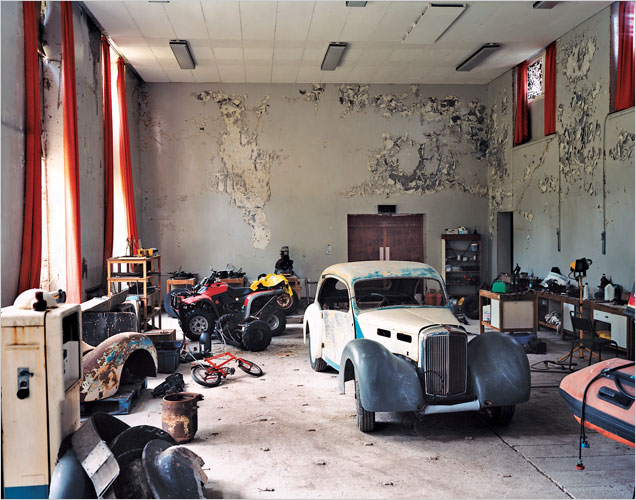
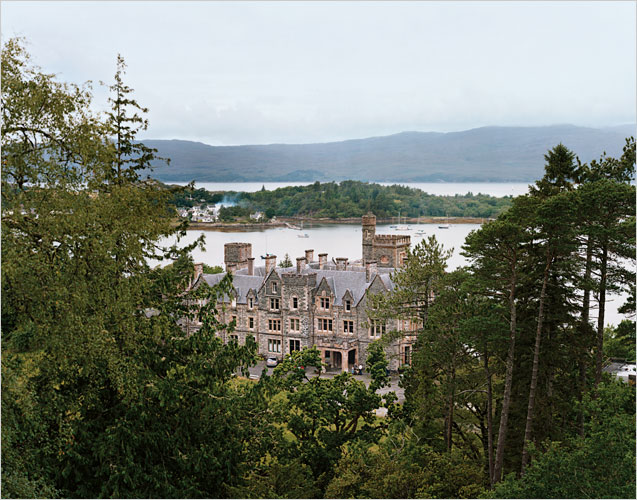
[Image: Duncraig Castle, Scotland; photo by Margaret Salmon and Dean Wiand for The New York Times].

There was a great article in The New York Times this weekend about an English family from Nottingham who purchased Duncraig Castle in Scotland, “set on 40 acres of forested land with its own train station, boathouse and two private islands.” It is “a storybook maze of stone-clad turrets, square towers and steeply peaked gables set on a promontory at the edge of the woods overlooking the loch.”
The article adds that the castle is “so large – 80 rooms – that a tour takes more than an hour, and it is impossible to remember where you’ve been or where any of the rooms are in relation to one another.” Indeed, the building is “a warren of rooms – a design meant to help ward off drafts. In one room, you can actually squeeze behind a wardrobe and end up in the school addition.”
As a brief aside, could you build a maze of outdoor rooms, each of them hoisted up on stilts throughout the northernmost extremes of the UK, so that they might interfere with, and thus stop, inclement weather? It’d be “a design meant to help ward off drafts” by trapping winds in little stop-boxes: like wind-shades, they’d help prevent certain storms from forming.
In other words, could you apply the internal climatic lessons of architecture – windows and doors like valves that stop drafts – to outdoor landscapes, using folly-like structures to control the weather?
You stumble on strange wooden folk-constructions in the forests of Bavaria and, not knowing what they are, tear them down; fierce storms begin that very evening, and you never – literally never – figure out what’s the cause.
But those were anti-storm constructions, built over six hundred years ago, and the climate you’d been living in was manmade.

[Image: Duncraig Castle, Scotland; photo by Margaret Salmon and Dean Wiand for The New York Times].

In any case, the couple who bought the castle went on to bring their entire family there with them:

When the family moved into Duncraig in the summer of 2003, the castle had no sewage system. Everyone used portable toilets outside the castle. Seventeen people made do with one washing machine and two kitchens. Hot water ran only to Sam and Perlin’s apartment. When winter arrived at Duncraig, which is farther north than Moscow, the days shrank to a mere six and a half hours. Without streetlights or any large town for dozens of miles, the long nights were disorientingly dark. The castle’s stone facade allowed the ever-present Highland moisture to seep right in. Without central heat, it was impossible to get warm. ‘‘We all got used to wearing damp clothes – there was no way to dry them,’’ says Duncan Dobson. ‘‘You’d get into bed at night, and your bed was damp. All the clothes at the back of the wardrobe went rotten with mold.’’

The specifics of the ensuing breakdown make for a fascinating read, but, in broad strokes, everything falls apart: they actually pay part of the family to leave, buying out their initial share of the investment; a court order against opening a day school inside a leaky side-building full of broken electrical equipment is obtained; and the parents are, incredibly, evicted from the property without compensation. Asked why he evicted his parents, the husband simply says: “I thought the family had descended into madness.”
Meanwhile, “black mold that covered the plaster wall so completely it looked like wallpaper” continues to grow in the unused rooms of the castle, as the couple – who still live there – sink nearly a million and a half dollars into renovations.
Read the rest if you get a chance.

(Thanks, Nicky!)

Minor Landscapes and the Geography of American Political Campaigns

[Image: The population density of the United States, ca. 2000, via Wikipedia].

If you’ll excuse a quick bit of landscape-inspired political speculation, I was reminded this morning of something I read last year on Boing Boing and which has stuck with me ever since – and that’s that there are more World of Warcraft players in the United States today than there are farmers.
Farmers, however, as Boing Boing and the original blog post it links to are both quick to point out, are often portrayed in media polls as a voice of cultural and political authenticity in the United States. They are real Americans, the idea goes, a kind of quiet majority in the background that presidential candidates and media pundits would be foolish to overlook.
If you want a real cross-section of Americana, then, you’re supposed to interview farmers and even hockey moms – but why not World of Warcraft players? This is just a rhetorical question – it would be absurd to suggest that World of Warcraft players (or architecture bloggers) somehow have a special insight on national governance – but, as cultural demographics go, it’s worth asking why politicians and the media continue to over-prioritize the rural and small-town experience.
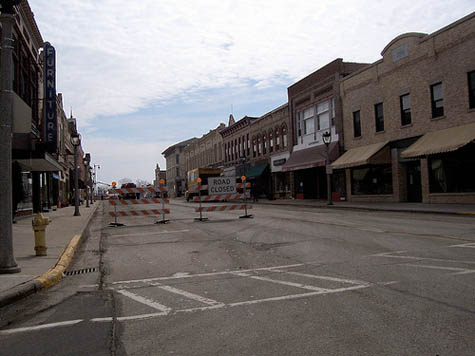
[Image: A street in Columbus, Wisconsin, the small and, at the time, semi-rural town in which I grew up, photographed under a Creative Commons license by Royal Broil].

In a related vein, it’s often said in the U.S. that certain politicians simply “don’t understand the West”: they’re so caught up in their big city, coastal ways that they just don’t get – they can’t even comprehend – how a rancher might react to something like increased federal control over water rights or how a small-town mayor might object to interfering rulings by the Supreme Court. Politicians who don’t understand the west – who don’t understand the rugged individuality of ranch life or the no-excuses self-responsibility of American small towns – are thus unfit to lead this society.
But surely the more accurate lesson to be drawn from such a statement is exactly the opposite?
One could even speculate here that politicians from small towns, and from the big rural states of the west, have no idea how cities – which now house the overwhelming majority of the American population – actually operate, on infrastructural, economic, socio-political, and even public health levels, and so they would be alarmingly out of place in the national government of an urbanized country like the United States.
If the United States – if the entire world – is rapidly urbanizing, then it would seem like literally the last thing we need in the White House, in an era of collapsing bridges and levees, is someone whose idea of public infrastructure is a dirt road.
Put another way, perhaps coming from a ranch or a small town is precisely why a certain candidate might be unable to govern a nation that is now 80% urban.
It’s a political collision of landscape management strategies.
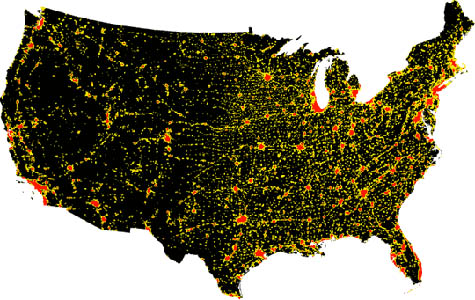
[Image: Urban areas in the U.S. Map courtesy of NASA].

On the other hand, perhaps this juxtaposition would be exactly why a rural or small-town candidate could be perfect for the job – fresh perspectives, thinking outside the box, and so on. After all, a good rancher is surely a better leader than a failed mayor.
Or, to take an even more aggressive stand against this argument, surely the administrative specifics of your previous professional life – you were a doctor, a minister, a novelist, a governor, a business owner, a soccer dad – are less important than your maturity, knowledge, clarity of thought, and judgment?
Even having said that, though, I can’t help but wonder if a candidate might “understand” one particular type of settled landscape – a small town, a thinly populated prairie, an icy state with a population one-fifth that of Chicago – but not another, more heavily urbanized type of landscape (i.e. the United States as a whole).
So I was reminded again of the opening statistic from Boing Boing – a statistic that I have not researched independently, mind you, but that appears to be based on this data – when I read that President Bush had stopped off this morning to speak about the credit crisis “with consumers and business people at Olmos Pharmacy, an old-fashioned soda shop and lunch counter” in San Antonio, Texas.
The idea here – the spatial implication – is that Bush has somehow stopped off in a landscape of down-home American democracy. This is everyday life, we’re meant to believe – a geographic stand-in for the true heart and center of the United States.
But it increasingly feels to me that presidential politics now deliberately take place in a landscape that the modern world has left behind. It’s a landscape of nostalgia, the golden age in landscape form: Joe Biden visits Pam’s Pancakes outside Pittsburgh, Bush visits a soda shop, Sarah Palin watches ice hockey in a town that doesn’t have cell phone coverage, Obama goes to a tractor pull.
It’s as if presidential campaigns and their pursuing tagcloud of media pundits are actually a kind of landscape detection society – a rival Center for Land Use Interpretation – seeking out obsolete spatial versions of the United States, outdated geographies most of us no longer live within or encounter.
They find small towns that, by definition, are under-populated and thus unrepresentative of the United States as a whole; they find “old-fashioned” restaurants that seem on the verge of closing for lack of interested customers; they tour “Main Streets” that lost their inhabitants and their businesses long ago.
All along they pretend that these landscapes are politically relevant.
My point here is not that we should just swap landscapes in order to be in touch with the majority of the American population – going to this city instead of to that town, visiting this urban football team instead of that rural hockey league, stopping by this popular Asian restaurant instead of that pie-filled diner (though I would be very interested to explore this hypothesis). I simply want to point out that political campaigning in the United States seems almost deliberately to take place in a landscape that no longer has genuine relevance to the majority of U.S. citizens.
The idea that “an old-fashioned soda shop” might give someone access to the mind of the United States seems so absurd as to be almost impossible to ridicule thoroughly.

[Images: From the fascinating series of electoral maps produced by M. T. Gastner, C. R. Shalizi, and M. E. J. Newman after the 2004 U.S. presidential election].

Of course, I understand that there are electoral college strategies at work and so on; but what I think remains unchallenged throughout all of this is the idea that small town voters somehow offer a more authentic perspective on the political life of this country – and not, say, people in West Hollywood or the Upper East Side or Atlanta or even Reno. Or World of Warcraft players. Or people who eat sushi. People who read Harry Potter novels.
“President Bush stopped off today with a group of people who read Harry Potter novels – the eleventh-largest demographic group in the United States – to discuss the ongoing financial crisis…”
Which group is larger, more important, more likely to vote, more demographically representative of the United States?
Call them micro-niches or whatever new marketing term you want to invent, but it seems like American politicians are increasingly trapped in a kind of minor landscape, a geography that is demonstrably not that within which the majority of Americans currently live.
“Barack Obama campaigned today in the early 1960s by visiting a small pancake house near Springdale…”
In any case, the entire political premise of the last eight years seems to have been one of landscape: big city dwellers near the Great Lakes and the ocean coasts simply don’t understand small town communities, and they’re embarrassingly out of touch with the everyday big skies of lonely ranchers on the plains. But while this might be true – and I don’t think it is, frankly – reversing this belief is surely even more alarming: the idea that someone whose background includes ranches and small towns should go on to lead an urban nation in an urban world seems questionable at best – and potentially dangerous in actual practice.
Again, though, there seems to be no adequate way to measure how political exposure to certain settled landscapes might affect a candidate’s ability to govern – and so this post should simply be taken as a kind of geographic speculation about democracy in the United States.
But it does raise at least one interesting group of questions, I think, including: what are the real everyday landscapes of American life, if those landscapes no longer include old-fashioned soda shops and small-town hockey arenas – or do such everyday landscapes simply no longer exist?
And if there are no everyday landscapes, then surely every landscape we encounter is, by definition, extraordinary – so we should perhaps all be paying more attention to the spatial and architectural circumstances of our daily lives?
Further, if political candidates have managed to discover – and to campaign almost exclusively within – an American landscape that seems not yet to have been touched by the trends and technologies of the twenty-first century, then why is that – and is it really a good indication that those candidates will know how to govern an urbanized, twenty-first century nation?
Finally, if urban candidates – or coastal candidates, whatever you want to call them – “don’t understand the west,” which is simply cultural code for not understanding small town life and for being out of touch with the moral hardships of the American countryside, then surely that’s not altogether bad in a country that is 80% urbanized?
Put another way, it would certainly be frustrating to think that a candidate doesn’t understand how a cattle ranch or an alfalfa farm operates, or that a candidate has no experience with a small town and its parent-teacher associations and so on – but it is extraordinarily troubling to me to think that a candidate doesn’t understand how, say, New York City functions – or Chicago, or Los Angeles, Miami, Boston, San Francisco, Denver, Seattle, Atlanta, or Phoenix – let alone the globally active and thoroughly urbanized economic networks within which these and other international cities are enmeshed.
Surely, then, it is small town candidates and politicians with ranching backgrounds who are demonstrably unqualified for the leadership of an urban country?
Surely we need urban candidates for the twenty-first century?
Rethinking Union Station in an Era of High-Speed Rail

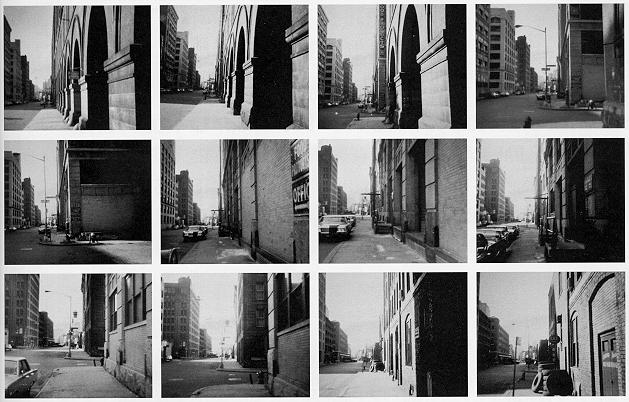
I’m also pleased to announce that I’ll be on the jury for a design competition hosted in Chicago next month, brought to you by the Chicago Architectural Club. The purpose of the competition is to rethink – and redesign – Chicago’s Union Station, updating it for an era of high-speed rail travel in the United States.
Unfortunately, it’s a bit late in the game to be announcing this: designs are due by October 15!
But I’ve uploaded the competition brief to my Flickr page, so check it out �– and hopefully it’s not too late for some of you to participate.
I’ll be meeting with the jury to announce our decision on Sunday, November 9; you can read more about that here.
But if our transportation options change, and high-speed rail does become an infrastructural fact of American life, then how can the design of our cities keep pace? What will Chicago – indeed, what will all metropolitan forms in the American midwest – look like in the year 2020, if high-speed rail becomes a viable option? Will we see future super-cities hot-linked one to another across the plains – or simply well-made train stations plunked into existing cities here and there?
While I’m in Chicago next month I will also be hosting an amazing panel with Jeffrey Inaba, Sam Jacob, and Joseph Grima, easily three of the most interesting people working in architecture today – but I’ll be posting more about that soon.

A mix of possible routes: BLDGBLOG speaks with Vito Acconci

A quick note before I hit the highway: I’ll be interviewing Vito Acconci on Saturday, live in Reno at the Nevada Museum of Art. This will be part of the Museum’s 2008 Art + Environment Conference, previously discussed here.

[Image: Vito Acconci, Blinks, Nov 23, 1969].

From an article about Acconci’s work in The New York Times:

”My biggest fear is that architecture is necessarily a kind of totalitarian activity, a kind of prison, in that when you design a space you’re probably designing people’s behavior in that space,” he says. ”So the goal of our work is to make a mix, a mix of possible routes, a mix of alternate routes, alternate channels.”

Be sure to read Shelley Jackson’s interview with Acconci in The Believer, take a look at his work courtesy of Azure, and stop by another profile of the artist-architect over at designboom.

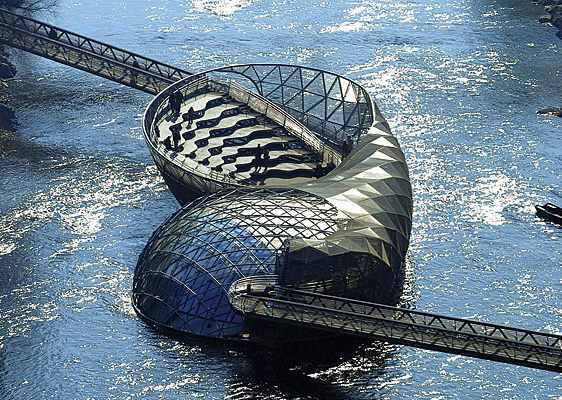
[Image: An artificial island in Austria, designed by Vito Acconci].

I’ll report back with details next week (and hopefully with a transcript or recording of the event), and I hope to find the time to do some blogging from the event itself.
Of course, if you’re anywhere near Reno, please stop by!

[Image: Vito Acconci, from Following Piece, 1969].

(Note that the title for this post – “A mix of possible routes” – comes from the profile of Acconci written by Aric Chen for The New York Times).

Hitting the Books

I picked up a few books yesterday afternoon at a store in Pacific Heights, in the midst of assembling my “Further Reading” list for The BLDGBLOG Book, and so I’ve got books on the brain. I thought I’d take a minute or two to stroll through my bookshelves and call out a few of the titles I happen to be reading right now or have recently finished.
So yesterday I bought Coal: A Human History by Barbara Freese. Coal tells “the fascinating history of a simple black rock that has shaped our world – and now threatens it.” Freese writes, and I quote at great length:

To grasp the magnitude of coal’s global impact, we must try to picture history without the momentous, high-intensity pulse of industrialization that started in Britain and then swept the world. The mainly agrarian world would have stayed in place for decades or centuries longer, with slower technological progress, less material wealth, and more gradual social change. Mass-production capitalism would not have soared to prominence, industrial working classes and places like nineteenth-century Manchester would not have mushroomed, and the Communist Manifesto would never have been written. The North might have lost the American Civil War, or it might never have started, and the transformation of the American West would have happened slowly by wagon rather than quickly by rail. The World Wars might never have exploded without the industrial rise of coal-rich Germany. Colonial conquests would have been far less sweeping, dramatically altering the history of all the societies that were dominated by foreign industrial powers, including China’s (whose ancient history would have been altered as well). The labor and environmental movements, if they had existed at all, would have taken very different forms. In short, none of the defining and epic struggles of the nineteenth and twentieth centuries would have played out as they did.

It’s the intrusion of geology into human history – a kind of economic batholith – the interaction between a fragment of the earth’s surface and the political development of the modern nation.
I also picked up a copy of The Slave Ship: A Human History – note the identical subtitles – by Marcus Rediker. Here, Rediker looks at the “floating dungeons” of the world’s earliest stab at transatlantic globalization:

For more than three centuries, slave ships carried millions of kidnapped Africans across the Atlantic in a “wooden world” where crew and captives alike lived with the ever-present fear of shipwreck, epidemics, and hungry sharks. As a cruel instrument of war and commerce, the slave ship helped to shape the Western world. Yet until now, it has remained a mystery.

Aside from being a social and economic history of the slave ship, the book also explores the ship’s technical structure – the mobile architecture of confinement.
I’ll hopefully start reading them both soon.
Books I’m currently in the process of reading, or have just finished, and that I’d recommend, include Kitty Hauser’s Bloody Old Britain: O.G.S. Crawford and the Archaeology of Modern Life. Crawford was an aerial archaeologist in England in the early 20th century, his “new skills of interpreting the earth from above,” discovering previously unknown landscape details, learned while flying reconnaissance missions during World War I.
Crawford and his colleagues, Hauser writes, “thought prehistory should be approached not through texts (as many archaeologists preferred) not through fetishized ‘finds’ (like those collected and admired by antiquarians), but through the spatial logic of geography. It made sense to think about the distribution of particular kinds of objects or sites over geographical space, rather than looking at them in isolation.” This was “a way of spatializing prehistory, restoring geographical connections and the materiality of the landscape to a subject that was too often reduced to disjointed objects or texts.” After all, she adds, “It was not just where ancient sites were to be found that interested him; it was how they related to each other, what constellations they formed, and how the siting of those constellations related to topography – geology, vegetation, trade routes, sources of water.”

[Images: O.G.S. Crawford and his aerially archaeological airplane; a view of the countryside from above, where remnants of history cast long shadows].

Though I haven’t finished Hauser’s book yet, I’m enjoying it immensely. Hauser also sent me an essay called “Revenants in the Landscape: The Discoveries of Aerial Photography,” from her recent book Shadow Sites. On a casual skim here, that essay appears to deal with the trigonometry of shadows as seen from the air and what these shadows might indicate about unexplored – and abnormal – features in the English landscape. As she writes in Bloody Old Britain, “at certain times of day, when the sun is low in the sky, the outlines of ancient fields become visible over Salisbury Plain, as shadows throw their ridges and dimples into sharp relief; these are known as ‘shadow sites’.”
Speaking of Stonehenge, a few months ago I read Stonehenge, author Rosemary Hill’s excellent contribution to the Wonders of the World series edited by Mary Beard. While it might seem like the world can’t possibly need another book about Stonehenge, Hill’s approach is consistently interesting and deliberately written for a general audience. Throughout the book she describes the imaginative, political, artistic, and historiographic influence of the ancient monument, from William Blake’s engravings and the architecture of Inigo Jones to the Led Zeppelinized druidry of the late twentieth-century. I read a British copy of the book, published by Profile, but Harvard University Press – whose publicity blog is worth a read – has their own version coming out this fall.
For a monument of a different sort, we turn to Glen Canyon Dam. Just last week I finished reading James Lawrence Powell’s forthcoming book Dead Pool: Lake Powell, Global Warming, and the Future of Water in the West. I’d say more about that book here, in fact, but I’m reviewing it for another publication and so I’ll save my thoughts for that article. But it is an interesting book, if imperfect, and it presents some very large questions quite early on in the text.
Powell writes:

Why did our government dam nearly every river in the West, some a dozen times or more? Why were dams built even though the associated irrigation projects were obvious money-losers? Why, within a decade or two of the launching of the United States Reclamation Service in 1902, were every one of its founding principles betrayed?

More evocatively, he asks: “What do we do when across the West are spread not beautiful blue-water lakes, but a hundred million acre-feet of mud, some of it laced with toxins? Where then will our successors get their water?”

[Images: The cover of, and spreads from, Ant Farm: Living Archive 7 by Felicity D. Scott].

The idea of speculative futures for otherwise unanticipated monuments brings me to Felicity D. Scott’s recent book Ant Farm: Living Archive 7, published by ACTAR. Scott’s book is a graphically inspired but sluggishly written exploration of Ant Farm, a 1960s/70s American architectural avant-garde, whose projects included mobile educational facilities, “investigations into the psychedelic and environmental potentials of electronic technology,” inflatable parachute-buildings and “moment villages” in the American desert, and a bewildering variety of other experimental structures, almost all of which, Scott adds, were “portable, ‘instant,’ temporary, cheap, and high-tech.”
It’s Archigram-meets-NASCAR amidst inflatable polyethylene megastructures in the California desert – high on LSD and powered by cheap oil – prefiguring today’s ongoing experiments in rogue instant-urbanism, like Burning Man.
The book is beautifully designed and it includes an awe-inspiring 120-page Timeline of the group’s output; these images alone – really only about two-thirds of the book’s total eye candy – make it a rewarding and memorable resource.
I’ve been reading a load of other books lately, from Reza Negarestani’s future cult-classic Cyclonopedia to Robert MacFarlane’s outstanding The Wild Places, but I hope to post more about those titles soon.

Light Box

[Images: Object 02, including two interesting wire studies for the project, followed by a “light object,” all by Jeroen Molenaar – who also took this amazing photograph. Object 02 is on display now at the Cultuurwerkplaats R10 in Zwolle, Netherlands. The structure seems to visually exemplify the idea that a work of architecture could double as a cantilevered lighting fixture installed on its site in the city. Or what if small, inhabitable lamps dotted the urban field? You climb into your lamp at night – and turn it off to sleep. Residents who have gone to bed form a dark constellation of unlit structures against the illuminated backdrop of those who’ve stayed awake; the city becomes a burning signage that graphs sleep].
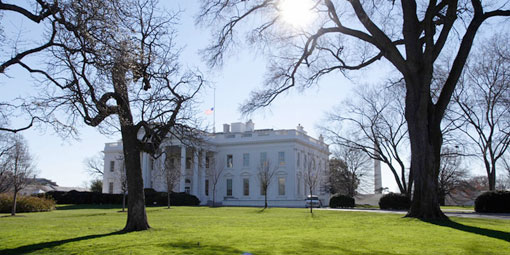
And the new White House is…

The White House Redux competition results have been announced!

First Prize: #834
J.P. Maruszczak, Ryan Manning (assistant), Roger Connah

Second Prize: #1485
David Iseri, Jefferson Frost, Justin Kruse, Laura Sperry

Third Prize (Shared):
#198
Grant Gibson, Chris-AnnMarie Spencer
#1369
Wayne Congar, Arrielle Assouline-Lichten

Honorable Mention: #892
Pieterjan Ginckels, Julian Friedauer

Congratulations to all the winners – and a gigantic thanks to everyone who participated.
It was a lengthy, but very, very fun jury process, as partially documented in the video, below, and I have about half-a-million things I still want to add to the discussion, but I’ll wait until the popular vote is announced on October 3 before putting up a longer post.

[Image: The White House Redux jury meeting for a quick breakfast on the Die Hard-like unfinished 45th floor of World Trade Center 7 in New York; photo by Marty Hyers].

Meanwhile, watch the jury deliberate at the end of the day (it was dark outside before we all left the building):


It’s interesting to watch this and the vox populi poll back to back:


More soon.

Into the Woods

A new exhibition called Forest, curated by Cécile Martin, opens up tomorrow night in Montreal. For the show, “artists and architects have joined forces to propose a new vision of the forest.”

There are three pavilions in all: “three installations that invite one to penetrate and explore the movements and dangers of the canopy, soil and hidden dangers of the forest.” They include the poetically named “From Chernobyl to Montreal, the Incandescent Zen Garden,” whose creators note that “the natural phenomena of radioactivity and sound waves are amplified,” with part of the installation “illuminated night and day by a red light, the same one that made the forest – the Red Forest – adjacent to the Chernobyl nuclear reactor vibrate.”
This slightly unclear image nonetheless leaves me wondering what the biological effects might be if you could cause a several-acre test-forest to vibrate constantly: what strange roots and branches would grow? Would constant vibration cause radically new tree structures to grow – or just make for some very happy plants?
It’d be like the sound farm, only more tactile – and far stranger.
A perpetual earthquake as a lab for cultivating the unnatural.
The other two pavilions, meanwhile, are “The Macrocosm of Fiber or the Filtering Pavilion” and “The Mobile Branch, A Forest of Hypnosis and Vertigo.” The latter project, a collaboration between architect Philip Beesley – whose work was explored here a few years ago – and artist Patrick Beaulieu, is described a kind of animatronic thicket: “A raised three-dimensional flooring and a cover propelled at 300 rotations per minute form a vibrating dance of branches and twigs, constituting a human-sized space of the in-between from which humans are nevertheless excluded.”
You wander into a forest – only to realize that it’s not a forest at all, but a vast machine…
There are a series of workshops on Friday and Saturday, as well – so if you’re anywhere near Montreal, check it out! Tell them you heard about it on BLDGBLOG.

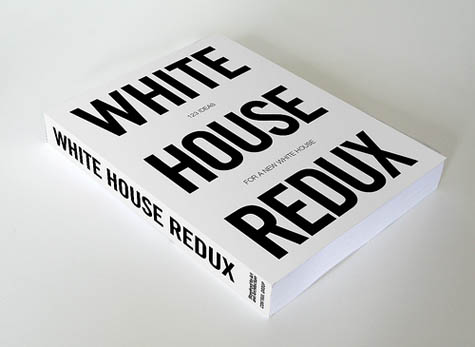
White House Redux: The Book

The White House Redux competition – discussed earlier this summer on National Public Radio – will soon be a book:

With almost 500 submissions from 42 countries around the world, White House Redux, a competition launched by Storefront for Art and Architecture and Control Group last January, became one of the most talked-about architecture competitions in 2008. The brief was simple: what would the residence of the most powerful individual in the world, the White House in Washington, D.C., look like if it were designed today?

Published to coincide with the opening of an exhibition of the competition’s results at Storefront for Art and Architecture, White House Redux—The Book contains a compendium of documentation related to the competition and an overview of the results. It includes essays by Joseph Grima (Storefront for Art and Architecture) and Geoff Manaugh (BLDGBLOG and Dwell Magazine), a history of the existing White House and 123 selected projects as well as the four winning submissions. A jury assessed the submissions in the spectacular setting of the 45th floor of the World Trade Center Tower 7, a process documented in the book’s 30-page photoessay by Marty Hyers.

The book is to be available for pre-order and will ship on October 2, 2008, to coincide with the prizegiving and opening of White House Redux at Storefront for Art and Architecture, New York. White House Redux was printed in a limited edition of 500 copies.

734 pages, color and black & white (7.8” x10.5”)
$39 USD Shipping: $5 (USA), $12 (Rest of the world)
Discounts available on shipping for multiple copies

With a print-run of only 500, the book should go fast – so order a copy before they all disappear.

(Note: This might be my last post here for a few days, as I’m going away for a quick – but much-needed – family vacation).

Outer Darkness

Apparently, “almost half” of the fluorescent light bulbs used in the Japanese module of the International Space Station have begun burning out far earlier than expected.
An entire section of the station thus might soon be left in darkness.

[Image: Kibo, the Japanese module of the International Space Station, soon to be without internal light].

Although an impending delivery of new bulbs will undoubtedly bring light back to the failing module, the implication that astronauts aboard something like the International Space Station – or some special, trans-galaxial touring edition, launched twenty-five years from now – might be faced with total darkness, a darkness from which they cannot be rescued, is mind-boggling.
At the very least it would make a great film: ten minutes into what you think is a science fiction adventure story, all the lights on the ship go out. There is no way to replace the bulbs.
The next hour and a half you listen – after all, you can’t watch – as a group of orbiting athletes and scientists slowly comes to grips with their situation. They are drifting out past the rings of Saturn inside a strange constellation of unlit rooms – and they will never have light in the station again.
Five years from now one of them will still be alive, half-insane, speaking into a dead transmitter. The price of seeing stars is darkness, he whispers to himself over and over again, as his failing eyes gaze out upon nebulas and planets he’ll never reach.

(Via Wired Science).

The Landscape Anthropology of Photography Museums (and the spatial implications of graven images)

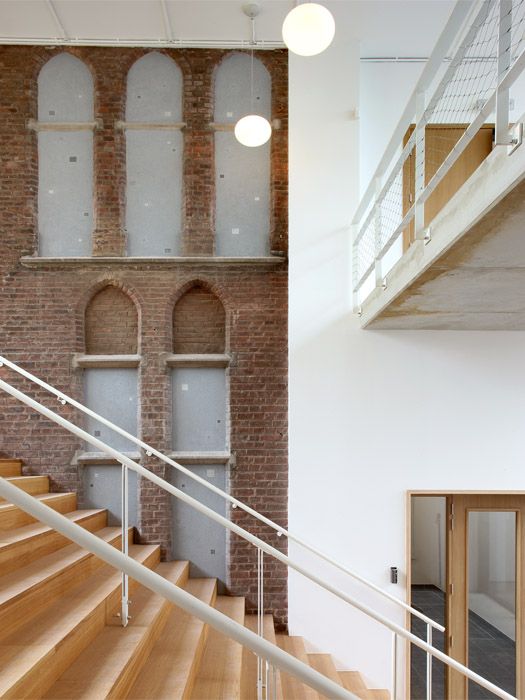
[Image: A new wing for the Museum of Photography in Charleroi by l’Escaut; photo by Filip Dujardin].
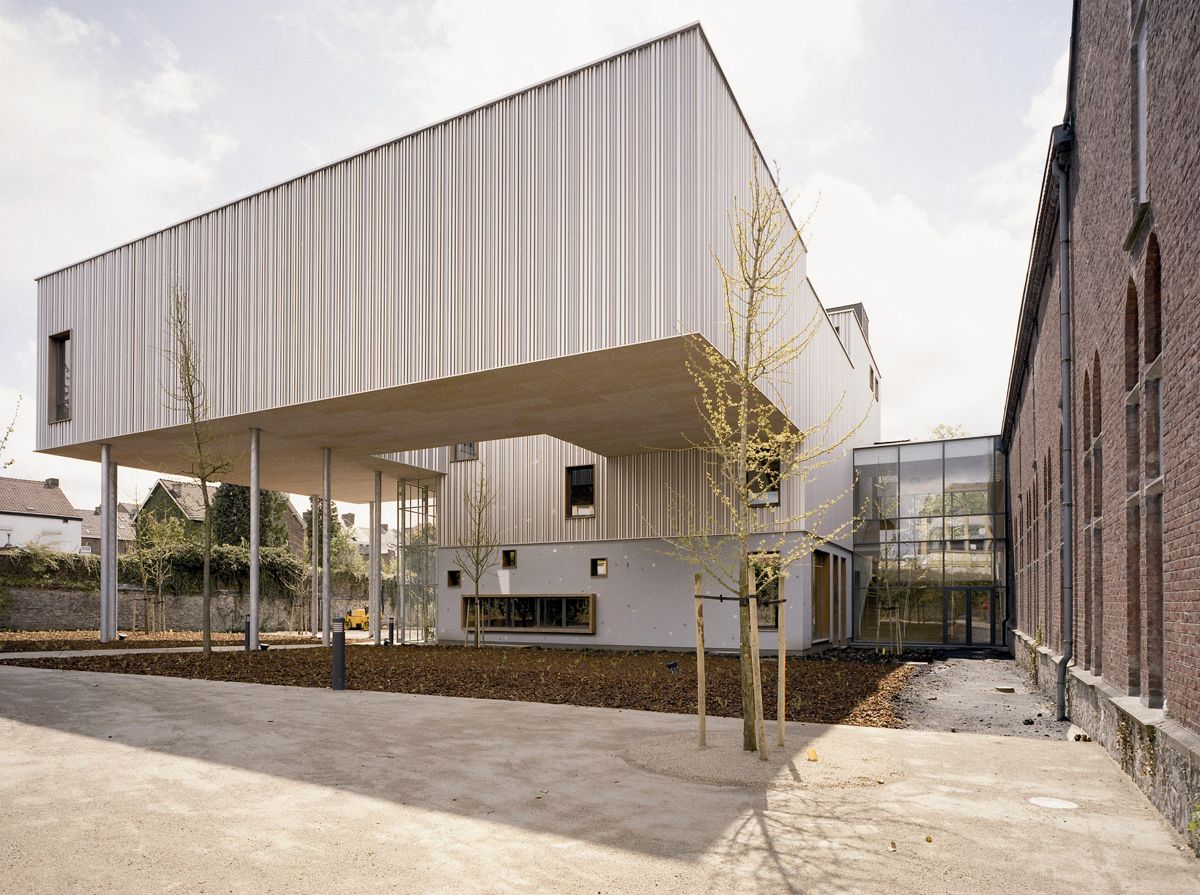
Belgian architects and scenographers l’Escaut have completed a new wing for the Museum of Photography in Charleroi, Belgium.
In an email received this morning, l’Escaut describes the project as being “situated at the intersection of architecture, landscape, city planning, photography and fine arts.”
This wide-ranging program, they go on to point out, “matches the interdisciplinarity of l’Escaut both in its daily life (l’Escaut is situated in a building shared with theatre actors and artists) as in its architecture practice (anthropology, landscaping, city planning, communication intervene in the projects).”
They are not really architects, in other words; they practice something more like landscape anthropology.

[Images: A new wing for the Museum of Photography in Charleroi by l’Escaut; photos by Filip Dujardin].
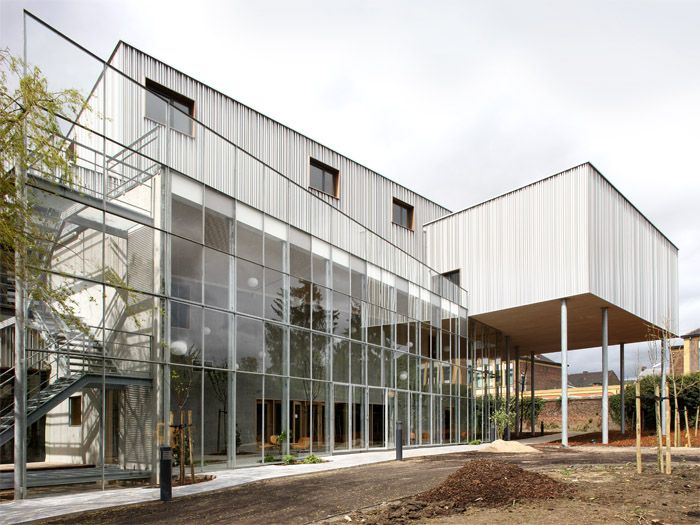
L’Escaut’s new wing is a surprising addition to the existing structure.
Partly raised on stilts, partly cantilevered, and almost entirely defined by a very clean-lined modern geometry, the added galleries nonetheless include a brief glimpse of botanical free-will: a “winter garden” that “shelters fragrant plants inside the museum.” Photosynthesis meets photography.

[Image: A new wing for the Museum of Photography in Charleroi by l’Escaut; photo by Filip Dujardin].
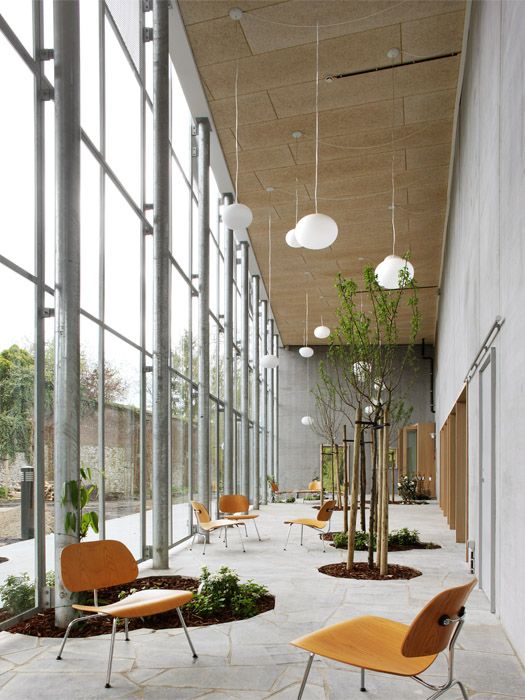
The galleries themselves, we’re told, are part of an overall “spatial scenography” of the site. Everything here is about views, counter-views, cross-views, and panoramas. Everything helps to frame everything else.
The architecture itself is photographic, you could say: the rooms flow into each other through a succession of bare white walls and exposed concrete, as if the space has been edited.
This raises the question, though, of the point at which space, actively experienced, becomes cinematic.
Are buildings ever truly photographic, or are they more like short films?

[Images: A new wing for the Museum of Photography in Charleroi by l’Escaut; photos by Filip Dujardin].

In any case, the story behind the original building itself is fascinating: it turns out that the Museum of Photography is a former Carmelite convent. The grounds include what used to be the nuns’ orchard.
This entails all sorts of interesting theological problems, as we’ll see.

[Image: A new wing for the Museum of Photography in Charleroi by l’Escaut; photo by Filip Dujardin].

Religious prohibitions against “graven images” become abstractly involved in the planning process:

The transformation of the convent into a museum of photography was a reverse process of existing logics in the building. A place where looking at the world was forbidden because of religious reasons became a place of revelation of the image for societal reasons. Its extension defies conventional museum logics by multiplying the relationships to photography, its history and its many facets of representation.

In other words, is a museum of photography – a temple of the graven image – a site for the “revelation of the image,” as the architects write – an inherent violation of Christian doctrine?
Is it de facto heresy to celebrate photography in a site formerly dedicated to the worship of god?
These unresolved tensions help to animate the interlinked spaces of the museum itself.

[Image: A new wing for the Museum of Photography in Charleroi by l’Escaut; photo by Filip Dujardin].

Here are some photos of the construction process, More about the project, meanwhile, can be found here.